
AI服务器

Search documents
深夜崩盘!英伟达2天蒸发3万亿,银行股集体跳楼!一场席卷全球的资本大逃亡正在上演
Sou Hu Cai Jing· 2026-03-01 07:10
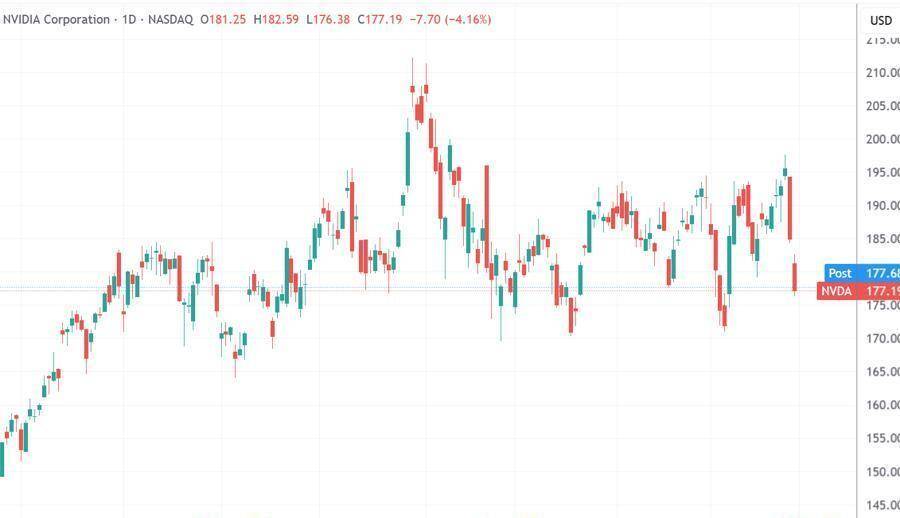
Market Overview - The U.S. stock market experienced significant declines, with the Dow Jones dropping 521 points (1.05%) to close at 48,977.92 points, and the Nasdaq falling 0.92% to 22,668.21 points, marking the largest monthly declines since March 2025 [1] - February saw the Nasdaq index plummet 3.38% and the S&P 500 decrease by 0.87%, both recording their largest single-month declines in a year [1] Nvidia's Market Impact - Nvidia's stock fell 4.16% to $177.19, resulting in a market cap loss of $187.1 billion in one day, and a staggering $446.4 billion over two trading days, equivalent to the total market cap of a major bank [3] - Despite Nvidia reporting a record Q4 revenue of $68.1 billion (up 73% YoY) and a net profit of $43 billion (up 94% YoY), the stock price plummeted, indicating a disconnect between strong earnings and market performance [3] Investor Sentiment and Concerns - Analysts noted that the sell-off reflects profit-taking after positive earnings, alongside skepticism about the sustainability of massive capital expenditures by cloud service providers in the AI sector [4] - Concerns arose regarding whether the substantial investments in AI by tech giants would yield returns, particularly as Nvidia's growth may face limits if customer demand slows [4] CoreWeave's Financial Struggles - CoreWeave, a cloud AI computing rental giant, saw its stock drop over 22% after reporting a Q4 net loss that expanded from $51 million to $452 million YoY, alongside a capital expenditure plan of $30-35 billion for 2026, significantly higher than the previous year's $10.3 billion [4] OpenAI's Funding and Market Reaction - OpenAI announced a new funding round of $110 billion, raising its pre-money valuation to $730 billion, with major investments from Amazon, Nvidia, and SoftBank [5] - Despite this funding, market sentiment remained negative, highlighting the harsh reality of the "burning cash" competition among AI giants [5] Financial Sector Impact - The KBW Bank Index fell 4.85%, marking its largest single-day drop since April of the previous year, with major banks like Goldman Sachs and Morgan Stanley experiencing significant declines [5] - The financial sector's downturn was exacerbated by fears stemming from the collapse of a UK mortgage company, raising concerns about systemic risks in the private credit market [7] Broader Market Trends - The market displayed a stark divide, with tech giants generally declining while some AI-related stocks surged, such as Dell Technologies, which rose 21.93% due to expected doubling of AI server revenue [8] - The overall sentiment shifted towards safe-haven assets like gold and silver, with gold prices nearing $5,280 per ounce and silver rising 6.15% [10] Employment Concerns in AI - The announcement of significant layoffs by Block, a fintech company, due to AI-driven productivity improvements raised alarms about AI's potential impact on employment across sectors, including finance [7] Conclusion - The market turmoil initiated by Nvidia's stock decline reflects a broader reassessment of the AI investment landscape, with implications for both technology and financial sectors as investors grapple with the sustainability of growth in a rapidly changing environment [12]


AI+存储双重引爆,半导体板块盘初冲高,多股创新高开启主升浪!
Jin Rong Jie· 2026-01-26 02:57
Core Viewpoint - The semiconductor sector in A-shares is experiencing a strong upward trend, driven by multiple favorable factors including AI computing demand, a reversal in the storage cycle, and accelerated domestic substitution, leading to increased market attention and active trading in core stocks [1][2]. Group 1: Market Performance - The semiconductor sector has shown significant strength, with leading stocks like Chipone Technology and Xilinx achieving historical highs, indicating a robust structural market [1]. - The trading volume for Chipone Technology reached 4.123 billion yuan on January 23, reflecting strong capital allocation interest and active overall trading in the sector [1]. Group 2: Industry Developments - The domestic semiconductor equipment substitution rate is projected to rise from 25% in 2025 to 35% by 2026, with key equipment like etching and deposition tools exceeding 40% substitution, supported by a 15% procurement subsidy from the Ministry of Industry and Information Technology [2]. - A super cycle in memory storage is anticipated, with DRAM contract prices expected to rise over 50% and flash memory prices over 30% by Q1 2026, driven by strong demand and supply shortages [2]. - The National Big Fund Phase III has been launched with a total scale exceeding 350 billion yuan, with 40% of the initial 120 billion yuan allocated to equipment and materials, indicating unprecedented financial support for the semiconductor sector [2]. Group 3: Global Market Outlook - The global semiconductor manufacturing equipment market is expected to reach $145 billion by 2026 and $156 billion by 2027, with China projected to lead in equipment investment at approximately $39.25 billion [3]. Group 4: Benefiting Industries - The semiconductor equipment industry is set to benefit directly from global wafer fab expansions and accelerated domestic substitution, with AI computing demand driving significant increases in equipment needs [4]. - The semiconductor materials industry will see growth in demand for materials like photoresists and specialty gases, as domestic equipment manufacturing increases and global expansions accelerate [4]. - The AI server industry is projected to see a surge in shipments, with estimates of over 3 million units in 2026, further driving demand for storage and computing chips [4].
白银疯了!柜台排长龙、大妈抢断货,三思而后行
Sou Hu Cai Jing· 2026-01-17 00:41
Group 1 - The core viewpoint of the article highlights a significant surge in silver prices, driven by strong demand from green technology sectors, financial speculation, and supply constraints, leading to a "silver frenzy" across China [1] - The price of physical silver has surpassed 20 yuan per gram, marking an over 80% increase in just 50 days, significantly outpacing gold [1] - Key drivers of this surge include the demand from photovoltaic, electric vehicle, and AI server industries, alongside expectations of interest rate cuts by the Federal Reserve, and increased buying from India while China tightens exports [1] Group 2 - Despite the excitement, the silver market is characterized by high volatility, with its market size being only one-tenth that of gold, and fluctuations being 2-3 times greater than gold [3] - Recent market events have seen drastic price drops, such as a 13% decline in a single day, resulting in substantial losses for leveraged investors [3] - The market is polarized, with bullish forecasts from firms like Goldman Sachs predicting prices could reach $300 per ounce, while technical analysts warn of overbought conditions indicated by an RSI of 93.8 [3]

高盛下调超微电脑目标价至26美元
Ge Long Hui· 2026-01-14 12:52
Group 1 - Goldman Sachs has assigned a "sell" rating to Supermicro, a major player in the AI server market, and has lowered its target price from $34 to $26 [1] - The rationale behind this downgrade is that the gross margin for AI servers is only in the single digits, which is suppressing the overall gross margin performance for the year [1]
高盛展望2026大中华区科技趋势:ASIC成AI服务器增量核心,光模块迈向1.6T,果链领跑智能手机.......
美股IPO· 2026-01-12 12:56
Core Viewpoint - Goldman Sachs report highlights that AI infrastructure, innovation in consumer electronics, and localization of semiconductors will be the core themes driving growth in the technology sector by 2026 [3][4]. Group 1: AI Infrastructure and Semiconductor Trends - AI servers are transitioning from a GPU-dominated landscape to a dual-GPU and ASIC development phase, with ASIC's penetration expected to significantly increase by 2026 [4]. - The demand for high-speed optical interconnects is set to grow, with a transition from 400G to 800G and eventually to 1.6T, driven by the need for enhanced bandwidth and reduced latency in AI clusters [5]. - Liquid cooling solutions are anticipated to gain traction in ASIC AI servers, with a notable increase in adoption rates, enhancing thermal efficiency and creating new technical barriers [6]. Group 2: Consumer Electronics and Smartphone Market - The iPhone's continuous innovation cycle, particularly with the introduction of foldable models, is expected to significantly influence consumer demand and reshape upgrade logic [9]. - The smartphone market is experiencing a moderate recovery, with high-end models and AI functionalities driving growth, despite overall shipment volumes not returning to previous high-growth levels [10]. Group 3: PCB and Semiconductor Localization - The high-end PCB and CCL markets are facing supply constraints due to increasing demand from AI servers and high-end consumer electronics, leading to improved pricing power and profitability [11]. - The domestic semiconductor industry is entering an accelerated phase, driven by AI computing needs and increasing acceptance of local chips and materials, transitioning from policy-driven to commercially driven growth [12][13]. Group 4: Emerging Technologies - Long-term growth opportunities are identified in L4 autonomous driving and low Earth orbit satellites, which are expected to drive demand for chips, sensors, and system integration [14][15].

高盛展望2026大中华区科技趋势:ASIC成AI服务器增量核心,光模块迈向1.6T,果链领跑智能手机.......
Hua Er Jie Jian Wen· 2026-01-12 09:47
Core Insights - Goldman Sachs released a report on the outlook for the Greater China technology sector in 2026, highlighting three main themes: AI infrastructure upgrades, innovations in consumer electronics, and localization of semiconductors. The report identifies the increasing penetration of ASIC AI servers and changes in iPhone form factors as key drivers for industry growth. Group 1: AI Infrastructure and Server Trends - AI servers are transitioning from a GPU-dominated landscape to a parallel development of GPU and ASIC, with ASIC becoming the core increment due to its advantages in specific training and inference scenarios [2] - By 2026, the penetration rate of ASIC in AI servers is expected to rise significantly, leading to rapid growth in rack-level AI server shipments and a shift towards higher integration and power density in server architecture [2] - The demand for high-speed interconnects, cooling, and power systems will increase as the value of the entire machine rises [2] Group 2: Networking and Cooling Technologies - The evolution of high-speed optical interconnects is a key trend, with a transition from 400G to 800G and eventually to 1.6T driven by the expanding scale of computing power [3] - New technologies like silicon photonics and CPO are maturing, setting the stage for significant growth in high-speed optical modules by 2026 [3] - Liquid cooling solutions are expected to see increased adoption in ASIC AI servers, transitioning from localized applications to more systematic solutions, enhancing cooling efficiency and creating new technical barriers [4] Group 3: ODM and Competitive Landscape - The complexity of AI servers is increasing customer reliance on ODM manufacturers, with competitive advantages shifting towards multi-chip platform adaptability and rapid delivery capabilities [5] - Leading ODMs with advanced manufacturing capabilities and long-term service relationships with cloud vendors are expected to dominate AI server orders, while smaller players will face limited opportunities [5] Group 4: Consumer Electronics and iPhone Innovations - The global PC market is projected to face growth pressures, with the end of pandemic-driven demand and rising memory costs impacting terminal demand [7] - The iPhone is entering a continuous cycle of form factor innovation, with foldable models expected to significantly influence consumer upgrade behavior and drive demand for high-end components [8] - The smartphone market is experiencing a mild recovery, with growth driven by an increase in high-end models and AI functionalities enhancing user experience [9] Group 5: Semiconductor and PCB Market Dynamics - The high-end PCB and CCL markets are experiencing supply constraints due to rising demand from AI servers and high-end consumer electronics, leading to increased pricing power and profitability [10] - The domestic semiconductor industry is entering an accelerated phase, driven by growing demand for computing power and local acceptance of domestic chips and materials [11] - Emerging fields such as L4 autonomous driving and low-orbit satellites are expected to open up long-term growth opportunities, with increasing demand for chips and system integration [12]
资本市场丨锚定未来 产业机遇与企业竞争力双重赋能
Sou Hu Cai Jing· 2026-01-12 06:19
Core Insights - The latest "Top 500 Chinese Listed Companies by Market Value" list for 2025 highlights the dominance of leading enterprises in finance, energy, technology, consumption, and intelligent manufacturing, with companies like Tencent and Industrial and Commercial Bank of China showcasing trillion-level market values [2][5][17] - The presence of companies such as Industrial Fulian, SMIC, and BYD in the 11th to 30th rankings reflects the deep transformation of China's economic structure, indicating these firms are both stabilizers and leaders in industrial upgrades [2][5][24] Market Value Rankings - The top ten companies by market value include Tencent (49400 billion), ICBC (26311 billion), Agricultural Bank of China (26123 billion), Alibaba (24621 billion), and others, collectively representing a significant portion of the market [17][19] - The total market value of the top ten companies reaches 181.5 trillion, emphasizing the concentration of market power among these leading firms [17][19] Industry Distribution - The companies ranked 11th to 20th span key sectors such as intelligent manufacturing, finance, e-commerce, energy, technology, and new energy vehicles, with a combined market value of 91645 billion [7][24] - The average market value of the top 500 companies is 1856 billion, reflecting a year-on-year increase of 373 billion, with information technology, finance, and consumer discretionary sectors leading in market share [10][27] Economic Transformation - The high market values of these companies signify a shift from extensive growth to intensive growth in China's economy, driven by national policies like "Made in China 2025" and the new energy strategy [9][26] - Analysts suggest that the emergence of high-value companies is due to their alignment with economic transformation directions and their potential for future growth, leading to higher valuation premiums from the capital market [9][26] Corporate Strategies - Companies are focusing on core business upgrades and exploring new growth avenues, with Xiaomi targeting 550,000 vehicle deliveries by 2026 and BYD investing in solid-state and hydrogen fuel cell technologies [11][28] - Financial institutions like China Ping An and China Merchants Bank are enhancing their digital transformation and wealth management capabilities, while Pinduoduo is investing in agricultural technology and expanding its global market presence [11][28] Investment Trends - The performance of the 11th to 20th ranked companies reinforces a value investment orientation, guiding capital towards high-quality enterprises and core sectors [12][28] - The capital market is expected to support the long-term matching of value and market capitalization for these quality enterprises, promoting a positive cycle of corporate development and investor returns [12][28]





每日投资策略-20260106
Zhao Yin Guo Ji· 2026-01-06 03:11
Global Market Overview - The Chinese stock market has shown an upward trend, with healthcare, consumer discretionary, and real estate sectors leading, while energy, telecommunications, and conglomerates lagged behind. Southbound capital recorded a net inflow of HKD 18.72 billion, with Kuaishou, Xiaomi, and SMIC seeing the highest net purchases, while Tencent and China Mobile experienced significant net sales [3] - The A-share market saw gains in media, pharmaceuticals, and electronics, while oil, banking, and transportation sectors faced declines. The market is entering a spring offensive phase, with expectations that previously underperforming sectors like healthcare and consumer will outperform [3] - The U.S. stock market continued its upward trajectory, led by energy, financials, and consumer discretionary sectors, while defensive sectors like utilities, staples, and healthcare lagged. Major tech stocks such as Amazon and Tesla contributed to the gains [3] Economic Indicators - China's December RatingDog services PMI reached 52, indicating expansion, although new export orders contracted. Business outlook for the coming year has improved, with the government emphasizing the importance of innovation and the application of new technologies [3] - In the U.S., the December ISM manufacturing PMI unexpectedly contracted significantly, with new orders shrinking for the fourth consecutive month and inventory reduction accelerating. This data contributed to a decline in U.S. Treasury yields and a drop in the dollar [3] Sector-Specific Insights - AI demand is driving significant price increases in DRAM, with Samsung and SK Hynix planning to raise prices by 60%-70%. Strong demand for AI servers has led to Hon Hai's Q4 sales increasing by 22% year-on-year, with a notable 31.8% increase in December alone [3] - Nvidia's release of the new Rubin platform significantly reduces inference costs compared to the previous Blackwell platform, indicating advancements in AI technology [3] - The brain-machine interface industry may be approaching a critical commercialization turning point, with potential applications in medical rehabilitation, AI connectivity, and humanoid robot collaboration, as highlighted by Elon Musk's announcement regarding Neuralink's production timeline [3]





AI赛道量产“翻倍基”!主动权益基金大翻身,新生代来势凶猛
Sou Hu Cai Jing· 2026-01-05 13:11
Core Insights - The active equity funds experienced a remarkable performance in 2025, with 94.91% of all funds generating positive returns, and 96.64% of active equity funds achieving positive returns over one year [3][4] - The emergence of "doubling funds" was a significant highlight, with 60 funds, including 51 active equity funds, achieving over 100% cumulative returns [4][5] - The strong performance of active equity funds is closely linked to the structural trends in the A-share market, particularly in technology sectors such as optical modules, PCB, cloud computing, and innovative pharmaceuticals [3][5] Fund Performance - Among active equity funds, Yongying Technology Smart Selection A led with a return of 223.14%, making it the only fund to achieve "doubling" status [5] - Other notable performers included AVIC Opportunity Navigator A with 156.48% and Hengyue Advantage Selection A with 141.96% [5] - A total of 3419 funds outperformed their benchmark returns, representing 78.26% of the active equity funds [3] Market Trends - The "doubling funds" phenomenon is characterized by a clear structural market trend, with most funds heavily invested in the "computing power" industry chain, particularly in optical modules [5][6] - The communication sector emerged as a significant winner among passive index "doubling funds," with several funds achieving returns exceeding 110% [6] New Entrants and Management - The emergence of new fund managers was notable, with the average management tenure of fund managers for the "doubling funds" being only 3.01 years, and 43.33% having less than two years of experience [7][8] - Despite the high returns associated with newer fund managers, experienced managers also delivered strong performances, indicating a diverse range of expertise contributing to the success of these funds [8] Fund Management Companies - E Fund emerged as the largest winner in 2025, managing nine "doubling funds," with E Fund Rui Xiang I achieving the highest return of 119.38% [10] - Smaller fund companies also contributed significantly to the "doubling funds," with several achieving impressive returns despite their lower rankings in total assets [11][12] Future Outlook - Analysts suggest that the technology sector will continue to be a clear investment focus in 2026, recommending strategies such as "core + satellite" and "barbell" approaches for portfolio diversification [13]

国信证券:2026年A股公司出海进入产能、品牌、管理体系协同输出的质变期 “哑铃型”组合为最优配置
智通财经网· 2025-12-25 23:36
Core Insights - The report from Guosen Securities indicates that by 2026, A-share companies will transition from merely exporting goods to a phase of collaborative output involving capacity, branding, and management systems, marking a qualitative shift in overseas operations [1] - Among 2,723 A-share companies engaged in overseas business, 60.96% hold a positive attitude towards international expansion, with 45.38% of 12,393 related announcements reflecting positive statements, indicating that going global has shifted from an optional strategy to a necessary action [1] Industry Analysis - "High-tech" industries are becoming the main force in overseas expansion, with technological barriers and industry concentration determining long-term value. The core logic of industry selection focuses on high-tech moats and strong industry clusters, which provide irreplaceability along with cost and efficiency advantages [2] - Three key sectors identified for overseas expansion include: - Chemical new materials (polyurethane, fiberglass) leveraging global pricing power and overseas base layouts to avoid trade barriers - High-end equipment (buses, construction machinery, semiconductor equipment) capitalizing on technology spillover to capture markets in "connector countries" - Electronic components (servers, MLCC) benefiting from global AI computing infrastructure and automotive electronics demand [2] - Data shows that over 70% of companies in machinery, power equipment, pharmaceuticals, computers, and automobiles are positively inclined towards overseas operations, making them core vehicles for international expansion [2] Regional Opportunities - Distinct opportunities are emerging across global markets, with a strategic focus on three core regions: - Europe emphasizes high-end manufacturing and green transformation, with localized production in new energy buses and chemical new materials to overcome technical and tariff barriers - Southeast Asia serves as a "backyard" for industry chain overflow, with semiconductor equipment and consumer electronics benefiting from mature process expansion and consumption upgrades - The Middle East and Latin America are emerging as new frontiers for photovoltaic energy storage and construction machinery, driven by energy transition and infrastructure demands [2] Investment Strategy - An "hourglass" portfolio is recommended to balance stable returns with growth flexibility, focusing on both "globalization dividend assets" and "technology breakthrough growth stocks": - The left side targets high-dividend, low-valuation stable assets, such as commercial buses and leading chemical new materials companies with stable overseas revenue and strong cash flow - The right side invests in high-growth, technology-driven assets, corresponding to "very positive" companies like semiconductor equipment and AI server firms, which are expected to experience nonlinear growth due to global supply chain restructuring and technological iteration [3]
