小家电等

Search documents
23股获推荐 火炬电子、新乳业目标价涨幅超40%丨券商评级观察
2 1 Shi Ji Jing Ji Bao Dao· 2025-12-09 01:13
Core Insights - On December 8, 2023, brokerage firms provided target prices for listed companies, with notable increases for Torch Electronics, New Dairy, and YK International, showing target price increases of 47.38%, 41.69%, and 38.08% respectively, across the military electronics, beverage dairy, and agricultural chemical sectors [1][2]. Group 1: Target Price Increases - Torch Electronics received a target price increase of 47.38% with a new target price of 47.00 yuan [2]. - New Dairy's target price increased by 41.69%, with a new target price of 23.52 yuan [2]. - YK International's target price rose by 38.08%, with a new target price of 66.00 yuan [2]. - Other companies with significant target price increases include Xiaoshangpin City (34.23%), Huayu New Energy (23.92%), and Shihua Technology (22.70%) [2]. Group 2: Brokerage Recommendations - A total of 23 listed companies received brokerage recommendations on December 8, with YK International receiving recommendations from 2 firms, while Weixinno and Weihai Guantai received recommendations from 1 firm each [3]. - The only company with an upgraded rating was Dechang Co., which was raised from "Hold" to "Buy" by Zheshang Securities [4]. Group 3: First-Time Coverage - On December 8, 9 companies received first-time coverage from brokerages, including Weixinno with a rating of "Increase" from Caixin Securities, and Xiaoshangpin City with a "Outperform Industry" rating from China International Capital [5]. - Other companies receiving first-time ratings include Kangnong Agriculture, Shihua Technology, Suzhou Planning, and others, with various ratings such as "Buy" and "Recommended" [5].




市场监管总局撤销1557张强制性产品认证证书
Yang Shi Xin Wen Ke Hu Duan· 2025-11-13 08:26
Core Points - The State Administration for Market Regulation has conducted a validity inspection of mandatory product certifications across 23 categories, including household gas stoves, electric bicycles, fire extinguishers, and small appliances [1] - A total of 3001 batches of products were inspected, with a coverage rate of 73.5% for certification agencies [1] - Additionally, 123 batches of low-voltage components and power tools were also inspected for certification validity [1] Regulatory Actions - Non-compliant certified manufacturers and products have been reported to relevant certification agencies, which are now required to enhance quality control and risk assessment [1] - A total of 1557 certification certificates have been revoked for products and manufacturers that did not meet certification requirements [1] - For products with serious non-compliance that had their certifications revoked, certification agencies will not accept new certification applications for six months [1] Compliance Requirements - Manufacturers whose self-declarations were revoked cannot reapply for self-declaration for six months and must cease production, import, or sale of the affected products [1] - Manufacturers are also required to conduct risk assessments and implement corrective actions [1]
透视长三角县级经济版图
Di Yi Cai Jing· 2025-11-04 12:30
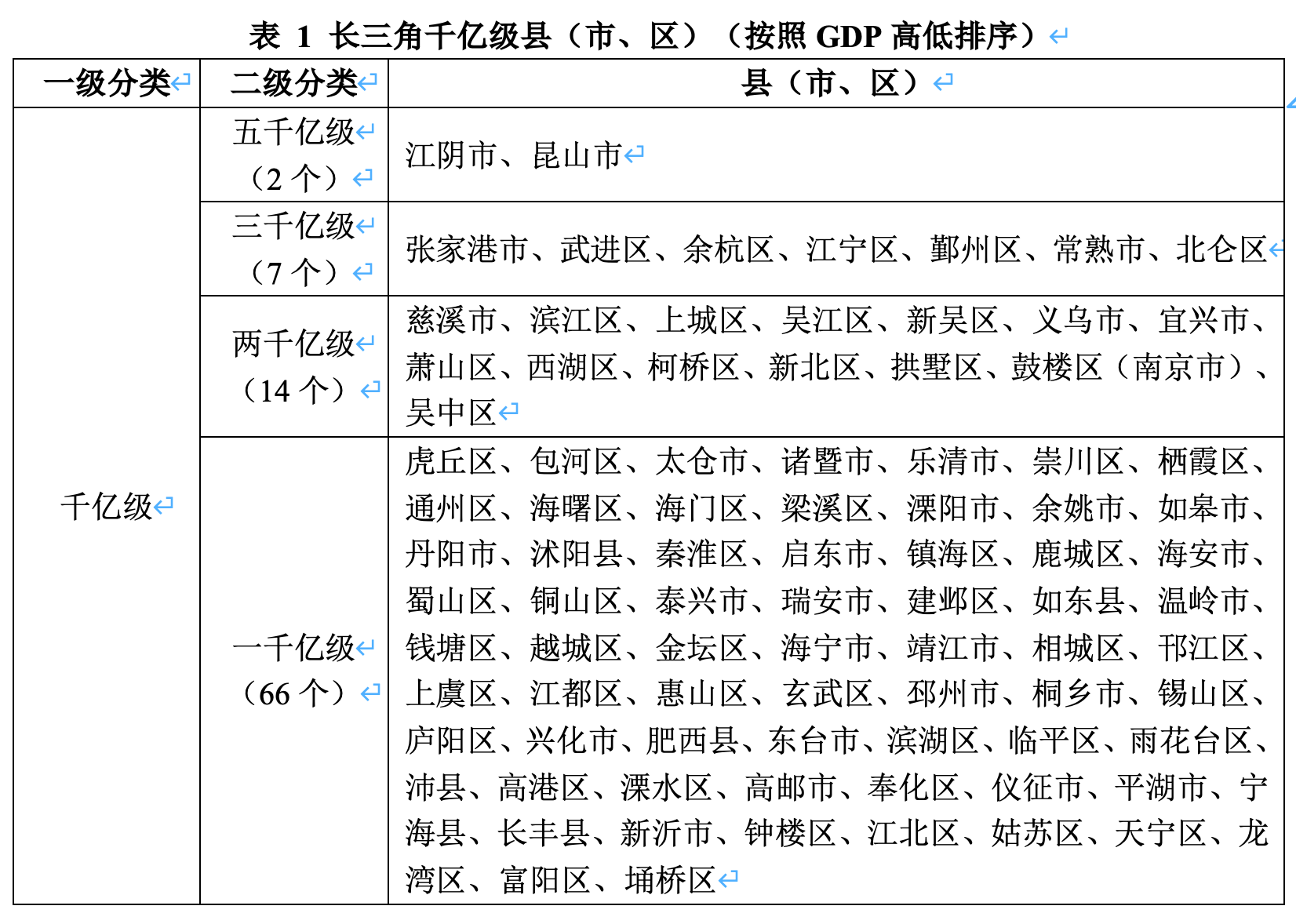
Core Insights - The Yangtze River Delta (YRD) region is experiencing a competitive and dynamic economic landscape, particularly among counties and districts with GDP exceeding 100 billion yuan, contributing significantly to regional and national economic development [1][12] - In 2024, the total GDP of the YRD is projected to surpass 33 trillion yuan, with all 41 prefecture-level cities achieving GDPs over 100 billion yuan [1][12] Distribution of GDP Levels - The YRD's 289 counties (cities, districts) exhibit a "thousand-hundred-ten" distribution pattern, with 89 counties exceeding 100 billion yuan, 195 counties exceeding 10 billion yuan, and 5 counties in the billion yuan range [2] - Among the 500 billion yuan level, there are 2 counties: Kunshan and Jiangyin, with GDPs of 538.02 billion yuan and 512.61 billion yuan respectively, leading the national rankings [2][3] - The 300 billion yuan level includes 7 counties, with Zhangjiagang and Wujin districts showing strong performance, each exceeding 330 billion yuan in GDP [3] - The 200 billion yuan level consists of 14 counties, with notable contributions from Cixi and Hangzhou High-tech Zone, both nearing 300 billion yuan [4] - The 100 billion yuan level includes 66 counties, with Suzhou High-tech Zone approaching 200 billion yuan [4] Economic Characteristics - The average GDP of counties and districts indicates that county-level cities outperform urban districts, with average GDPs of 1.38 billion yuan for county-level cities, 1.003 billion yuan for urban districts, and 485.9 million yuan for counties [6] - The YRD's per capita GDP is projected to reach 139,400 yuan in 2024, nearing the threshold for developed economies [7] Urban Agglomeration and Integration - A significant concentration of the 89 counties with GDPs over 100 billion yuan is found in six major urban agglomerations, with 77 of them located in these areas, highlighting the region's collaborative development [10][11] - The recent policy initiatives aim to enhance urban integration and collaborative development within the YRD, transitioning from infrastructure connectivity to institutional alignment [10][12] Conclusion - The YRD's counties and districts are positioned as key players in regional economic development, with a focus on enhancing collaboration and integration to drive high-quality growth [12]
商务发布|2025第四届山东跨境电商交易会10月在烟台举办
Qi Lu Wan Bao· 2025-10-21 10:39
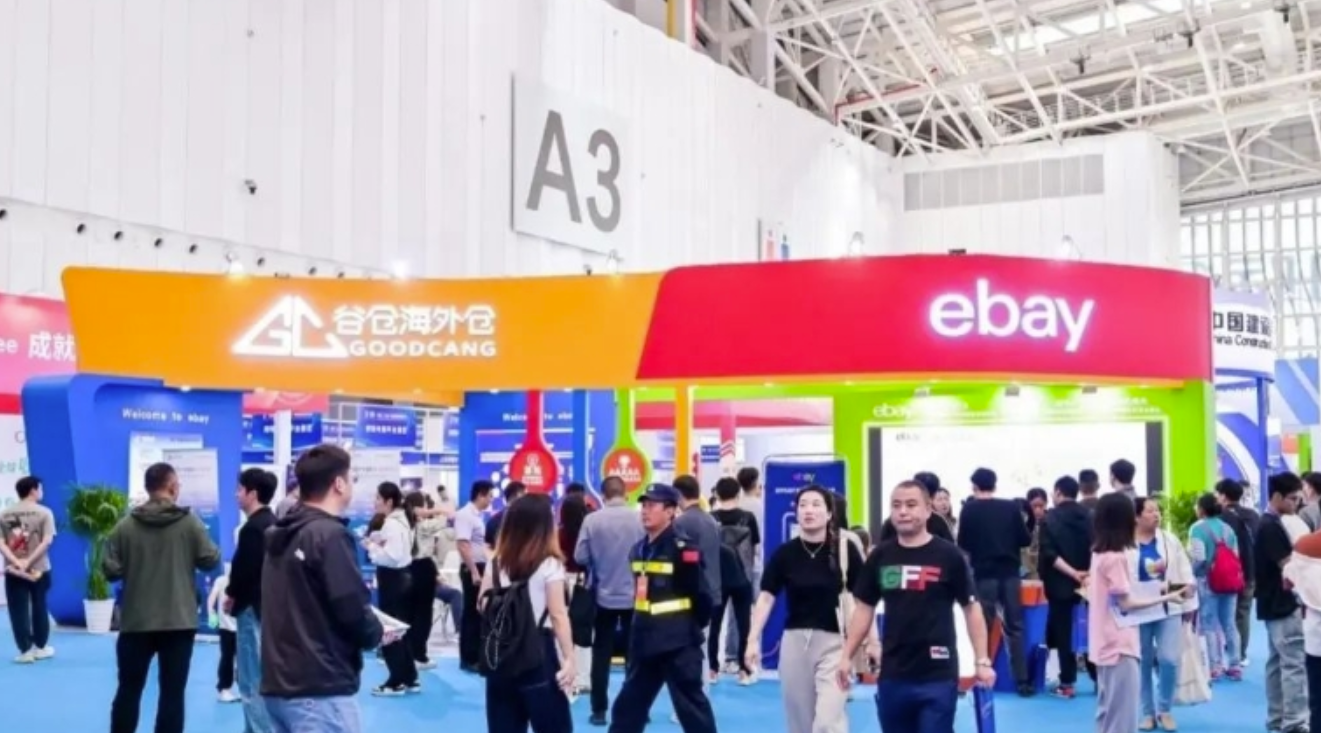
Core Viewpoint - The Fourth Shandong Cross-Border E-Commerce Trade Fair will be held from October 24 to 26, 2025, in Yantai, aiming to implement the Shandong Province Cross-Border E-Commerce Leap Development Action Plan [1] Group 1: Event Overview - The Shandong Cross-Border E-Commerce Trade Fair is the first provincial-level professional exhibition in northern China, successfully held three times since its inception in 2022, with a cumulative exhibition area exceeding 72,000 square meters and over 110,000 participants, generating an intended transaction amount of nearly 820 million USD [3] - The upcoming fair will feature a theme of "Selecting Products from Shandong, Connecting Globally," with an exhibition area exceeding 20,000 square meters and an expected participation of over 800 enterprises and 60,000 visitors [3] Group 2: Participating Entities and Products - The trade fair will invite over 100 characteristic industrial belt workstations from 16 cities, showcasing a diverse range of products including home goods, small appliances, pet supplies, toys, fashion accessories, and more, highlighting the depth and innovation of Shandong's manufacturing industry [4] - Notable global cross-border e-commerce platforms and leading service providers such as Amazon Global Store, eBay, Alibaba International Station, and Shopee will participate, covering essential nodes in the cross-border e-commerce supply chain [3][4] Group 3: Additional Activities - The event will host various forums and discussions, including the Shandong Cross-Border E-Commerce Industry Development Forum, specialized sessions for Amazon and Alibaba, and a high-end dinner event, aimed at fostering collaboration and knowledge sharing among participants [4] - The trade fair is positioned to play a significant role in reshaping international trade links amid profound changes in the global trade landscape, with predictions indicating that global e-commerce penetration will exceed 25% by 2025, unlocking trillion-dollar market opportunities [4]