工控主板

Search documents
全产业链企业组团招聘!低空经济等热门行业人才需求旺
Sou Hu Cai Jing· 2025-12-28 15:08
Group 1 - The core viewpoint of the article highlights the strong demand for talent across various advantageous industries in Guangdong, with a new trend of full industry chain enterprises recruiting together [1] - The recruitment initiatives in 21 cities, including Guangzhou, Dongguan, and Huizhou, aim to match local advantageous industries with talent needs, particularly in hot sectors like new energy, new materials, biopharmaceuticals, and low-altitude economy [3] - A new materials company reported an increase in recruitment needs from 600 positions last year to 800 this year, indicating a growing demand for skilled workers [5] Group 2 - The CEO of Zhilian Recruitment noted that the low-altitude economy data on their platform has increased by 4.7 times compared to last year, showcasing significant growth in this sector [7] - The recruitment fair introduced a "chain master enterprise zone," where eight well-known chain master companies collaborated with over 80 upstream and downstream supply chain enterprises to demonstrate the full-chain talent demand of industrial clusters [9] - A human resources manager from a new energy vehicle company mentioned that they brought together 13 chain master enterprises, offering a total of 1,000 positions across various components, including cockpit, headlights, and body structures [11] Group 3 - The upcoming APEC summit in Shenzhen in 2026 has prompted the recruitment fair to set up an "APEC talent docking service zone," focusing on providing quality positions for foreign and returning talents [13] - A chief recruitment officer from an industrial control mainboard production company stated they have nearly 30 quality positions available for graduates from overseas prestigious universities, reflecting a significant demand [15]


工控主板隐形冠军信步科技:过去10个月销量同比增长60%
Zhong Guo Jing Ying Bao· 2025-09-29 09:53
Core Insights - Humanoid robots and embodied intelligence are currently popular sectors, with Seavo Technology showcasing over a hundred industrial control motherboard products at the 25th China International Industry Fair [1] - Seavo Technology, a hidden champion in the industrial control motherboard field, has an annual sales volume of 1.5 million units [1] - The global industrial control machine market is projected to grow from approximately $2.093 billion in 2024 to $3.36 billion by 2031, with a CAGR of 7.1% from 2025 to 2031 [3] Company Overview - Seavo Technology, established in 2003, has been focused on motherboard research and innovation for over 30 years, serving numerous leading enterprises across various industries globally [1] - The company has a significant client base, including over 100 listed companies and more than 10 Fortune 500 companies, with clients such as Siemens, Nokia, and Huawei [1] - Seavo Technology is recognized as a national-level specialized and innovative small giant enterprise, holding over 10% market share in its niche [4] Market Dynamics - The competition in the industrial control market has evolved, requiring companies to increase personnel and expenditures [1] - The ARM architecture industrial control machine holds the largest market share at approximately 66%, with industrial automation being the primary application area, accounting for about 64% of the market [3] - Major global manufacturers are concentrated in China and Europe/North America, with the top four companies holding around 40% of the market share [3] Product and Innovation - Seavo Technology has developed a hardware development platform, HB03, in collaboration with Intel, which integrates AI computing and motion control capabilities [2] - The company has seen a 60% year-on-year increase in industrial control motherboard sales over the past ten months [4] - Seavo Technology aims to achieve an ambitious sales target of 10 million units annually by 2025, capitalizing on the growth opportunities presented by AI and robotics [4]
70B模型能当零售业区域经理!小模型加速端侧落地,芯片不一定要GPU
Di Yi Cai Jing· 2025-06-04 08:47
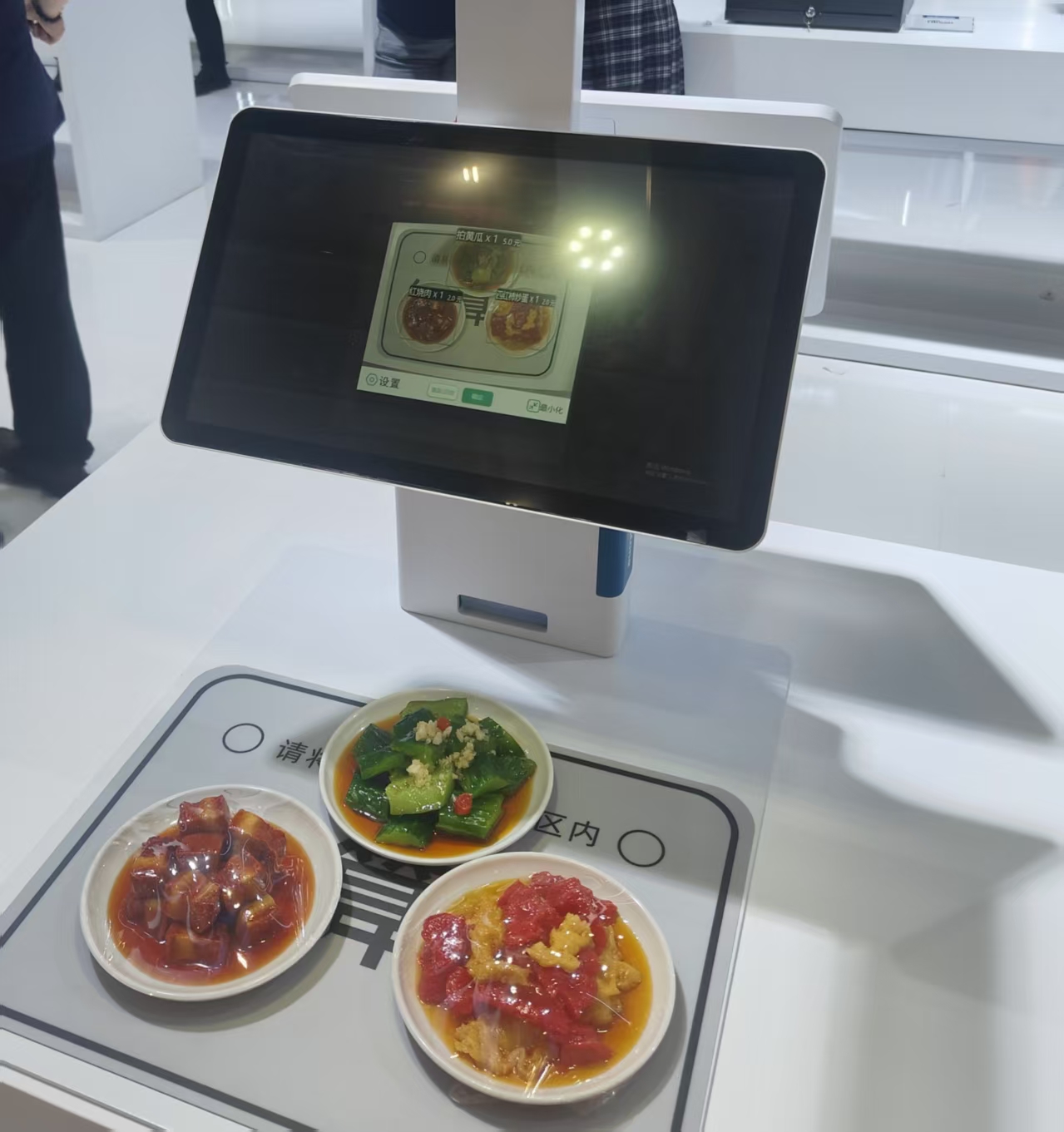
Core Insights - The retail industry is increasingly adopting AI applications, with smaller models being utilized for various tasks such as customer flow prediction and product inspection [2][3][5] - The cost of implementing AI models in retail can be significantly reduced, with 14B models costing around 10,000 yuan when using GPUs, and even lower costs achievable with CPUs [1][8][9] - The trend towards model miniaturization allows for effective AI deployment in edge scenarios, where high-performance GPUs are not always necessary [2][8] Group 1: AI Model Applications in Retail - Smaller AI models (8B to 70B parameters) are being used for tasks like customer flow prediction, product inspection, and simple report analysis [2][3] - AI applications in retail have evolved from basic functions like automatic product recognition to more complex tasks such as self-service loss prevention [3][5] - The introduction of AI in retail is driven by the redundancy of computing power in existing systems, allowing for the integration of AI without significant hardware upgrades [3][5] Group 2: Cost and Efficiency of AI Implementation - The cost of deploying AI models in retail is becoming more manageable, with 14B models costing around 10,000 yuan and 32B models offering a good balance of cost, efficiency, and accuracy [8][9] - Retailers are exploring the use of consumer-grade GPUs and CPUs for running smaller models, reducing the need for expensive hardware [8][9] - The implementation of AI in retail can lead to significant cost savings, with estimates suggesting that using AI can reduce operational costs for staff [8][9] Group 3: Future Trends in AI and Chip Technology - The development of edge computing capabilities is expected to enhance the performance of AI applications in retail, with ongoing advancements in CPU technology [9][10] - The market for AI in retail is anticipated to grow, with different CPU manufacturers competing for market share, particularly in the context of energy efficiency and performance [10] - The integration of AI into retail operations is seen as a transformative trend, with potential for new functionalities and improved customer experiences [7][10]