情绪疗愈

Search documents
2026年大健康新趋势风向洞察报告-数说故事
数说Social Research· 2026-03-07 06:35
Investment Rating - The report does not explicitly state an investment rating for the health industry, but it highlights significant growth opportunities and trends that suggest a positive outlook for investment in this sector. Core Insights - Health demand is undergoing a comprehensive upgrade, with a shift from passive response to proactive management of health concerns, focusing on convenience, scientific approaches, and holistic well-being [5]. - Six major trends identified include: 1) Comprehensive sleep health management 2) Scientific weight management and nutritional balance 3) Disease prevention and chronic disease management 4) Emotional and psychological healing 5) Integration of traditional and lightweight health practices 6) Technology empowerment for health of special populations [5]. - Eight key insights reveal emerging areas such as social emotional healing, quality upgrades in senior health, precise interventions in metabolic health, rehabilitation and post-operative recovery, traditional Chinese medicine adjustments, skin health maintenance, chronic disease and metabolic health sectors, and mind-body synergy [5]. Summary by Relevant Sections Research Background Assessment - The research is conducted by DataStory, a leading data intelligence and AI marketing technology company established in 2015, providing insights and services to over 1000 top brands globally [3]. - The report covers a ten-year market trend from 2015 to 2025, with a focus on social media trends in 2025 and projections for 2026 [3]. Scope and Boundaries - The report encompasses the entire health sector, including health foods, AI healthcare, health management, chronic disease prevention, sleep health, weight management, emotional healing, senior health, rehabilitation, traditional Chinese medicine, skin health, and metabolic health [4]. - The geographical focus is on mainland China, covering first and second-tier cities as well as emerging markets in lower-tier cities [4]. - The target demographic includes consumers of all ages, with particular attention to young adults (under 30), seniors, women, children, and special populations [4]. Key Data Capture and Presentation - By 2025, the AI healthcare market in China is projected to reach 115.7 billion yuan, with an annual growth rate of 18.9% [8]. - The report highlights significant social media engagement around health topics, with discussions on nutrition and women's health reaching hundreds of millions of views [8]. - Health demand metrics show substantial growth in areas such as skin health (+29.0%), cardiovascular health (+45.0%), metabolic issues (+114%), and thyroid health (+58.8%) [8].
艺恩数据:2026年“情绪疗愈”消费市场趋势盘点报告
Sou Hu Cai Jing· 2026-01-06 01:06
Core Insights - The report highlights the rising trend of the "emotional healing" consumption market, driven by modern societal pressures and the shift from "pleasing others" to "self-care" [1][6] - The emotional healing economy is projected to grow at a compound annual growth rate (CAGR) of 25.6%, with over half of young consumers willing to pay for emotional value [1][14] Market Overview - The emotional healing market is becoming a new consumption engine, permeating various daily life scenarios as individuals seek to alleviate anxiety and stress [1][6] - Social media mentions related to emotional healing increased by 17% in 2025 compared to the previous year, indicating growing consumer interest [10] Consumer Segmentation - The core consumer groups are categorized into three types: - 42% are "Instant Emotion Escapers," primarily Gen Z (ages 18-28), favoring low-cost, quick stress relief methods like blind boxes and stress toys [2][25] - 33% are "High-Pressure Sustainers," aged 28-45, seeking efficient and professional healing solutions such as incense and meditation [2][25] - 25% are "Spiritual Nomads," individuals over 25 who prefer deep experiences like concerts and art exhibitions for emotional resonance and self-exploration [2][25] Consumption Trends - The market is witnessing a shift from "functional consumption" to "sensory system reconstruction," with products related to sensory healing, body healing, and attention healing gaining popularity [2][20] - Emotional value is becoming an "invisible price" across various industries, expanding the "healing+" scenarios that encompass space, technology, and content [2][21] Marketing Insights - Marketing strategies are evolving, with significant growth in emotional healing-related commercial investments on platforms like Xiaohongshu and Douyin, focusing on narrative-driven content and daily life interactions [2][20] - Brands are positioning themselves as emotional providers, utilizing scenario-based marketing to convey joy and transforming technical functions into perceivable emotional experiences [2][21] Consumer Motivations - More than 56% of young consumers are willing to spend on emotional value, primarily motivated by self-pleasure, emotional companionship, and stress relief [17] - The main consumption forms include physical products, experiential consumption, and social relationships, with daily and home settings being the primary healing scenarios [18]


2025年中国情绪疗愈行业研究报告
艾瑞咨询· 2025-09-23 00:03
Core Viewpoint - The emotional healing industry is emerging as a response to increasing mental health issues due to fast-paced lifestyles, with a significant portion of the global population suffering from anxiety disorders [2][3]. Industry Background - The Chinese emotional healing industry is experiencing unprecedented growth opportunities as the government elevates mental health and wellness to a strategic priority [4][11]. - The industry has developed a multi-layered ecosystem involving self-healing, digital platforms, AI psychological healing, and comprehensive offline healing institutions [4][20]. Current Status - The emotional healing industry has established a collaborative ecosystem that integrates user needs, technological innovation, and policy support [20][22]. - The industry is characterized by a diverse range of participants, including self-healing and lifestyle enhancement providers, digital platforms, and offline healing institutions [4][20]. User Insights - A survey of 1,561 respondents revealed that nearly 50% faced anxiety and stress-related issues, with psychological health being the most affected aspect [35][38]. - Users generally have low satisfaction with their emotional management capabilities, with only 11.2% feeling very satisfied [38][59]. Future Outlook - The emotional healing industry is expected to solidify its base among middle to high-income individuals, particularly targeting educated women for service penetration [5][64]. - Technological advancements are driving the industry towards efficiency and service upgrades, reshaping the emotional healing ecosystem [5][67]. - The industry is undergoing a structural upgrade from standardization to intelligence, with a focus on integrating online and offline services [5][73]. Industry Trends - The emotional healing market is witnessing a significant increase in patent applications, with an annual growth rate exceeding 25% over the past five years [9]. - The market is evolving towards a three-tier system of preventive, alleviative, and therapeutic services, incorporating cutting-edge technologies like virtual reality and AI [9][22]. Consumer Behavior - Users are increasingly seeking personalized and lifestyle-oriented emotional healing solutions, with a notable preference for online channels for information [40][45]. - The majority of users invest between 1,001 and 5,000 yuan in emotional healing services, indicating a relatively small consumption gap [47]. Decision Factors - Key decision factors for self-healing and lifestyle enhancement include authority certification and effectiveness, while digital platforms prioritize therapeutic effects and service professionalism [50][53][57].

2025年中国情绪疗愈行业研究报告
艾瑞咨询· 2025-08-31 00:06
Core Insights - The emotional healing industry is emerging as a response to increasing mental health issues due to fast-paced lifestyles and rising stress levels, with 4% of the global population suffering from anxiety disorders according to WHO data [2][3] - The report focuses on the development trajectory of the emotional healing industry in China, analyzing audience demographics and industry trends to provide insights for stakeholders [3][4] Industry Background - The Chinese government has elevated mental health and psychological well-being to a strategic priority, creating unprecedented opportunities for the emotional healing industry [4][11] - The industry has developed a multi-layered ecosystem with participants from self-healing, lifestyle enhancement, digital platforms, AI psychological healing, and comprehensive offline healing institutions [4][20] User Insights - A survey of 1,561 respondents revealed that nearly 50% faced anxiety and stress issues in the past year, with psychological health being the most affected aspect [35][38] - Users show a preference for emotional healing methods that focus on sleep, stress relief, and relaxation, with a trend towards personalized and lifestyle-oriented solutions [40][42] Future Trends - The emotional healing industry is expected to solidify its base among middle to high-income individuals, particularly targeting educated women for service penetration [65] - Technological advancements are driving the industry towards efficiency and service upgrades, reshaping the emotional healing ecosystem [68] - The industry is evolving through three stages: standardization, collaboration, and intelligence, with a focus on integrating online and offline services by 2030 [71] Industry Characteristics - The emotional healing market is characterized by high financing activity, with leading companies completing multiple funding rounds, indicating strong investor confidence [24] - The market is transitioning from single-service offerings to an ecosystem approach, emphasizing both technological empowerment and personalized services [24][68] User Demographics - High-educated women are identified as a key demographic, showing high awareness but low penetration of professional services, indicating a growth opportunity [65][27] - Young men aged 18-35, particularly in second-tier cities, face significant emotional challenges, highlighting the need for market education [30][65]

2025年中国情绪疗愈行业研究报告
艾瑞咨询· 2025-08-16 00:07
Core Insights - The emotional healing industry is emerging as a response to increasing mental health issues, with 4% of the global population suffering from anxiety disorders according to WHO data [2][3] - The report focuses on the development trajectory of the emotional healing industry in China, identifying audience demographics and industry trends to provide insights for stakeholders [3][4] Industry Background - The Chinese government has elevated mental health and psychological well-being to a strategic priority, creating unprecedented opportunities for the emotional healing industry [4][6] - The industry has developed a multi-layered ecosystem involving self-healing, digital platforms, AI psychological healing, and comprehensive offline healing institutions [4][20] User Insights - A survey of 1,561 respondents revealed that nearly 50% faced anxiety and stress issues, with 52.79% reporting mental health deterioration as a primary consequence [35][38] - The emotional healing market shows a significant user interest, with 70% of users focusing on sleep, stress relief, and relaxation [40][59] Development Trends - The emotional healing industry is predicted to solidify its base among middle to high-income individuals, particularly targeting educated women for service penetration [5][65] - Technological advancements are driving the industry into a dual upgrade phase of efficiency and service, reshaping the emotional healing ecosystem [5][68] - The industry is evolving through three stages: standardization, collaboration, and intelligence, which will drive comprehensive development for enterprises [5][71] Market Characteristics - The emotional healing market is characterized by high financing activity, with leading companies completing multiple funding rounds, indicating strong investor confidence [24] - The market is transitioning from single services to an ecological, full-chain model, emphasizing both technological empowerment and personalized services [24][68] Consumer Behavior - Users generally invest between 1,001 to 5,000 yuan in emotional healing services, with a focus on immediate relief and long-term interventions [47][42] - The decision-making process for self-healing and lifestyle enhancement is influenced by authority certification and effectiveness, while digital platforms prioritize therapeutic outcomes and service professionalism [50][53] Satisfaction and Expectations - Approximately 54.7% of users express satisfaction with emotional healing measures, with lifestyle products receiving the highest satisfaction ratings at 70.1% [59][62] - Users expect improved services and effective outcomes from emotional healing methods, indicating a significant area for industry growth [62][68]

2025年中国情绪疗愈行业政策、产业链、市场规模、专利技术、竞争格局及行业发展趋势研判:市场规模将进一步增长,21-40岁的人群占比显著[图]
Chan Ye Xin Xi Wang· 2025-08-14 01:26
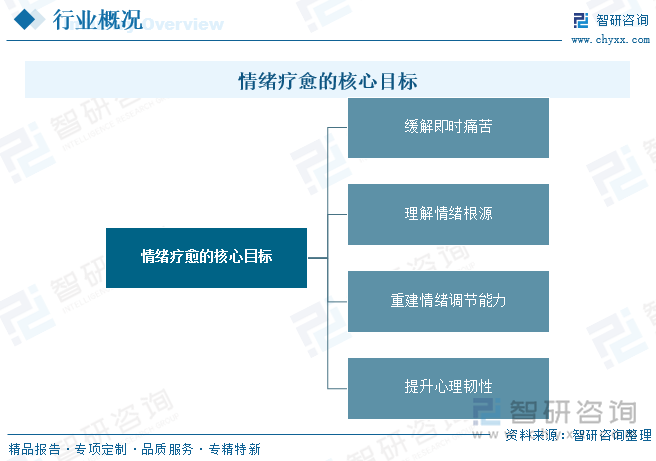
Core Viewpoint - Emotional healing is a gradual process aimed at repairing inner trauma and restoring emotional balance, focusing on individual emotional trauma recovery through scientific and personalized methods [1][6][22] Emotional Healing Industry Definition and Methods - Emotional healing is a psychological intervention that helps individuals release repressed emotions such as anxiety, depression, anger, and sadness, ultimately achieving emotional health and stability [1][6] - Common emotional healing methods include psychological healing, physical healing, spiritual healing, artistic healing, and environmental healing [4] Current Development of the Emotional Healing Industry - The emotional health issue has gained significant attention due to the accelerated pace of life and increased psychological pressure [6] - The government has elevated mental health and psychiatric care to a strategic level, implementing various policies that create a favorable external environment for the emotional healing industry [6][8] Market Size and Growth - The global health/healing economy reached $6.3 trillion in 2023, with projections to grow to $7 trillion by 2025 [1][8] - China plays a crucial role in this growth, with the emotional healing economy expected to reach ¥10 trillion in 2024 and further increase to ¥13.45 trillion by 2025 [1][8] Consumer Demographics - The demand for healing services is evident across various age groups, particularly among individuals aged 21-30 (51.36%) and 31-40 (34.45%) [10] - The emotional healing economic investment in China is primarily concentrated in the range of ¥1,001 to ¥5,000, followed by ¥5,001 to ¥10,000 [12] Emotional Healing Industry Value Chain - The upstream of the emotional healing industry includes lifestyle products, natural therapy products, and massage sleep aids [15] - The midstream consists of self-healing and external healing, with online platforms and offline services providing comprehensive solutions [15] Patent Technology in the Emotional Healing Industry - The number of patents in the emotional healing sector has been on the rise, with a total of 912 patents filed in China from 2014 to 2024, and an annual growth rate of over 25% in the last five years [17] Competitive Landscape of the Emotional Healing Industry - The emotional healing market in China features a diverse competitive landscape, including professional psychological consulting institutions, healing organizations, online platforms, and emerging brands [19] - Major brands in the industry include Simple Psychology, 壹心理, KnowYourself, and others [19] Future Trends in the Emotional Healing Industry - Emotional healing is evolving into a lifestyle attitude, integrating traditional medicine with modern scientific concepts [22] - The industry is expected to leverage technologies like AI and VR for personalized emotional healing solutions and expand community-based services [22]
2025年中国情绪疗愈行业研究报告
艾瑞咨询· 2025-07-24 02:41
Core Insights - The emotional healing industry is emerging as a response to increasing mental health issues, with 4% of the global population suffering from anxiety disorders, highlighting a growing demand for emotional value and solace [2][3] - The report focuses on the development trajectory of the emotional healing industry in China, identifying audience demographics and industry trends to provide insights for stakeholders [2][3] Industry Background - The Chinese government has elevated mental health and wellness to a strategic priority, creating unprecedented opportunities for the emotional healing industry [3][7] - The industry has developed a multi-layered ecosystem with participants from self-healing, digital platforms, AI therapy, and comprehensive offline healing institutions [3][18] User Insights - A survey of 1,561 individuals who used emotional healing products/services revealed insights into user demographics, emotional healing awareness, consumption behavior, and future expectations [3][10] - The emotional healing market is characterized by a significant demand for psychological health services, with a low mental health literacy rate among the population, particularly among youth [10][41] Future Outlook - The emotional healing industry is expected to solidify its base among middle to high-income individuals, particularly targeting educated women for service penetration [4][69] - Technological advancements are driving the industry towards efficiency and service upgrades, reshaping the emotional healing ecosystem [4][72] - The industry is evolving through three stages: standardization, collaboration, and intelligence, which will drive comprehensive development for leading enterprises [4][76] Industry Ecosystem - The emotional healing industry has established a dual-loop ecosystem, integrating user needs, technological innovation, and policy support to create a complete industry cycle [18][20] - The industry comprises three core segments: self-healing and lifestyle enhancement, digital platforms and AI therapy, and offline healing institutions, all working in synergy to promote professional, intelligent, and scenario-based development [20][23] User Demographics - High-educated women are a key demographic, showing high satisfaction with emotional healing services but with a gap in professional service penetration [26][69] - Young male users, particularly in urban areas, face significant emotional challenges, indicating a need for market education to improve awareness and satisfaction [29][69] Emotional Challenges - Nearly 50% of users report experiencing anxiety and stress, with significant impacts on mental health, sleep quality, and overall well-being [35][38] - Emotional management satisfaction is low, with interpersonal relationships, personal traits, and long-term stress being primary triggers for emotional issues [38][41] Healing Methods - Users actively engage in emotional healing through immediate relief and long-term intervention strategies, with a focus on self-care and professional services [45][63] - The majority of users learn about emotional healing through online channels, indicating a shift towards digital platforms for mental health resources [48][51] Investment Trends - The emotional healing market is experiencing high investment activity, with leading companies securing multiple funding rounds, reflecting confidence in the mental health sector [23][69]

2025年中国情绪疗愈行业研究报告
艾瑞咨询· 2025-07-16 09:49
Core Insights - The emotional healing industry is emerging as a response to increasing mental health issues, with 4% of the global population suffering from anxiety disorders, highlighting a growing demand for emotional value and solace [2][3] Industry Background - The Chinese emotional healing industry is experiencing unprecedented growth opportunities as mental health and wellness are elevated to a strategic priority by the government [3][7] - The industry has developed a multi-layered ecosystem with participants from self-healing, digital platforms, AI therapy, and comprehensive offline healing institutions [3][18] User Insights - A survey of 1,561 individuals who consumed emotional healing products/services revealed insights into user demographics, emotional healing awareness, consumption behavior, and future expectations [3][10] - The emotional healing market is characterized by a significant demand for mental health literacy improvement, with only 6.4% of adolescents meeting the standards [10][13] Development Trends - The emotional healing industry is predicted to solidify its base among middle to high-income individuals, particularly focusing on high-educated women [4][68] - Technological advancements are driving the industry into a dual upgrade phase of efficiency and service, reshaping the emotional healing ecosystem [4][71] - The industry is evolving through three stages: standardization, collaboration, and intelligence, which will drive comprehensive development for leading enterprises [4][75] User Demographics - High-educated women show a high awareness of emotional healing services (79.4%) but have low penetration rates for professional services, indicating a gap between recognition and behavior [26][68] - Young men aged 18-35, primarily from second-tier cities, face significant emotional challenges, with a high prevalence of anxiety and stress [29][35] Emotional Issues - Nearly 50% of users reported experiencing anxiety and stress, with psychological health being the most affected aspect [35][38] - Users generally express low satisfaction with their emotional management capabilities, with only 11.2% feeling very satisfied [38][41] Healing Methods - Users engage in both immediate relief and long-term intervention strategies to achieve emotional balance, with a significant portion utilizing natural therapy products [45][62] - The primary channels for understanding emotional healing methods are online platforms, accounting for 73.9% of user awareness [48][51] Investment and Spending - The majority of users invest between 1,001 to 5,000 yuan in emotional healing services, indicating a relatively small spending gap across different user segments [51][52] Decision Factors - Users prioritize authoritative certification and effectiveness when choosing self-healing and lifestyle enhancement products, with significant variations in decision-making across different product categories [53][56] - Professionalism is the key factor for selecting offline healing institutions, with a strong emphasis on service quality and medical backing for psychological consultations [59][62]