数字制造业

Search documents
全球金融论坛 | 证监会原主席肖钢:三个方面入手破解数字经济发展堵点
Zhong Guo Jing Ying Bao· 2025-05-19 22:15
Core Insights - The digital economy in China has shown strong growth in the first quarter of 2023, with core industries growing at over 10%, significantly outpacing GDP growth [2] - The development of digital finance is also robust, with the emergence of AI models like DeepSeek enhancing financial efficiency and customer experience [2][3] Group 1: Digital Economy Growth - In Q1 2023, the digital economy's core industries maintained a growth rate of over 10%, with digital manufacturing value-added increasing by 11.5% year-on-year, surpassing the growth rates of traditional industrial and high-tech manufacturing sectors [2] - The digital services sector has also experienced double-digit growth, exceeding the overall service sector growth by 5 percentage points [2] - Eastern regions of China are leading in digital economy development, contributing over 90% of revenue and net profit from A-share listed companies in core industries [2] Group 2: Digital Finance Development - Digital finance has two notable characteristics in Q1 2023: financial institutions are focusing on cost-effective investments while enhancing talent acquisition and training [3] - The securities industry has the highest investment intensity in financial technology among all financial sub-sectors, with increased emphasis on return on investment [3] - Financial data market construction is deepening, with institutions working on policies and infrastructure to activate data elements and enhance data circulation [3] Group 3: Policy and Strategic Recommendations - The development of the digital economy aims to improve the efficiency of the real economy, necessitating deeper integration between digital and traditional sectors [4] - Recommendations include improving the digital economy ecosystem, accelerating the establishment of governance frameworks for generative AI in finance, and building a high-quality financial data market [4] - Key actions involve fostering a cooperative ecosystem among technology, industry, and finance, and addressing constraints in digital consumption [4]
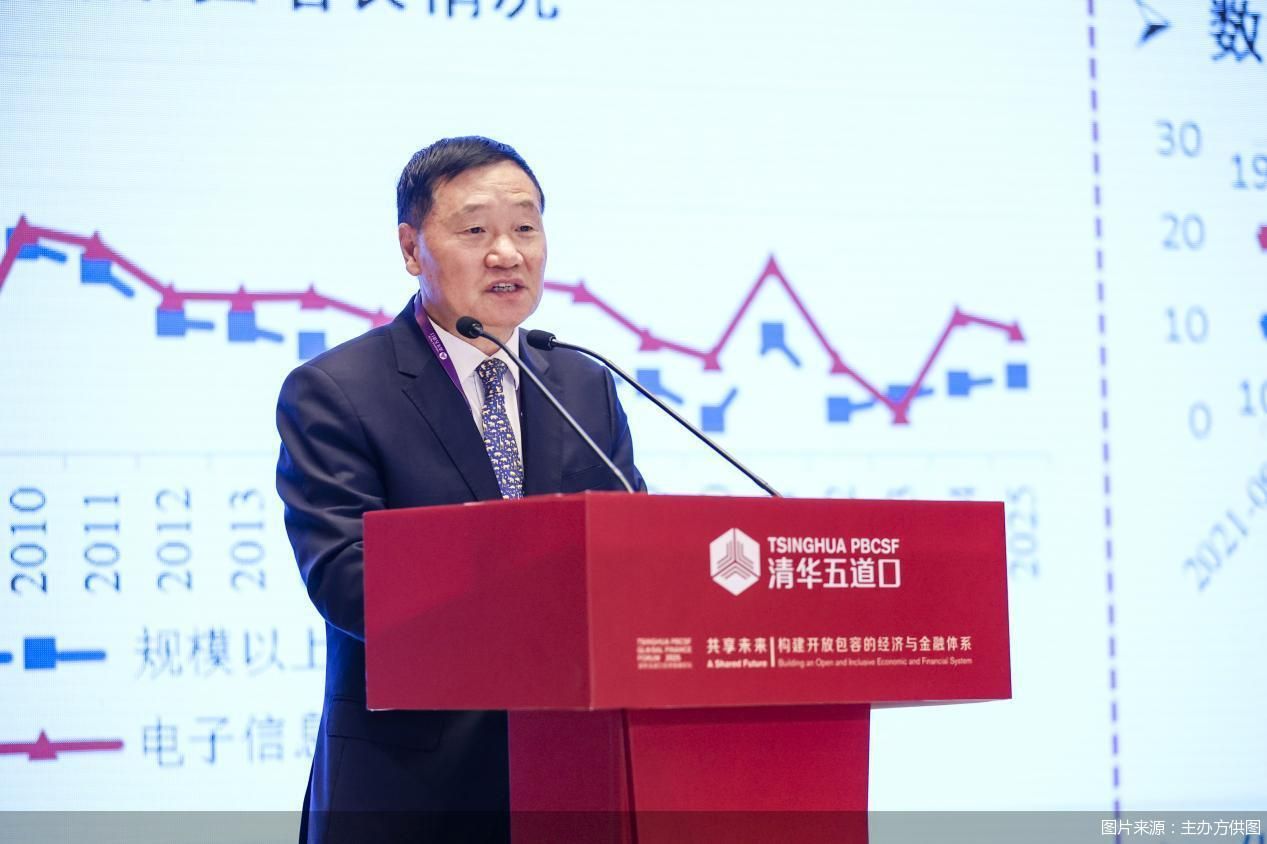
肖钢:数字经济核心产业增势良好,增长速度保持在10%以上
2 1 Shi Ji Jing Ji Bao Dao· 2025-05-18 12:36
Group 1 - The core viewpoint of the article highlights the robust growth of China's digital economy in the first quarter of this year, with core industries experiencing over 10% growth [1] - The digital manufacturing sector saw a year-on-year increase of 11.5%, surpassing the growth rates of traditional industrial and high-tech manufacturing sectors [1] - Investment in the core industries of the digital economy also achieved double-digit growth, particularly in electronic information manufacturing and information services, which grew by 10.1% and 10.5% respectively [1] Group 2 - The eastern region of China leads in the digital economy, with A-share listed companies in this area contributing over 90% of the national revenue and net profit in the first quarter [2] - The digital finance sector is thriving, with many financial institutions integrating AI models like DeepSeek, enhancing the capabilities of small and medium-sized financial entities [2] - There is a trend of financial institutions being more strategic with their technology investments, focusing on cost-effectiveness while also accelerating the development of technology talent [2] Group 3 - Recommendations for the future of the digital economy and digital finance include promoting deeper integration with the real economy and fostering a cooperative ecosystem among technology, industry, and finance [3] - There is a need to establish a governance framework for generative AI applications in finance, focusing on risk management related to AI misuse [3] - Building a high-quality financial data market is essential, exploring theoretical and practical pathways for data ownership, pricing, valuation, and circulation [3]
2025五道口金融论坛|肖钢:推动金融行业严格执行AI算法备案制度
Bei Jing Shang Bao· 2025-05-18 10:20
Core Viewpoint - The development of the digital economy and digital finance is progressing positively, with a strong emphasis on the integration of artificial intelligence (AI) in financial applications and the need for governance in this area [1][6][7]. Group 1: Digital Economy Growth - The digital economy showed a strong performance in Q1, with core industries growing over 10%, significantly outpacing GDP growth [3]. - The digital manufacturing sector's value added increased by 11.5%, surpassing the growth rates of the overall industrial and high-tech manufacturing sectors [3]. - Digital services, particularly in information transmission, software, and IT services, achieved double-digit growth, exceeding the overall service sector growth by 5 percentage points [3]. Group 2: Investment Trends - Investment in core digital economy industries surged, driven by policies and recovering market demand, with fixed asset investment growing by 4.2% year-on-year, an increase of 1 percentage point from the previous year [3]. - High-tech industry investment rose by 6.5%, significantly higher than the national fixed asset investment growth rate [5]. - Investment in digital economy core industries also saw double-digit growth, with electronic information manufacturing and information services increasing by 10.1% and 10.5%, respectively [5]. Group 3: Digital Consumption - Digital consumption is on the rise, with online food consumption growing faster than overall consumption, and the "trade-in" model boosting online sales [4]. - The rapid development of digital service consumption is notable, driven by innovations in digital technology and new consumption scenarios created through the internet and AI [4]. Group 4: Financial Institutions' Investment Strategies - Financial institutions are becoming more strategic in their technology investments, focusing on cost-effectiveness and the return on investment [5]. - The banking sector's technology investment growth has slowed, while the securities sector has increased its investment intensity, reflecting a shift in focus towards rational investment [5]. Group 5: Governance of AI in Finance - There is a need to establish a governance framework for generative AI applications in finance, including strict adherence to AI algorithm registration systems [6][7]. - The importance of matching AI models to specific financial scenarios is emphasized, alongside the need to address risks associated with AI misuse [7]. - The construction of a high-quality financial data market is essential, focusing on data ownership, pricing, and circulation [7][8].