数字服务业

Search documents
这个小城,挤进杭州都市圈
3 6 Ke· 2025-12-30 02:45
Core Viewpoint - The Hangzhou-Quzhou High-Speed Railway, which officially opened on December 26, 2023, is expected to significantly enhance connectivity between Hangzhou and Quzhou, reducing travel time from over one hour to approximately 40 minutes, thereby promoting regional integration and economic development [1][5]. Group 1: Infrastructure and Investment - The Hangzhou-Quzhou High-Speed Railway has a total length of 131 kilometers and a design speed of 350 kilometers per hour, with an estimated investment of 23.6 billion yuan, utilizing a "PPP+EPC+construction agency" model [3][4]. - The investment structure involves a 49% contribution from government entities and a 51% contribution from social capital, with Quzhou contributing over 30% of the government share [3]. Group 2: Regional Economic Impact - The railway is seen as a strategic project for Quzhou, which has historically been at a transportation disadvantage, and is expected to restore its status as a transportation hub [4][5]. - The completion of the railway connects Quzhou to the "one-hour commuting circle" of Hangzhou, facilitating labor mobility and industrial collaboration [2][5]. Group 3: Industry Collaboration and Development - Quzhou aims to leverage its cost advantages in land and labor to attract industries from Hangzhou, particularly in the digital economy sector, promoting a model of "R&D in Hangzhou, production in Quzhou" [7][8]. - Since 2021, several major digital economy projects have been established in Quzhou, indicating a successful collaboration between the two cities [8]. Group 4: Future Development Strategies - Quzhou's development strategy emphasizes deepening integration with Hangzhou, focusing on infrastructure connectivity and shared public services [6][9]. - The collaboration is expected to enhance Quzhou's role as a bridgehead for the Yangtze River Delta's outreach to inland provinces, creating more development opportunities [5][9].
光复道街举办企业联欢会 携手共促河北区经济高质量发展
Sou Hu Cai Jing· 2025-12-29 03:40
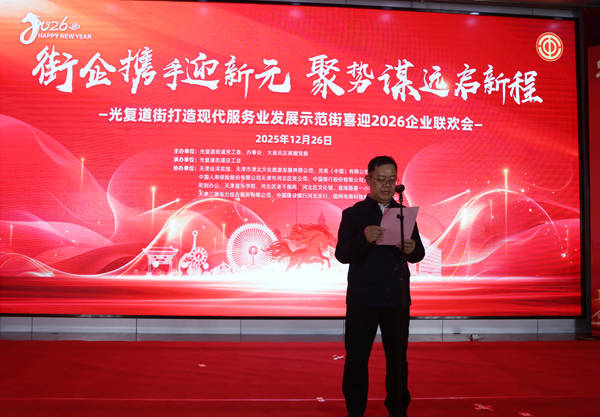
Group 1 - The event "Street-Enterprise Hand in Hand Welcoming the New Year" was held to promote high-quality economic development in Hebei District, with over a hundred representatives from various industries including digital services, shipping, and commerce attending [1][2] - The focus for 2025 is on creating a modern service industry demonstration street, enhancing economic development advantages, and leveraging policy opportunities to revitalize resources and support projects in shipping, commerce, and digital economy [2][3] - The local business association successfully held its second member meeting, completing the election of a new council and emphasizing the importance of attracting quality resources and providing precise services to support enterprises [3][5] Group 2 - The event aimed to foster collaboration among businesses and explore win-win opportunities, contributing to a vibrant commercial atmosphere and improved urban environment [1][2] - The local government and business leaders are committed to enhancing the service capabilities of the area, ensuring a solid foundation for high-quality regional development [2][3] - The new business council is expected to focus on high-quality economic and social development, with a strategic emphasis on "three quantities" and "three new services" to drive growth [3][5]

全球金融论坛 | 证监会原主席肖钢:三个方面入手破解数字经济发展堵点
Zhong Guo Jing Ying Bao· 2025-05-19 22:15
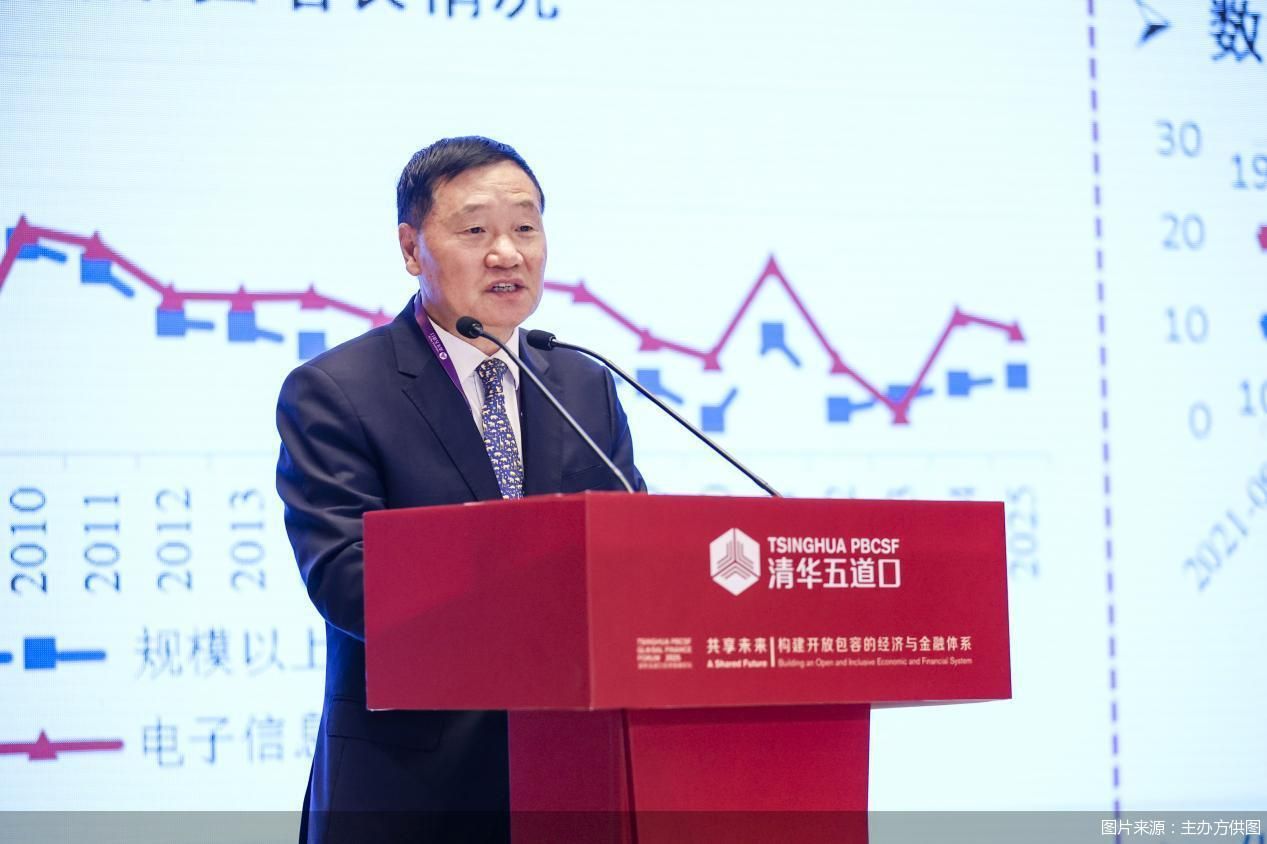
Core Insights - The digital economy in China has shown strong growth in the first quarter of 2023, with core industries growing at over 10%, significantly outpacing GDP growth [2] - The development of digital finance is also robust, with the emergence of AI models like DeepSeek enhancing financial efficiency and customer experience [2][3] Group 1: Digital Economy Growth - In Q1 2023, the digital economy's core industries maintained a growth rate of over 10%, with digital manufacturing value-added increasing by 11.5% year-on-year, surpassing the growth rates of traditional industrial and high-tech manufacturing sectors [2] - The digital services sector has also experienced double-digit growth, exceeding the overall service sector growth by 5 percentage points [2] - Eastern regions of China are leading in digital economy development, contributing over 90% of revenue and net profit from A-share listed companies in core industries [2] Group 2: Digital Finance Development - Digital finance has two notable characteristics in Q1 2023: financial institutions are focusing on cost-effective investments while enhancing talent acquisition and training [3] - The securities industry has the highest investment intensity in financial technology among all financial sub-sectors, with increased emphasis on return on investment [3] - Financial data market construction is deepening, with institutions working on policies and infrastructure to activate data elements and enhance data circulation [3] Group 3: Policy and Strategic Recommendations - The development of the digital economy aims to improve the efficiency of the real economy, necessitating deeper integration between digital and traditional sectors [4] - Recommendations include improving the digital economy ecosystem, accelerating the establishment of governance frameworks for generative AI in finance, and building a high-quality financial data market [4] - Key actions involve fostering a cooperative ecosystem among technology, industry, and finance, and addressing constraints in digital consumption [4]
肖钢:数字经济核心产业增势良好,增长速度保持在10%以上
2 1 Shi Ji Jing Ji Bao Dao· 2025-05-18 12:36
Group 1 - The core viewpoint of the article highlights the robust growth of China's digital economy in the first quarter of this year, with core industries experiencing over 10% growth [1] - The digital manufacturing sector saw a year-on-year increase of 11.5%, surpassing the growth rates of traditional industrial and high-tech manufacturing sectors [1] - Investment in the core industries of the digital economy also achieved double-digit growth, particularly in electronic information manufacturing and information services, which grew by 10.1% and 10.5% respectively [1] Group 2 - The eastern region of China leads in the digital economy, with A-share listed companies in this area contributing over 90% of the national revenue and net profit in the first quarter [2] - The digital finance sector is thriving, with many financial institutions integrating AI models like DeepSeek, enhancing the capabilities of small and medium-sized financial entities [2] - There is a trend of financial institutions being more strategic with their technology investments, focusing on cost-effectiveness while also accelerating the development of technology talent [2] Group 3 - Recommendations for the future of the digital economy and digital finance include promoting deeper integration with the real economy and fostering a cooperative ecosystem among technology, industry, and finance [3] - There is a need to establish a governance framework for generative AI applications in finance, focusing on risk management related to AI misuse [3] - Building a high-quality financial data market is essential, exploring theoretical and practical pathways for data ownership, pricing, valuation, and circulation [3]
2025五道口金融论坛|肖钢:推动金融行业严格执行AI算法备案制度
Bei Jing Shang Bao· 2025-05-18 10:20
Core Viewpoint - The development of the digital economy and digital finance is progressing positively, with a strong emphasis on the integration of artificial intelligence (AI) in financial applications and the need for governance in this area [1][6][7]. Group 1: Digital Economy Growth - The digital economy showed a strong performance in Q1, with core industries growing over 10%, significantly outpacing GDP growth [3]. - The digital manufacturing sector's value added increased by 11.5%, surpassing the growth rates of the overall industrial and high-tech manufacturing sectors [3]. - Digital services, particularly in information transmission, software, and IT services, achieved double-digit growth, exceeding the overall service sector growth by 5 percentage points [3]. Group 2: Investment Trends - Investment in core digital economy industries surged, driven by policies and recovering market demand, with fixed asset investment growing by 4.2% year-on-year, an increase of 1 percentage point from the previous year [3]. - High-tech industry investment rose by 6.5%, significantly higher than the national fixed asset investment growth rate [5]. - Investment in digital economy core industries also saw double-digit growth, with electronic information manufacturing and information services increasing by 10.1% and 10.5%, respectively [5]. Group 3: Digital Consumption - Digital consumption is on the rise, with online food consumption growing faster than overall consumption, and the "trade-in" model boosting online sales [4]. - The rapid development of digital service consumption is notable, driven by innovations in digital technology and new consumption scenarios created through the internet and AI [4]. Group 4: Financial Institutions' Investment Strategies - Financial institutions are becoming more strategic in their technology investments, focusing on cost-effectiveness and the return on investment [5]. - The banking sector's technology investment growth has slowed, while the securities sector has increased its investment intensity, reflecting a shift in focus towards rational investment [5]. Group 5: Governance of AI in Finance - There is a need to establish a governance framework for generative AI applications in finance, including strict adherence to AI algorithm registration systems [6][7]. - The importance of matching AI models to specific financial scenarios is emphasized, alongside the need to address risks associated with AI misuse [7]. - The construction of a high-quality financial data market is essential, focusing on data ownership, pricing, and circulation [7][8].