新消费产业

Search documents
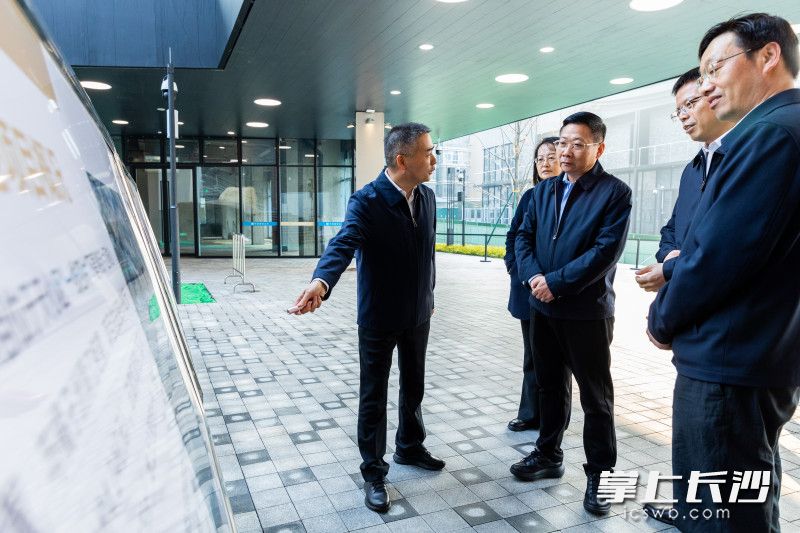
陈博彰在天心区宣讲党的二十届四中全会、省委十二届九次全会精神并开展调研
Chang Sha Wan Bao· 2025-12-07 03:02
Core Viewpoint - The article highlights the efforts of the municipal government in Changsha to promote economic and social development through urban renewal, cultural preservation, and the enhancement of new consumption sectors, emphasizing the importance of integrating various resources and ensuring public safety in education and food management [3][6]. Group 1: Urban Development and Cultural Preservation - The municipal government is focusing on urban organic renewal and the protection of historical culture in the Tianxin District, aiming to revitalize old neighborhoods while benefiting local residents [3]. - Emphasis is placed on planning guidance, cultural heritage preservation, and the integration of diverse new business formats to promote deep integration of culture, commerce, and tourism [3]. Group 2: New Consumption and Economic Growth - The establishment of the Changsha New Consumption Research Institute is noted as the first national platform focusing on new consumption, aiming to enhance data support and resource analysis to empower brand incubation and investment in the new consumption sector [3]. - The government aims to make new consumption a significant driver of economic growth in the city [3]. Group 3: Education and Food Safety - The government is committed to prioritizing education development and expanding quality educational resources to ensure public satisfaction [6]. - There is a strong focus on food safety management within schools, emphasizing a comprehensive approach to procurement, transportation, and meal distribution [6]. Group 4: Digital Economy Development - The government is actively promoting the development of the digital economy by enhancing the functionality of data markets and fostering collaborative efforts among provincial and municipal levels [6]. - Initiatives include improving public data accessibility and accelerating the establishment of data industry clusters to better serve the digital economy [6].

勇做全球消费革命潮流中的新势力
Sou Hu Cai Jing· 2025-07-04 06:10
Core Insights - The new consumption industry is characterized by the integration of new technologies, aesthetics, products, and services, catering to a new generation of consumers [1][2] - The rapid technological advancements and the emergence of new aesthetic concepts are driving a global revolution in consumption, with significant implications for product and service innovation [1] - The rise of the new consumption industry is closely linked to the development of China's private economy, which has a vast potential yet to be fully realized [5][6] Group 1: New Consumption Industry Characteristics - The new consumption industry is defined by a focus on single product revolutions, emphasizing continuous innovation in specific categories to meet the demands of the new generation [2] - The industry is experiencing a geometric increase in global patent applications since 2007, indicating rapid technological evolution and cross-industry innovation [1] - New aesthetic concepts influenced by digital experiences and immersive media are reshaping consumer perceptions and expectations [1] Group 2: Economic Implications - China has 120 million private economic entities, but less than 1% are engaged in strategic new industries, highlighting a gap in the market [5] - The new consumption industry offers a wide array of opportunities, with examples from global leaders in beauty, food, and apparel sectors [5] - The potential for China to transition from a manufacturing powerhouse to a leader in new consumption brands and industries is significant, provided it leverages technological advancements effectively [5][6] Group 3: Future Directions - The first New Consumption Industry Development Conference aims to create a platform for sharing exemplary cases and fostering collaboration among various stakeholders [7] - The conference will annually release a report featuring 108 top cases to enhance understanding of the new consumption revolution and its dynamics [6][7] - The "14th Five-Year Plan" period is seen as a critical time for integrating the new consumption industry into broader economic strategies, promoting the development of new industrial clusters [7]

中部大省,拼命“抢人”
Mei Ri Jing Ji Xin Wen· 2025-05-30 14:32
Group 1 - The core viewpoint of the articles is that Hunan Province is implementing a strategic initiative to attract and retain young talent, particularly university graduates, to foster innovation and entrepreneurship, which is seen as crucial for long-term development [2][3][6] - Hunan's "Double Backpack" action plan aims to provide comprehensive support for young entrepreneurs, from initial setup to market entry, reflecting a systematic approach to talent retention [2][16] - The "Intelligent Gathering of Xiang River Talent" series of actions includes job fairs and recruitment events targeting both local and national talent, with over 30,000 job openings available [8][10] Group 2 - The competition for talent has intensified across various cities in China, with a shift from quantity to quality in talent acquisition strategies, focusing on meeting industry needs and fostering innovation [3][5] - Hunan's initiatives are part of a broader trend where cities are recognizing the importance of creating a conducive environment for talent retention, including affordable living and high-quality life [12][13] - The tourism sector in Hunan is also being leveraged to attract talent, with significant visitor numbers and revenue contributing to the local economy, thus creating more job opportunities [10][14] Group 3 - Hunan's approach includes a multi-faceted strategy that encompasses policy support, economic development, and quality of life improvements to create an attractive environment for young professionals [12][16] - The province's focus on entrepreneurship is underscored by the low startup rates among graduates in China compared to global standards, with Hunan aiming to bridge this gap through innovative policies [6][15] - The "Xiang Business Return" initiative aims to attract local entrepreneurs back to Hunan, further enhancing the province's economic growth and talent pool [10][11]