
新能源与节能环保

Search documents
浙江为96家“科技新小龙”授牌
Xin Lang Cai Jing· 2026-01-28 10:31
Core Insights - The first batch of "Technology New Dragons" in Zhejiang Province was announced, consisting of 96 companies selected from nearly 400 candidates across 11 cities, with Hangzhou having the highest representation [1][3] - The selected companies span multiple strategic fields, including new generation information technology, biotechnology, new materials, new energy, and bionic robotics, showcasing a strong focus on high-tech industries [3][4] - The selection criteria for these companies included being established for more than 3 years but less than 10 years, having a high-level talent R&D team, and meeting specific R&D investment thresholds [3][4] Industry Distribution - Among the selected companies, 43 are in the new generation information technology sector, making it the core strength of the "New Dragons" group, while 18 are in biotechnology and 12 in new materials, indicating a robust presence in advanced industries [3][4] - The initiative reflects Zhejiang's commitment to fostering innovation and high-tech industries, aligning with its "315" technology innovation system and "415X" advanced manufacturing cluster development goals [4][5] Support Measures - A "Technology New Dragon Enterprise Support Action" was launched to empower the growth of these companies, featuring ten measures focused on resource support, ecosystem integration, and service assurance [3][4] - The province aims to establish a "service consortium" to address operational challenges and innovation needs by involving experts from various fields [4]

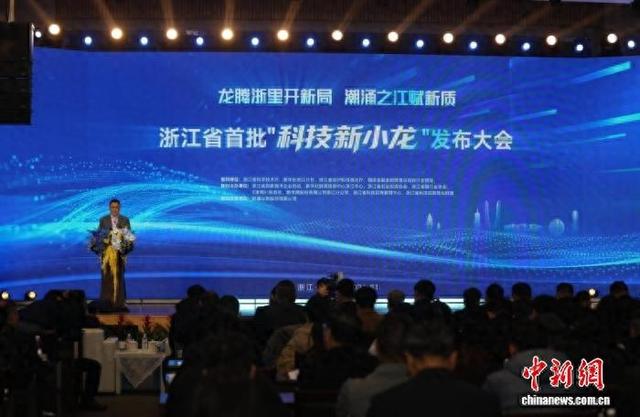
“年轻且能打”!浙江首批“科技新小龙”集结杭州
Xin Lang Cai Jing· 2026-01-28 10:08
Core Insights - The Zhejiang Province held a conference on January 28 to announce the first batch of 96 "Technology New Dragons" companies, marking a significant step in fostering innovative forces in the region [1][3][11] Group 1: Announcement of "Technology New Dragons" - A total of 96 companies were selected from nearly 400 candidates across 11 cities in Zhejiang, with over half of the selected companies located in Hangzhou, the core area for digital economy and innovation resources [4][15] - The selected companies span various strategic fields, including new generation information technology (43 companies), biotechnology (18 companies), new materials (12 companies), and others, showcasing a diverse and high-potential technological landscape [4][15] - To qualify, companies must have been registered for more than three years but less than ten, have a high-level talent R&D team, and invest at least 10% of their revenue in R&D or a minimum of 10 million yuan annually [4][15] Group 2: Support Measures for "Technology New Dragons" - The "Technology New Dragon Enterprise Support Action" was launched to enhance the innovation capabilities of these companies, with ten specific measures introduced by eight relevant organizations [5][16] - Key support areas include establishing a response mechanism for corporate needs, enhancing financial support with diverse credit products, and optimizing talent services for core R&D and management personnel [7][18] - The initiative aims to foster collaboration within the industrial chain, promote resource sharing among high-energy platforms, and support cross-regional innovation cooperation [8][19] Group 3: Innovation and Growth Metrics - The conference also unveiled the 2025 list of high-growth enterprises and the top 100 innovative enterprises in Zhejiang, reinforcing the province's commitment to innovation as a driving force for development [9][20] - The selection criteria for these lists focus on breakthroughs in core technologies, industry leadership potential, and high growth, reflecting the vibrant innovation ecosystem in Zhejiang [9][20]
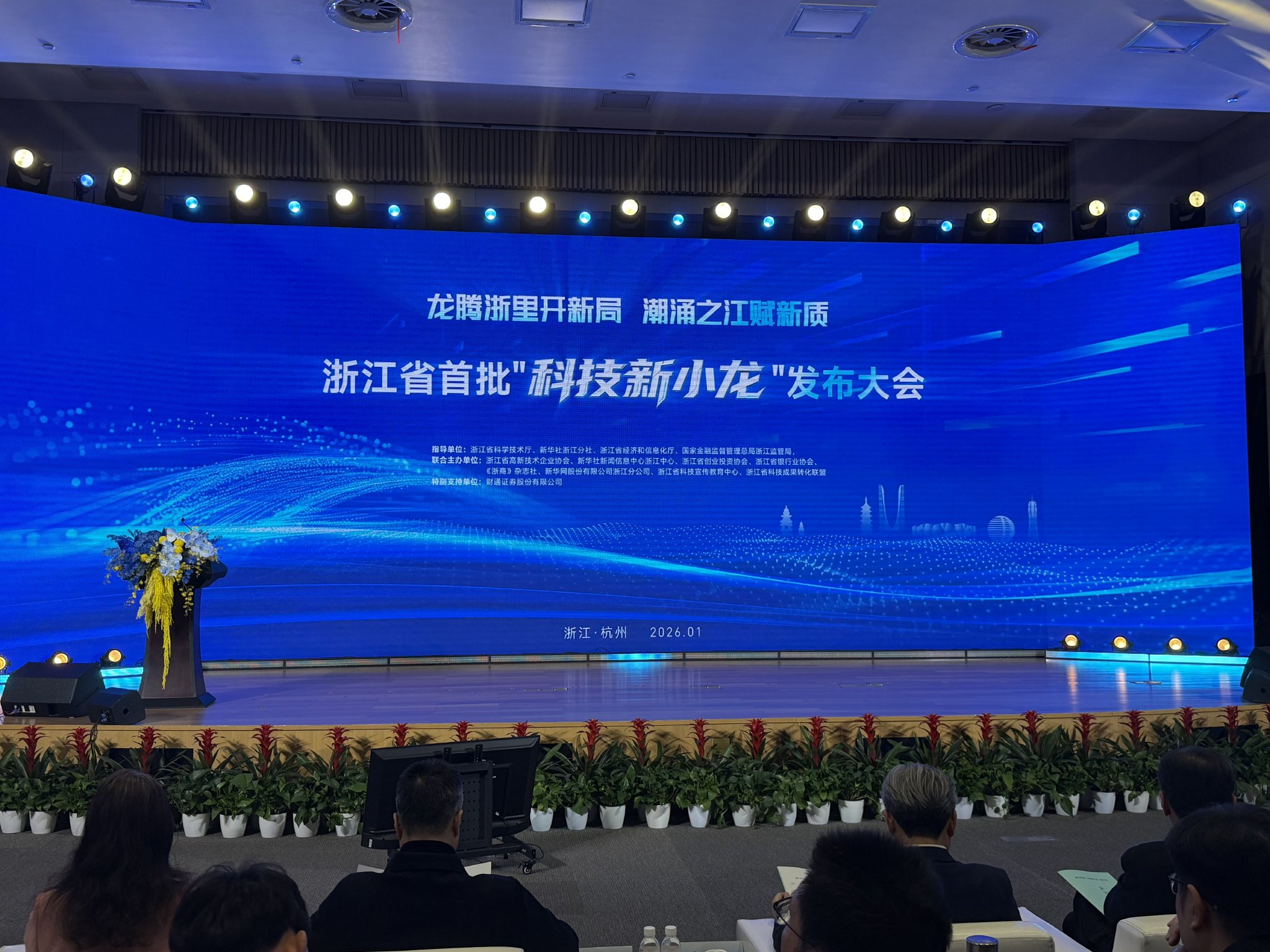
浙江确定96家科技新小龙企业
Zhong Guo Xin Wen Wang· 2025-12-15 17:30
Core Insights - The "Zhejiang Province Technology New Dragon" initiative has identified 96 innovative enterprises in Zhejiang, focusing on various sectors including information technology, renewable energy, and biotechnology [1][2] - The initiative aims to provide comprehensive support for these enterprises through policy assistance, expert guidance, and resource connections, fostering a competitive innovation ecosystem in the region [1] Group 1: Identified Enterprises - 43 enterprises in the new generation information technology sector [1] - 12 enterprises in the renewable energy and environmental protection industry [1] - 18 enterprises in the biotechnology sector [1] - 12 enterprises in the new materials sector [1] - 3 enterprises in aerospace information [1] - 4 enterprises in bionic robotics [1] - 1 enterprise in brain science and brain-like intelligence [1] - 1 enterprise in the metaverse [1] - 2 enterprises in modern services [1] Group 2: Support Mechanisms - The initiative will conduct special matching activities for major provincial technology projects to assist enterprises in participating in significant technological challenges [2] - Enterprises are encouraged to focus on core technology breakthroughs and play a leading role in industrial upgrades and high-quality development [2] - The government emphasizes the need for enhanced services for these innovative enterprises to accelerate the growth of new productive forces in Zhejiang [2]
打造科技成果转化新高地 湖南区域性股权市场科技成果转化专板开板
Sou Hu Cai Jing· 2025-11-08 12:11
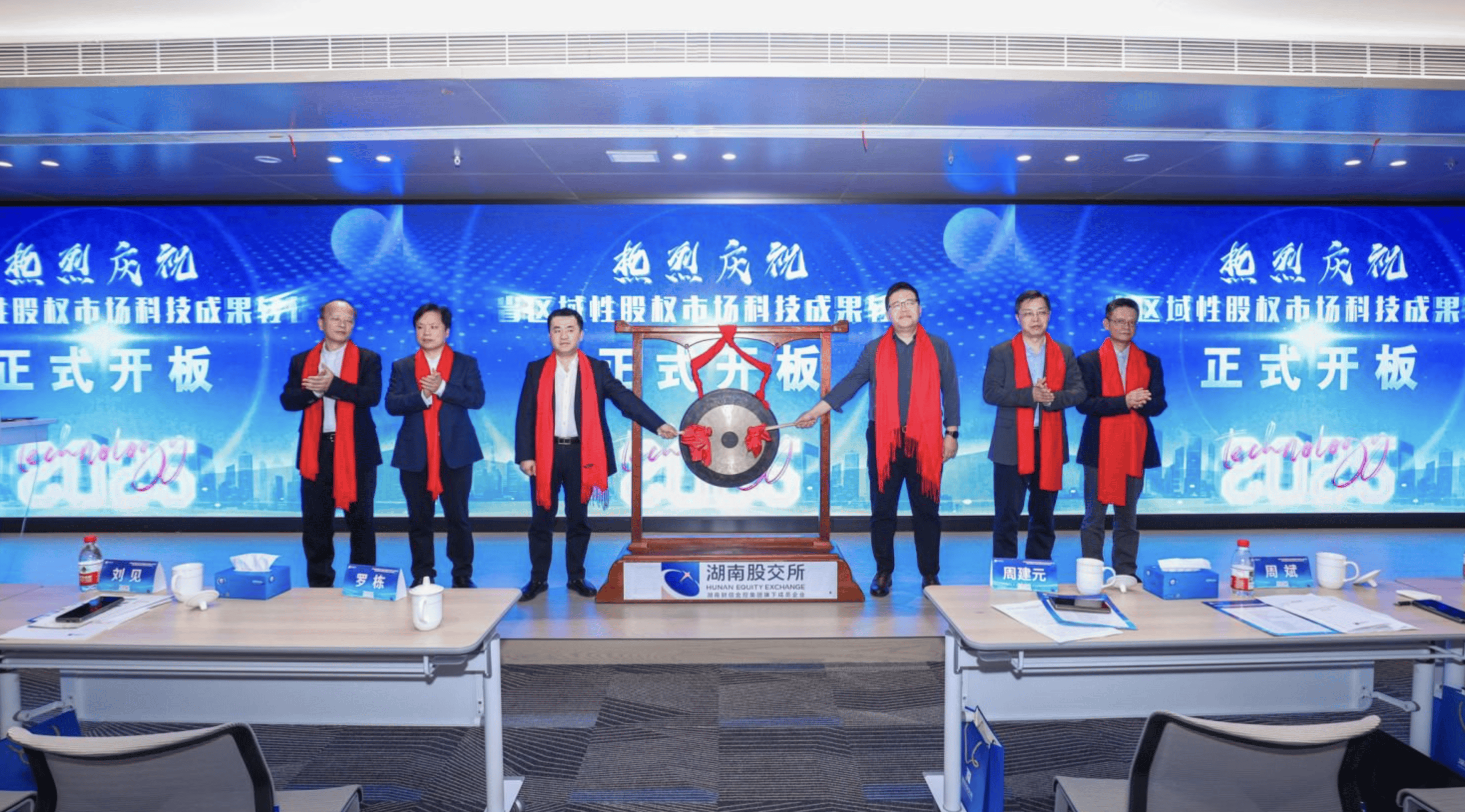
Core Viewpoint - The establishment of the Hunan Regional Equity Market Technology Achievement Transformation Special Board marks a significant step in accelerating the transformation of scientific and technological achievements from laboratories to production lines in Hunan province [1][3][4]. Group 1: Special Board Overview - The Technology Achievement Transformation Special Board is a key initiative for Hunan to cultivate new productive forces and create a new highland for technological innovation [4]. - The board is designed as an "incubation port" and "accelerator" for early-stage enterprises with high potential for technology achievement transformation [4]. - It will not set financial performance thresholds but will focus on the technological attributes and transformation potential of enterprises [4]. Group 2: Initial Companies and Their Innovations - The first batch of 32 "seed" companies includes those from strategic emerging industries such as new materials, biomedicine, new generation information technology, and renewable energy [5]. - Many of these companies have core technologies derived from collaborations with renowned universities and research institutions, fostering a strong collaborative innovation mechanism [5][6]. - Notable technologies include special operation robots from Qianzhizhi Robotics and a multi-fluorescence staining technology combined with AI analysis from Aifang Bio, showcasing strong innovation and application prospects [6]. Group 3: Ecosystem and Future Plans - The Hunan Jin Furong Fund Science and Technology Innovation Ecological Alliance aims to integrate scientific research achievements with financial resources to facilitate technology transformation [7]. - The alliance has gathered 102 member units, including 14 universities and 5 key laboratories, promoting a collaborative ecosystem [7]. - Future plans include signing cooperation agreements with universities and financial institutions to provide specialized financial products for technology and innovation [8].
“十五五”规划定调!这场大赛的意义非同一般
Sou Hu Cai Jing· 2025-10-29 07:36
Group 1 - Huawei's success is attributed to talent acquisition and utilization, with a consensus on "technological innovation, talent as the foundation" [4] - The postdoctoral system in China was established to address the challenges faced by returning overseas PhDs, particularly in securing research positions [7][8] - The postdoctoral system has evolved significantly in China, growing from 10 stations and 18 postdocs to nearly 8,800 stations and over 400,000 postdocs trained [9] Group 2 - The integration of postdoctoral research into enterprises has become a notable feature of China's postdoctoral system, with over 56% of postdoctoral workstations located in companies [9][10] - The third National Postdoctoral Innovation and Entrepreneurship Competition showcased the deep integration of industry and academia, with 1,743 projects competing [13][15] - The competition introduced a new model where industries present challenges and postdoctoral teams provide solutions, enhancing the relevance of research to market needs [20][33] Group 3 - The competition attracted high-level talent, with 2,950 PhDs and postdocs participating, indicating a strong pool of expertise available for addressing industrial challenges [15][32] - The competition's projects are focused on practical applications, demonstrating a shift from theoretical research to technologies that can be commercialized [26][27] - Cities are increasingly recognizing the strategic value of postdoctoral talent, implementing policies to attract and retain these individuals [37]

北京110个项目入围第三届全国博士后创新创业大赛总决赛
Zhong Guo Xin Wen Wang· 2025-10-21 05:48
Core Points - The third National Postdoctoral Innovation and Entrepreneurship Competition has announced its finals, with 110 projects from Beijing qualifying, representing a 140% increase from the previous competition [1][2] - The finals will take place from October 26 to 28 in Quanzhou, Fujian, featuring four main categories: innovation competition, entrepreneurship competition, challenge-response competition, and overseas competition [1] - The competition aims to promote the exchange of postdoctoral talent and the transformation of scientific research achievements, with various activities planned during the finals [1] Group 1: Competition Details - Beijing's representative team consists of 110 projects, including 14 innovation projects, 15 entrepreneurship projects, 43 challenge-response projects, and 38 overseas projects [2] - A total of 1,003 projects registered for the competition, surpassing the combined total of the previous two competitions [2] - Pre-selection rounds were organized to select outstanding teams, with guidance provided to participants on business plan writing and presentation skills [2] Group 2: Postdoctoral Workstations - Beijing has established 727 postdoctoral workstations covering all 12 academic disciplines except military science, supporting high-tech enterprises [3] - There are over 2,200 postdoctoral researchers currently in the stations, with a cumulative total of over 8,000 entering and 5,000 exiting [3] - Postdoctoral talent plays a crucial role in addressing major national strategic needs and technological challenges in various industries [3]

第三届全国博士后创新创业大赛发布766个项目邀请“揭榜领题”
Xin Jing Bao· 2025-05-14 07:27
Core Viewpoint - The third National Postdoctoral Innovation and Entrepreneurship Competition has launched a "Challenge and Lead" project list, featuring 766 technology projects that seek participation from postdoctoral researchers and teams [1][2]. Group 1: Competition Overview - The competition is the largest and most comprehensive postdoctoral event in China, aimed at promoting the integration of industry, academia, and research [1]. - The "Challenge and Lead" segment invites enterprises to present technical challenges, which postdoctoral researchers are encouraged to solve [1]. Group 2: Project Details - A total of 766 project demands have been released, focusing on four key areas aligned with national strategies and cutting-edge scientific technologies, with a total planned investment exceeding 40 billion yuan [2]. - The projects cover seven major directions, including new generation information technology and artificial intelligence, high-end equipment manufacturing, and robotics [2]. - The top areas of demand include: - New generation information technology and artificial intelligence: 143 projects (18.7%) - Biomedicine and health: 140 projects (18.3%) - New materials and petrochemicals: 135 projects (17.6%) - High-end equipment manufacturing and robotics: 131 projects (17.1%) - New energy and energy conservation: 93 projects (12.1%) - Modern agriculture and food: 67 projects (8.7%) - Other industries: 57 projects (7.4%) [2]. Group 3: Participation and Timeline - The project list has been publicly released on various platforms, including the China Postdoctoral website and the official competition website [3]. - The registration deadline for participation is July 31, 2025, with successful teams invited to the finals in Quanzhou, Fujian Province, in mid to late October [3].