
生物产业

Search documents
【广发宏观王丹】3月EPMI显示基本面继续运行良好
郭磊宏观茶座· 2026-03-21 01:14
Core Viewpoint - The March EPMI (Emerging Industries Purchasing Managers Index) significantly increased by 13.0 points to 57.6, indicating a strong recovery in emerging industries during the peak season of operations, surpassing seasonal averages and previous years' performance [1][6][7]. Supply and Demand Dynamics - Supply and demand improved synchronously, with production and procurement indices rising by 23.4 and 24.2 points respectively, while product and export order indices increased by 17.8 and 15.6 points [8][9]. - Both production and product order indices exceeded an absolute level of 60, indicating a healthy supply-demand relationship, contributing 45% and 41% to the EPMI increase respectively [8][9]. Price Trends - Prices continued to rise, with purchase and sales price indices increasing by 8.4 and 6.1 points respectively, marking the continuation of a positive trend for three and four months [12]. - The EPMI and PMI price indices suggest a potential positive shift in PPI (Producer Price Index) for the first time in 42 months [12]. R&D and Expectations in Emerging Industries - Emerging industries showed strong R&D and expectation indicators, with short-term financing conditions improving as the EPMI loan difficulty index decreased by 2.7 points [15][16]. - R&D, employment, and expectations indices rose by 7.5, 8.6, and 22.2 points respectively, reflecting a favorable environment for innovation and growth [15][16]. Sector Performance - The new generation of information technology, new materials, and new energy sectors exhibited the highest levels of prosperity, with indices around 60 [3][17]. - The automotive sector, particularly in new energy vehicles, saw significant growth, with retail sales increasing by 36% year-on-year in early March [3][17]. Price Performance Insights - New materials and energy-saving environmental protection sectors experienced substantial price increases due to geopolitical tensions affecting costs, which were passed down to downstream sectors [20]. - The sales prices in high-end equipment manufacturing rose significantly by 16.2 points, supported by strong export demand [20][22]. Manufacturing PMI Outlook - The manufacturing PMI is expected to show significant improvement, returning to an expansionary phase, supported by positive trends in traditional manufacturing sectors [22].


广发宏观:3月EPMI显示基本面继续运行良好
GF SECURITIES· 2026-03-20 12:04
Group 1: EPMI Overview - The March EPMI increased significantly by 13.0 points to 57.6, surpassing seasonal averages and previous years' increases of 7.8, 3.9, and 9.3 points in March 2015, 2018, and 2024 respectively[3] - The absolute level of the March EPMI indicates a strong performance in emerging industries during the peak production season[3] Group 2: Supply and Demand Dynamics - Supply-side production and procurement indices rose by 23.4 and 24.2 points respectively, while demand-side product orders and export orders increased by 17.8 and 15.6 points[4] - Both production and product order indices exceeded 60, indicating a healthy supply-demand relationship, contributing 45% and 41% to the EPMI increase respectively[4][5] Group 3: Price Trends - In March, the purchasing price index rose by 8.4 points and the sales price index increased by 6.1 points, continuing a trend of improvement over the past months[7] - The profit index also saw a rise of 9.4 points, indicating a positive outlook for profitability in the sector[7] Group 4: Industry Insights - Emerging industries such as new generation information technology, new materials, and new energy showed the highest levels of prosperity, with indices around 60[8] - Significant improvements were noted in the new energy vehicle and biotechnology sectors, with increases exceeding 15 points[8]
2月EPMI数据带来哪些增量信息
GF SECURITIES· 2026-02-25 09:45
Group 1: EPMI Overview - The February EPMI for strategic emerging industries decreased by 5.4 points to 44.6, primarily due to seasonal effects from the Spring Festival[3] - Compared to historical data, this year's EPMI decline is less severe than in 2021 and similar to 2024, while weaker than 2015 and 2018[3] - Only the new energy sector remains in the expansion zone, with the other six sectors below the 50-point threshold[3] Group 2: Production and Demand Indicators - Production index fell by 14.7 points, contributing 68% to the EPMI decline, while the procurement index decreased by 18.0 points[3] - Product order index dropped by 5.9 points and export order index fell by 8.1 points, indicating weak demand[4] - The production-to-order ratio was -3.9, down from 4.9, suggesting a significant shift in production dynamics[4] Group 3: Price Trends and Loan Conditions - Purchase prices increased by 5.3 points and sales prices rose by 2.8 points, continuing an upward trend for two and three months respectively[5] - The profit index decreased by 11.2 points, indicating pressure on margins despite rising prices[5] - Loan difficulty index remained stable, showing no signs of easing liquidity conditions[5] Group 4: Sector-Specific Insights - New energy is the only sector above 50, with a significant increase of 5.2 points, while energy-saving and environmental protection sectors rose by 3.1 points[6] - High-end equipment manufacturing and new-generation information technology sectors also saw increases in new product launches, indicating active innovation[5] - The overall price improvement amidst seasonal impacts suggests potential opportunities in the price line for March[8]
【广发宏观王丹】2月EPMI数据带来哪些增量信息
郭磊宏观茶座· 2026-02-25 09:13
Core Viewpoint - The February Strategic Emerging Industries Purchasing Managers Index (EPMI) decreased by 5.4 points to 44.6, primarily due to seasonal factors related to the Spring Festival, with the decline being less severe than in 2021 and similar to 2024, while weaker than 2015 and 2018 [1][4][5]. Group 1: EPMI and Industry Performance - The EPMI's decline reflects a broader economic slowdown, with only the new energy sector remaining in the expansion zone among seven major sub-industries [6][4]. - The production index fell by 14.7 points, while the procurement index dropped by 18.0 points, indicating a significant slowdown in production compared to demand [9][10]. - The production index's decline contributed 68% to the overall EPMI decrease, suggesting that the extended holiday period had a substantial impact [9][10]. Group 2: New Product Launches and Price Trends - New product launches increased by 5.7 points, particularly in high-end equipment manufacturing and next-generation information technology, indicating active product innovation during this period [11][2]. - Price indicators showed positive trends, with purchase prices rising by 5.3 points and sales prices increasing by 2.8 points, marking continued improvement despite seasonal impacts [11][2]. Group 3: Loan Difficulty and Sectoral Insights - The loan difficulty index remained stable, indicating a neutral stance without signs of easing, despite previous increases [14][2]. - The new energy sector was the only industry with an EPMI above 50, reflecting its leading position in the emerging industries, while other sectors like energy conservation and environmental protection also showed slight improvements [15][3].

2月2日生物经济(970038)指数跌2.99%,成份股大北农(002385)领跌
Sou Hu Cai Jing· 2026-02-02 11:10
Core Viewpoint - The Biotech Economy Index (970038) experienced a decline of 2.99%, closing at 2139.16 points on February 2, with a total trading volume of 26.538 billion yuan and a turnover rate of 2.97% [1] Group 1: Index Performance - On the day, only 2 out of the index's constituent stocks rose, with Aimeike leading the gain at 1.01%, while 48 stocks fell, with Dabeinong leading the decline at 10.02% [1] Group 2: Capital Flow - The net outflow of main funds from the Biotech Economy Index constituents totaled 1.249 billion yuan, while the net inflow from speculative funds was 262 million yuan, and the net inflow from retail investors was 988 million yuan [2]


1月中观景气结构暂延续前期特征
GF SECURITIES· 2026-02-02 05:51
Group 1: Manufacturing PMI Analysis - In January, the manufacturing PMI decreased by 0.8 points to 49.3, primarily due to seasonal factors and a significant drop in consumer goods and high-energy industries, which fell by 2.1 and 1.0 points respectively[2] - High-tech manufacturing PMI stood at 52.0, down 0.5 points, while equipment manufacturing PMI decreased by 0.3 points to 50.1[2] - The consumer goods and high-energy industries recorded PMIs of 48.3 and 47.9, reflecting declines of 2.1 and 1.0 points respectively[2] Group 2: Industry Performance Insights - The automotive sector saw a significant decline, with retail sales of passenger cars dropping by 37% in January compared to the same period last year[2] - Brent crude oil prices rose from $61 per barrel at the end of 2025 to $71 per barrel by the end of January 2026, impacting the petrochemical and chemical industries negatively[2] - The non-ferrous and black metal sectors experienced increases of 4.0 and 2.0 points respectively, driven by global pricing expectations and pre-season stockpiling[2] Group 3: Emerging Industries and Construction Sector - Emerging industries such as biotechnology, new energy vehicles, and next-generation information technology continue to lead in performance, with biotechnology remaining above 60 in the high prosperity range[5] - The construction sector's PMI fell by 4.0 points to 48.8, exceeding seasonal declines observed in previous years[6] - New orders in the construction sector decreased by 7.3 points, indicating a slowdown in demand[8] Group 4: Service Sector Trends - The service sector PMI slightly decreased by 0.2 points to 49.5, remaining in the contraction zone for three consecutive months[10] - Financial services, including monetary finance and capital market services, maintained high activity levels, with indices above 65[10] - The transportation and information services sectors saw declines in their PMIs, while residential services experienced a slight increase of 1.6 points[10]
中智咨询:中央企A股上市公司战新产业布局和模式路径比较研究报告
Sou Hu Cai Jing· 2026-01-29 04:44
Core Insights - The report by Zhongzhi Consulting focuses on the strategic layout and development models of central enterprises controlling A-share listed companies in emerging industries, providing a systematic analysis of the layout logic and development paths of strategic emerging industries [1][12]. Group 1: Overview of Central Enterprises in Emerging Industries - Among 402 central enterprises controlling A-share listed companies, 64% can be classified as emerging industry enterprises, with nearly 80% concentrated in five key areas: new generation information technology, new materials, high-end equipment manufacturing, new energy, and biotechnology [1][18]. - The report highlights a significant underinvestment in critical areas such as industrial mother machines and chips, indicating a need for increased focus and resources in these sectors [1][18]. Group 2: Industry-Specific Analysis - The report emphasizes that over 40% of manufacturing emerging enterprises are transitioning towards new materials and high-end equipment manufacturing, showcasing significant industrial synergy effects [1][20]. - In terms of profitability, emerging industry enterprises contribute 26% of total operating revenue and 31.27% of total profit, with new generation information technology, new energy, and new materials showing particularly strong profitability [1][23]. Group 3: Strategic Positioning and Implementation Paths - The report identifies four business layout models: core business extension, establishment of emerging platforms, equity cooperation, and fund investment, which enterprises can combine based on their specific circumstances [2]. - It suggests a systematic cultivation framework of "assessment-layout-empowerment," advocating for a full-cycle evaluation mechanism and a tailored approach for each enterprise to optimize resource allocation and enhance competitiveness in emerging industries [2].


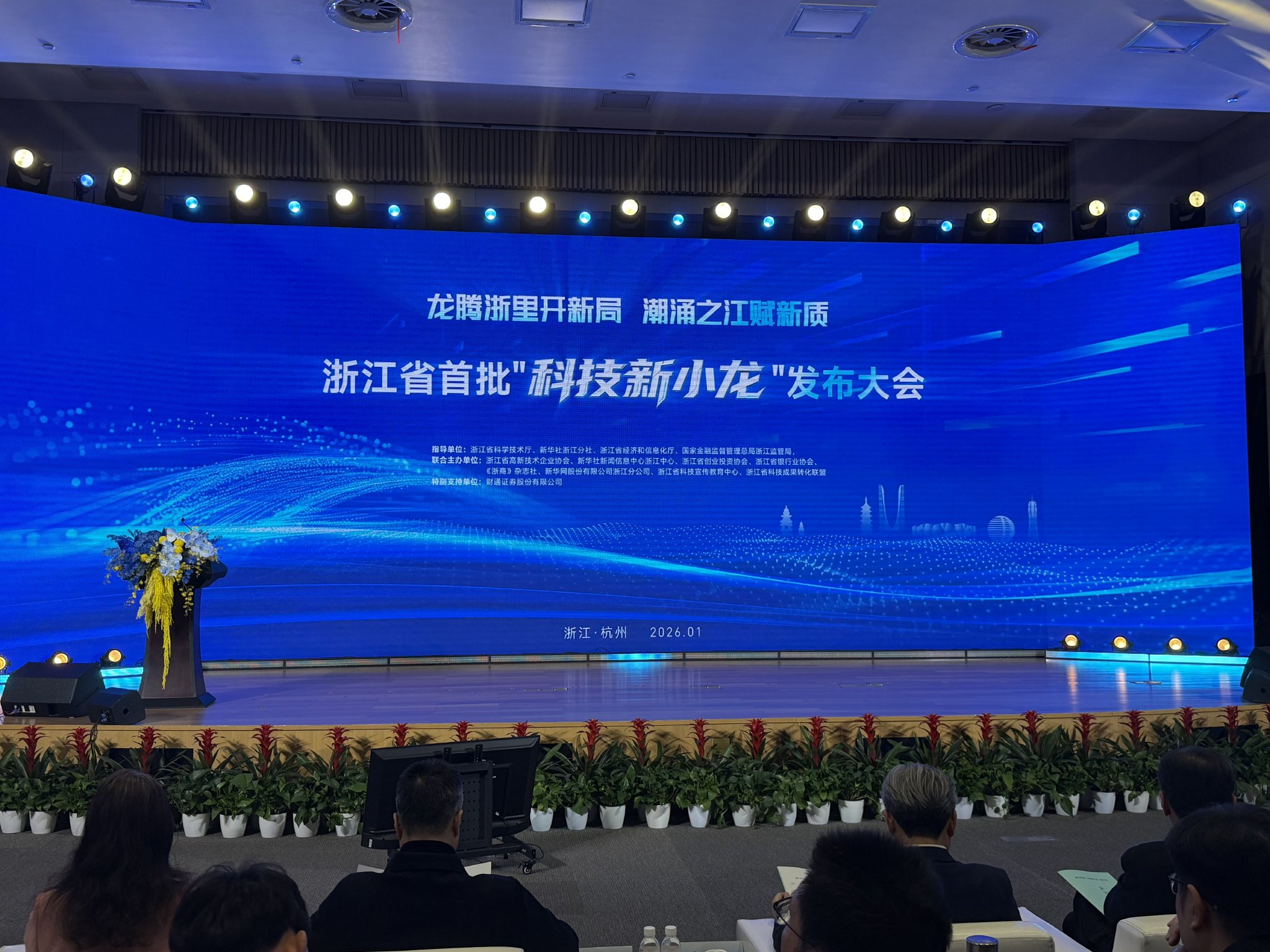
浙江为96家“科技新小龙”授牌
Xin Lang Cai Jing· 2026-01-28 10:31
Core Insights - The first batch of "Technology New Dragons" in Zhejiang Province was announced, consisting of 96 companies selected from nearly 400 candidates across 11 cities, with Hangzhou having the highest representation [1][3] - The selected companies span multiple strategic fields, including new generation information technology, biotechnology, new materials, new energy, and bionic robotics, showcasing a strong focus on high-tech industries [3][4] - The selection criteria for these companies included being established for more than 3 years but less than 10 years, having a high-level talent R&D team, and meeting specific R&D investment thresholds [3][4] Industry Distribution - Among the selected companies, 43 are in the new generation information technology sector, making it the core strength of the "New Dragons" group, while 18 are in biotechnology and 12 in new materials, indicating a robust presence in advanced industries [3][4] - The initiative reflects Zhejiang's commitment to fostering innovation and high-tech industries, aligning with its "315" technology innovation system and "415X" advanced manufacturing cluster development goals [4][5] Support Measures - A "Technology New Dragon Enterprise Support Action" was launched to empower the growth of these companies, featuring ten measures focused on resource support, ecosystem integration, and service assurance [3][4] - The province aims to establish a "service consortium" to address operational challenges and innovation needs by involving experts from various fields [4]
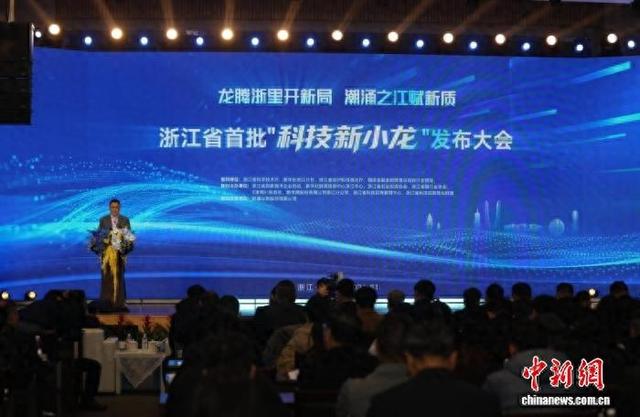
“年轻且能打”!浙江首批“科技新小龙”集结杭州
Xin Lang Cai Jing· 2026-01-28 10:08
Core Insights - The Zhejiang Province held a conference on January 28 to announce the first batch of 96 "Technology New Dragons" companies, marking a significant step in fostering innovative forces in the region [1][3][11] Group 1: Announcement of "Technology New Dragons" - A total of 96 companies were selected from nearly 400 candidates across 11 cities in Zhejiang, with over half of the selected companies located in Hangzhou, the core area for digital economy and innovation resources [4][15] - The selected companies span various strategic fields, including new generation information technology (43 companies), biotechnology (18 companies), new materials (12 companies), and others, showcasing a diverse and high-potential technological landscape [4][15] - To qualify, companies must have been registered for more than three years but less than ten, have a high-level talent R&D team, and invest at least 10% of their revenue in R&D or a minimum of 10 million yuan annually [4][15] Group 2: Support Measures for "Technology New Dragons" - The "Technology New Dragon Enterprise Support Action" was launched to enhance the innovation capabilities of these companies, with ten specific measures introduced by eight relevant organizations [5][16] - Key support areas include establishing a response mechanism for corporate needs, enhancing financial support with diverse credit products, and optimizing talent services for core R&D and management personnel [7][18] - The initiative aims to foster collaboration within the industrial chain, promote resource sharing among high-energy platforms, and support cross-regional innovation cooperation [8][19] Group 3: Innovation and Growth Metrics - The conference also unveiled the 2025 list of high-growth enterprises and the top 100 innovative enterprises in Zhejiang, reinforcing the province's commitment to innovation as a driving force for development [9][20] - The selection criteria for these lists focus on breakthroughs in core technologies, industry leadership potential, and high growth, reflecting the vibrant innovation ecosystem in Zhejiang [9][20]
2026年第一份软数据EPMI表现如何
GF SECURITIES· 2026-01-20 12:47
Group 1: EPMI Overview - In January 2026, the Strategic Emerging Industries Purchasing Managers' Index (EPMI) increased by 0.9 points to 50.0, aligning with seasonal trends observed in previous years[3] - Historical data shows that in years with a late Spring Festival, the average EPMI change in January is an increase of 0.8 points, with 2015 showing a decrease of 1.5 points, while 2018 and 2024 showed increases of 2.8 and 1.0 points respectively[3] Group 2: Industry Performance - Among the seven sub-sectors of strategic emerging industries, three are in the expansion zone, consistent with November and December 2025[4] - Key indicators such as production volume, product orders, and export orders improved by 1.6, 1.5, and 1.0 points respectively in January 2026[4] - The production-demand ratio increased to 4.9, up from 4.8, indicating a positive outlook for demand post-holiday[5] Group 3: Price and Loan Indicators - In January 2026, purchase prices rose by 0.4 points and sales prices by 0.3 points, continuing an upward trend since July 2025[5] - The difficulty of obtaining loans increased by 0.4 points, marking a two-month recovery, potentially linked to liquidity conditions in early January[5] Group 4: Sector-Specific Insights - The biotechnology, new energy vehicles, and next-generation information technology sectors are leading in terms of economic performance, with biotechnology remaining above 60 in the high prosperity zone[6] - Compared to December 2025, the biotechnology sector increased by 1.2 points, while other sectors saw increases between 0.7 and 1.0 points[7] Group 5: Manufacturing PMI Expectations - Seasonal patterns suggest that the manufacturing PMI may experience slight declines in January, as seen in previous years, with an average decrease of 0.13 points historically[7] - High-frequency data indicates mixed performance in traditional industries, with some sectors like steel showing increased operational rates while others like automotive parts declined[8]