新能源汽车废旧动力电池回收利用

Search documents
全链条管理废旧动力电池回收利用
Jing Ji Ri Bao· 2026-01-21 22:16
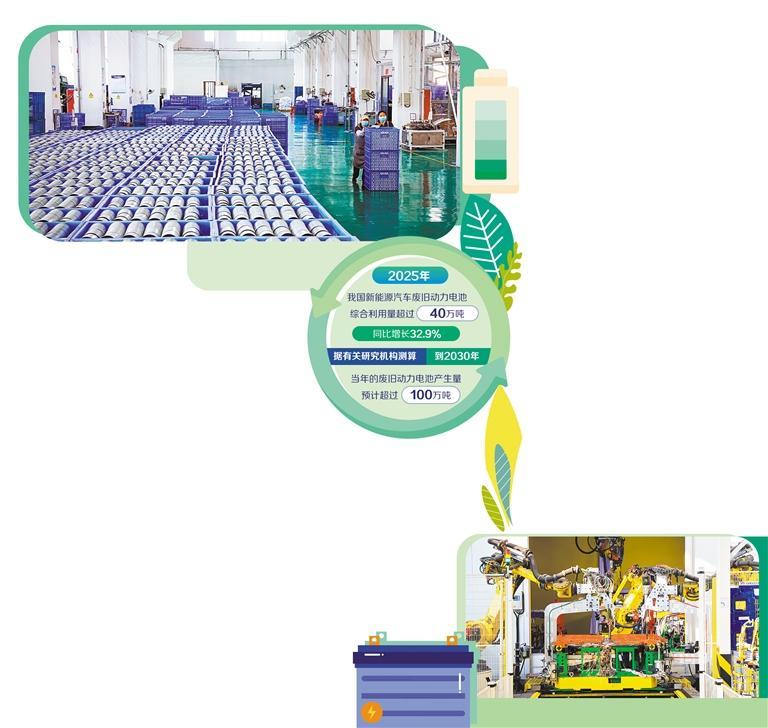
Core Viewpoint - The introduction of the "Interim Measures for the Recycling and Comprehensive Utilization of Used Power Batteries for New Energy Vehicles" marks a new phase in the standardized management of used power battery recycling in China, addressing the increasing volume of waste batteries due to the rapid development of the new energy vehicle industry [2][4]. Group 1: Regulatory Framework - The new management measures significantly enhance legal constraints and aim to resolve existing issues in the recycling process, such as unregulated sales and dismantling of used batteries [5][4]. - The previous regulations from 2018 will be abolished, and a digital identification system for power batteries will be established to monitor their lifecycle and ensure compliance [4][7]. Group 2: Industry Development - By 2025, the comprehensive utilization of used power batteries in China is expected to exceed 400,000 tons, reflecting a year-on-year growth of 32.9%, with leading companies achieving international standards in metal recovery rates [3]. - The management measures will require companies to adhere to new conditions for engaging in comprehensive utilization, focusing on compliance and environmental protection [7][8]. Group 3: Stakeholder Responsibilities - The recycling and utilization of used power batteries require collaboration among various stakeholders, including policy, market, technology, and standards [6]. - The government has established a recycling network across 31 provinces and has cultivated 148 leading enterprises in the comprehensive utilization sector [6]. Group 4: Public Participation - The measures emphasize the importance of public involvement in the recycling process, urging consumers to understand and comply with battery recycling guidelines when purchasing new energy vehicles [9]. - The call for collective responsibility highlights the need for consumers to ensure that used batteries are disposed of through regulated channels to prevent environmental hazards [9].

新能源车动力电池将有“身份证”,新规出台解决哪些痛点?
Yang Shi Xin Wen· 2026-01-17 01:53
Core Viewpoint - The new regulations on the recycling and comprehensive utilization of used power batteries from new energy vehicles (NEVs) are aimed at addressing the industry's urgent needs as the production and sales of NEVs are projected to exceed 16 million units by 2025, with the recycling volume of used batteries surpassing 400,000 tons [1][3][12]. Group 1: Characteristics and Highlights of the New Regulations - The new regulations emphasize "full channel, full chain, and full life cycle" management of used power batteries [6][14]. - It includes comprehensive management across various aspects such as battery production, vehicle scrapping, battery swapping operations, and maintenance [6][14]. - A digital identity system for batteries will be established to monitor the entire life cycle of batteries, enhancing traceability and accountability [9][15]. Group 2: Addressing Current Industry Needs - The new regulations are timely, as previous guidelines lacked strong enforcement mechanisms and did not adequately address emerging issues in the battery recycling industry [12][22]. - The regulations clarify the responsibilities and obligations of various stakeholders in the battery production and recycling chain, introducing specific penalties for non-compliance [12][22]. - Efficient recycling of batteries is crucial for resource conservation, especially given China's high dependence on imported metals like lithium and nickel [13][22]. Group 3: Pain Points Addressed by the New Regulations - The "three full" approach aims to extend producer responsibility and improve lifecycle management of batteries [14][22]. - The concept of "cascade utilization" is eliminated to prevent confusion regarding battery quality and safety in various applications [11][18]. - The regulations encourage the establishment of a coordinated recycling system across provinces to avoid resource wastage and ensure effective recovery [20][21].
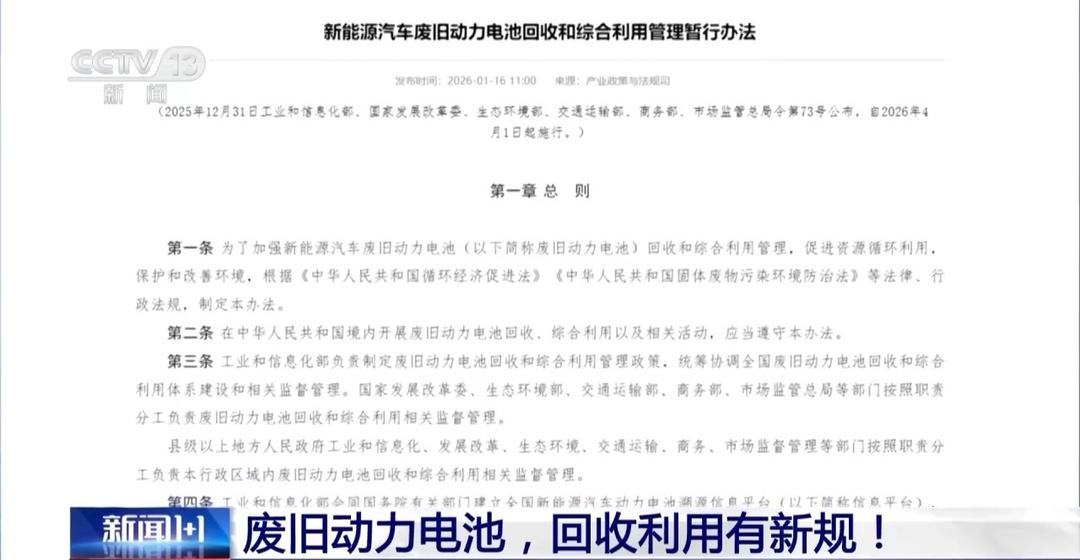
【新华解读】如何加强新能源汽车废旧动力电池回收利用?
Xin Hua She· 2026-01-17 01:45
Core Viewpoint - The Ministry of Industry and Information Technology, along with five other departments, has released interim measures for the recycling and comprehensive utilization of used power batteries from new energy vehicles, emphasizing a "whole-channel, whole-chain, whole-lifecycle" management approach [1] Group 1: Regulatory Framework - The new regulations require that scrapped new energy vehicles must have their power batteries intact, establishing a "vehicle-battery integration" principle to prevent the loss of used batteries [1][2] - The management measures introduce new requirements for the comprehensive utilization of batteries and the conditions for enterprises involved, eliminating the concept of "cascade utilization" [2][3] Group 2: Safety and Quality Standards - The decision to eliminate "cascade utilization" stems from safety concerns, as some companies have produced new battery products from used batteries that may not meet quality standards, leading to potential risks for consumers [3] - The new regulations mandate that any battery products produced must comply with the quality standards of their application fields, ensuring consumer safety [3] Group 3: Recycling and Utilization Efficiency - The recycling of used power batteries is crucial as they contain valuable metals like nickel, cobalt, manganese, and lithium, and improper disposal could lead to environmental pollution and resource wastage [1][4] - Some companies have achieved significant recovery rates, with nickel, cobalt, and manganese recovery rates reaching 99.6% and lithium recovery rates at 96.5%, demonstrating the economic and ecological benefits of effective recycling [4] Group 4: Management and Oversight - The management measures follow a comprehensive approach that includes all aspects of battery production, vehicle scrapping, battery swapping operations, and maintenance to ensure proper management of used batteries [5] - Responsibilities and obligations are clearly defined across the entire battery lifecycle, from production to recycling, enhancing supervision and management of each segment [6] Group 5: Digital Identification System - A digital identification system will be established for each power battery, linking information from production, sales, maintenance, scrapping, and recycling, enabling full lifecycle monitoring and traceability [7] - The Ministry of Industry and Information Technology will collaborate with relevant departments to create an information platform that generates a unique, dynamic digital ID for each battery pack, supporting comprehensive supervision [7]
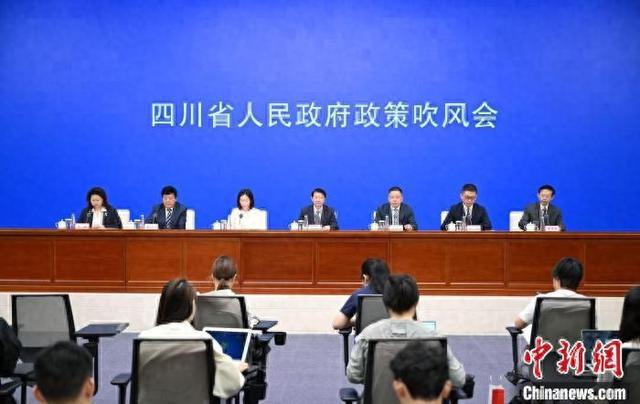
四川将加快新能源汽车废旧动力电池回收利用
Huan Qiu Wang Zi Xun· 2025-05-07 07:12
Core Viewpoint - The "Interim Measures for the Management of Recycling and Utilization of Waste Power Batteries for New Energy Vehicles in Sichuan Province" will be implemented on June 1, 2023, marking the first provincial-level regulatory document in China for the recycling and utilization of waste power batteries [1][3]. Group 1: Policy Overview - The Sichuan Provincial Government issued the measures to promote the development of the waste power battery recycling industry and to standardize recycling activities [3][4]. - The document consists of 7 chapters and 27 articles, covering aspects such as regional center construction, recycling norms, support measures, supervision, and legal responsibilities [3][4]. Group 2: Market Context - By the end of 2024, Sichuan Province is expected to have 1.402 million new energy vehicles, with Chengdu having 932,500, indicating a significant market for waste battery recycling [3][4]. - A large-scale "retirement wave" of waste power batteries is anticipated in the next two to three years, presenting a promising market outlook for recycling [3][4]. Group 3: Current Industry Status - Sichuan has 11 comprehensive utilization enterprises and 512 recycling service points, with a total utilization capacity of approximately 69,000 tons [5]. - Only 2 enterprises in Sichuan meet national comprehensive utilization standards, accounting for 1.2% of the national total, indicating a significant gap in industry standardization [5]. Group 4: Future Development Focus - Sichuan will focus on two main areas: accelerating the construction of regional centers and cultivating a provincial "white list" of enterprises to ensure compliance with technical standards and safety requirements [5]. - The aim is to establish 4 to 5 regional centers and to eliminate non-compliant enterprises, promoting healthy and sustainable industry development [5].