全渠道

Search documents
动力电池回收利用管理进一步完善 引导产业走向规范新阶段
Xin Lang Cai Jing· 2026-01-18 21:31
Core Viewpoint - The recent issuance of the "Interim Measures for the Management of Recycling and Comprehensive Utilization of Waste Power Batteries for New Energy Vehicles" marks a significant step towards legalizing the management of power battery recycling and utilization in China, emphasizing a "full-channel, full-chain, and full-lifecycle" approach [1][2]. Group 1: Policy Framework - The "Interim Measures" are a key implementation of the "Action Plan for Improving the Recycling and Utilization System of Power Batteries for New Energy Vehicles," which aims to accelerate the establishment of relevant regulations [2]. - The measures include a "vehicle-battery integrated scrapping" system to ensure that scrapped new energy vehicles come with their power batteries, preventing the loss of tracking for waste batteries [2][3]. Group 2: Responsibilities and Regulations - The measures clarify the responsibilities of battery manufacturers and new energy vehicle producers, mandating them to fulfill extended producer responsibility and enhance information sharing across the industry chain [1][3]. - Specific obligations are outlined for various stakeholders, including battery replacement service providers and vehicle dismantling enterprises, to ensure proper disposal and recycling of waste batteries [3][4]. Group 3: Industry Impact - The new regulations aim to standardize the market for battery disposal and recycling, addressing previous issues of low industry entry barriers that led to substandard practices [4]. - Enhanced regulatory measures will impose penalties for non-compliance, such as failing to report battery information or not fulfilling recycling responsibilities, thereby strengthening the enforcement of the new rules [4]. Group 4: Future Outlook - The industry is expected to move towards a more sustainable future under the guidance of these policies, with a projected increase in waste battery generation exceeding 1 million tons by 2030 [1]. - The establishment of a national information platform for tracking battery flows and the introduction of digital identification for batteries are anticipated to improve monitoring and management [2].
动力电池回收新规来了 有哪些重点亮点?
Yang Shi Xin Wen· 2026-01-17 04:55
Core Viewpoint - The new management measures emphasize "omni-channel, full chain, and full lifecycle" characteristics for the management of used power batteries from electric vehicles, aiming to ensure safety and environmental protection in the recycling process [1][4]. Group 1: Omni-channel Management - The management measures regulate various aspects including battery production, vehicle scrapping, battery swapping operations, and maintenance, with a focus on the "vehicle-battery integrated scrapping" system to prevent the uncontrolled flow of used batteries [1][4]. Group 2: Full Chain Responsibility - The measures clarify the responsibilities and obligations of various entities involved in the production, sales, maintenance, replacement, disassembly, recycling, and comprehensive utilization of batteries [1][4]. Group 3: Full Lifecycle Information Management - The establishment of a national information platform for tracing the lifecycle of new energy vehicle power batteries is highlighted, along with a digital identity management system for these batteries to enhance information traceability [1][7]. Group 4: Producer Responsibility - The new regulations stress the importance of safety in the recycling and comprehensive utilization of used power batteries, mandating that producers of new energy vehicles and batteries fulfill extended producer responsibilities [4][6]. Group 5: Technological Empowerment - The introduction of an information platform that includes features for information tracing, digital identity, corporate responsibility evaluation, and data analysis is a significant highlight, aiming to cover all lifecycle stages of battery information [7]. Group 6: Ecological Design and Maintenance - Battery manufacturers and new energy vehicle producers are encouraged to adopt ecological design principles, ensuring that battery components are easy to maintain and disassemble, while also providing necessary technical information for disassembly [9]. Group 7: Prohibition of "Tiered Utilization" - The new management measures explicitly prohibit the direct or processed use of used power batteries in electric bicycles and other areas restricted by laws and regulations, moving away from the previously used "tiered utilization" concept [10].

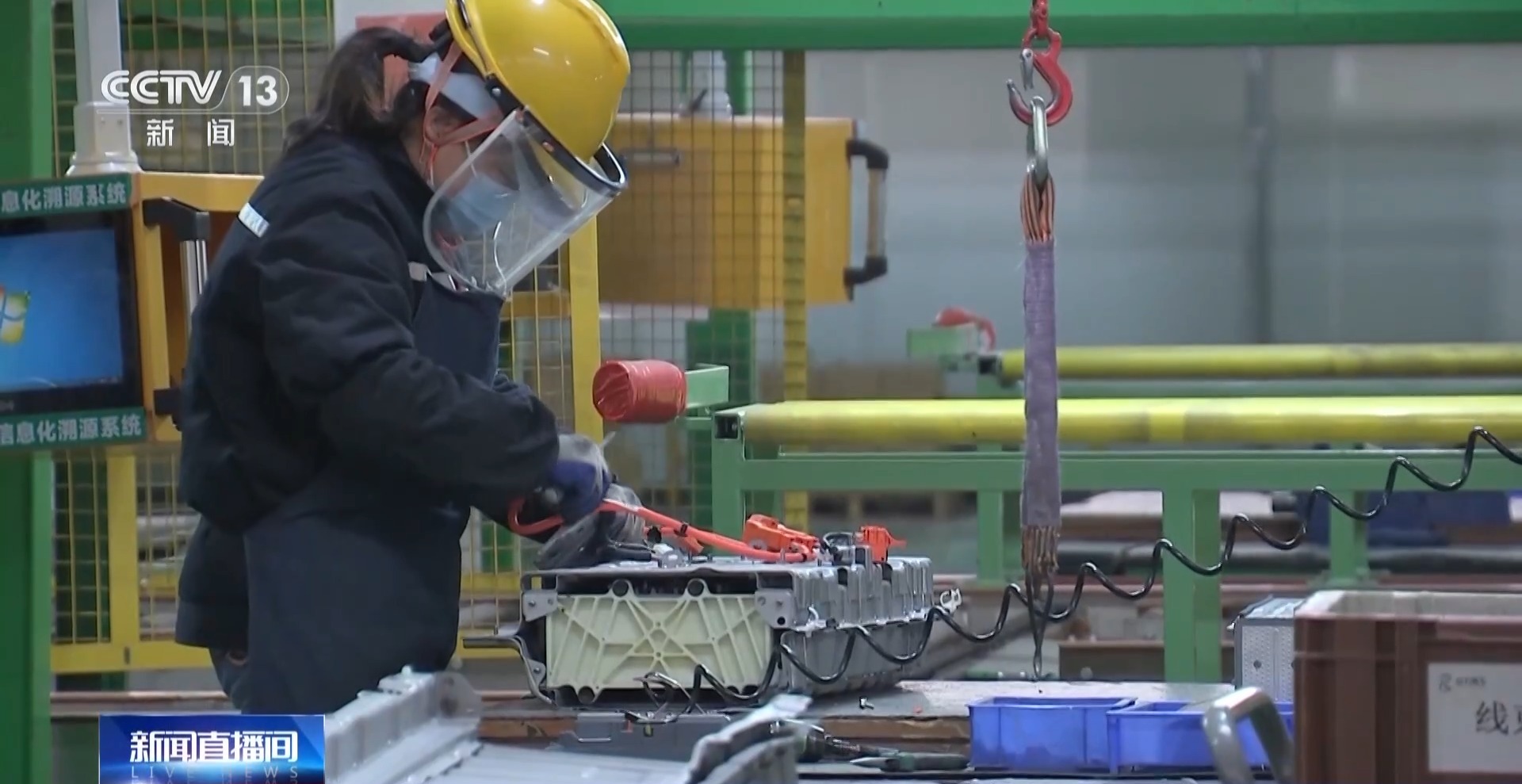
新能源车动力电池将有“身份证”,新规出台解决哪些痛点?
Yang Shi Xin Wen· 2026-01-17 01:53
Core Viewpoint - The new regulations on the recycling and comprehensive utilization of used power batteries from new energy vehicles (NEVs) are aimed at addressing the industry's urgent needs as the production and sales of NEVs are projected to exceed 16 million units by 2025, with the recycling volume of used batteries surpassing 400,000 tons [1][3][12]. Group 1: Characteristics and Highlights of the New Regulations - The new regulations emphasize "full channel, full chain, and full life cycle" management of used power batteries [6][14]. - It includes comprehensive management across various aspects such as battery production, vehicle scrapping, battery swapping operations, and maintenance [6][14]. - A digital identity system for batteries will be established to monitor the entire life cycle of batteries, enhancing traceability and accountability [9][15]. Group 2: Addressing Current Industry Needs - The new regulations are timely, as previous guidelines lacked strong enforcement mechanisms and did not adequately address emerging issues in the battery recycling industry [12][22]. - The regulations clarify the responsibilities and obligations of various stakeholders in the battery production and recycling chain, introducing specific penalties for non-compliance [12][22]. - Efficient recycling of batteries is crucial for resource conservation, especially given China's high dependence on imported metals like lithium and nickel [13][22]. Group 3: Pain Points Addressed by the New Regulations - The "three full" approach aims to extend producer responsibility and improve lifecycle management of batteries [14][22]. - The concept of "cascade utilization" is eliminated to prevent confusion regarding battery quality and safety in various applications [11][18]. - The regulations encourage the establishment of a coordinated recycling system across provinces to avoid resource wastage and ensure effective recovery [20][21].
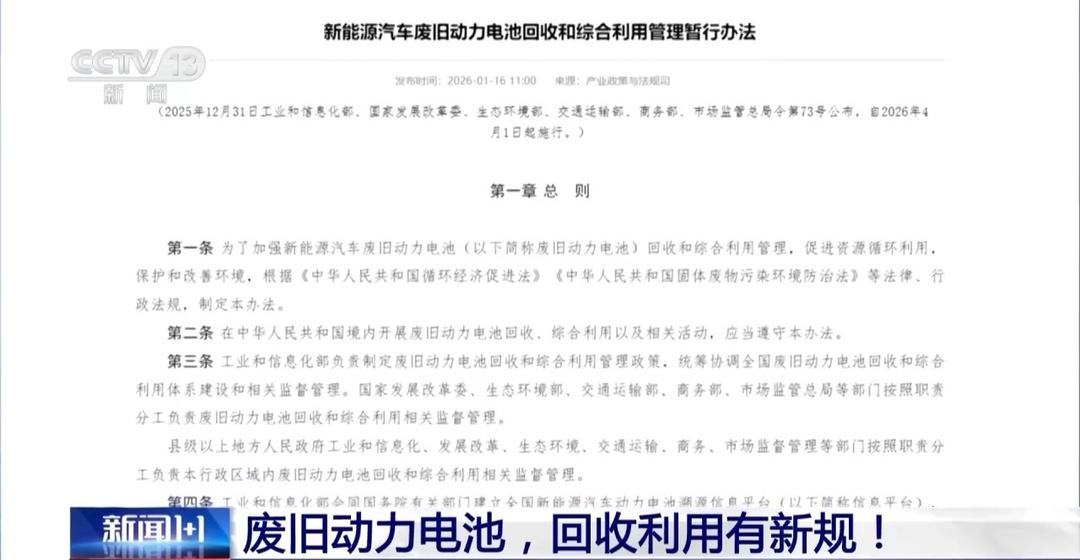
【新华解读】如何加强新能源汽车废旧动力电池回收利用?
Xin Hua She· 2026-01-17 01:45
Core Viewpoint - The Ministry of Industry and Information Technology, along with five other departments, has released interim measures for the recycling and comprehensive utilization of used power batteries from new energy vehicles, emphasizing a "whole-channel, whole-chain, whole-lifecycle" management approach [1] Group 1: Regulatory Framework - The new regulations require that scrapped new energy vehicles must have their power batteries intact, establishing a "vehicle-battery integration" principle to prevent the loss of used batteries [1][2] - The management measures introduce new requirements for the comprehensive utilization of batteries and the conditions for enterprises involved, eliminating the concept of "cascade utilization" [2][3] Group 2: Safety and Quality Standards - The decision to eliminate "cascade utilization" stems from safety concerns, as some companies have produced new battery products from used batteries that may not meet quality standards, leading to potential risks for consumers [3] - The new regulations mandate that any battery products produced must comply with the quality standards of their application fields, ensuring consumer safety [3] Group 3: Recycling and Utilization Efficiency - The recycling of used power batteries is crucial as they contain valuable metals like nickel, cobalt, manganese, and lithium, and improper disposal could lead to environmental pollution and resource wastage [1][4] - Some companies have achieved significant recovery rates, with nickel, cobalt, and manganese recovery rates reaching 99.6% and lithium recovery rates at 96.5%, demonstrating the economic and ecological benefits of effective recycling [4] Group 4: Management and Oversight - The management measures follow a comprehensive approach that includes all aspects of battery production, vehicle scrapping, battery swapping operations, and maintenance to ensure proper management of used batteries [5] - Responsibilities and obligations are clearly defined across the entire battery lifecycle, from production to recycling, enhancing supervision and management of each segment [6] Group 5: Digital Identification System - A digital identification system will be established for each power battery, linking information from production, sales, maintenance, scrapping, and recycling, enabling full lifecycle monitoring and traceability [7] - The Ministry of Industry and Information Technology will collaborate with relevant departments to create an information platform that generates a unique, dynamic digital ID for each battery pack, supporting comprehensive supervision [7]
新华解码丨如何加强新能源汽车废旧动力电池回收利用?
Xin Lang Cai Jing· 2026-01-16 18:02
Core Viewpoint - The article discusses the newly released interim measures for the recycling and comprehensive utilization of used power batteries from electric vehicles, emphasizing the need for a "whole-channel, whole-chain, and whole-lifecycle" management approach to address the growing volume of waste batteries as the electric vehicle market expands [1][5]. Group 1: Regulatory Framework - The Ministry of Industry and Information Technology and five other departments have jointly issued the interim measures, which require that scrapped electric vehicles must have their batteries included, establishing a digital identity for each battery [1][5]. - The management measures set new requirements for the comprehensive utilization of waste batteries, including a prohibition on the "cascade utilization" concept, which has been a common practice among some companies [2][3]. Group 2: Environmental and Safety Considerations - The article highlights the environmental risks associated with improper recycling of used batteries, which contain valuable metals like nickel, cobalt, manganese, and lithium, as well as toxic substances [1][3]. - The new regulations aim to eliminate the potential for unsafe and non-compliant battery products in the market, ensuring that all battery products meet quality standards for their intended applications [3]. Group 3: Implementation and Monitoring - The management approach includes comprehensive oversight of the entire battery lifecycle, from production to recycling, with a focus on establishing a national information platform for tracking battery flows [5][6]. - A digital identity system will be implemented to monitor the lifecycle of each battery, linking it to various stages such as production, sales, maintenance, and recycling [6]. Group 4: Industry Impact - The recycling rates for valuable materials from used batteries have shown significant improvement, with some companies achieving recovery rates of 99.6% for nickel, cobalt, and manganese, and 96.5% for lithium, indicating positive economic, social, and ecological benefits [4]. - The complexity of the battery recycling process, involving multiple stakeholders and lengthy procedures, presents challenges for effective regulation and management [4].
新华解码|如何加强新能源汽车废旧动力电池回收利用?
Xin Hua She· 2026-01-16 14:17
Core Viewpoint - The article discusses the newly released interim measures for the recycling and comprehensive utilization of used power batteries from electric vehicles, emphasizing the need for a "whole-channel, whole-chain, and whole-lifecycle" management approach to address the growing volume of waste batteries as the electric vehicle market expands [1][2]. Group 1: Regulatory Framework - The Ministry of Industry and Information Technology and five other departments have jointly issued the interim measures, mandating that scrapped electric vehicles must have their batteries included, establishing a "vehicle-battery integration" requirement [1][2]. - The measures aim to prevent the illegal recycling of used batteries and ensure that all batteries are accounted for during the scrapping process [2]. Group 2: Changes in Utilization Concepts - The concept of "cascade utilization" of used batteries, where batteries are repurposed for other applications, has been eliminated from the new regulations due to safety and quality concerns [3]. - The new regulations stipulate that any organization or individual is prohibited from using waste batteries directly or after processing in electric bicycles or other areas banned by laws and regulations [3]. Group 3: Recycling Efficiency - Some companies have achieved significant recycling rates, with nickel, cobalt, and manganese recovery rates reaching 99.6% and lithium recovery rates at 96.5%, demonstrating substantial economic, social, and ecological benefits [4]. - The recycling process involves multiple enterprises and complex channels, making regulatory oversight challenging [4]. Group 4: Management Strategy - The management measures follow a comprehensive strategy that includes full-channel management of battery production, vehicle scrapping, battery swapping operations, and maintenance [5][6]. - Responsibilities and obligations for all stakeholders in the battery production, sales, maintenance, replacement, dismantling, recycling, and comprehensive utilization processes are clearly defined [6]. Group 5: Digital Identity Management - A digital identity system for power batteries will be established, linking information from production, sales, maintenance, scrapping, recycling, and comprehensive utilization, enabling full lifecycle monitoring and traceability [7]. - Each battery will receive a unique, dynamic digital identity to support comprehensive supervision and management throughout its lifecycle [7].
商品力 + 全渠道驱动 沃尔玛四店同开破解社区零售同质化
21世纪经济报道· 2025-12-31 11:44
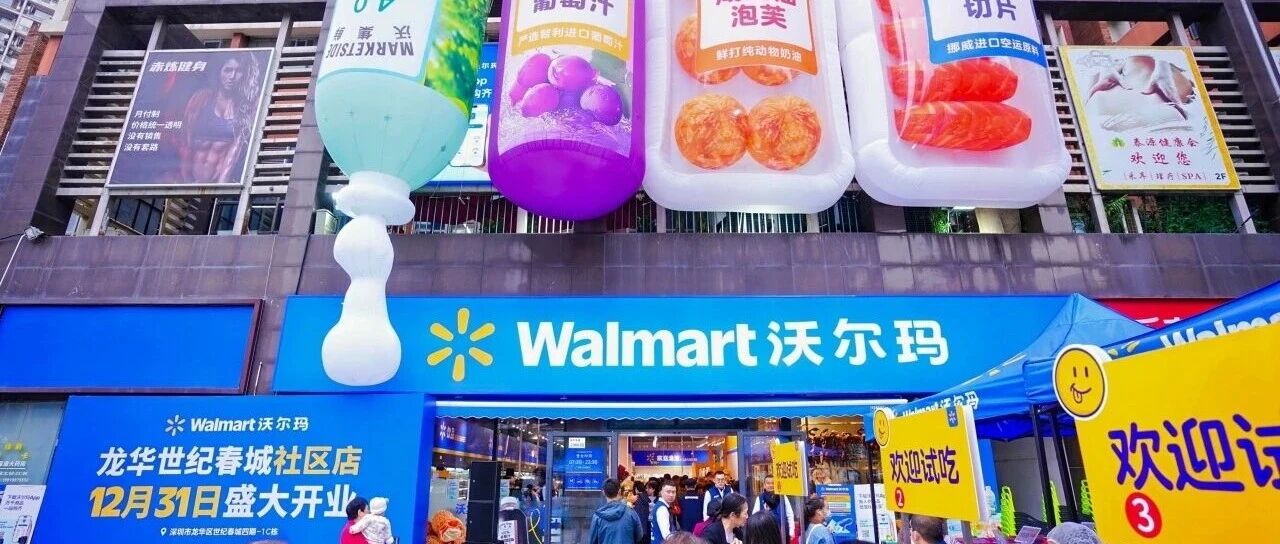
Core Insights - The community retail sector in China is undergoing significant restructuring, with the market size approaching 5.2 trillion yuan, attracting numerous players. However, many participants overlook the core demands for "quality certainty" and "scene adaptability," leading to a homogenized low-price competition [1] Group 1: Walmart's Community Store Strategy - Walmart has opened four community stores in Shenzhen and upgraded its app, marking the validation of its "small, refined, and close" community store model and entering a phase of replication and expansion [3] - The community store layout focuses on addressing industry pain points, featuring a "small and refined" model with approximately 500 square meters and 2000 selected products, catering to high-frequency daily needs [5] - Walmart's private label "Wojixian" has been upgraded to emphasize quality, with a focus on simple ingredients and stable quality-price ratios, differentiating itself in a price-driven market [5][7] Group 2: Product Quality and Consumer Focus - Walmart has established a high-standard food safety and quality control management system, ensuring end-to-end quality management through strict supplier and product controls [7] - The "Wojixian" brand emphasizes low-sugar and health-oriented products, responding to consumer demands for both health and trendiness, with innovative offerings quickly gaining popularity [9] - The company does not use private label sales as a performance metric, instead prioritizing customer feedback to drive product development, which is crucial for avoiding homogenization [9] Group 3: Omnichannel Integration - Walmart's community stores target immediate high-frequency needs within a 3-kilometer radius, while its app serves as a primary choice for daily replenishment, demonstrating the effectiveness of its omnichannel strategy [12] - The integration of online and offline channels creates a "collaborative closed loop," where online consumer data informs offline product optimization, enhancing overall retail efficiency [10][12] - Walmart's commitment to a "customer-first" philosophy underpins its operational strategy, ensuring that every action taken is aimed at enhancing consumer value [13] Group 4: Strategic Direction - Walmart's approach focuses on "product strength" and "omnichannel support," avoiding the pitfalls of low-price competition and instead building a differentiated advantage by addressing core customer needs [15] - The company's future development logic emphasizes "customer first, quality core, channel collaboration, and long-termism," guiding the industry towards a new phase of competition based on quality, efficiency, and value [15]

维他奶集团罗友礼:对持续扩大规模的长期潜力充满信心
Zheng Quan Shi Bao Wang· 2025-11-25 15:22
Core Viewpoint - Vitasoy International Holdings Limited reported a 6% decrease in revenue for the interim period ending September 30, 2025, primarily due to challenges in the mainland China market, while maintaining a gross margin of 51.1% and an operating profit margin of 7.6% [1] Group 1: Financial Performance - The company recorded a profit attributable to equity holders of HKD 172 million [1] - The board declared an interim dividend of HKD 0.04 per ordinary share, unchanged from the previous interim period [1] - The operating profit margin for the mainland China business was maintained at 11% due to cost optimization measures [2] Group 2: Market Performance - The mainland China business faced revenue decline due to shrinking traditional retail channel sales, although this was partially offset by robust growth in the omnichannel approach [1][2] - In Hong Kong, the beverage business continued to strengthen its leadership position in the non-alcoholic beverage market, despite challenges in the Vitasoy Tian Di business and export to the U.S. [2] - The Australian and New Zealand markets saw a 5% sales growth in local currency, with improved profitability and a significant reduction in operating losses to HKD 22 million [3] Group 3: Product Innovation and Strategy - The company focused on enhancing commercial execution and product innovation, leading to increased market share for Vitasoy's soy and plant-based milk products [1] - New product launches, such as Vitasoy's low-sugar white peach soy milk and lemon tea, contributed to market share growth in the ready-to-drink tea category [1][2] - In the Philippines, the plant-based category has been growing steadily at a double-digit rate, driven by oat and almond products [3]

山姆会员商店增长强劲,电商销售额占比超50% 业绩维持上涨趋势 沃尔玛中国面临挑战与烦恼
Mei Ri Jing Ji Xin Wen· 2025-11-24 13:02
Core Viewpoint - Walmart China is entering a phase of rapid expansion, with significant growth in sales and e-commerce, while also facing challenges in a competitive retail environment [1][2][8] Financial Performance - In Q3 of FY2026, Walmart China achieved net sales of $6.1 billion, a year-on-year increase of 21.8%, with comparable sales growth of 13.8% [2][3] - E-commerce sales grew by 32%, accounting for over 50% of total sales, reflecting a significant increase of more than 390 basis points compared to the same period last year [2][3] - Despite a decline in gross margin due to changes in business format, operating profit increased due to strong sales growth and improved operational efficiency [2] Expansion and Leadership Changes - Walmart China opened a new Sam's Club store in Beijing, bringing the total number of Sam's locations in China to 61, with plans for continued expansion [1][3] - The appointment of Liu Peng, former Alibaba executive, as the president of Sam's Club in China is seen as a strategic move to enhance digital capabilities and better understand local consumer behavior [3][4] Competitive Landscape - The retail market in China is becoming increasingly competitive, with local players like Dingdong Maicai and Hema launching their own private label products and expanding rapidly [6][8] - Walmart faces challenges related to customer satisfaction, including issues with product offerings and delivery services, which have led to some negative feedback from members [6][7][8] Digital Transformation and Future Outlook - Walmart's leadership emphasizes the importance of digital innovation and the ability to adapt to new shopping formats, including social commerce [5][8] - The company is preparing for a future driven by artificial intelligence, with a focus on enhancing customer experience and operational efficiency [5][4]
山姆狂奔、电商占比过半,沃尔玛中国业绩高增下的“外患”与“内伤”
Mei Ri Jing Ji Xin Wen· 2025-11-22 12:57
Core Insights - Walmart China is entering a phase of rapid expansion, with Q3 2026 net sales reaching $6.1 billion, a year-on-year increase of 21.8%, and e-commerce sales growing by 32% [2][3] - The Sam's Club continues to show strong growth, with double-digit increases in transaction volume and the opening of new stores, including the 61st store in China [2][3] - Walmart's private label "沃集鲜" has been upgraded, introducing nearly a thousand new or upgraded products [2] - The appointment of former Alibaba executive Liu Peng as president of Sam's Club indicates Walmart's commitment to enhancing its digital capabilities in China [4] Financial Performance - Walmart China's comparable sales increased by 13.8% in Q3, with e-commerce sales accounting for over 50% of total sales, a rise of over 390 basis points from the previous year [3] - The overall membership income grew by 17%, with international business growth at 34%, primarily driven by Sam's Club in China [4] - Despite a decline in gross margin due to changes in business mix, operating profit increased due to strong sales growth and improved operational efficiency [3][4] Market Position and Challenges - Walmart faces intense competition in the Chinese retail market, with emerging players like Dingdong Maicai and Hema launching their own private label products [10][11] - Recent customer complaints regarding delivery issues and product misrepresentation have raised concerns about Sam's Club's reputation [9][10] - The company is adapting to a rapidly changing retail landscape, emphasizing the need for strong product offerings and digital transformation [11] Leadership Changes - Douglas McMillon, the current president, will step down at the end of January, with John Furner set to take over, bringing a strong background in digital innovation [5] - The leadership transition is seen as crucial for navigating the challenges posed by artificial intelligence and evolving consumer preferences [5][6]