
全链条

Search documents
“硬保障”+“软服务”,民生福祉融入烟火日常
Xin Lang Cai Jing· 2026-02-14 11:24
Core Viewpoint - Jiangsu Province is focusing on enhancing the well-being of its citizens through a comprehensive approach to public service, with a significant budget allocation of approximately 18.3 billion yuan for 2026, marking the highest proportion of new projects in history [1][2]. Group 1: 2025 Implementation and 2026 Planning - The government has successfully completed all 45 projects under the 2025 civil affairs initiative, ensuring that the needs of the public are met [1]. - A robust mechanism for project tracking and evaluation has been established, including over 40 meetings and more than 20 documents issued to facilitate smooth implementation [1]. - The 2026 civil affairs projects will focus on five key themes: small-scale initiatives, full-chain collaboration, sustainability, effectiveness, and investment in people [2]. Group 2: Public Service Enhancements - Jiangsu is committed to improving public services by optimizing education resources, enhancing healthcare services, and enriching cultural and sports offerings [3]. - The province aims to create 1.2 million new urban jobs, maintaining an urban unemployment rate around 5% [3]. - Initiatives such as over 3,000 "talent night markets" and more than 1,000 "skills night school" training programs are being implemented to boost employment and skill development [3].
真金白银保障!办好今年45件民生实事,江苏已明确安排183亿元预算资金
Yang Zi Wan Bao Wang· 2026-02-09 08:25
Core Viewpoint - The Jiangsu provincial government has announced 45 livelihood projects for 2026, with over half being new initiatives, marking the highest number of multi-department collaborations to date [2][6]. Group 1: Project Overview - The 45 livelihood projects are categorized into 12 areas, including education, healthcare, housing, and public safety, with specific projects aimed at youth mental health and employment enhancement [2][3]. - A total of 18 projects will be implemented through collaboration among multiple departments, the highest in history, aimed at efficiently addressing community concerns [2][4]. Group 2: Key Concepts - The projects emphasize five key concepts: "small cuts," "full chain," "sustainability," "effectiveness," and "investment in people," focusing on practical, community-oriented solutions [3][4]. - "Small cuts" refers to addressing specific community needs, such as free dental care for eligible children and the installation of elevators in existing residential buildings [3]. Group 3: Financial Support - The provincial government has allocated approximately 183 billion yuan for these projects, ensuring that each initiative has a budget and funding guarantee [5][7]. - The fiscal strategy includes a rolling three-year expenditure plan, with a commitment to maintain a budgetary connection between current and future projects [6][8].
动力电池回收利用管理进一步完善 引导产业走向规范新阶段
Xin Lang Cai Jing· 2026-01-18 21:31
Core Viewpoint - The recent issuance of the "Interim Measures for the Management of Recycling and Comprehensive Utilization of Waste Power Batteries for New Energy Vehicles" marks a significant step towards legalizing the management of power battery recycling and utilization in China, emphasizing a "full-channel, full-chain, and full-lifecycle" approach [1][2]. Group 1: Policy Framework - The "Interim Measures" are a key implementation of the "Action Plan for Improving the Recycling and Utilization System of Power Batteries for New Energy Vehicles," which aims to accelerate the establishment of relevant regulations [2]. - The measures include a "vehicle-battery integrated scrapping" system to ensure that scrapped new energy vehicles come with their power batteries, preventing the loss of tracking for waste batteries [2][3]. Group 2: Responsibilities and Regulations - The measures clarify the responsibilities of battery manufacturers and new energy vehicle producers, mandating them to fulfill extended producer responsibility and enhance information sharing across the industry chain [1][3]. - Specific obligations are outlined for various stakeholders, including battery replacement service providers and vehicle dismantling enterprises, to ensure proper disposal and recycling of waste batteries [3][4]. Group 3: Industry Impact - The new regulations aim to standardize the market for battery disposal and recycling, addressing previous issues of low industry entry barriers that led to substandard practices [4]. - Enhanced regulatory measures will impose penalties for non-compliance, such as failing to report battery information or not fulfilling recycling responsibilities, thereby strengthening the enforcement of the new rules [4]. Group 4: Future Outlook - The industry is expected to move towards a more sustainable future under the guidance of these policies, with a projected increase in waste battery generation exceeding 1 million tons by 2030 [1]. - The establishment of a national information platform for tracking battery flows and the introduction of digital identification for batteries are anticipated to improve monitoring and management [2].
动力电池回收新规来了 有哪些重点亮点?
Yang Shi Xin Wen· 2026-01-17 04:55
Core Viewpoint - The new management measures emphasize "omni-channel, full chain, and full lifecycle" characteristics for the management of used power batteries from electric vehicles, aiming to ensure safety and environmental protection in the recycling process [1][4]. Group 1: Omni-channel Management - The management measures regulate various aspects including battery production, vehicle scrapping, battery swapping operations, and maintenance, with a focus on the "vehicle-battery integrated scrapping" system to prevent the uncontrolled flow of used batteries [1][4]. Group 2: Full Chain Responsibility - The measures clarify the responsibilities and obligations of various entities involved in the production, sales, maintenance, replacement, disassembly, recycling, and comprehensive utilization of batteries [1][4]. Group 3: Full Lifecycle Information Management - The establishment of a national information platform for tracing the lifecycle of new energy vehicle power batteries is highlighted, along with a digital identity management system for these batteries to enhance information traceability [1][7]. Group 4: Producer Responsibility - The new regulations stress the importance of safety in the recycling and comprehensive utilization of used power batteries, mandating that producers of new energy vehicles and batteries fulfill extended producer responsibilities [4][6]. Group 5: Technological Empowerment - The introduction of an information platform that includes features for information tracing, digital identity, corporate responsibility evaluation, and data analysis is a significant highlight, aiming to cover all lifecycle stages of battery information [7]. Group 6: Ecological Design and Maintenance - Battery manufacturers and new energy vehicle producers are encouraged to adopt ecological design principles, ensuring that battery components are easy to maintain and disassemble, while also providing necessary technical information for disassembly [9]. Group 7: Prohibition of "Tiered Utilization" - The new management measures explicitly prohibit the direct or processed use of used power batteries in electric bicycles and other areas restricted by laws and regulations, moving away from the previously used "tiered utilization" concept [10].

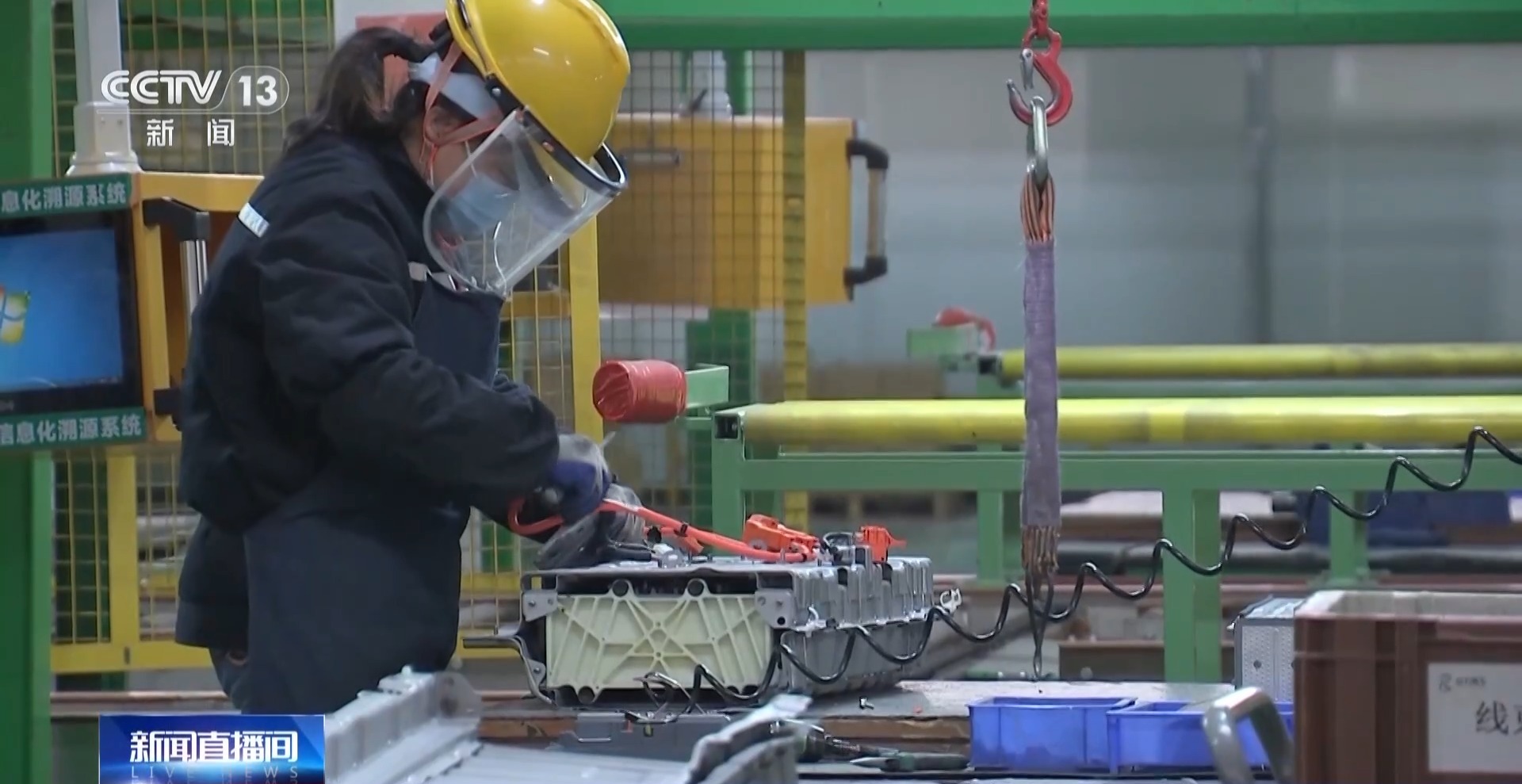
新能源车动力电池将有“身份证”,新规出台解决哪些痛点?
Yang Shi Xin Wen· 2026-01-17 01:53
Core Viewpoint - The new regulations on the recycling and comprehensive utilization of used power batteries from new energy vehicles (NEVs) are aimed at addressing the industry's urgent needs as the production and sales of NEVs are projected to exceed 16 million units by 2025, with the recycling volume of used batteries surpassing 400,000 tons [1][3][12]. Group 1: Characteristics and Highlights of the New Regulations - The new regulations emphasize "full channel, full chain, and full life cycle" management of used power batteries [6][14]. - It includes comprehensive management across various aspects such as battery production, vehicle scrapping, battery swapping operations, and maintenance [6][14]. - A digital identity system for batteries will be established to monitor the entire life cycle of batteries, enhancing traceability and accountability [9][15]. Group 2: Addressing Current Industry Needs - The new regulations are timely, as previous guidelines lacked strong enforcement mechanisms and did not adequately address emerging issues in the battery recycling industry [12][22]. - The regulations clarify the responsibilities and obligations of various stakeholders in the battery production and recycling chain, introducing specific penalties for non-compliance [12][22]. - Efficient recycling of batteries is crucial for resource conservation, especially given China's high dependence on imported metals like lithium and nickel [13][22]. Group 3: Pain Points Addressed by the New Regulations - The "three full" approach aims to extend producer responsibility and improve lifecycle management of batteries [14][22]. - The concept of "cascade utilization" is eliminated to prevent confusion regarding battery quality and safety in various applications [11][18]. - The regulations encourage the establishment of a coordinated recycling system across provinces to avoid resource wastage and ensure effective recovery [20][21].
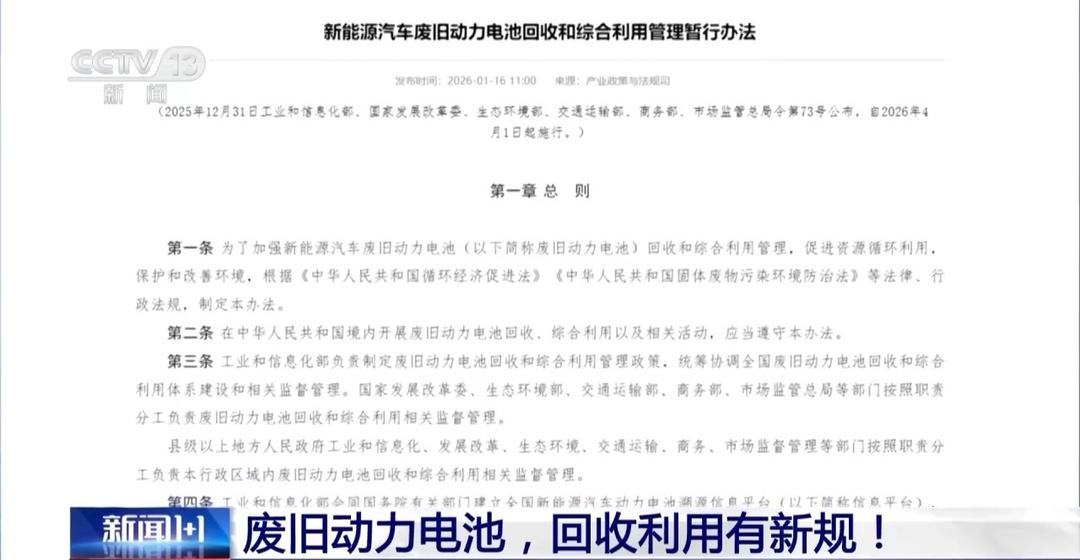
【新华解读】如何加强新能源汽车废旧动力电池回收利用?
Xin Hua She· 2026-01-17 01:45
Core Viewpoint - The Ministry of Industry and Information Technology, along with five other departments, has released interim measures for the recycling and comprehensive utilization of used power batteries from new energy vehicles, emphasizing a "whole-channel, whole-chain, whole-lifecycle" management approach [1] Group 1: Regulatory Framework - The new regulations require that scrapped new energy vehicles must have their power batteries intact, establishing a "vehicle-battery integration" principle to prevent the loss of used batteries [1][2] - The management measures introduce new requirements for the comprehensive utilization of batteries and the conditions for enterprises involved, eliminating the concept of "cascade utilization" [2][3] Group 2: Safety and Quality Standards - The decision to eliminate "cascade utilization" stems from safety concerns, as some companies have produced new battery products from used batteries that may not meet quality standards, leading to potential risks for consumers [3] - The new regulations mandate that any battery products produced must comply with the quality standards of their application fields, ensuring consumer safety [3] Group 3: Recycling and Utilization Efficiency - The recycling of used power batteries is crucial as they contain valuable metals like nickel, cobalt, manganese, and lithium, and improper disposal could lead to environmental pollution and resource wastage [1][4] - Some companies have achieved significant recovery rates, with nickel, cobalt, and manganese recovery rates reaching 99.6% and lithium recovery rates at 96.5%, demonstrating the economic and ecological benefits of effective recycling [4] Group 4: Management and Oversight - The management measures follow a comprehensive approach that includes all aspects of battery production, vehicle scrapping, battery swapping operations, and maintenance to ensure proper management of used batteries [5] - Responsibilities and obligations are clearly defined across the entire battery lifecycle, from production to recycling, enhancing supervision and management of each segment [6] Group 5: Digital Identification System - A digital identification system will be established for each power battery, linking information from production, sales, maintenance, scrapping, and recycling, enabling full lifecycle monitoring and traceability [7] - The Ministry of Industry and Information Technology will collaborate with relevant departments to create an information platform that generates a unique, dynamic digital ID for each battery pack, supporting comprehensive supervision [7]
2026年北京丰台加快建设150个总投资2492.3亿元的区级重点工程
Bei Jing Shang Bao· 2026-01-16 23:30
Core Viewpoint - The 2026 year marks the beginning of the "14th Five-Year Plan," emphasizing the importance of enhancing economic development quality and efficiency [1] Group 1: Economic Development Initiatives - The district plans to improve the "4+5+X" modern industrial system and leverage ten industrial promotion centers along with government investment funds [1] - The goal is to attract 100 domestic projects with investments over 100 million yuan, 80 high-potential projects, and 170 high-quality enterprises [1] Group 2: Infrastructure and Investment - There are 13 key municipal projects with a total investment of 431.9 billion yuan and 150 district-level key projects with a total investment of 2,492.3 billion yuan [1] - The district aims to introduce 50 first stores in Beijing, targeting a market consumption growth rate of 5% [1] Group 3: Business Environment Optimization - Continuous efforts will be made to enhance the business environment, including the promotion of "comprehensive inspections" and the "Fengyi Service" brand [1] - The "Xianfeng Port" work mechanism will be optimized to create a comprehensive, full-cycle, and all-weather enterprise service ecosystem [1]
新华解码丨如何加强新能源汽车废旧动力电池回收利用?
Xin Lang Cai Jing· 2026-01-16 18:02
Core Viewpoint - The article discusses the newly released interim measures for the recycling and comprehensive utilization of used power batteries from electric vehicles, emphasizing the need for a "whole-channel, whole-chain, and whole-lifecycle" management approach to address the growing volume of waste batteries as the electric vehicle market expands [1][5]. Group 1: Regulatory Framework - The Ministry of Industry and Information Technology and five other departments have jointly issued the interim measures, which require that scrapped electric vehicles must have their batteries included, establishing a digital identity for each battery [1][5]. - The management measures set new requirements for the comprehensive utilization of waste batteries, including a prohibition on the "cascade utilization" concept, which has been a common practice among some companies [2][3]. Group 2: Environmental and Safety Considerations - The article highlights the environmental risks associated with improper recycling of used batteries, which contain valuable metals like nickel, cobalt, manganese, and lithium, as well as toxic substances [1][3]. - The new regulations aim to eliminate the potential for unsafe and non-compliant battery products in the market, ensuring that all battery products meet quality standards for their intended applications [3]. Group 3: Implementation and Monitoring - The management approach includes comprehensive oversight of the entire battery lifecycle, from production to recycling, with a focus on establishing a national information platform for tracking battery flows [5][6]. - A digital identity system will be implemented to monitor the lifecycle of each battery, linking it to various stages such as production, sales, maintenance, and recycling [6]. Group 4: Industry Impact - The recycling rates for valuable materials from used batteries have shown significant improvement, with some companies achieving recovery rates of 99.6% for nickel, cobalt, and manganese, and 96.5% for lithium, indicating positive economic, social, and ecological benefits [4]. - The complexity of the battery recycling process, involving multiple stakeholders and lengthy procedures, presents challenges for effective regulation and management [4].
新华解码|如何加强新能源汽车废旧动力电池回收利用?
Xin Hua She· 2026-01-16 14:17
Core Viewpoint - The article discusses the newly released interim measures for the recycling and comprehensive utilization of used power batteries from electric vehicles, emphasizing the need for a "whole-channel, whole-chain, and whole-lifecycle" management approach to address the growing volume of waste batteries as the electric vehicle market expands [1][2]. Group 1: Regulatory Framework - The Ministry of Industry and Information Technology and five other departments have jointly issued the interim measures, mandating that scrapped electric vehicles must have their batteries included, establishing a "vehicle-battery integration" requirement [1][2]. - The measures aim to prevent the illegal recycling of used batteries and ensure that all batteries are accounted for during the scrapping process [2]. Group 2: Changes in Utilization Concepts - The concept of "cascade utilization" of used batteries, where batteries are repurposed for other applications, has been eliminated from the new regulations due to safety and quality concerns [3]. - The new regulations stipulate that any organization or individual is prohibited from using waste batteries directly or after processing in electric bicycles or other areas banned by laws and regulations [3]. Group 3: Recycling Efficiency - Some companies have achieved significant recycling rates, with nickel, cobalt, and manganese recovery rates reaching 99.6% and lithium recovery rates at 96.5%, demonstrating substantial economic, social, and ecological benefits [4]. - The recycling process involves multiple enterprises and complex channels, making regulatory oversight challenging [4]. Group 4: Management Strategy - The management measures follow a comprehensive strategy that includes full-channel management of battery production, vehicle scrapping, battery swapping operations, and maintenance [5][6]. - Responsibilities and obligations for all stakeholders in the battery production, sales, maintenance, replacement, dismantling, recycling, and comprehensive utilization processes are clearly defined [6]. Group 5: Digital Identity Management - A digital identity system for power batteries will be established, linking information from production, sales, maintenance, scrapping, recycling, and comprehensive utilization, enabling full lifecycle monitoring and traceability [7]. - Each battery will receive a unique, dynamic digital identity to support comprehensive supervision and management throughout its lifecycle [7].
赣州银行2025年成功发行75亿元金融债券
Jin Rong Jie· 2025-12-16 14:36
Core Insights - Ganzhou Bank successfully issued a total of 7.5 billion yuan in financial bonds in 2025, including various types such as "Three Rural" bonds, technology innovation bonds, and special loans for small and micro enterprises, which optimized the bank's asset-liability structure and broadened capital replenishment channels [1][2] Group 1: Bond Issuance Achievements - Ganzhou Bank achieved multiple breakthroughs in bond issuance this year, including the first "Three Rural" financial bond in Jiangxi Province with a 3-year term at a record low interest rate of 1.93% [2] - The bank also issued the first technology innovation bond in the Ganzhou region with a 5-year term at a record low interest rate of 1.91% and a special loan bond for small and micro enterprises with a 3-year term at 1.93% [2] - The bond investors included a diverse range of institutions such as banks, brokerages, and funds, reflecting strong market confidence in the bank's operational strength and service capabilities [2] Group 2: Support for the Real Economy - Ganzhou Bank ensured that the funds raised from the special bonds were accurately directed towards corresponding sectors, aligning with Jiangxi Province's "1269" action plan and Ganzhou City's "7510" action plan, thereby enhancing the quality and efficiency of financial services to the real economy [3] - As of November 2025, the bank's inclusive small and micro loans reached 43.804 billion yuan, an increase of 3.3 billion yuan from the beginning of the year, with a growth rate significantly higher than other loan categories, leading among four city commercial banks in the province [3] - Agricultural loans exceeded 20.292 billion yuan, increasing by 1.63 billion yuan, covering various aspects of grain production, specialty farming, and agricultural product processing [3] Group 3: Future Outlook - Leveraging the successful bond issuance, Ganzhou Bank aims to deepen its "full-chain, full-cycle" service model and upgrade its product system, actively participating in risk compensation mechanisms and promoting collaboration among finance, industry, and government [4] - The bank will continue to focus on serving local economies, small and medium-sized enterprises, and urban-rural residents, aligning closely with the modernization of key industrial chains in Jiangxi Province and Ganzhou City [4] - Ganzhou Bank plans to utilize bond market tools to enrich financing channels and provide more flexible financial products and efficient resource allocation to support the construction of a modern industrial system in Jiangxi Province and the high-quality development of the Ganzhou revolutionary old area [4]