
废旧动力电池

Search documents
政策、技术、市场齐发力,规范废旧电池回收利用
Jing Ji Ri Bao· 2026-02-24 10:16
Core Insights - The production and sales of new energy vehicles in China are expected to grow by nearly 30% by 2025, while the volume of retired batteries is also increasing significantly [1] - By 2028, the retired volume of power batteries in China is projected to exceed 4 million tons, with the waste battery recycling industry expected to exceed 280 billion yuan in value [1] - The current standardized recycling rate of waste power batteries in China is still below 50%, indicating both pressure for recycling and significant market opportunities [1] Group 1: Policy and Regulatory Framework - In 2018, the Ministry of Industry and Information Technology introduced interim measures for the recycling and utilization of new energy vehicle power batteries, establishing a battery coding traceability system and designating automobile manufacturers as the main entities responsible for recycling [2] - The State Council approved an action plan in February 2025 to improve the recycling system for power batteries, emphasizing the need for a standardized, safe, and efficient recycling process [2] - The upcoming interim measures for the management of waste power battery recycling and comprehensive utilization, effective April 1, aim to create a full lifecycle regulatory system for power batteries [2] Group 2: Industry Development and Market Opportunities - The construction of a waste power battery recycling system is crucial, requiring a closed-loop model that integrates production, use, recycling, and regeneration [3] - The comprehensive utilization of waste power batteries in China is expected to exceed 400,000 tons by 2025, reflecting a year-on-year growth of 32.9%, driven by market demand and technological advancements [3] - The application of digital traceability technology is transforming traditional recycling models, while innovations in production processes are reducing costs and improving recovery efficiency [3] Group 3: Market Environment and Competition - The recycling of power batteries has transcended industrial boundaries, becoming a battleground for global strategic resource competition [3] - A standardized and orderly market environment is essential to prevent a large number of waste batteries from flowing into informal recycling channels, thereby promoting the transformation of waste battery recycling into a new industry with significant commercial value [3]
规范废旧动力电池回收利用
Jing Ji Ri Bao· 2026-02-23 22:15
Core Insights - The recycling and utilization of retired power batteries is crucial for reducing environmental pollution and promoting resource circulation [1][2] - By 2025, China's new energy vehicle production and sales are expected to grow by nearly 30%, leading to an increase in retired battery volume [1] - The retired battery volume in China is projected to exceed 4 million tons by 2028, with the industry value surpassing 280 billion yuan [1] Group 1: Policy and Regulatory Framework - In 2018, the Ministry of Industry and Information Technology introduced interim measures for the recycling and utilization of new energy vehicle batteries, establishing a battery coding traceability system [2] - The State Council approved an action plan in February 2025 to improve the recycling system, emphasizing the need for a standardized, safe, and efficient recycling process [2] - A new interim measure for the management of retired batteries will be implemented on April 1, aiming to create a full lifecycle regulatory system for battery recycling [2] Group 2: Market Dynamics and Opportunities - The recycling rate of retired power batteries in China is currently below 50%, indicating significant pressure for recycling and disposal, but also a substantial market opportunity [1][3] - By 2025, the comprehensive utilization of retired batteries is expected to exceed 400,000 tons, reflecting a year-on-year growth of 32.9% driven by market demand and technological advancements [3] - The application of digital traceability technology is transforming traditional recycling models, enhancing recovery efficiency and reducing processing costs [3] Group 3: Industry Structure and Innovation - There is a need to resolve structural contradictions between segmented industry layouts and full lifecycle management requirements, establishing a closed-loop system from production to recycling [3] - Encouraging resource comprehensive utilization of retired batteries is essential for achieving sustainable development in the new energy sector [3] - The competition for strategic resources in battery recycling has escalated, necessitating the creation of a regulated market environment to prevent informal recycling channels [3]
国家出手整治废旧动力电池回收乱象
Zhong Guo Jing Ji Wang· 2026-01-30 12:09
Core Viewpoint - The government is taking action to regulate the chaotic recycling of used power batteries, establishing a nationwide traceability platform for power batteries that are scrapped alongside vehicles [1] Group 1: Regulatory Actions - The government aims to address the disorganized recycling practices of used power batteries [1] - A nationwide traceability platform for power batteries will be established to enhance compliance and safety [1] Group 2: Industry Implications - The initiative targets the illegal operations of small workshops involved in battery recycling [1] - The regulation is expected to improve the overall safety and compliance standards within the battery recycling industry [1]
重磅!六部门联合印发《新能源汽车废旧动力电池回收利用管理暂行办法》
起点锂电· 2026-01-29 03:24
Core Viewpoint - The article discusses the implementation of the "Interim Measures for the Management of Recycling and Comprehensive Utilization of Waste Power Batteries for New Energy Vehicles," aimed at establishing a regulated, safe, and efficient recycling system for waste power batteries in China, in response to the rapid growth of the new energy vehicle industry and the anticipated increase in waste battery generation by 2030 [2][4]. Group 1: Regulatory Framework - The "Management Measures" is a significant initiative to implement the "Action Plan" for the recycling and utilization of waste power batteries, adhering to a "full-channel, full-chain, full-lifecycle" management approach [3][4]. - The measures emphasize the need for standardized management of waste battery sources, including production, vehicle scrapping, battery swapping operations, and maintenance [4][5]. - Responsibilities are clearly defined across all stages of battery production, sales, maintenance, replacement, disassembly, recycling, and comprehensive utilization [4][5]. Group 2: Lifecycle Management - A national information platform for tracking the lifecycle of new energy vehicle power batteries will be established, incorporating a digital identity management system for batteries [4][5]. - The measures will enhance information traceability and monitoring of battery flows using digital technologies [4][5]. Group 3: Compliance and Penalties - Strict regulatory measures are set for non-compliance, including administrative penalties such as warnings and fines for failing to meet recycling responsibilities or reporting requirements [4][5]. - The article outlines the legal basis for these measures, which aim to standardize the behavior of all participants in the recycling process [4][5]. Group 4: Future Implementation - The Ministry of Industry and Information Technology will collaborate with relevant government departments to promote and implement the "Management Measures," fostering a conducive environment for the regulated development of the industry [4][5].


六部门出台新规,为退役动力电池回收利用划定“红线”
Bei Jing Ri Bao Ke Hu Duan· 2026-01-27 00:53
Core Viewpoint - The implementation of the "Interim Measures for the Recycling and Comprehensive Utilization of Waste Power Batteries from New Energy Vehicles" aims to strengthen the supervision and management of the entire chain of waste battery recycling and utilization, which is crucial for ecological protection and the high-quality development of the new energy vehicle and battery industry [1][4]. Group 1: Policy Implementation - The new measures will officially take effect on April 1, establishing clear responsibilities for various stakeholders in the recycling process and promoting a standardized, safe, and efficient recycling system for waste power batteries [1][4]. - The measures include a comprehensive management system for tracking the lifecycle of batteries, ensuring that all stages from production to recycling are monitored [6]. Group 2: Industry Growth and Challenges - The production and sales of new energy vehicles in China are projected to reach 16.626 million and 16.49 million units respectively by 2025, marking year-on-year growth of 29% and 28.2% [2]. - The volume of waste power batteries is expected to exceed 1 million tons by 2030, necessitating the establishment of a robust recycling and utilization framework [2]. Group 3: Technological and Regulatory Developments - The government is actively developing a comprehensive management system for battery recycling, including a digital identity system for tracking battery information throughout its lifecycle [6][8]. - Over 30 national and industry standards related to battery recycling have been established to enhance the regulatory framework [2][3]. Group 4: Environmental Safety and Resource Management - The recycling of waste power batteries is critical for preventing environmental pollution and resource wastage, as these batteries contain valuable metals and hazardous materials [7]. - The Ministry of Ecology and Environment plans to implement measures to ensure that waste batteries are managed responsibly, including strict enforcement against illegal disposal practices [7]. Group 5: Market Dynamics and Utilization - Waste power batteries are increasingly viewed as "urban mines," with significant interest in their comprehensive utilization, including the production of new battery products for various applications [8]. - The concept of "cascade utilization" is being clarified, with regulations prohibiting the use of waste batteries in certain applications to ensure safety and compliance [8].
市政协委员相均泳:为全国废旧动力电池回收利用打造“北京样板”
Bei Ke Cai Jing· 2026-01-26 13:09
Core Viewpoint - The article discusses the importance of strengthening the recycling and utilization of used power batteries in Beijing's new energy vehicle sector, highlighting the challenges and proposing solutions to create a "Beijing model" for nationwide implementation [1][2]. Group 1: Current Situation and Challenges - Beijing has over 1.3 million new energy vehicles, and the first batch of their batteries is approaching the end of life, raising concerns about battery recycling [1]. - The city has made progress in establishing a comprehensive management system for battery recycling but faces challenges such as weak constraints on production, a nascent recycling industry, and inadequate regulatory oversight [2][4]. Group 2: Recommendations for Improvement - The proposal includes three main recommendations: 1. Encourage collaboration among upstream and downstream companies in the new energy vehicle industry to develop standardized battery designs and lifecycle carbon footprint accounting [3]. 2. Establish a recycling and regeneration system involving original manufacturers and recycling companies, implementing a "white list" for companies with strong technical capabilities and safety controls [3]. 3. Strengthen comprehensive regulation of the battery industry by incorporating battery recycling into local legislation, enhancing oversight, and establishing a lifecycle information tracing system [4].
000504 终止重大资产重组
Shang Hai Zheng Quan Bao· 2026-01-22 16:01
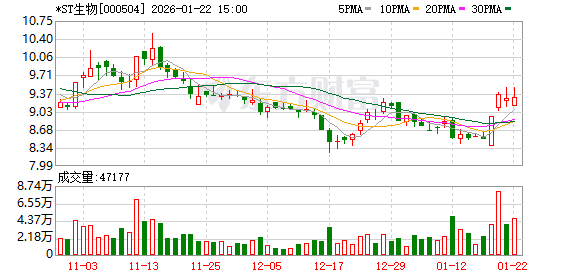
Core Viewpoint - *ST Bio (000504) expects significant revenue growth in 2025, projecting operating income between 385 million to 425 million yuan, compared to approximately 130 million yuan in the previous year, indicating a substantial year-on-year increase [2][5]. Financial Performance - The company anticipates a total profit of 18.5 million to 26.5 million yuan for 2025, with net profit attributable to shareholders expected to be between 28.5 million to 32.5 million yuan, and net profit after deducting non-recurring gains and losses projected at 8.5 million to 12.5 million yuan, all indicating a turnaround from previous losses [2][5]. - Basic earnings per share are forecasted to be between 0.025 yuan and 0.037 yuan, a recovery from a loss of 0.06 yuan per share in the previous year [5]. Revenue Drivers - The revenue increase is attributed to the acquisition of Loudi Jinhong New Materials Co., which enhanced the company's recycling business, particularly in the areas of waste battery and scrap steel recycling [5][6]. - The company has also expanded sales of related products in its main business, including beauty and health products linked to its biopharmaceutical operations, contributing to revenue and profit growth [5][6]. Cost Management - In 2025, *ST Bio implemented cost reduction and efficiency improvement measures, including organizational restructuring, personnel optimization, and expense control, which enhanced profitability [6]. Regulatory Context - 2025 is a critical year for *ST Bio to avoid delisting, as the company faced a risk warning due to negative profits and revenue below 300 million yuan in 2024 [7]. - The company can apply to lift the delisting risk warning if it meets specific financial criteria in the subsequent annual report [7]. Asset Restructuring - Concurrently, *ST Bio announced the termination of a major asset restructuring plan aimed at acquiring a 51% stake in Hunan Huize Biopharmaceutical Technology Co., a professional CRO company [11][12].


工信部:2025年我国废旧动力电池综合利用量将超40万吨
Zhong Guo Jing Ying Bao· 2026-01-19 14:41
Core Viewpoint - The rapid development of China's new energy vehicle (NEV) industry is leading to significant growth in production and sales, with a projected comprehensive utilization of over 400,000 tons of used power batteries by 2025, reflecting a year-on-year increase of 32.9% [1] Industry Summary - China's NEV production and sales are expected to reach 16.626 million and 16.49 million units respectively by 2025, marking year-on-year growth of 29% and 28.2% [1] - NEVs are projected to account for 47.9% of total new car sales in the country by 2025 [1] - The recycling and utilization system for used power batteries has made significant progress, with leading companies achieving international advanced levels in the recovery rates of lithium, cobalt, and nickel [1] Future Projections - The country is anticipated to enter a phase of large-scale retirement of power batteries, with an estimated generation of over 1 million tons of used batteries by 2030 [1]

20cm速递|六部门发文规范动力电池回收!泰胜风能涨13.19%,创业板新能源ETF华夏(159368)回调0.26%
Mei Ri Jing Ji Xin Wen· 2026-01-19 06:35
Group 1 - The A-share market experienced fluctuations on January 19, with the ChiNext New Energy ETF Huaxia (159368) slightly declining by 0.26% in the afternoon [1] - Notable stock performances included Taisheng Wind Power rising by 13.19%, Maiwei Co. increasing by 9.61%, Yingjie Electric gaining 8.07%, and Dier Laser up by 4.91% [1] - The ChiNext New Energy ETF Huaxia (159368) has seen a net inflow of over 51 million yuan in the past five days, with a trading volume of 99.48 million yuan, making it the largest in its category [1] Group 2 - On January 16, six departments, including the Ministry of Industry and Information Technology and the National Development and Reform Commission, released a temporary management measure for the recycling and comprehensive utilization of used power batteries for new energy vehicles, effective from April 1, 2026 [1] - The core of the new regulation emphasizes a "vehicle-battery integrated scrapping" system, aiming to establish a management system covering "all channels, all chains, and all life cycles" and to introduce a "digital identity" for power batteries [1] - According to research institutions, it is estimated that by 2030, the amount of used power batteries generated in China will exceed 1 million tons, highlighting the need for a structured recycling system [1] Group 3 - The ChiNext New Energy ETF Huaxia (159368) is the largest ETF fund tracking the ChiNext New Energy Index, which includes various sectors such as batteries and photovoltaics [2] - The fund has high elasticity, with a potential increase of up to 20%, and the lowest fee rate, with a combined management and custody fee of only 0.2% [2] - As of December 30, 2025, the fund's scale is projected to reach 676 million yuan, with an average daily trading volume of 70.75 million yuan over the past month [2]


格林期货早盘提示:钢材-20260119
Ge Lin Qi Huo· 2026-01-19 02:04
Group 1 - The investment rating of the steel industry in the report is "volatile" [1] Group 2 - The core view of the report is that after the previous upward movement, rebar has entered a consolidation phase again. The further loosening of monetary policy is beneficial to commodities. The steel mill accident in Baotou over the weekend may trigger expectations of safety inspections and production suspensions in the steel industry, which is positive for the market. Fundamentally, the production and inventory of steel have both declined, with a slight decline in rebar production and inventory, an increase in hot-rolled coil production, and a slight decline in inventory. The apparent demand has increased month-on-month. Project demand remains stable, overall market transactions are okay, merchants have a good attitude, and are relatively optimistic about the future market. Overall, the supply - demand contradiction in the fundamentals is not prominent. Due to the impact of the accident, steel prices may strengthen in the short term, and short - buying can be attempted, but the sustainability is expected to be weak [1] Group 3 Market Review - Rebar and hot-rolled coils closed higher on Friday and lower in the night session [1] Important Information - Six departments issued the Interim Measures for the Recycling and Comprehensive Utilization of Spent Power Batteries from New Energy Vehicles [1] - In December 2025, 23,095 excavators of various types were sold, a year - on - year increase of 19.2%. Among them, domestic sales were 10,331 units, a year - on - year increase of 10.9%; exports were 12,764 units, a year - on - year increase of 26.9%. In 2025, a total of 235,257 excavators were sold, a year - on - year increase of 17%. Among them, domestic sales were 118,518 units, a year - on - year increase of 17.9%; exports were 116,739 units, a year - on - year increase of 16.1% [1] - Beijing will start 160 major projects in the first quarter, with a total investment of about 518.8 billion yuan [1] - In 2025, China's automobile exports exceeded 7 million, reaching 7.098 million, a year - on - year increase of 21.1%. Among them, new energy vehicle exports were 2.615 million, a year - on - year doubling, becoming the core engine driving growth [1] - Since January 19, the rediscount rate and relending rate have been lowered by 0.25 percentage points [1] - Last week, the blast furnace iron - making capacity utilization rate of 247 steel mills was 85.48%, a decrease of 0.56 percentage points from the previous week; the profitability rate of steel mills was 39.83%, an increase of 2.17 percentage points from the previous week; the daily average pig iron output was 2.2801 million tons, a decrease of 14,900 tons from the previous week [1] Market Logic - After the previous upward movement, rebar has entered a consolidation phase again. The further loosening of monetary policy is beneficial to commodities. The steel mill accident in Baotou over the weekend may trigger expectations of safety inspections and production suspensions in the steel industry, which is positive for the market. Fundamentally, the production and inventory of steel have both declined, with a slight decline in rebar production and inventory, an increase in hot-rolled coil production, and a slight decline in inventory. The apparent demand has increased month-on-month. Project demand remains stable, overall market transactions are okay, merchants have a good attitude, and are relatively optimistic about the future market. Overall, the supply - demand contradiction in the fundamentals is not prominent [1] Trading Strategy - Due to the impact of the accident, steel prices may strengthen in the short term, and short - buying can be attempted, but the sustainability is expected to be weak. The support level for the rebar main contract is 3000, and the resistance level is 3200 [1]