
无人车制造

Search documents
无人车,在农村哐哐干活
创业邦· 2025-11-24 10:13
Core Viewpoint - The rapid adoption of unmanned delivery vehicles in the logistics industry is transforming operations, particularly in remote areas where traditional delivery methods are inefficient [3][4][5]. Group 1: Unmanned Vehicle Adoption - Unmanned delivery vehicles are increasingly being utilized across various provinces, with over 6,000 units expected to be in operation by the end of 2024, surpassing the number of unmanned taxis [4][6]. - Major logistics companies like Zhongtong, Jitu, and SF Express are investing heavily in unmanned vehicles, with Zhongtong deploying nearly 3,000 units and plans for further expansion [4][6]. - The cost of unmanned vehicles has significantly decreased, with prices dropping from over 1 million yuan in 2018 to a range of 40,000 to 70,000 yuan by 2025, making them more accessible for logistics companies [22][23]. Group 2: Operational Efficiency and Cost Savings - Unmanned vehicles can operate efficiently in sparsely populated areas, reducing costs associated with fuel and labor, with some operators reporting savings of up to 25,000 yuan annually [8][9]. - The ability to deliver packages without the need for a driver allows logistics companies to serve remote locations more effectively, with unmanned vehicles capable of making multiple trips per day [8][9]. - In cities like Qingdao, unmanned vehicles are being integrated into urban logistics networks, addressing challenges such as driver shortages during peak times [9][10]. Group 3: Technological Advancements - Continuous improvements in unmanned vehicle technology, including hardware and software updates, are enhancing their operational capabilities in various weather conditions [12][23]. - Companies like Jiushi Intelligent are iterating their vehicle models annually to adapt to different climates and road conditions, ensuring stable performance [12][23]. - The integration of automated production processes is reducing manufacturing costs and improving the efficiency of unmanned vehicle production [23][24]. Group 4: Regulatory Environment and Challenges - The successful deployment of unmanned vehicles is contingent upon local government regulations and the establishment of road rights, with over 100 cities having opened up for unmanned delivery operations [16][28]. - Companies are actively engaging with local authorities to ensure compliance and safety, often requiring special permits and ongoing monitoring of unmanned vehicle operations [15][16]. - Despite the growing acceptance of unmanned vehicles, concerns about liability and accident management remain, necessitating clear legal frameworks [26][28].


「新石器无人车」完成过6亿美元D轮融资;马可波罗瓷砖登陆上交所,最新市值375.92亿人元丨全球投融资周报10.18-10.24
创业邦· 2025-10-26 03:11
Group 1 - The core viewpoint of the article highlights a significant decrease in domestic financing events, with 55 events reported this week, down by 74 from the previous week, and a total financing scale of 11.597 billion RMB [7] - The most active sectors in financing events this week are intelligent manufacturing, artificial intelligence, and healthcare, with 15, 14, and 6 events respectively [8] - The logistics and warehousing sector led in disclosed financing amounts, totaling approximately 4.732 billion RMB, with the company "New Stone Unmanned Vehicle" securing 600 million USD in Series D financing [8][10] Group 2 - The geographical distribution of disclosed financing events is primarily concentrated in Jiangsu, Beijing, and Shanghai, with Jiangsu reporting 13 events, Beijing 10, and Shanghai 10 [13] - The stage distribution of the disclosed financing events shows 38 early-stage, 13 growth-stage, and 4 late-stage events [17] Group 3 - This week, 9 completed merger and acquisition events were disclosed, a decrease of 3 from the previous week, primarily in the intelligent manufacturing, energy, and agriculture sectors [34] - Notable M&A activity includes Hangzhou Jindi Commercial Management Co., Ltd. acquiring 8.42% of Ningbo Zhongbai for 270 million RMB [36]
桐庐打造智慧物流新高地
Hang Zhou Ri Bao· 2025-09-25 03:08
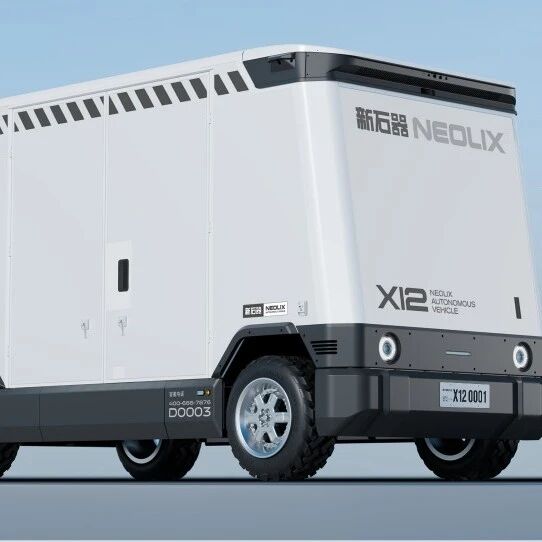
Core Insights - The article highlights the milestone achievement of New Stone Technology in delivering the world's first fleet of 10,000 autonomous delivery vehicles, marking a significant transition from technology validation to large-scale commercial application in the logistics sector [1][2]. Company Overview - New Stone Technology, founded in 2018, aims to popularize autonomous vehicles globally and has achieved rapid growth, including the establishment of the world's first factory with a capacity for 10,000 units in 2019 and obtaining public road testing qualifications for autonomous delivery vehicles in 2021 [1]. - The company has delivered over 1,000 units annually by 2024 and its L4 autonomous vehicles have accumulated over 42 million kilometers in driving distance, covering more than 280 cities across 15 countries and regions [1]. Industry Context - The city of Tonglu, known as the "hometown of private express delivery in China," has a robust logistics infrastructure, with nearly two-thirds of the national express delivery volume (1.1 billion packages) handled by local companies, providing a natural testing ground for autonomous vehicle technology [2]. - The logistics-related industry in Tonglu is projected to generate revenue of 48 billion yuan, contributing to a county GDP exceeding 50.2 billion yuan by 2024 [3]. Strategic Developments - New Stone Technology's headquarters and R&D production base were established in Tonglu, with an expected annual output value of 100 million yuan and a cumulative output value projected to exceed 5 billion yuan within five years [2]. - The company has signed contracts to supply 10,000 autonomous vehicles to major logistics players, enhancing industry collaboration and synergy [2].
今年上半年,南京全社会用电量372.38亿千瓦时,连创新高
Nan Jing Ri Bao· 2025-08-18 02:44
Group 1: Electricity Consumption and Economic Growth - Nanjing's total electricity consumption reached 37.238 billion kWh in the first half of the year, with a GDP of 917.918 billion yuan, reflecting a 5.3% year-on-year growth [1] - The peak electricity load in Nanjing hit a historical high of 16.43 million kW on July 7, indicating strong economic activity [1] Group 2: Consumer Activity and Power Demand - From January to July, the wholesale and retail sector's electricity consumption increased by 12.55% year-on-year, driven by events like music and beer festivals [2] - The core area of the Fuzimiao business district saw a 13% year-on-year increase in electricity consumption since July, attributed to the vibrant night market economy [2] - The "Rich Road" area, a popular tourist destination, experienced a 19% increase in electricity usage, necessitating upgrades to outdated power distribution equipment [2] Group 3: Digital Economy and Power Usage - Nanjing Tencent Digital Co., Ltd. reported a staggering 520.26% year-on-year increase in electricity consumption from January to July, highlighting the growth in the digital economy [4] - The average load of Tencent's data center is 70,000 kW, equivalent to the simultaneous operation of six manufacturing plants [4] Group 4: Green Transition and Electric Vehicle Growth - Nanjing's production of new energy vehicles surged by 45% in volume and 68.9% in retail value in the first half of the year, with over 4000 public charging stations and more than 220,000 private charging piles [5] - The electricity consumption of the charging and swapping service industry rose by 51.64% year-on-year, reflecting the growing market for electric vehicles [5] Group 5: Advanced Manufacturing and Power Support - The second industry in Nanjing saw a 4.1% year-on-year increase in added value, with significant projects in advanced manufacturing [6] - The Chip Technology AI advanced packaging base project in Jiangbei New Area requires high power reliability, with the power supply company completing necessary infrastructure ahead of schedule [6] Group 6: Efficient Power Services for Industry - The Nanjing power supply company has successfully completed 43 major project connections this year, enhancing the electricity service environment for businesses [7] - The rapid response to power supply requests, such as the 3000 kVA application for the Yika Intelligent Vehicle project, demonstrates the efficiency of the local power service [7]
溧水:以项目之“进”支撑发展之“稳”
Nan Jing Ri Bao· 2025-06-26 23:59
Core Insights - The article highlights the significant progress in project construction in Lishui District, with 18 major provincial and municipal projects initiated from January to May, achieving a startup rate of 78.3% [1][3] - The "Five Certificates Issued Together" initiative has accelerated project approvals, exemplified by the early commencement of the Botong Industrial Robot Project, which began construction 17 days ahead of schedule [2][5] - Lishui's proactive government support and efficient project management have contributed to the early operation of key projects, such as the Nanjing Yika Intelligent Vehicle Factory, which commenced testing ahead of its planned timeline [4][6] Project Initiatives - From January to May, Lishui District has initiated 18 major projects, with a total investment of 8.712 billion yuan, representing 51.9% of the annual investment plan, exceeding the scheduled progress by 10.2 percentage points [3] - The Botong Industrial Robot Project, with a total investment of 500 million yuan, is expected to produce 1,000 industrial robots annually, generating sales revenue of 250 million yuan [2] - The Nanjing Yika Intelligent Vehicle Factory, with an investment of 3 billion yuan, aims to establish a leading digital intelligent factory for autonomous vehicles, with early testing already underway [4] Government Support and Efficiency - Lishui District has implemented a "Five Certificates Issued Together" mechanism to streamline project approvals, significantly reducing the time required for necessary permits [2][5] - The local government has adopted a "special class promotion" approach, providing on-site support to address project challenges and enhance service efficiency [5][6] - The district's focus on full lifecycle management of projects aims to ensure timely completion and operational readiness, fostering a conducive environment for investment and development [6]