
智慧健康

Search documents
北京大学教授李玲:发展“健康+”新范式 开启全球产业新蓝海
Zhong Guo Jing Ji Wang· 2026-01-16 07:13
Core Viewpoint - China is transitioning from a "disease-centered" approach to a "people's health-centered" model, aiming to improve public health and reduce illness [1][3]. Group 1: Health System Reform - The Chinese government is implementing systematic reforms in the healthcare service system, focusing on integrated management of rural healthcare institutions [3]. - The payment system is being reformed, with health insurance funds being allocated to "health communities," linking hospital and physician income to residents' health levels [3]. - The "health community" model, known as the "Sanming Model," is being promoted nationwide, with a goal of achieving full coverage within four years [3]. Group 2: New Development Opportunities - The health sector in China faces challenges such as an aging population but also presents new development opportunities [4]. - The country is entering a "health+" development phase, integrating various industries such as healthcare, pharmaceuticals, green food, wellness, and smart health to create a new health industry covering the entire life cycle [4]. - The demand for this new health industry is continuous and substantial, serving both domestic needs and potential global markets [4]. Group 3: Innovation and Technology - China is leveraging the integration of agriculture, industry, commerce, and information technology to drive innovation in the health sector [4]. - With the empowerment of artificial intelligence and new production capabilities, the country aims to achieve comprehensive health management through platforms like personal health codes and health information networks [4]. - The integration of systematic, informational, and intelligent approaches is expected to create a high-quality, low-cost, and scalable health system [4].

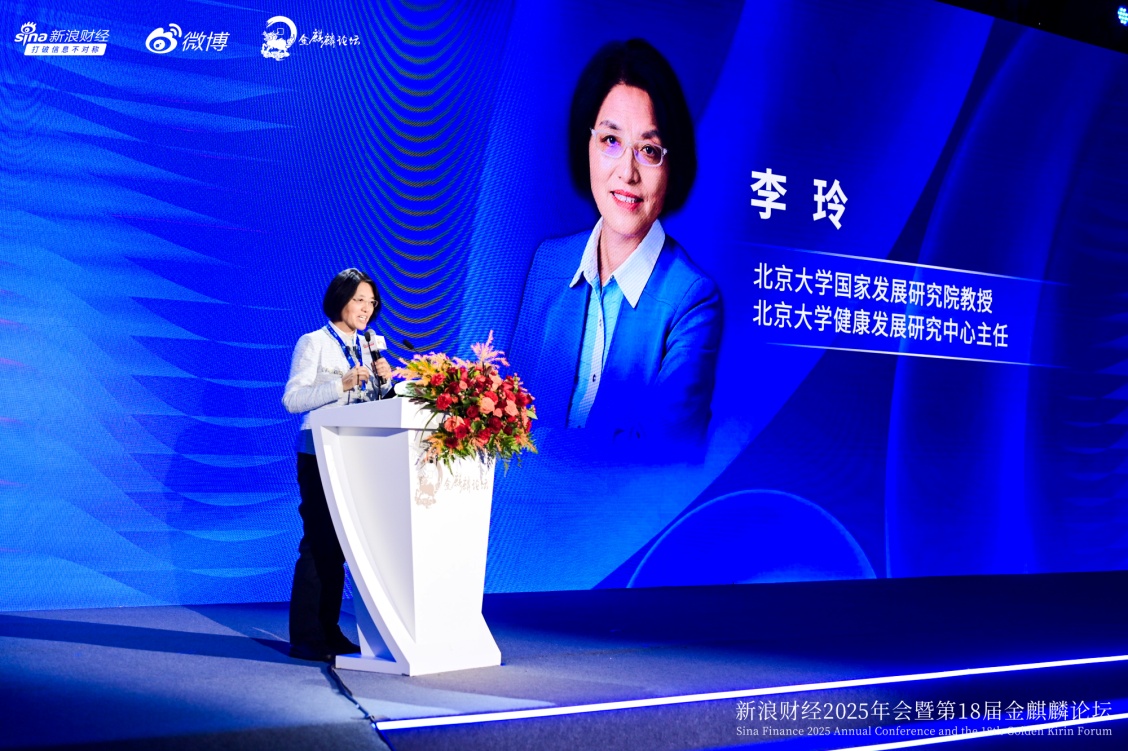
北京大学国发院李玲:“健康中国”或将为人类健康做出中国式原创贡献
Xin Lang Cai Jing· 2026-01-15 04:29
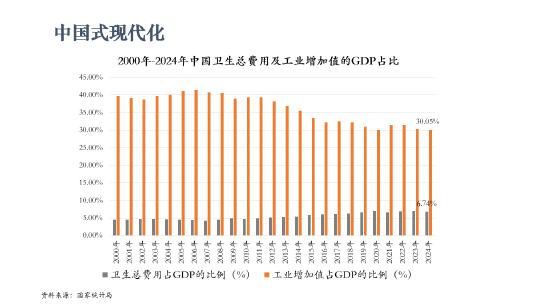
Core Insights - The "Sina Finance 2025 Conference and the 18th Golden Unicorn Forum" will be held on January 15, 2026, in Beijing, focusing on the theme of "Starting the 14th Five-Year Plan, New Economic Voyage - Reshaping Growth Paradigms, Creating Future Prosperity" [1][9] - Li Ling, a prominent figure in China's economic and health sectors, highlighted the achievements and challenges of China's healthcare system, emphasizing the need for a shift from a disease-centered approach to a health-centered paradigm [4][12] Healthcare Spending - In 2024, China's total health expenditure is estimated at 90,895.5 billion yuan, with government spending accounting for 24.9%, social spending for 47.6%, and personal spending for 27.5% [1][9] - The per capita health expenditure is 6,454.4 yuan, and the total health expenditure as a percentage of GDP is 6.7%, marking a significant decline below 7% for the first time [1][9] Challenges and Opportunities - The aging population presents significant challenges, necessitating a focus on disease prevention rather than treating aging as a disease [4][12] - The "Healthy China" national strategy prioritizes health as a key indicator of socialist modernization, advocating for a preventive approach to health [4][12] Systemic Changes in Healthcare - The government is promoting a systemic approach to healthcare, integrating county, township, and village services into a cohesive "health community" model, moving away from hospitals competing for patient revenue [5][13] - The "Sanming Model" aims to incentivize hospitals and doctors to manage patients' health proactively, with a nationwide rollout planned within four years [5][13] Emerging Health Industry - The integration of healthcare, pharmaceuticals, green food, wellness, and elderly care is expected to create a new "big health" industry, which could surpass the real estate sector in scale [5][13] - This industry is seen as a lifelong necessity for individuals, with potential benefits extending beyond China to serve global health needs [5][13] Future Health Management - The envisioned future health model includes a personal health code system, supported by AI for continuous health management throughout an individual's life [6][14] - The "Healthy China" and "Smart Health" initiatives are positioned as new development models that will contribute significantly to global health, leveraging China's historical wisdom and modern technological advancements [6][14]
北京大学国发院教授李玲:新型大健康产业规模不可限量,“可以远远超过房地产”
Xin Lang Cai Jing· 2026-01-15 04:23
Core Viewpoint - The "Sina Finance 2025 Conference and the 18th Golden Unicorn Forum" emphasizes the theme of reshaping growth paradigms and creating future prosperity, highlighting the importance of health in China's modernization strategy [1][9]. Group 1: Healthcare Spending and Trends - In 2024, China's total health expenditure is estimated at 90,895.5 billion yuan, with government spending at 24.9%, social spending at 47.6%, and personal spending at 27.5% [1][9]. - The per capita health expenditure is 6,454.4 yuan, and the health expenditure as a percentage of GDP has dropped to 6.7%, marking a significant decline below 7% for the first time [1][9]. Group 2: Challenges and Strategic Shifts - The primary challenge facing China is population aging, necessitating a shift from a disease treatment focus to a health-centered approach, promoting disease prevention [4][12]. - The "Healthy China" national strategy prioritizes health as a key indicator of socialist modernization, requiring collaboration among government, society, and individuals to implement a preventive health model [4][12]. Group 3: Systemic Changes in Healthcare - The government is promoting a systemic approach to healthcare, integrating county, township, and village services into a cohesive "health community," moving away from a profit-driven model based on patient volume [5][13]. - The "Sanming Model" aims to incentivize hospitals and doctors to manage patients' health effectively, with a goal of nationwide implementation within four years [5][13]. Group 4: Opportunities in the Health Industry - The aging population presents opportunities for a new "health+" development paradigm, integrating healthcare, pharmaceuticals, green food, wellness, and elderly care into a large health industry [5][13]. - This emerging health industry is expected to be a lifelong necessity for individuals, with potential market size surpassing that of real estate, serving both Chinese citizens and the global population [5][13]. Group 5: Future Health Management - The envisioned future health model includes a personal health code system, utilizing AI for continuous health management throughout an individual's life, aiming to reduce disease incidence and promote longevity [6][14]. - The integration of traditional wisdom with modern technology is seen as a unique contribution from China to global health, especially in light of challenges faced by developed nations like the U.S. [6][14].
Home Control(1747.HK):承袭飞利浦血统,以国际化实力开启智慧健康新篇章
Cai Fu Zai Xian· 2025-11-13 07:19
Core Insights - Home Control is leveraging its strong international foundation and flexible global layout to demonstrate a robust growth trajectory in the smart control and IoT sectors [1][2] - The company has transitioned from smart home solutions to health technology, aiming to establish a significant presence in the healthcare IoT market [4][5] Group 1: Company Background - Home Control has over 30 years of experience in smart control and IoT technology, providing products and system solutions to more than 300 global clients, with cumulative shipments exceeding 1.5 billion units across over 40 countries [2] - The management team combines European engineering rigor with Asian manufacturing efficiency, allowing the company to maintain high delivery capabilities and stable gross margin structures despite global supply chain fluctuations [2][3] Group 2: R&D and Manufacturing - The company operates dual R&D centers in Singapore and China, with the Singapore team focusing on foundational engineering and system architecture, while the China center emphasizes product implementation and customer customization [3] - Home Control has established manufacturing bases in China, Brazil, India, and Cambodia, creating a distributed production network that enhances delivery flexibility and mitigates supply chain risks [3] Group 3: Strategic Growth in Healthcare - Since 2019, Home Control has entered the healthcare sector, with a notable performance expected in 2024 and continued growth into 2025, including the establishment of a Hong Kong subsidiary, Orbiva, focused on home health solutions [4] - The global healthcare IT market is projected to grow from $587.9 billion in 2025 to $1.225 trillion by 2029, with a compound annual growth rate of 20.2%, providing a substantial market opportunity for Home Control's health technology initiatives [5] Group 4: Future Outlook - Home Control is positioned at the intersection of smart manufacturing and healthcare, with a focus on innovation, quality, and flexibility, potentially leading to a revaluation and value reconstruction for long-term investors [6]