
智能床

Search documents
舒福德锚定家庭健康管理新赛道 数字睡眠技术重构全龄照护生态
财联社· 2026-03-16 11:46
Core Viewpoint - The article highlights the strategic transformation of Shufude from an "inventor of smart beds" to a "guardian of family health," focusing on the launch of the iFamily family health management system and the S-Senior senior-friendly smart bed at AWE2026, addressing the pain points of family care through digital sleep technology [1][18]. Group 1: Market Demand and Demographics - By 2025, China's elderly population is projected to reach 323 million, with an aging rate of 23%, and 87% of elderly individuals opting for home care, making families the primary unit for health care [3]. - There are currently 200 million family caregivers in China, with 48 million having special care needs, highlighting the dual responsibilities of the "sandwich generation" aged 30-50, who face significant stress and mental health issues [3][4]. - 66.7% of caregivers experience long-term depression, and 93.1% work over 13 hours a day, indicating a public health crisis stemming from family caregiving [3]. Group 2: Health Management Insights - The biggest risk in family health management is not the diseases themselves but the lack of awareness, as parents desire care without excessive monitoring, while children worry about their parents' health [4]. - Sleep issues affect 300 million people in China, with sleep quality being a critical indicator of overall health, providing valuable data for digital health management [5]. Group 3: Technological Innovations - Shufude's digital sleep model, referred to as the "canary in the coal mine," can predict 1,041 diseases based on a single night's sleep data, with a prediction consistency index (C-Index) exceeding 0.75 for 130 diseases [7]. - The accuracy of Shufude's sleep monitoring technology rivals that of professional medical devices, achieving a heart rate monitoring accuracy of 90.7% and a respiratory rate accuracy of 89.1% [8]. Group 4: Comprehensive Health Management System - Shufude has developed a full-cycle sleep management system that includes data recording, analysis, interpretation, improvement suggestions, and intervention services, transforming cold data into warm health protection [10]. - The iFamily family circle system integrates health data management across devices, creating dynamic health profiles for each family member and providing practical guides for family health management [17]. Group 5: Product Offerings - Shufude has created a product matrix covering all age groups, including the S-Teener smart bed for teenagers, the S500 smart bed for family caregivers, and the S-Senior smart bed for seniors, addressing specific health needs [14][15]. - The S-Senior smart bed features a dual protection system with physical aids and a 3D warning system to address health risks for the elderly [15].

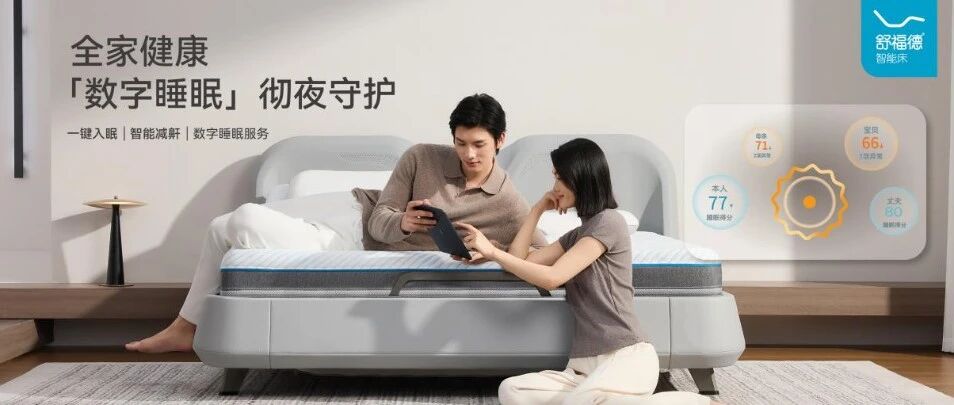
慕思睡魔方,睡眠生态的“极简”与“极智”革命
3 6 Ke· 2025-09-28 07:43
Core Insights - The AIoT wave is rapidly reshaping human living environments, with the concept of "home" being continuously redefined [1] - The smart home industry in China is approaching a market size of 700 billion yuan, but fully integrated smart homes remain rare, with most consumers still using standalone smart devices [1] - The smart sleep market is in its infancy, with smart beds having a domestic penetration rate of less than 1%, significantly lower than the 14% in the United States [1] Market Potential - The Chinese sleep economy is projected to exceed 530 billion yuan in 2024 and grow to approximately 650 billion yuan by 2027, driven by AIoT and biosensing technologies [3] - The smart bed market is expected to transition from niche to mainstream, potentially capturing 50% of the bedding market share by 2027, with a market size forecast to surpass 120 billion yuan [12] Product Innovation - The "Sleep Magic Cube" launched by Mousse in collaboration with Huawei aims to revolutionize the smart sleep ecosystem with a focus on "active care" and "seamless connectivity" [1][3] - The product features a "sensitive intervention" mechanism that can adjust the bed's position to alleviate snoring, with an accuracy rate of up to 90% [4][6] - Mousse's innovation extends to real-time health monitoring, capturing metrics like heart rate and breathing, and generating sleep reports that meet industry standards [6] Technological Integration - The Sleep Magic Cube utilizes Huawei's unique IoT connection technology, significantly reducing device pairing time and enhancing user experience [6][9] - Mousse's commitment to R&D is evident, with an investment of 211 million yuan in 2024, a 13.5% increase year-on-year, and a strong patent portfolio of over 1,800 items [8][9] Strategic Partnerships - The collaboration with Huawei is pivotal for Mousse's AI-driven transformation, providing essential technological support and access to a broader consumer base through various channels [9][11] - Mousse has also engaged in cross-industry collaborations, such as with Ximalaya, to enhance its sleep ecosystem through auditory content [11] Future Directions - Mousse plans to expand its ecosystem by integrating more devices within the Huawei HarmonyOS, enhancing the overall smart home experience [14] - The company aims to establish comprehensive health management services, potentially collaborating with educational and medical institutions to create sleep health profiles for users [14][15]

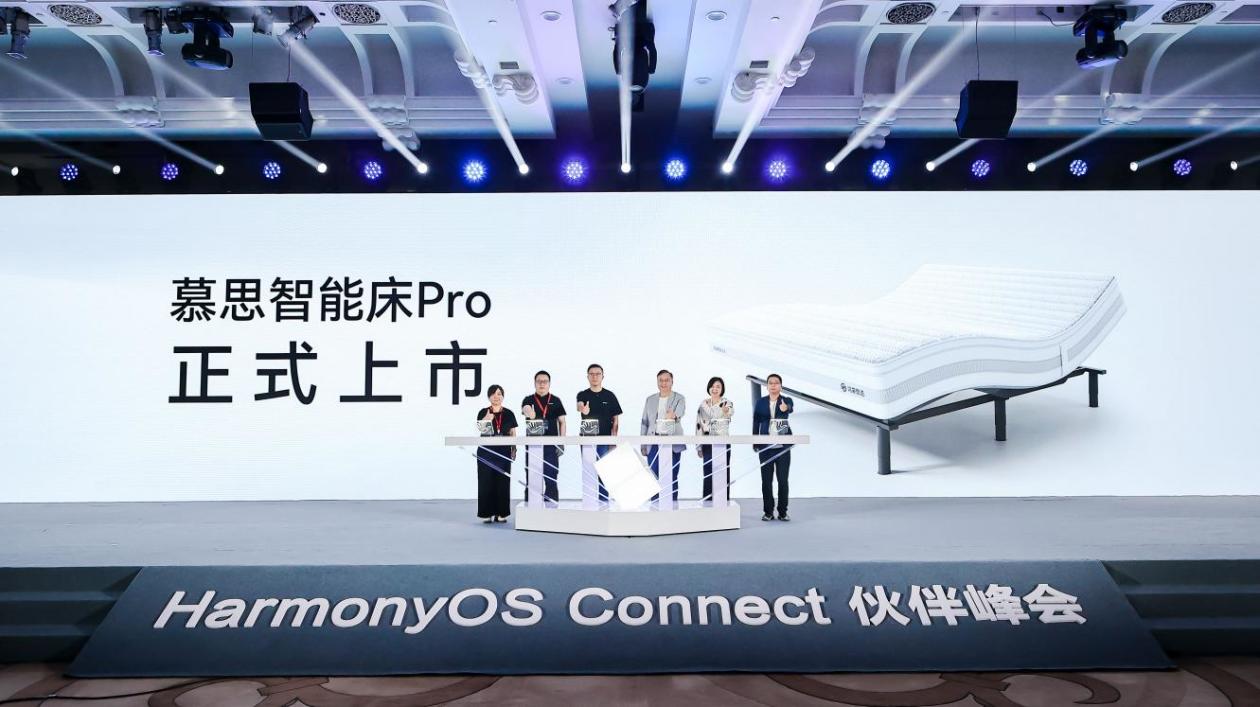
慕思联合鸿蒙智选发布智能床新品 拓展科技与家居融合新边界
Huan Qiu Wang· 2025-09-28 05:10
Core Insights - The article highlights the emergence of a significant sleep economy market in China, projected to reach 534.93 billion yuan in 2024 and 658.68 billion yuan by 2027, driven by increasing product penetration and variety [1] - The collaboration between Mousse and Hongmeng Smart aims to address sleep issues through innovative smart bed technology, targeting the approximately 30% of the population experiencing sleep disorders [1][3] Market Overview - The sleep economy market in China is expected to grow substantially, with a forecasted increase from 534.93 billion yuan in 2024 to 658.68 billion yuan by 2027, indicating a robust demand for sleep-related products [1] - The penetration rate of smart beds in China is currently low, suggesting significant growth potential in this segment [1] Product Innovation - The newly launched Hongmeng Smart Mousse smart bed integrates traditional smart beds and mattresses, featuring "six independent zones" for customized firmness settings, enhancing user comfort [3] - The smart bed includes a snore detection feature that elevates the user's back by 15 degrees to improve breathing quality during sleep [3] - A comprehensive quality control system has been implemented, increasing testing items from 200-300 to nearly 900, ensuring high reliability and user experience [3] User Experience - The smart bed introduces a "tap to activate" interaction method, allowing users to adjust settings easily without needing a remote or voice assistant, enhancing convenience [3] - The collaboration aims to create a holistic smart sleep environment, linking the smart bed with other devices like lamps and air conditioners for an integrated experience [4] Industry Impact - The partnership between Mousse and Hongmeng Smart represents a significant convergence of health sleep and smart technology sectors, aiming to transform fragmented products into a systematic ecosystem [4] - This innovation is expected to drive the sleep industry towards a more integrated and experience-focused approach, fostering rapid development in the sector [4]
麒盛科技: 麒盛科技关于2025年半年度业绩说明会召开情况的公告
Zheng Quan Zhi Xing· 2025-09-01 08:19
Group 1 - The company held a semi-annual performance briefing on September 1, 2025, where key executives discussed operational performance and future development plans with investors [1][2] - The company has established its own brand "Shufude" focusing on smart bedding products, with over 200 offline stores and a growing online presence [1][4] - The company is expanding its smart bed products into various application scenarios such as elderly care institutions, hotels, and postpartum centers to enhance domestic market coverage [1][4] Group 2 - The company has formed long-term partnerships with international mattress manufacturers like TSI and SSB to penetrate overseas markets while diversifying its sales channels [2][3] - The Vietnam factory is in trial operation, and the Mexico factory has been stable since its launch in 2020, contributing to a flexible supply chain for international markets [2][3] - The company is currently in the process of medical device registration for its smart bed products, aiming to integrate digital sleep technology to address sleep-related issues [2][3] Group 3 - The company’s products primarily target the mid-to-high-end market, with plans to optimize product features and introduce new products based on market demand [3][4] - As of the first half of 2025, overseas sales accounted for over 90% of total sales, with a focus on North America while also exploring markets in Europe, Japan, South Korea, and Australia [3][4] - The company’s top five customers contributed approximately 68.26% of its main business revenue, with ongoing stable partnerships and efforts to expand its customer base [4]

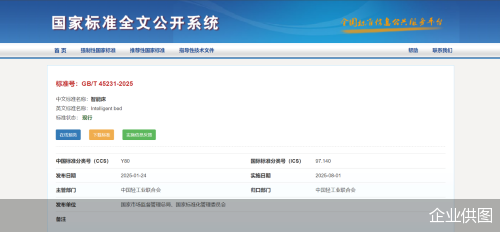
填补行业空白,我国首个《智能床》国家标准正式实施
Bei Jing Shang Bao· 2025-08-04 07:17
Core Insights - The smart bed market has seen rapid growth in recent years, but issues such as lack of unified national standards have led to confusion and varying product quality [1][3]. Industry Standards - The first national technical standard for smart beds, GB/T 45231-2025, will be implemented on August 1, 2025, providing authoritative guidance for design, production, and quality inspection [2]. - The standard was drafted by a consortium led by the Shanghai Quality Supervision and Inspection Technology Research Institute, involving 52 leading companies in the industry, ensuring scientific and practical applicability [2]. Market Impact - The domestic market for smart beds has expanded significantly, with a market size of 1.47 billion yuan in 2017, projected to grow to 3.99 billion yuan by 2026, with demand expected to reach 1.795 million units [3]. - The implementation of the new national standard is expected to accelerate the elimination of outdated production capacity and guide companies to focus on smart technology development, user experience, and product quality [3]. Safety Considerations - Safety is a core consideration for smart bed products, highlighted by past incidents, such as an elderly person being trapped in a malfunctioning electric bed [4]. - Companies are encouraged to innovate in safety features and medical functionalities to capture the high-end market [4]. Standard Specifications - The new standard defines "smart beds" and categorizes them into integrated and split types, requiring core functionalities such as human-computer interaction, data collection, storage, transmission, and intelligent adjustment [7]. - Key safety features include child lock functions, rounded edges for elderly and disabled users, and speed limitations for lifting mechanisms [8]. - The standard also emphasizes noise control, remote control capabilities, and strict environmental regulations, including formaldehyde release limits and fire resistance [8]. Future Outlook - The introduction of GB/T 45231-2025 is seen as a significant step towards the healthy development of the smart bed industry, promoting market order and consumer rights [8]. - Companies are urged to adapt to the new standards and enhance their technological and management innovations to improve competitiveness and drive industry growth [8].
从定位创新到全球市场拓展:撬动助力霸王茶姬缔造上市佳绩
Sou Hu Cai Jing· 2025-06-26 03:01
Core Insights - The article highlights the transformative impact of the "new Chinese tea beverage" brand, Bawang Chaji, which has expanded to over 70 cities globally, reflecting a significant shift in consumer preferences towards cultural identity and emotional resonance rather than just product functionality [1][11] - The strategic consulting industry is evolving from a supporting role to a crucial force in reshaping social value, emphasizing the need for innovative thinking to drive strategic breakthroughs in the new competitive landscape [3][11] Group 1: Strategic Consulting Evolution - The core value of strategic consulting lies in its precise grasp of enterprise strategic positioning, moving beyond traditional theoretical frameworks to integrate knowledge with practical application [4] - The "knowledge capitalization" model advocated by the consulting firm breaks the limitations of traditional consulting by combining knowledge with capital, enhancing the value of knowledge through deep collaboration with enterprises [4][10] Group 2: Breaking Traditional Competition Boundaries - Traditional business competition focused on clear boundaries such as products, prices, and channels, but the consulting firm employs innovative strategies to help companies break these boundaries and create competitive advantages [5] - For instance, the consulting firm assisted Bantu printers in establishing a strategic position as a "leading Chinese printer brand," enabling them to successfully navigate technological barriers and achieve global sales in over 110 countries [5] Group 3: Redefining Market Demand - The consulting firm believes that companies can not only adapt to existing market demands but also create new demands through innovative strategies, as demonstrated by Bawang Chaji's health-focused initiatives in the tea beverage industry [7] - These initiatives not only met consumer health needs but also led to a transformation in the tea beverage market, reshaping supply and demand relationships [7] Group 4: Digital Integration in Strategy - The rise of digitalization has made data-driven decision-making a new trend, with the consulting firm integrating AI technology into strategic consulting to enhance efficiency and visualize complex strategies [8] - This integration allows companies to respond more quickly and accurately to market changes, thereby improving their competitiveness [8] Group 5: Innovative Collaboration Models - The consulting firm adopts a results-oriented collaboration model, deeply engaging in enterprise operations to ensure significant outcomes at every step [10] - This innovative approach fosters a tighter partnership between enterprises and consulting firms, driving strategic transformation and sustainable growth [10] Conclusion - The article concludes that the Chinese business model is undergoing unprecedented changes due to shifts in consumer behavior and digital technology, necessitating a departure from traditional strategic frameworks [11] - The consulting firm's forward-thinking strategies, including knowledge capitalization and AI integration, position it as a leader in the consulting industry, enabling enterprises to navigate the complexities of the modern market and achieve growth [11]

2025年中国智能床行业概览:从传统到智能,智能床为现代生活带来的变革与机遇
Tou Bao Yan Jiu Yuan· 2025-04-22 12:34
Investment Rating - The report does not explicitly provide an investment rating for the smart bed industry Core Insights - The smart bed industry in China is experiencing significant growth, with the global market size increasing from approximately $1.328 billion in 2015 to around $5.531 billion in 2023, reflecting a compound annual growth rate (CAGR) of 19.52% [5][33] - The report highlights a concerning trend in sleep quality among the Chinese population, with the sleep quality index dropping to 62.61 in 2023, indicating a decline in overall sleep health [20][22] - The smart bed market is projected to reach a size of 4.5 billion yuan by 2027, driven by increasing awareness of sleep health and the aging population in China [26][37] Summary by Sections Industry Overview - The report investigates the current state and market size of the smart bed industry in China, focusing on market conditions and application scenarios [2] - There is a notable increase in sleep-related patents in China, with 2,734 and 2,867 new patents filed in 2020 and 2021, respectively, indicating a trend towards scientific and intelligent product development [5][19] - The report emphasizes the importance of understanding sleep cycles and quality for better health and quality of life [10][12] Industry Chain Analysis - The smart bed industry is in its early stages, with a stable growth trajectory as sleep health issues gain consumer attention [26] - The industry chain includes upstream suppliers of smart sleep solutions, midstream manufacturers, and downstream retailers and consumers [27][31] - The market is expected to expand significantly due to the aging population, with a projected demand for approximately 1.795 million smart beds by 2026 [35][37] Market Size and Trends - The global smart bed market is expected to exceed $6 billion in 2024, with North America leading in market share due to high acceptance of smart technology [5][33] - The report forecasts that the smart bed market in China will grow to 39.9 billion yuan by 2026, reflecting changing market demands and technological advancements [35][37] Consumer Insights - The primary demographic for smart bed consumers is young adults aged 22-40, who represent 80.9% of the market [40][41] - The report identifies a significant portion of insomnia sufferers as being well-educated and facing economic pressures, which may contribute to sleep issues [43]


