电力业

Search documents
印度首富弟弟被指同爱泼斯坦私密交往多年,对方献上“瑞典金发女郎”
Xin Lang Cai Jing· 2026-02-07 15:37
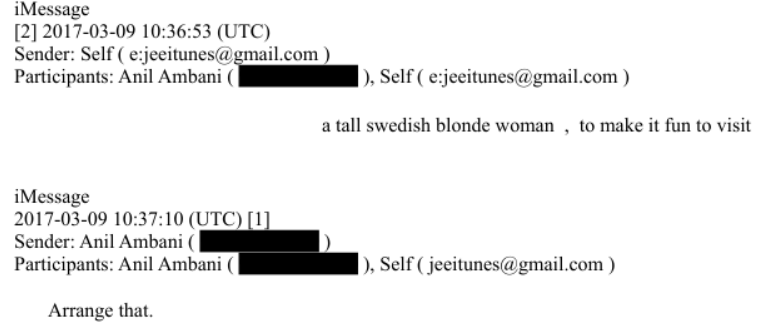
Core Viewpoint - The recent release of documents related to Jeffrey Epstein has revealed his extensive connections with high-profile individuals, including Anil Ambani, a prominent Indian billionaire, and has raised significant concerns regarding the implications for Indian politics and society [1][2][9]. Group 1: Epstein's Connections - Epstein maintained a vast business and social network even after his 2008 conviction for soliciting minors for prostitution, extending his influence beyond the United States [2]. - He invested considerable effort in building relationships with the Ambani family, specifically purchasing books to understand their history and internal conflicts [2][4]. - Anil Ambani, who faced significant financial difficulties after the split of the Reliance Group, received support from Epstein during his career downturn [2][4]. Group 2: Communication with Anil Ambani - Epstein's correspondence with Anil Ambani began in early 2017 and continued until shortly before Epstein's arrest in 2019, discussing various topics including international affairs and potential business collaborations [5][7]. - The two planned to meet in Paris in 2017, but the meeting did not occur; however, they did meet in New York shortly before Epstein's arrest [7][19]. Group 3: Political Implications - Anil Ambani appeared to act as an intermediary for the Indian government in facilitating meetings with U.S. officials, including Jared Kushner and Steve Bannon, ahead of Prime Minister Modi's visit to the U.S. [10][11]. - Epstein's emails suggested that Modi followed advice to enhance his image in the U.S. by engaging in public displays during his visit to Israel, which has sparked outrage in India [13][14]. - The revelations have led to political turmoil in India, with opposition parties demanding explanations from the government regarding Modi's connections to Epstein [19].

三措并举支持资源型经济转型
Jin Rong Shi Bao· 2026-01-15 02:07
Core Insights - The People's Bank of China, Linfen Branch, focuses on extending the energy industry chain and transforming green transportation, promoting financial resources to empower local economic transformation since 2025 [1] - A total of 103 projects have been pushed to financial institutions, with 23 projects receiving bank credit support amounting to 34.32 billion yuan [1][2] - The initiative includes collaboration between government and financial institutions to enhance communication and support for key projects [2] Group 1: Provincial and Municipal Collaboration - The Linfen Branch of the People's Bank of China, in collaboration with local government offices, has established a working group to analyze the city's industrial transformation and identify financial support directions [1] - Policy briefings and financial demand assessments have been conducted to understand the needs of key projects and enterprises [1][2] - A series of activities have been organized to facilitate communication between government, banks, and enterprises, enhancing collaborative efforts [1] Group 2: Mechanism-Driven Initiatives - An action plan has been developed to support the energy industry chain and green transportation, outlining key support areas and tasks [2] - Two information platforms have been established to maintain a directory of key projects and facilitate financing connections [2] - A credit product library covering the entire industry chain has been created, encouraging financial institutions to innovate and develop tailored financial products [2] Group 3: Enterprise-Specific Policies - Financial institutions are encouraged to follow the financing needs throughout the project lifecycle, providing diverse financing models [3] - Supply chain financing models have been innovated to support small and medium-sized enterprises through credit advantages of core enterprises [3] - Tailored services are provided to address specific financing challenges faced by enterprises, enhancing credit limits and reducing financing costs [3]
钱越来越难赚?那到底都进了谁的口袋?曹德旺一语道破真相
Sou Hu Cai Jing· 2025-09-21 16:21
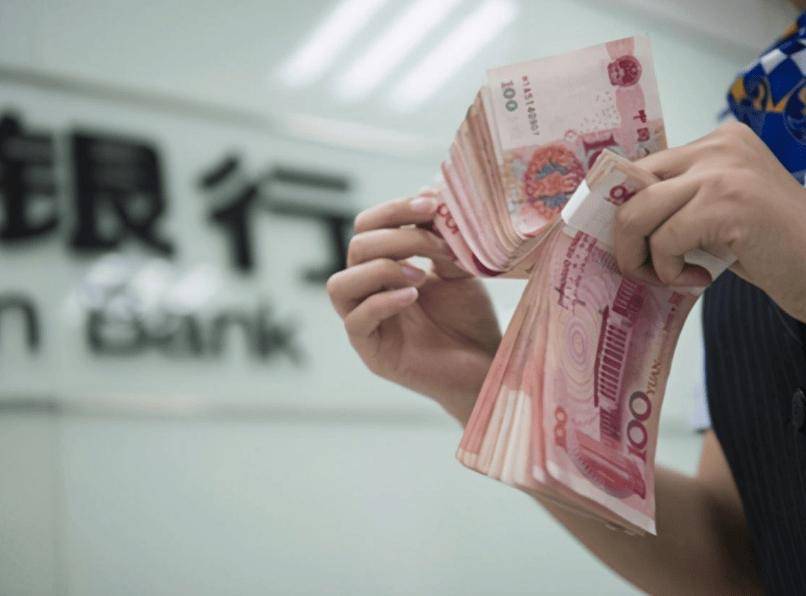
Group 1: Economic Sentiment - A significant 76.3% of respondents in a survey believe that "making money is becoming increasingly difficult," which is an increase of 8.7 percentage points compared to the same period in 2024 [1] - The growth rate of residents' income has noticeably slowed, with the per capita disposable income in Q1 2025 being 11,782 yuan, reflecting a real growth of only 3.2% after adjusting for price factors [3] - The Gini coefficient stands at 0.468, indicating a substantial disparity in wealth distribution, with lower-income individuals experiencing slow or even declining income growth [3] Group 2: Financial Industry - The financial sector is currently the most profitable, with the six major state-owned banks reporting a combined net profit of 682.524 billion yuan in the first half of 2025, averaging about 3.77 billion yuan per day [5] - The securities industry achieved a total operating revenue of approximately 251.9 billion yuan, marking a year-on-year growth of 31%, and a net profit of 104 billion yuan, up 65% [5] - The insurance industry reported premium income of 3.74 trillion yuan, reflecting a year-on-year increase of 5.3% [5] Group 3: Monopoly Industries - Monopoly industries such as oil, telecommunications, tobacco, and electricity have fewer competitors, making it easier for these companies to generate profits [6] - The three major oil companies in China—PetroChina, Sinopec, and CNOOC—collectively achieved a net profit of 175.009 billion yuan in the first half of 2025 [8] - The domestic tobacco industry reported a total tax and profit amount of approximately 624.24 billion yuan, showing a year-on-year growth of about 7.58% [8] Group 4: Real Estate Industry - Despite a decline in both sales volume and area in the real estate sector during the first half of 2025, it remains a primary avenue for wealth accumulation [10] - Homebuyers often exhaust their savings and incur bank loans to purchase properties, leading to significant capital inflow into real estate companies [10] - The real estate sector has historically produced some of the wealthiest individuals in China, indicating its role in wealth concentration [10] Group 5: Wealth Distribution Insights - The primary sectors where wealth is flowing include the financial industry, monopoly industries, and real estate, as highlighted by entrepreneur Cao Dewang [12] - These sectors benefit from either monopolistic conditions or supportive government policies that stimulate market activity, contributing to the perception that earning money is increasingly challenging for the average resident [12]