钢铁业

Search documents
资讯早班车-2026-03-17-20260317
Bao Cheng Qi Huo· 2026-03-17 02:08
1. Report Industry Investment Rating No information provided in the report. 2. Core Views of the Report - The Chinese economy showed a mixed performance in the first two months of 2026. Some indicators such as industrial added - value and service production index improved, while real - estate related indicators remained weak [2][18]. - The situation in the Middle East, especially the blockade of the Strait of Hormuz, has had a significant impact on the global energy and commodity markets, leading to supply disruptions and price fluctuations [11]. - The Sino - US economic and trade consultations are ongoing, and both sides are working towards promoting bilateral economic and trade relations [4][15]. 3. Summary by Directory 3.1 Macro Data - GDP growth in Q4 2025 was 4.5% year - on - year, lower than the previous quarter and the same period last year [1]. - In February 2026, the manufacturing PMI was 49.0%, and the non - manufacturing PMI for business activities was 49.5%, both lower than the same period last year [1]. - Social financing scale in February 2026 was 2385.5 billion yuan, with M0, M1, and M2 showing year - on - year growth [1]. - CPI in February 2026 increased by 1.3% year - on - year, and PPI decreased by 0.9% year - on - year [1]. - Fixed - asset investment from January to February 2026 increased by 1.8% year - on - year, and social consumer goods retail sales increased by 2.8% year - on - year [1][2]. 3.2 Commodity Investment Reference 3.2.1 Comprehensive - China's economic data for the first two months of 2026 showed that fixed - asset investment increased by 1.8% year - on - year, industrial added - value increased by 6.3% year - on - year, and service production index increased by 5.2% year - on - year. However, real - estate investment and sales declined [2]. - Many banks tightened or exited the agency business of personal precious metals on the Shanghai Gold Exchange [2]. - The US launched a 301 investigation against 60 economies including China, and Sino - US economic and trade consultations are ongoing [3][4]. - Morgan Stanley maintains the prediction that the Fed will restart interest rate cuts in June and cut rates again in September [5]. - Indonesia is considering imposing a "windfall tax" on commodities [5]. 3.2.2 Metals - The price of refined indium in China has been rising rapidly since 2026, more than doubling compared to the beginning of 2025 [6]. - Guinea is discussing controlling the supply of bauxite to protect against price drops [6]. - Bahrain Aluminium is shutting down 3 electrolytic aluminium production lines, accounting for 19% of its total annual capacity [6]. - The blockade of the Strait of Hormuz has affected the aluminium industry chain, and the aluminium price may rise due to supply contraction [7]. - The holdings of major gold and silver ETFs decreased on March 16, 2026 [8]. - Metal inventories in the London Metal Exchange showed different trends on March 13, 2026 [8]. 3.2.3 Coal, Coke, Steel and Minerals - India's JSW Steel Company obtained a coking coal mining project in Mozambique [9]. - From January to February 2026, the production of raw coal was stable, and the production of crude oil increased year - on - year [9]. 3.2.4 Energy and Chemicals - The "15th Five - Year Plan" aims to have over 100 million kilowatts of installed capacity for offshore wind power, and the installed capacity will double compared to the end of 2025 [10][24]. - International oil prices fluctuated after the US attack on Iran, and the blockade of the Strait of Hormuz has led to supply disruptions and price increases [10][11]. - The EU plans to gradually phase out Russian oil [11]. 3.2.5 Agricultural Products - Zhejiang issued a plan for precise fertilization of grain and oil crops to improve yields and efficiency [12]. - The quota for cotton import under the sliding - scale duty for processing trade in 2026 is 300,000 tons [12]. - Indonesia may impose additional tariffs on some commodities such as palm oil [13]. - The blockade of the Strait of Hormuz has affected the global fertilizer supply chain, and urea prices have risen by about 30% [13]. 3.3 Financial News Compilation 3.3.1 Open Market - On March 16, 2026, the central bank conducted 137.3 billion yuan of 7 - day reverse repurchase operations, with a net injection of 88.8 billion yuan [14]. - The Ministry of Finance and the People's Bank of China will conduct treasury cash management commercial bank time - deposit tenders on March 19, 2026, with an operation volume of 70 billion yuan for 21 - day and 180 billion yuan for 3 - month terms [14]. 3.3.2 Important News - Sino - US economic and trade consultations in Paris aimed to promote bilateral economic and trade relations [15][19]. - The State Council emphasized key tasks for economic and social development in 2026 and the "15th Five - Year Plan" [16]. - Shanghai adjusted the minimum down - payment ratio for commercial housing loans to no less than 30% [16]. - The National Financial Regulatory Administration focused on risk resolution in key areas [17]. - China's economic indicators in the first two months of 2026 showed an overall positive trend [18]. - Many A - share companies' 2025 annual reports showed that emerging industries performed well [20]. - The Ministry of Natural Resources proposed to use existing land resources for real - estate development [20]. - China's foreign exchange market was generally stable in February 2026 [21]. - Many banks redeemed high - interest preferred stocks, causing difficulties in asset substitution [22]. - The wind power sector in the A - share market performed well [24]. 3.3.3 Bond Market Review - The Chinese bond market weakened, with yields of major interest - rate bonds rising and bond futures falling [27]. - The exchange - traded bond market had mixed performance, with some bonds rising and some falling [27]. - The convertible bond index declined, and different convertible bonds had different price changes [28]. - Money market interest rates showed mixed trends [28]. - The yields of US Treasury bonds declined [30]. 3.3.4 Foreign Exchange Market - On March 16, 2026, the on - shore RMB against the US dollar rose 33 points at the 16:30 close, and the RMB central parity rate against the US dollar was depreciated by 50 points [31]. - The US dollar index fell, and non - US currencies generally rose [31]. 3.3.5 Research Report Highlights - Huatai Fixed - income suggested a cautious attitude towards convertible bonds, waiting for opportunities, and focusing on certain sectors [32]. - Huatai Fixed - income also analyzed the transformation of land resources and the situation of the bond market [32]. - CITIC Construction Investment pointed out that government bonds continued to play an important role in social financing growth, and the credit growth rate was expected to be around 7% - 8% in 2026 [33]. - Xingzheng Fixed - income analyzed the situation of convertible bonds, emphasizing the importance of equity judgment [33]. 3.3.6 Today's Reminders - On March 17, 2026, 251 bonds will be listed, 178 bonds will be issued, 91 bonds will be paid, and 266 bonds will pay principal and interest [34]. 3.4 Stock Market News - The A - share market recovered after a decline, with some sectors performing well and some performing poorly [35]. - The Hong Kong stock market rebounded strongly, with chip and pharmaceutical stocks leading the rise [35].
关注凸点骑乘,二永供给或下行
East Money Securities· 2026-03-16 02:36
1. Report Industry Investment Rating There is no mention of the industry investment rating in the provided report. 2. Core Viewpoint of the Report - This week (March 9 - March 13), credit bond yields declined, but the repair amplitude was smaller than that of interest - rate bonds, and credit spreads widened passively. The February inflation and January - February import and export data released this week disturbed market expectations. Due to the rebound in February CPI and January - February import and export data, market concerns about inflation pressure increased, and bond market sentiment weakened temporarily. Meanwhile, the overall capital environment was stable, the fluctuation of money market interest rates was limited, which provided a certain buffer for the bond market. The equity market is still in a volatile range, and the overall risk preference has not changed much, so its impact on the bond market is relatively limited [2][11]. - Currently, the yield curve forms a relatively obvious convex point around the 4 - year term. Institutions with relatively stable liability ends can pay attention to the riding value of 4 - year bonds. In the scenario where the yield curve rises by 20BP, 4 - year AA - rated medium - short notes, 4 - year AA and AA(2) - rated urban investment bonds, and 4 - year AAA - and AA + - rated bank perpetual bonds are expected to maintain positive returns or only have small drawdowns during the holding period, with relatively strong anti - volatility ability. For 7 - year urban investment bonds, caution should be exercised, and for 7 - year secondary perpetual bonds, allocation - type funds can choose the opportunity to layout after market adjustments [13][14]. - The issuance of secondary capital bonds and perpetual bonds has obvious seasonal characteristics. Although there is still a high maturity and redemption scale of secondary perpetual bonds this year, and the renewal demand still exists, in the context of the continuous expansion of capital replenishment channels, commercial banks' dependence on secondary perpetual bonds has decreased, and the overall future supply scale may decline [17][18]. 3. Summary According to the Directory 3.1. Focus on Convex Point Riding, and the Supply of Secondary Perpetual Bonds May Decline - Market situation: This week, credit bond yields declined, but the repair amplitude was smaller than that of interest - rate bonds, and credit spreads widened passively. The February inflation and January - February import and export data disturbed market expectations, and bond market sentiment weakened temporarily. The equity market was in a volatile range, and its impact on the bond market was relatively limited [2][11]. - Investment strategy: The current yield curve forms a convex point around the 4 - year term. In the case of a 3 - month holding period and the curve shape remaining unchanged, the holding - period returns of 4 - year bonds are generally higher than those of 5 - year bonds of the same rating. Institutions with relatively stable liability ends can pay attention to their riding value. In the scenario where the yield curve rises by 20BP, 4 - year AA - rated medium - short notes, 4 - year AA and AA(2) - rated urban investment bonds, and 4 - year AAA - and AA + - rated bank perpetual bonds have relatively strong anti - volatility ability. For 7 - year urban investment bonds, caution should be exercised, and for 7 - year secondary perpetual bonds, allocation - type funds can choose the opportunity to layout after market adjustments [13][14]. - Supply situation: The issuance of secondary capital bonds and perpetual bonds has obvious seasonal characteristics. This year, secondary perpetual bonds are still in a peak maturity stage, with an expected annual maturity and redemption scale of about 1.18 trillion yuan, and banks still have a certain renewal demand. However, in the long - term, the net financing scale of secondary perpetual bonds has been declining in recent years. With the diversification of bank capital replenishment channels, the dependence of commercial banks on secondary perpetual bonds has decreased, and the future supply scale may decline [17][18]. 3.2. Review of the Quantity and Price of Inter - bank Liquidity - This week (March 9 - March 13), the volume of the inter - bank pledged repurchase market decreased and the price increased. The median daily trading volume of inter - bank pledged repurchase was 8.51 trillion yuan, a decrease of 260.2 billion yuan from last week, and the trading volume was in the top 2.9% of the range since 2020. The median R001 was 1.39%, an increase of 4bp from last week, and the repurchase interest rate was in the bottom 21% of the range since 2020. The median spread between R001 and DR001 was 6.7bp, a decrease of 0.6bp from last week; the median spread between GC001 and R001 was 11.0bp, an increase of 20.3bp from last week, and the exchange financing cost was higher than that of the inter - bank [38][40]. - In terms of interest rate swaps, the 1 - year FR007 IRS interest rate increased this week. The median 1 - year FR007 IRS was 1.50%, an increase of 2.1bp from last week, and the interest rate was in the bottom 5% of the range since 2020. The median 1 - year SHIBOR 3 - month IRS was 1.56%, and the interest rate was in the bottom 4% of the range since 2020 [43]. 3.3. Review of the Inter - bank Certificate of Deposit Market - On March 13, SHIBOR overnight, 7 - day, 1 - month, 3 - month, 6 - month, 9 - month, and 1 - year quotes were 1.32%, 1.46%, 1.53%, 1.54%, 1.56%, 1.57%, and 1.58% respectively. Compared with March 6, the overnight and above - term quotes changed by 0bp, 5bp, - 1bp, - 1bp, - 1bp, - 1bp, - 1bp respectively. The yields to maturity of 1 - month, 3 - month, 6 - month, 9 - month, and 1 - year inter - bank certificates of deposit of AAA - rated commercial banks were 1.5%, 1.5%, 1.51%, 1.52%, 1.53% respectively. Compared with March 6, the 1 - month and above - term yields changed by 1bp, 0bp, - 1bp, - 1bp, - 2bp respectively [44]. - This week, the total primary issuance volume of inter - bank certificates of deposit was 842.5 billion yuan (excluding those whose actual raised amounts have not been disclosed as of March 13), an increase of 125.2 billion yuan from last week. In terms of issuance terms, the proportions of 6 - month and 9 - month terms increased, while the proportions of 1 - month, 3 - month, and 1 - year terms decreased [48]. - On March 13, the 1 - year FR007 IRS interest rate was 1.50%, an increase of 3.11bp from last week. The yield of 1 - year AAA - rated inter - bank certificates of deposit decreased by 1.75bp from last week, and the spread between the two was 3bp, a narrowing of 5bp from last week [50]. 3.4. Credit Bond Issuance Situation 3.4.1. Issuance Volume and Net Financing - This week (March 9 - March 13), the supply of credit bonds increased both month - on - month and year - on - year. The issuance of credit bonds was 350.333 billion yuan, a month - on - month increase of 18.21% and an increase of 96.211 billion yuan compared with the same period last year. The net financing of credit bonds decreased by 36.707 billion yuan month - on - month and increased by 61.262 billion yuan year - on - year. In terms of types, the net financing of urban investment bonds, industrial bonds, and financial bonds decreased by 43.783 billion yuan, 21.115 billion yuan, and increased by 28.190 billion yuan respectively month - on - month [55]. 3.4.2. Issuance Cost - The average issuance interest rate of credit bonds decreased this week. The average issuance interest rate of credit bonds was 2.81%, a decrease of 6bp from last week. In terms of types, the average issuance interest rates of industrial bonds, urban investment bonds, and financial bonds decreased by 13bp, 6bp, and increased by 2bp respectively month - on - month; in terms of ratings, the average issuance interest rates of AA, AA +, and AAA decreased by 16bp, 2bp, and 11bp respectively month - on - month [66]. 3.4.3. Issuance Term - The average issuance term of credit bonds increased this week. The average issuance term of credit bonds was 2.97 years, an increase of 0.02 years from last week. In terms of types, the issuance terms of industrial bonds, urban investment bonds, and financial bonds increased by 0.29 years, decreased by 0.46 years, and increased by 0.24 years respectively month - on - month [68]. 3.4.4. Cancellation of Issuance - This week, the number of cancelled credit bond issuances was the same as last week, and the scale decreased. A total of 12 credit bonds were cancelled for issuance, the same as last week, and the total cancelled issuance scale was 7.5 billion yuan, a decrease of 0.46 billion yuan from last week [69]. 3.5. Credit Bond Transaction and Valuation Situation 3.5.1. Transaction Volume - This week (March 9 - March 13), the total transaction volume of credit bonds was 1,435 billion yuan, a decrease of 1.3 billion yuan from last week. In terms of categories, commercial bank bonds and non - bank financial bonds in financial bonds traded 455.4 billion yuan and 90 billion yuan respectively. Medium - term notes, short - term financing bills, directional instruments, enterprise bonds, and corporate bonds traded 333 billion yuan, 122.2 billion yuan, 55.4 billion yuan, 18.4 billion yuan, and 360.8 billion yuan respectively. Compared with last week, the trading volumes of various varieties showed mixed trends. The trading volume of urban investment bonds decreased the most, by 15.8 billion yuan. The trading volume of industrial bonds decreased by 10.3 billion yuan, while the trading volumes of bank perpetual bonds and bank secondary capital bonds increased by 7.6 billion yuan and 7.4 billion yuan respectively; the trading volumes of securities firm sub - bonds and insurance sub - bonds decreased slightly by 1.1 billion yuan and 0.3 billion yuan respectively [74]. - In terms of remaining terms, the transaction term structure of urban investment bonds shifted to the medium - long term, the proportion of transactions within 1 year decreased by 4.58pct, while the proportions of 1 - 2 years, 2 - 3 years, 3 - 5 years, and over 5 years increased by 0.83pct, 2.69pct, 0.18pct, and 0.88pct respectively; the term structure of industrial bonds concentrated on 1 - 3 years, the proportion within 1 year decreased by 1.10pct, the proportion of 1 - 2 years increased by 2.93pct, the proportion of 2 - 3 years increased by 0.13pct, the proportion of 3 - 5 years decreased by 1.44pct, and the proportion of over 5 years decreased by 0.51pct; the term structure of bank secondary capital bonds was generally stable, the proportion within 1 year increased by 0.04pct, the proportion of 1 - 2 years decreased by 0.15pct, and the proportion of over 5 years increased by 0.11pct; the term of bank perpetual bonds shifted to the short - end, the proportion within 1 year increased by 3.05pct, the proportion of 1 - 2 years increased by 0.49pct, the proportion of 2 - 3 years increased by 1.72pct, and the proportion of 3 - 5 years decreased by 5.25pct; the term structure of securities firm sub - bonds concentrated on 3 - 5 years, the proportion within 1 year increased by 1.59pct, the proportion of 1 - 2 years decreased by 5.03pct, the proportion of 2 - 3 years decreased by 9.28pct, and the proportion of 3 - 5 years increased by 12.72pct; the term of insurance sub - bonds concentrated on the short - term, the proportion within 1 year increased by 12.94pct, and the proportion of over 5 years decreased by 12.94pct [75]. - In terms of implied ratings, the rating structure of urban investment bonds concentrated on lower ratings, AAA decreased by 0.90pct, AAA - decreased by 0.01pct, AA + remained unchanged (0.00pct), AA increased by 0.14pct, AA(2) decreased by 0.06pct, and AA - increased by 0.85pct; the rating structure of industrial bonds showed differentiation, AAA increased by 1.16pct, AAA - increased by 0.34pct, AA + decreased by 2.02pct, AA increased by 1.13pct, AA(2) decreased by 0.12pct, and AA - increased by 0.12pct; the ratings of bank secondary capital bonds were differentiated, AAA - increased by 4.78pct, AA + decreased by 4.39pct, AA decreased by 0.42pct, and AA - increased by 0.06pct; the ratings of bank perpetual bonds tilted towards AAA -, the proportion of AAA remained unchanged (0.00pct), AAA - increased by 9.07pct, AA + decreased by 7.99pct, AA decreased by 2.40pct, and AA - increased by 1.10pct; the ratings of securities firm sub - bonds concentrated on AA +, AAA - decreased by 8.36pct, AA + increased by 11.03pct, AA decreased by 2.88pct, and AA - increased by 0.14pct; the proportions of various ratings of insurance sub - bonds showed differentiation, AA + increased by 3.55pct, AA increased by 11.64pct, and AA - decreased by 13.17pct [76]. 3.5.2. Spread Tracking - The yields of credit bonds showed differentiation at various levels and terms. This week, except for the yields of 5 - year bonds at all levels, 3 - year and 4 - year AAA - rated bonds, which generally increased, the others generally decreased. Among them, the yields of 1 - year bonds at all levels decreased slightly by 1.73BP. The yield of 5 - year AA - rated bonds decreased the most, by 2.15BP. The current yield percentile levels of all levels are relatively low, the percentiles of the medium - short end are generally lower than those of the long end, the 1 - year AA is at an extremely low percentile of 0.3% since 2025, the 4 - year AA yield percentile is at 24.4%, and the 5 - year AAA is at a percentile of 22.0%. - The credit spreads of 1 - year bonds at all levels, 4 - year AA + and AA - rated bonds narrowed, while the others widened. Among them, the spread of 4 - year AA - rated bonds narrowed the most, by 1.73BP, the narrowing amplitude of 1 - year bonds at all levels was 0.09BP, and the spread of 3 - year AAA - rated bonds widened by 2.48BP. In terms of spread percentiles, the spreads of all levels are generally in a relatively low range, among which the spread percentiles of 1 - year bonds at all levels are relatively low, all between 0.3% - 0.6% [79]. - The yields of urban investment bonds showed differentiation at various levels and terms. The 1 - year yields generally decreased, while the 2 - year, 4 - year, and 5 - year yields generally increased. Among them, the yields of 1 - year bonds at all levels decreased significantly, with AAA decreasing by 1.59BP, and AA + and AA decreasing by 1.58BP. The yields of 5 - year bonds at all levels increased synchronously, with AAA increasing by 0.90BP, AA + increasing by 1.60BP, and AA increasing by 0.6BP. This week, except for the yields of 2 - year, 3 - year AA, 4 - year, and 5 - year bonds at all levels, which increased, the yields of 1 - year bonds at all levels, 3 - year AAA, and 3 - year AA + at all levels decreased, and the short - end decline was relatively significant. The current yield percentile levels of all levels are relatively low, the percentiles of the medium - short term are generally lower than those of the long term, the 1 - year bonds at all levels are at an extremely low percentile of 0.3% since 2025
忙起来 干起来 热起来
Xin Lang Cai Jing· 2026-02-24 18:20
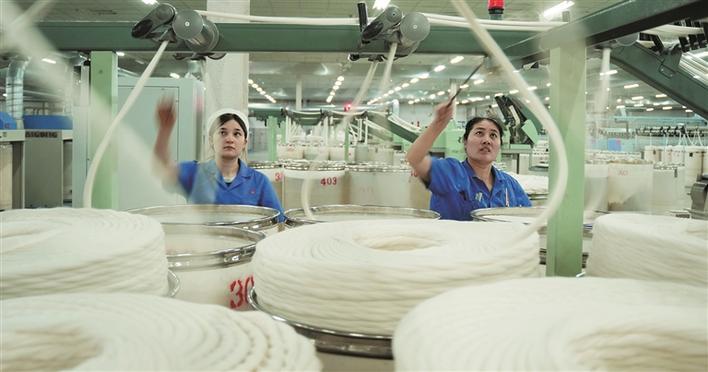
Group 1 - Xinjiang Jinyu Textile Co., Ltd. is operating its spinning production line efficiently, with workers accelerating the production of order products [2] - The agricultural sector is actively preparing for spring farming, with a focus on improving crop yields and quality through training and technical support [5][7] - The company Xinjiang Yilihong Biological New Materials Technology Co., Ltd. has achieved an automation control rate of over 80% in its production processes, leading to a continuous industrial output growth rate exceeding 40% for two consecutive years [8] Group 2 - Xinjiang Fengda Cotton Industry Technology Co., Ltd. has signed over 1 million meters of fabric orders, achieving full production capacity with a daily output of 30,000 meters of fabric [8] - The logistics sector is enhancing efficiency through innovative models, such as the "front warehouse" approach, significantly shortening procurement distances for downstream enterprises [10] - The China Post Group's Aral City branch has resumed full operations, with approximately 4,000 packages being delivered on the first day back to work after the holiday [11] Group 3 - The Six Division Wujiaqu City Government Service Hall has improved service efficiency by increasing service windows and optimizing business processing, now handling 668 government service items [12] - The agricultural technology advancements in strawberry cultivation have led to over 300 farmers increasing their income, with the related industry achieving a comprehensive output value exceeding 40 million yuan [3] - The automotive market in Xinjiang is expanding, with the Xinjiang Tianhengji International Automotive Culture City serving as a significant hub for domestic and international vehicle transactions, achieving an annual transaction volume exceeding 10 billion yuan [10]

除夕献词|马年启幕资本潮涌 新的一年与您并肩前行 见证资本市场的力量与时代机遇 ! 《澳华财经在线》全体同仁向全球读者拜年!
Sou Hu Cai Jing· 2026-02-16 14:29
Group 1 - The global capital markets have experienced significant volatility and structural changes over the past year, with inflation, interest rate fluctuations, and geopolitical tensions impacting market sentiment [4][5] - The rise of AI and technological advancements has shifted investor focus from speculative themes to execution capabilities and cash flow, indicating a maturation of market dynamics [4][5] - In Australia, the stock market has seen opportunities emerge amidst resource cycles and technological trends, with improved China-Australia relations contributing to a more stable economic environment [5][21] Group 2 - Shandong Xinhai Mining Group has positioned itself as a leading EPC company in the global mining market, leveraging professional expertise and technological innovation to expand its international presence [21][22] - The company has established strategic partnerships in Australia, focusing on key resources such as gold, copper, and rare earth elements, enhancing its service capabilities across the mining value chain [22][23] - Looking ahead, Xinhai aims to deepen its "resource + service" dual-driven strategy, reinforcing its project execution capabilities while expanding its international footprint [22][23] Group 3 - Jiahe Capital has successfully navigated the complexities of the market in 2025, focusing on gold and key metals, and achieving significant progress in project financing and cross-border cooperation [24][25] - The firm anticipates continued strength in gold demand driven by structural trends in the monetary system and persistent geopolitical risks, while also exploring opportunities in critical metals related to energy transition [25][26] - Jiahe Capital's strategic positioning in the resource sector emphasizes the importance of effective management of cyclical fluctuations and deep participation in the industry value chain [25][26] Group 4 - BlueScope Steel's acquisition discussions have stalled due to high expectations from shareholders, with analysts suggesting that a successful transaction may require asset divestitures [26][27] - The current share price of BlueScope is AUD 29.16, with the board seeking offers above AUD 30, but industry experts believe a significant drop in share price may be necessary for a successful deal [27]

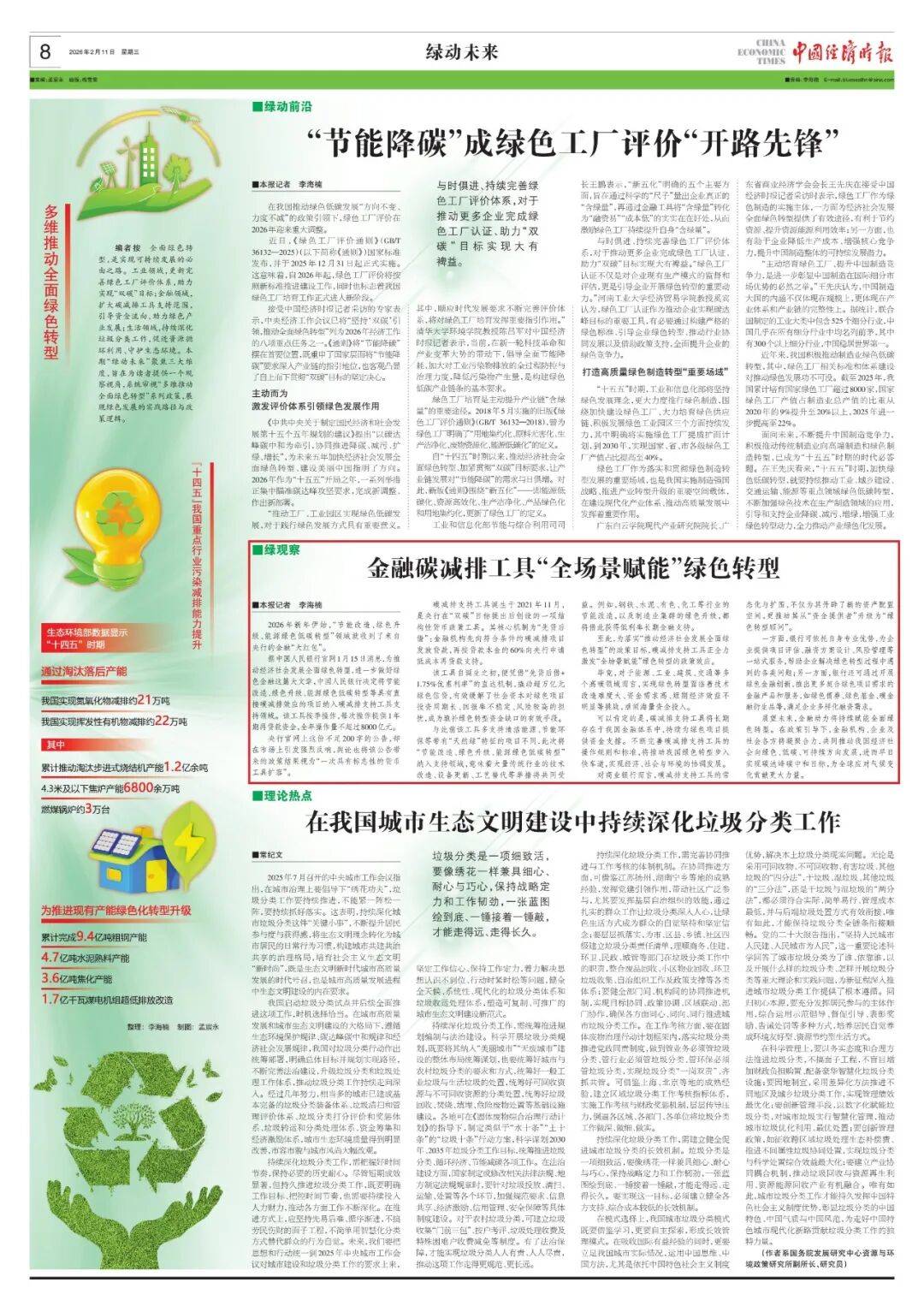
绿动未来丨金融碳减排工具“全场景赋能”绿色转型
Sou Hu Cai Jing· 2026-02-11 03:26
Core Viewpoint - The People's Bank of China (PBOC) has expanded its carbon reduction support tool to include projects related to energy efficiency upgrades and low-carbon transitions, aiming to facilitate a comprehensive green transformation in the economy [1][2][3]. Financial Sector - The PBOC's announcement has been perceived as a significant expansion of a structural monetary policy tool created in November 2021, which operates on a "lend first, borrow later" mechanism, allowing financial institutions to issue loans for eligible carbon reduction projects and then seek low-cost refinancing from the central bank [2][3]. - The carbon reduction support tool has mobilized over 1 trillion yuan in green credit since its inception, effectively addressing concerns about the long investment cycles and uncertain returns associated with green projects [2][3][4]. Industrial Sector - The inclusion of energy efficiency upgrades and low-carbon transitions in the support tool signifies that traditional industries such as steel, cement, and chemicals will benefit from long-term, low-interest financial support for technological upgrades and process improvements [2][3][4]. - The tool aims to address the high capital demands and technical challenges faced by high-carbon sectors, ensuring a steady flow of funds to facilitate their green transformation [3][4]. Policy Implications - The ongoing refinement of the carbon reduction support tool's operational rules and standards is expected to accelerate China's green transition, promoting coordinated economic, social, and environmental development [3][4]. - The central government's commitment to green transformation is underscored by its inclusion in the key economic tasks for 2026, emphasizing energy efficiency and carbon reduction as primary objectives [9][10]. Green Manufacturing - The new national standard for green factory evaluation, effective from December 31, 2025, aims to enhance the green manufacturing landscape, aligning with the broader goals of carbon neutrality and sustainable development [9][10][11]. - The green factory certification process is seen as a crucial driver for enterprises to adopt greener practices, thereby improving resource efficiency and reducing production costs [11][12][13]. Future Outlook - The financial sector is expected to evolve from merely providing funds to becoming a "green transformation consultant," offering comprehensive services to businesses undergoing green transitions [4][16]. - The collaborative efforts among financial institutions, enterprises, and society are anticipated to propel the economy towards a sustainable, low-carbon future, contributing to global climate change mitigation efforts [4][16].
所长早读-20260206
Guo Tai Jun An Qi Huo· 2026-02-06 01:43
1. Report Industry Investment Ratings - Not provided in the document 2. Core Views of the Report - On February 5th, European and American stock markets closed down collectively. The German DAX index and the UK FTSE 100 index fell nearly 1%, and the three major US stock indexes all fell more than 1%. Technology stocks generally declined. The market was under pressure from multiple factors such as weak US employment data, high corporate lay - offs, fluctuations in the Fed's interest - rate cut expectations, chip supply shortages, trade policy adjustments, and the divergence of AI capital expenditure and profit realization expectations of technology giants. Amazon's share price tumbled after hours as it announced a capital expenditure of $200 billion this year, far exceeding market expectations [8]. - The price of lithium carbonate dropped significantly on February 5th. The 2605 contract closed at 132,780 yuan/ton, a decrease of 10.68%. The price decline was mainly due to macro - level price corrections, an unexpected increase in Chile's exports, and lower - than - expected energy storage bid data, weak new energy vehicle sales and penetration, and reduced downstream rigid - demand stocking before the Spring Festival. The current spot price of battery - grade lithium carbonate is 144,000 yuan/ton, and the basis between the futures and spot prices has widened significantly [9][10]. 3. Summary by Related Catalogs 3.1 Metals 3.1.1 Precious Metals - **Gold and Silver**: Gold is releasing risks, and silver is falling from a high level. The prices of gold and silver futures and spot markets showed certain fluctuations. The Comex gold 2602 contract rose 0.32%, and the Comex silver 2602 contract rose 3.36%. The trading volume and positions of gold and silver futures also changed. The trend intensity of both gold and silver is 0 [16]. - **Platinum and Palladium**: Platinum is following silver and weakening further, and palladium is relatively weak and back to a low level. The prices of platinum and palladium futures and spot markets declined. The trend intensity of both platinum and palladium is - 1 [39][41]. 3.1.2 Base Metals - **Copper**: The market sentiment is pessimistic, and the price is under pressure. The Shanghai copper main contract fell 3.97%, and the London copper 3M electronic disk fell 1.42%. The trading volume and positions of copper futures changed, and the inventory also increased. The trend intensity of copper is - 1 [21]. - **Zinc**: It is running weakly. The Shanghai zinc main contract fell 1.97%, and the London zinc 3M electronic disk fell 0.53%. The trading volume and positions of zinc futures decreased, and the inventory situation also changed. The trend intensity of zinc is 0 [24]. - **Lead**: The domestic inventory has increased, and the price is under pressure. The Shanghai lead main contract fell 0.21%, and the London lead 3M electronic disk rose 0.28%. The trading volume and positions of lead futures changed, and the inventory increased. The trend intensity of lead is 0 [27]. - **Tin**: It is in a state of shock consolidation. The Shanghai tin main contract fell 3.72%, and the London tin 3M electronic disk fell 2.83%. The trading volume and positions of tin futures changed, and the inventory decreased. The trend intensity of tin is 0 [30]. - **Aluminum, Alumina, and Cast Aluminum Alloy**: Aluminum is under pressure at a high level, alumina is rebounding slightly, and cast aluminum alloy is following electrolytic aluminum. The prices and trading volumes of aluminum, alumina, and cast aluminum alloy futures and spot markets showed certain changes. The trend intensity of aluminum is 1, alumina is 0, and cast aluminum alloy is 1 [34]. - **Nickel and Stainless Steel**: For nickel, the macro - sentiment dominates the margin, and the fundamentals and speculative positions are in a game. For stainless steel, there are frequent maintenance and production cuts in February, and the nickel - iron is expected to support the lower price. The prices and trading volumes of nickel and stainless steel futures and spot markets changed. The trend intensity of both nickel and stainless steel is 0 [44][45]. 3.2 Energy and Chemicals - **Lithium Carbonate**: Attention should be paid to the changes in the macro - sentiment of the commodity. The price of the 2605 contract of lithium carbonate fell significantly. The production and inventory of lithium carbonate also changed. The trend intensity of lithium carbonate is 0 [51]. - **Industrial Silicon and Polysilicon**: Industrial silicon should pay attention to inventory changes, and polysilicon is in a range - bound pattern. The prices and trading volumes of industrial silicon and polysilicon futures and spot markets changed. The trend intensity of both industrial silicon and polysilicon is 0 [55]. - **Iron Ore**: The steel mills' inventory replenishment is nearing completion, and the ore price is fluctuating and falling. The price of the I2605 contract of iron ore fell 1.66%. The spot prices of iron ore also decreased. The trend intensity of iron ore is - 1 [58]. - **Rebar and Hot - Rolled Coil**: The apparent demand of rebar and hot - rolled coil decreased month - on - month, and they are in a wide - range shock. The prices of rebar and hot - rolled coil futures and spot markets changed. The trend intensity of both rebar and hot - rolled coil is 0 [63][64]. - **Silicon Iron and Manganese Silicon**: The fundamentals and sentiment are in a game, and they are in a wide - range shock. The prices and trading volumes of silicon iron and manganese silicon futures and spot markets changed. The trend intensity of both silicon iron and manganese silicon is 0 [68]. - **Coke and Coking Coal**: They are in a high - level shock. The prices of coke and coking coal futures and spot markets changed. The trend intensity of both coke and coking coal is 0 [72]. - **Steam Coal**: The news of production cuts in Indonesia has stimulated the import market, and the domestic coal price remains stable before the Spring Festival. The prices of steam coal in different regions and the inventory situation changed. [76] - **Log**: It is in a shock - consolidation state. The prices and trading volumes of log futures and spot markets changed. The trend intensity of log is 0 [79]. - **Para - Xylene, PTA, and MEG**: Para - xylene's cost has collapsed, the price has followed the correction, and the monthly spread is weak. PTA is in a range - bound market, and MEG is for range - bound operation. The prices and trading volumes of para - xylene, PTA, and MEG futures and spot markets changed. The trend intensity of para - xylene, PTA, and MEG is - 1 [83]. - **Rubber**: It is in a wide - range shock. The price and trading volume of rubber futures and spot markets changed. The trend intensity of rubber is 0 [90]. - **Synthetic Rubber**: It is under shock pressure. The price and trading volume of synthetic rubber futures and spot markets changed. The trend intensity of synthetic rubber is - 1 [94]. - **LLDPE**: The import is narrowing, the bid is limited, and the strong naphtha compresses the cracking profit. The price and trading volume of LLDPE futures and spot markets changed. The trend intensity of LLDPE is - 1 [97]. - **PP**: The valuation repair is limited, and the L - PP spread is under pressure. The price and trading volume of PP futures and spot markets changed. The trend intensity of PP is 0 [100]. - **Caustic Soda**: The near - month delivery pressure is large. The price and trading volume of caustic soda futures and spot markets changed. The trend intensity of caustic soda is - 1 [103]. - **Pulp**: It is in a shock - running state. The price and trading volume of pulp futures and spot markets changed. The trend intensity of pulp is 0 [107]. - **Glass**: The price of the original sheet is stable. The price and trading volume of glass futures and spot markets changed. The trend intensity of glass is 0 [114]. - **Methanol**: It is in a shock - supported state. The price and trading volume of methanol futures and spot markets changed. The trend intensity of methanol is 0 [117]. - **Urea**: It is in a short - term shock - running state. The price and trading volume of urea futures and spot markets changed. The trend intensity of urea is 0 [122]. - **Styrene**: It is in a relatively strong shock. The price and trading volume of styrene futures and spot markets changed. The trend intensity of styrene is 0 [125]. - **Soda Ash**: The spot market has little change. The price and trading volume of soda ash futures and spot markets changed. The trend intensity of soda ash is 0 [128]. - **LPG and Propylene**: For LPG, short - term geopolitical disturbances are relatively strong, and the fundamental driving force is downward. For propylene, the upward driving force is limited, and attention should be paid to cost - side disturbances. The prices and trading volumes of LPG and propylene futures and spot markets changed. The trend intensity of both LPG and propylene is 0 [132]. - **PVC**: It is in a weak shock. The price and trading volume of PVC futures and spot markets changed. The trend intensity of PVC is - 1 [142]. - **Fuel Oil and Low - Sulfur Fuel Oil**: Fuel oil is continuously rebounding, and the short - term weakness is暂缓. Low - sulfur fuel oil is in a narrow - range adjustment, and the spot price spread between high - sulfur and low - sulfur fuel oil in the overseas market is still at a historical low. The prices and trading volumes of fuel oil and low - sulfur fuel oil futures and spot markets changed. The trend intensity of both fuel oil and low - sulfur fuel oil is 0 [145]. 3.3 Agricultural Products - **Palm Oil and Soybean Oil**: Palm oil's macro - sentiment is fluctuating, and the high - level volatility is intensifying. Soybean oil is in a range - bound adjustment. The prices and trading volumes of palm oil and soybean oil futures and spot markets changed. The trend intensity of both palm oil and soybean oil is 0 [175]. - **Soybean Meal and Soybean**: Overnight, US soybeans continued to rise, and Dalian soybean meal may follow. The spot price of soybeans is stable, and the futures price is in a shock. The prices and trading volumes of soybean meal and soybean futures and spot markets changed. The trend intensity of soybean meal is + 1, and that of soybean is 0 [180][181]. - **Corn**: The callback range is limited. The price and trading volume of corn futures and spot markets changed. The trend intensity of corn is 0 [184]. - **Sugar**: It is in a range - bound arrangement. The price and trading volume of sugar futures and spot markets changed. The trend intensity of sugar is 0 [187]. - **Cotton**: It is expected to maintain a shock trend. The price and trading volume of cotton futures and spot markets changed. The trend intensity of cotton is 1 [191]. - **Eggs**: They maintain a weak state. The price and trading volume of egg futures and spot markets changed. The trend intensity of eggs is - 1 [197]. - **Hogs**: The peak season is not prosperous, and the post - festival price center is expected to continue to decline. The price and trading volume of hog futures and spot markets changed. The trend intensity of hogs is - 1 [200]. - **Peanuts**: They are in a shock - running state. The price and trading volume of peanut futures and spot markets changed. The trend intensity of peanuts is 0 [205]. 3.4 Shipping - **Container Freight Index (European Line)**: The expectation of price increase is rising again. The price and trading volume of the container freight index (European line) futures changed. The trend intensity of the container freight index (European line) is 0 [147]. 3.5 Fibers - **Staple Fiber and Bottle Chip**: They are in a short - term shock market. The prices and trading volumes of staple fiber and bottle chip futures and spot markets changed. The trend intensity of both staple fiber and bottle chip is 0 [163]. 3.6 Paper - **Offset Printing Paper**: Hold short positions and reverse spreads. The price and trading volume of offset printing paper futures and spot markets changed. The trend intensity of offset printing paper is - 1 [166]. 3.7 Aromatics - **Pure Benzene**: It is in a relatively strong shock. The price and trading volume of pure benzene futures and spot markets changed. The trend intensity of pure benzene is 0 [171].
中国实践中的利益协调(二):过程利益协同与时空平衡的治理智慧
Jing Ji Guan Cha Bao· 2026-01-31 02:50
Group 1 - The core idea of the article emphasizes the need to move beyond mere efficiency in capital circulation to establish a new framework for equitable benefit distribution through institutional innovation and technological empowerment [1] - The article focuses on how China is leveraging blockchain technology to reconstruct process property rights and optimize spatial layouts through national computing power projects, aiming for a more inclusive and sustainable benefit-sharing model [1][2] Group 2 - The re-engineering of processes and reconstruction of property rights through blockchain establishes new rules for the distribution of process benefits, enhancing efficiency in capital movement [2] - Cross-border settlement has transformed from "credit friction costs" to a "foundation for benefit collaboration," with sales revenue for ginseng increasing by 170% due to its green attributes [2] - Smart contracts lock 30% of carbon credit revenues for future ecological compensation, improving cash flow for farmers by 400% and creating long-term development funds for communities [2] Group 3 - The "East Data West Computing" initiative represents a strategic intervention by the state to balance spatial interests across regions, integrating eastern data demand with western green energy resources [3][5] - This initiative has led to a historical breakthrough, with the western region currently receiving about 30% of computing power revenue, while also alleviating energy pressure in the east and reducing national computing costs by 40% [5][6] Group 4 - The case study of Industrial and Commercial Bank's "Chang'an Chain" illustrates a significant reduction in settlement time from 7-10 days to 4 hours, showcasing efficiency improvements and the restructuring of stakeholder relationships through smart contracts [4] - The blockchain technology reduces transaction costs by 40%, transforming saved costs into shared process benefits among all parties involved [4] Group 5 - The strategic shift from "resource curse" to "computing power dividend" aims to reorganize resource endowments nationwide, enhancing the role of the western region in the high-value digital economy [5] - Direct benefits include investments in data center construction and job creation in the west, while indirect benefits help reduce energy pressure in the east and enhance national digital competitiveness [5][6] Group 6 - External pressures, such as the EU's Carbon Border Adjustment Mechanism (CBAM), are driving internal reforms in China, compelling companies to adopt green technologies and internalize ecological costs [7] - The establishment of a carbon footprint tracing and trading system transforms global ecological pressures into domestic industrial upgrades and technological innovations [7] Group 7 - The governance logic in China is characterized by a collaborative approach that adjusts production relationships through institutional innovation, optimizes capital movement via technological empowerment, and ultimately aims for equitable benefit distribution [8][10] - The article concludes that China's exploration of process collaboration and spatial balance transcends mere efficiency, showcasing a governance model that integrates institutional rationality with technological advancements for a more inclusive digital civilization [9]
黄金:再创新高白银:高位回落
Guo Tai Jun An Qi Huo· 2026-01-30 01:32
Report Industry Investment Ratings Not provided in the content. Core Views - The report provides a comprehensive analysis of various commodities, including precious metals, base metals, energy, agricultural products, and chemical products, and gives corresponding trend intensities and trading suggestions for each commodity [2][9][12]. Summary by Directory Precious Metals - **Gold**: Reached a new high, with the Shanghai gold futures contract 2602 closing at 1,249.12 yuan, up 5.30% during the day, and the overnight session closing at 1202.00 yuan, down 1.38%. The trend intensity is 0 [6]. - **Silver**: Fell from a high, with the Shanghai silver futures contract 2602 closing at 30891 yuan, up 5.91% during the day, and the overnight session closing at 30358.00 yuan, up 2.10%. The trend intensity is 0 [6]. - **Platinum**: Oscillated upward, with the gold exchange - traded platinum closing at 703.90 yuan, up 4.99%. The trend intensity is 0 [24]. - **Palladium**: Followed the upward trend due to continuous inflow of ETFs. The trend intensity is 0 [24]. Base Metals - **Copper**: Supported by the weak US dollar, the Shanghai copper main contract closed at 109,110 yuan, up 5.87%. The trend intensity is 1 [9]. - **Zinc**: Inventory was depleted, with the Shanghai zinc main contract closing at 25950 yuan, up 1.35%. The trend intensity is 1 [12]. - **Lead**: Domestic inventory increased continuously, pressuring the price. The Shanghai lead main contract closed at 17185 yuan, up 1.12%. The trend intensity is 0 [16]. - **Tin**: Oscillated within a range, with the Shanghai tin main contract closing at 446,130 yuan, up 0.53%. The trend intensity is 0 [19]. - **Aluminum**: High - level and high - volatility, with the Shanghai aluminum main contract closing at 25590 yuan. The trend intensity is 1 [22]. - **Alumina**: Weakly running, with the Shanghai alumina main contract closing at 2816 yuan. The trend intensity is 0 [22]. - **Cast Aluminum Alloy**: Followed the trend of electrolytic aluminum. The trend intensity is 1 [22]. - **Nickel**: The situation in Indonesia was undetermined, with a game between hedging and speculative positions. The Shanghai nickel main contract closed at 147,470 yuan. The trend intensity is 0 [29]. - **Stainless Steel**: Concerns about nickel ore in Indonesia intensified, and the rise of ferronickel supported the price center. The stainless - steel main contract closed at 14,585 yuan. The trend intensity is 0 [29]. Energy - **Fuel Oil**: Will continue to be strong in the short term, with a high - volatility trend. The trend intensity is 2 [132]. - **Low - Sulfur Fuel Oil**: Continued to rise, and the price difference between high - and low - sulfur fuels in the overseas spot market continued to shrink. The trend intensity is 2 [132]. - **LPG**: Short - term geopolitical disturbances were strong. The trend intensity is 0 [117]. - **Coal**: - **Coking Coal**: The first round of price increase was implemented, and it oscillated at a high level. The trend intensity is 0 [56]. - **Coking Coal**: The event was fermenting, and it oscillated at a high level. The trend intensity is 0 [56]. - **Steam Coal**: Supply and demand tended to be weak, and the coal price slightly increased. The trend intensity is 0 [60]. Agricultural Products - **Palm Oil**: High - level volatility increased, and attention should be paid to the previous high pressure. The trend intensity is 0 [160]. - **Soybean Oil**: Oscillated and adjusted at a high level. The trend intensity is 0 [160]. - **Soybean Meal**: The overnight US soybeans closed down, and the Dalian soybean meal adjusted and oscillated. The trend intensity is 0 [166]. - **Soybean**: The spot price was stable, and the futures price fluctuated with the sentiment of the commodity market. The trend intensity is 0 [166]. - **Corn**: The callback range was limited. The trend intensity is 1 [169]. - **Sugar**: Attention should be paid to the low - basis spot - futures opportunities. The trend intensity is 0 [172]. - **Cotton**: Maintained a strong - side oscillation. The trend intensity is 1 [177]. - **Eggs**: The expectation of the off - season after the Spring Festival remained unchanged. The trend intensity is 0 [183]. - **Hogs**: The demand performance was lower than expected, and the supply contradiction was released. The trend intensity is - 2 [186]. - **Peanuts**: Oscillated. The trend intensity is 0 [190]. Chemical Products - **PX**: Unilaterally strong, with a reverse spread in the monthly difference. The trend intensity is 1 [66]. - **PTA**: Supported by cost, with a unilateral strong trend. The trend intensity is 1 [66]. - **MEG**: The trend remained strong. The trend intensity is 1 [66]. - **Rubber**: Oscillated strongly. The trend intensity is 1 [72]. - **Synthetic Rubber**: Oscillated widely at a high level. The trend intensity is 1 [75]. - **LLDPE**: Import was difficult to increase in the short term, and supported by the oil price. The trend intensity is - 1 [78]. - **PP**: The oil price increased, providing cost support. The trend intensity is 0 [81]. - **Caustic Soda**: Oscillated at a low level. The trend intensity is 0 [84]. - **Pulp**: Oscillated widely. The trend intensity is 0 [89]. - **Glass**: The price of the original sheet was stable. The trend intensity is - 1 [96]. - **Methanol**: Oscillated with support. The trend intensity is 1 [100]. - **Urea**: The oscillation center moved up. The trend intensity is 0 [105]. - **Styrene**: Oscillated strongly. The trend intensity is 0 [108]. - **Soda Ash**: The spot market changed little. The trend intensity is - 1 [112]. - **Propylene**: Supported by strong demand, the spot price remained high. The trend intensity is 0 [117]. - **PVC**: Oscillated within a range. The trend intensity is 0 [129]. Shipping - **Container Freight Index (European Line)**: In an oscillating market, with the geopolitical situation fermenting again. The trend intensity is 0 [134]. Fibers - **Short - Fiber**: Oscillated strongly at a high level. The trend intensity is 1 [148]. - **Bottle Chip**: Oscillated strongly at a high level. The trend intensity is 1 [148]. Paper - **Offset Printing Paper**: Hold short positions and conduct a 3 - 4 reverse spread. The trend intensity is - 1 [152]. Aromatics - **Pure Benzene**: Oscillated strongly. The trend intensity is 0 [156].
钢材&铁矿石日报:产业担忧发酵,钢矿偏弱震荡-20260127
Bao Cheng Qi Huo· 2026-01-27 11:50
Report Industry Investment Rating - No relevant content provided Core Views - The main contract price of rebar declined weakly with a daily decline of 0.79%, and both trading volume and open interest contracted. Currently, rebar production has significantly increased, supply has grown, while demand is weak, leading to the accumulation of fundamental contradictions. Steel prices are under pressure during the off - season. The relatively positive factor is the warm commodity sentiment. The subsequent trend will continue to oscillate at a low level, and attention should be paid to inventory changes [5]. - The main contract price of hot - rolled coil fluctuated weakly with a daily decline of 0.60%, and both trading volume and open interest contracted. Currently, the supply of hot - rolled coil has declined, but inventory is high and the pressure remains. Demand resilience is weakening, and industrial contradictions are likely to accumulate, putting pressure on prices. The relatively positive factor is the decent speculative demand. It is expected that the trend will continue to oscillate, and attention should be paid to demand performance [5]. - The main contract price of iron ore fluctuated weakly with a daily decline of 0.51%, trading volume decreased while open interest increased. Currently, the reduction in iron ore supply is limited, demand is weak, and combined with high inventory pressure, the fundamentals are weak. Iron ore prices are under pressure. The relatively positive factor is the warm commodity sentiment. It is expected that iron ore prices will maintain an oscillating trend, and attention should be paid to steel mills' restocking [5]. Summary by Relevant Catalogs Industry Dynamics - In 2025, the China Development Bank issued over 200 billion yuan in railway loans, a year - on - year increase of 27.8%, and the railway loan balance exceeded 1 trillion yuan for the first time. By the end of 2025, the total operating mileage of high - speed rail projects supported by the bank exceeded 42,500 kilometers, accounting for over 85% of the "Eight Vertical and Eight Horizontal" high - speed rail network. In the future, it will continue to increase support for railway construction [7]. - According to the Tower Crane Rental Industry Prosperity Index (TPI) in December 2025, the utilization rate of tower crane days was 55.1%, and the utilization rate of maximum lifting moment was 56.8%, 2 and 1.5 percentage points lower than the previous month respectively. The rental price index was 496.52 points, 5.65 points lower than the previous month and 57.283 points lower than the same period last year [8]. - On January 23, 2026, the Australian Anti - Dumping Commission announced a new exporter review investigation of anti - dumping and counter - subsidy on aluminized zinc - coated steel sheets imported from the Chinese mainland at the request of a Chinese exporter. The investigation period is from January 1, 2025, to December 31, 2025, and the final ruling is expected to be submitted by April 15, 2026 [9]. Spot Market - The spot prices of rebar, hot - rolled coil, and Tangshan billet all declined, while the price of Zhangjiagang heavy scrap remained unchanged. The spot prices of PB powder in Shandong ports increased, and the price of Tangshan iron concentrate remained unchanged. The freight rates from Australia and Brazil increased slightly, the SGX swap price decreased, and the iron ore price index declined [10]. Futures Market - The closing price of rebar futures was 3,126 yuan, a decline of 0.79%, with a trading volume of 673,796 lots and an open interest of 1,714,659 lots. - The closing price of hot - rolled coil futures was 3,289 yuan, a decline of 0.60%, with a trading volume of 288,700 lots and an open interest of 1,508,428 lots. - The closing price of iron ore futures was 788.0 yuan, a decline of 0.51%, with a trading volume of 211,744 lots and an open interest of 571,053 lots [12]. Related Charts - The section on related charts mainly presents various inventory and production - related charts of steel and iron ore, including steel inventory, iron ore inventory, and steel mill production conditions, showing the trends and seasonal characteristics of relevant data over multiple years [14][22][27]. 后市研判 - For rebar, supply pressure is increasing as production has risen, and demand is weak. The price is under pressure during the off - season but may be supported by warm commodity sentiment. It will continue to oscillate at a low level, and inventory changes should be monitored [34]. - For hot - rolled coil, both supply and demand have weakened. Inventory is high, and demand resilience is weakening. Although speculative demand is decent, the price is under pressure and will continue to oscillate. Attention should be paid to demand performance [34]. - For iron ore, the supply reduction is limited, demand is weak, and inventory is high. The price is under pressure but may be supported by warm commodity sentiment. It will maintain an oscillating trend, and steel mills' restocking should be monitored [35].
有意“抱团”应对美国,关键领域仍存分歧,印欧今天或敲定自贸协定
Huan Qiu Shi Bao· 2026-01-26 23:09
Core Points - The EU and India are set to announce the completion of nearly 20 years of negotiations for a free trade agreement (FTA) during a summit in New Delhi, creating the largest trade area covering 2 billion people [1][2] - India plans to significantly reduce tariffs on EU imported cars from a maximum of 110% to 40%, marking a major opening of its automotive market [1][2] - The FTA will also address tariff reductions in labor-intensive sectors such as textiles and footwear, as well as wine imports, which are crucial for Indian exporters facing U.S. tariffs [3][6] Group 1: Trade Agreement Details - The FTA is expected to provide the EU with the highest level of market access to India, traditionally a protected market [2] - The agreement will not include electric vehicles in the initial five years of tariff reductions to protect Indian manufacturers [2][3] - The negotiations are ongoing due to unresolved key issues, particularly concerning agriculture and steel, which are sensitive sectors for both parties [4] Group 2: Economic Impact - The FTA is anticipated to have a more significant impact on India, which is looking to mitigate the effects of U.S. tariffs, while the short-term effects on the EU may be limited due to the current weak economic relationship [6] - The EU is India's largest trading partner, with bilateral trade expected to account for 11.5% of India's total trade by 2024 [6] - The agreement aims to foster long-term economic cooperation and includes a new security and defense partnership, reflecting a higher level of trust between the two regions [6] Group 3: Geopolitical Context - The timing of the FTA is influenced by the geopolitical landscape, particularly concerns over U.S. policies and the stability that India offers as a growing market [7][8] - The negotiations have been facilitated by the perceived need for both the EU and India to diversify their economic relationships and reduce dependency on other powers [8]