
神经技术

Search documents
单芯片实现大脑与AI高速无线连接
Ke Ji Ri Bao· 2025-12-11 01:08
Core Insights - A new brain-machine interface called the Cortical Biointerface System (BISC) has been developed by research teams from Columbia University, Stanford University, and the University of Pennsylvania, showcasing transformative clinical potential [1][2] - BISC is a single-chip implant that is only 50 micrometers thick and approximately 3 cubic millimeters in volume, allowing for minimally invasive insertion between the brain and skull, significantly reducing surgical trauma and tissue rejection risks [1][2] - The chip integrates 65,536 electrodes and features a wireless data link with a bandwidth of 100 megabytes per second, enabling real-time transmission of brain neural signals to external computers with a data throughput at least 100 times greater than existing devices [1][2] Industry Impact - The high bandwidth and minimally invasive nature of BISC are expected to have profound implications for neuroscience and clinical medicine, potentially allowing paralyzed patients to regain control of limbs or external devices, and enabling speech for those with aphasia [2] - BISC has the potential to revolutionize the management of neurological disorders ranging from epilepsy to paralysis by transforming the cortical surface into an effective "portal" for high-bandwidth communication between the brain and AI or external devices [2][4] - The research team is currently developing a commercial version of the BISC chip to facilitate its application in preclinical and future human patient settings [3]
盲人复明,马斯克Neuralink联创实现人工视觉里程碑
3 6 Ke· 2025-10-27 00:41
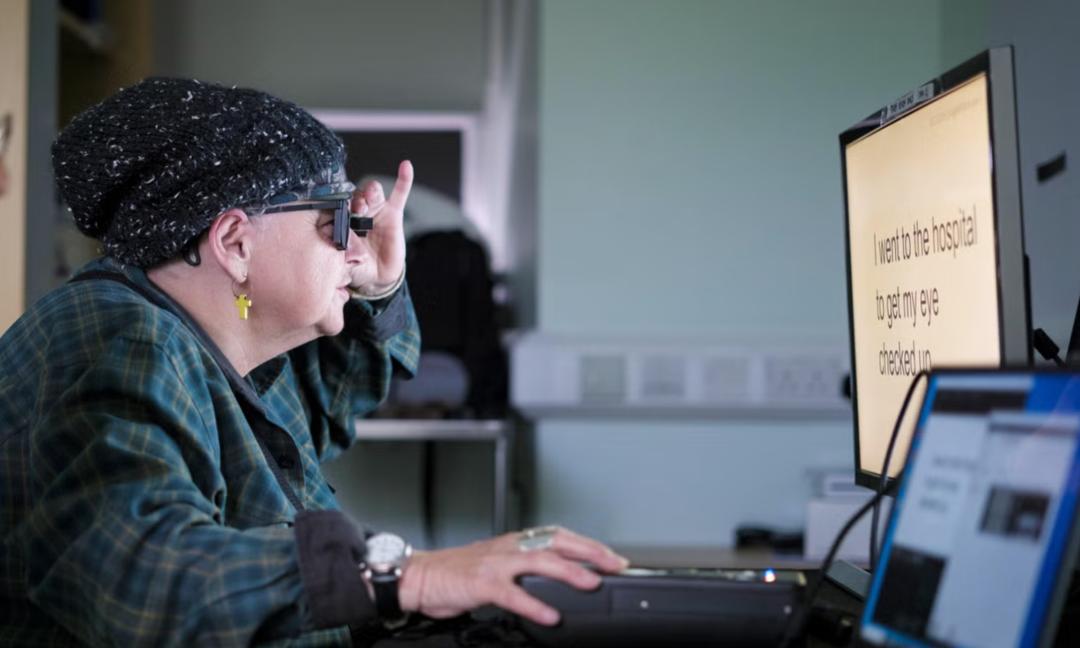
Core Insights - The article highlights a groundbreaking advancement in artificial vision technology, specifically the PRIMA retinal implant, which has successfully restored functional central vision to a 70-year-old woman after 15 years of blindness [1][3][5]. Group 1: Technology Overview - PRIMA is a world-first artificial vision research project that utilizes a photovoltaic retinal implant to restore vision by acting as a substitute for light-sensitive cells [13][15]. - The device consists of a small photovoltaic retinal implant (2mm x 2mm x 30μm) and special glasses that capture images and convert them into infrared beams, which the implant then processes to stimulate remaining retinal neurons [15][19]. - The system has shown promising results, with 84% of participants recovering functional central vision and 80% achieving a significant improvement in visual acuity [16][19]. Group 2: Clinical Trials and Results - The study involved 38 patients from 17 clinical sites across five countries, with 32 completing the final evaluation [16]. - Results indicated an average improvement of 25.5 letters on the standard vision test, equating to an increase of two lines on the vision chart [16]. - Despite some initial adverse reactions, 95% of patients experienced symptom resolution within two months, and overall benefits outweighed the risks associated with the implant surgery [19]. Group 3: Future Developments - PRIMA has been submitted for regulatory approval in Europe and is undergoing the FDA approval process in the U.S., with plans for a commercial launch in 2024 [21]. - The research team is also working on next-generation implants and glasses to enhance visual performance, aiming for smaller pixels and color vision capabilities [24]. - The company behind PRIMA, Science Corporation, was co-founded by Max Hodak, a former co-founder of Neuralink, and focuses on neuroengineering and brain-machine interface technologies [25][29].

从脑科学到猕猴桃——中外联合实验室奏响“一带一路”科技合作交响曲
Xin Hua She· 2025-06-27 00:23
Group 1 - The article highlights the establishment and significance of the China-Cuba Neuroscience and Brain-Computer Interaction Joint Laboratory as a platform for international scientific cooperation under the Belt and Road Initiative [2][3] - The laboratory aims to leverage Cuba's expertise in neuroscience and China's strengths in artificial intelligence and big data to develop accessible neural technologies, particularly for low-income countries facing brain disease burdens [3] - As of January 2025, China has signed technology cooperation agreements with over 80 countries and established more than 70 joint laboratories, emphasizing the importance of scientific collaboration within the Belt and Road Initiative [3] Group 2 - The article discusses the China-New Zealand Kiwi Joint Laboratory, which focuses on joint research to combat plant diseases and enhance agricultural practices, benefiting both countries and contributing to global agricultural improvements [3][5] - The collaboration has led to the introduction of New Zealand's germplasm evaluation system and standardized planting techniques, optimizing them for local conditions in China, thus enhancing breeding and pest control capabilities [5] - The joint laboratory has also facilitated international training programs for kiwi industry professionals from various countries, promoting the development of the kiwi industry in Belt and Road partner nations [5] Group 3 - The China-Croatia Biodiversity and Ecosystem Services Joint Laboratory is highlighted for its role in protecting natural heritage sites and studying the impact of climate change and tourism on ecosystems [6] - The laboratory embodies the principles of harmonious coexistence between humans and nature, contributing strategies for the optimization and protection of world heritage water systems [6] - These joint laboratories serve as bridges connecting countries, showcasing international scientific cooperation and addressing global challenges from neuroscience to biodiversity [6]
“钞能力”重启:马斯克回归首周就疯狂吸金!
Jin Shi Shu Ju· 2025-06-03 02:08
Group 1 - Elon Musk's xAI Corp. plans to raise $5 billion through debt issuance, indicating a shift back to business operations after a period of political involvement [1][2] - Morgan Stanley is selling this debt at a double-digit interest rate, with a spread of 7 percentage points above the benchmark rate and a yield of approximately 12% on senior secured notes [1] - The debt structure includes floating-rate term loans, fixed-rate term loans, and senior secured notes, with subscription demand exceeding $3.5 billion [1] Group 2 - The financing will support the construction of a large AI data center in Memphis, as Musk aims to reclaim his entrepreneurial identity [2] - Musk has also raised $650 million for Neuralink and is selling $300 million worth of xAI stock, with a target valuation of $113 billion [2] - xAI, founded in 2023, aims to compete with OpenAI and has launched the Grok chatbot, establishing partnerships with Microsoft and Telegram [2] Group 3 - Musk's decision to step back from politics and return to business is seen as crucial for stabilizing his companies, especially after Tesla's sales decline due to his political affiliations [3] - Morgan Stanley has a long-standing relationship with Musk and has benefited from the renewed optimism surrounding his business prospects [4] - The bank successfully restarted the sale of debt related to Musk's previous acquisition of Twitter, capitalizing on the early synergies between X and xAI [4]