
科技教育

Search documents
盛通股份:预计2025年归属于上市公司股东的净利润为600万元~900万元
Mei Ri Jing Ji Xin Wen· 2026-01-29 10:14
Group 1 - The company, Shengtong Co., Ltd., expects a net profit attributable to shareholders of 6 million to 9 million yuan for 2025, marking a turnaround from loss to profit [1] - The basic earnings per share are projected to be between 0.0113 yuan and 0.0169 yuan [1] - The improvement in performance is attributed to enhanced market engagement and customer collaboration in the printing business, as well as internal quality management and cost reduction efforts [1] Group 2 - The technology education business is still in the process of recovery, indicating ongoing challenges in that segment [1]

盛通股份(002599.SZ):预计2025年净利润600万元~900万元 同比扭亏为盈
Ge Long Hui A P P· 2026-01-29 09:55
Core Viewpoint - The company, Sheng Tong Co., Ltd. (002599.SZ), expects to achieve a net profit attributable to shareholders of 6 million to 9 million yuan in 2025, marking a turnaround from losses in the previous year, with a net profit excluding non-recurring gains and losses projected at 200,000 to 300,000 yuan, also indicating a return to profitability [1] Group 1: Business Performance - The company is enhancing its market presence in the printing comprehensive business by strengthening customer cooperation and improving order acquisition capabilities [1] - Internal efforts are focused on quality management and cost reduction to increase efficiency, leading to a steady improvement in the printing comprehensive business and a profit increase compared to the previous period [1] - The technology education business is still in the process of recovery, indicating ongoing challenges in that segment [1]
盛通股份:预计2025年净利润为600万元至900万元
Xin Lang Cai Jing· 2026-01-29 09:45
Core Viewpoint - The company expects a net profit of 6 million to 9 million yuan for the year 2025, a significant recovery from a net loss of 192 million yuan in the same period last year [1] Group 1: Printing Business - The company is enhancing market engagement and collaboration with clients to improve order acquisition capabilities [1] - Internal efforts are focused on quality management and cost reduction to increase efficiency [1] - The printing business is steadily improving, with profits showing growth compared to the previous period [1] Group 2: Technology Education Business - The performance in the technology education sector is still in the process of recovery [1]
丰台区启动“星火启航计划”
Xin Lang Cai Jing· 2026-01-25 17:15
Group 1 - The core initiative is the establishment of the "Jinpeng Project Alliance" to enhance technology education and resource sharing in Fengtai District by 2026 [3][4] - The alliance will focus on seven key areas: modeling, electronic information, robotics, life sciences, future engineering, earth and environment, and astronomy and aerospace [3] - A "seed teacher" training group will be created to provide foundational training and specialized guidance, involving both internal and external experts [3] Group 2 - The "Boundaryless Learning Technology Practice Base Resource Library" will be developed to integrate educational resources across the district, allowing for easy booking and precise matching [4] - The "Spark Launch Plan" will introduce three types of course resources: basic, advanced, and competition-oriented, enabling schools to customize their educational offerings [4] - Recognition will be given to outstanding teachers, students, and organizations during the technology festival, highlighting successful project incubation and educational practices [4][5]

2025科技教育经验交流会在大余举行
Xin Lang Cai Jing· 2025-12-27 12:31
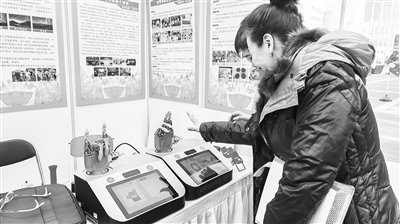
Group 1 - The 2025 Technology Education Experience Exchange Conference was held in Dayu Middle School, focusing on promoting county-level revitalization and high-quality development of education through technology education [1] - The event gathered experts, scholars, and frontline workers in the education field to discuss development paths for technology education and share innovative practices [1] - Various activities were organized during the conference, including guiding reports, case sharing, roundtable forums, and an award ceremony for outstanding cases [1] Group 2 - Dayu County has prioritized educational development, successfully constructing or renovating 78 schools, including a new campus for Dayu Middle School, and was selected as one of the first pilot areas for science education in Jiangxi Province [2] - The county has leveraged support from the Chinese Academy of Sciences to establish high-standard science popularization centers in schools, with Dayu Middle School recognized as a national experimental school for science education [2] - Initiatives such as the county's technology sports meeting have been implemented to stimulate youth interest in science and innovation, contributing to the effective implementation of the "double reduction" policy [2]
祝贺!海淀区八一学校FTC夺冠,打破世界纪录!
Xin Lang Cai Jing· 2025-12-25 11:12
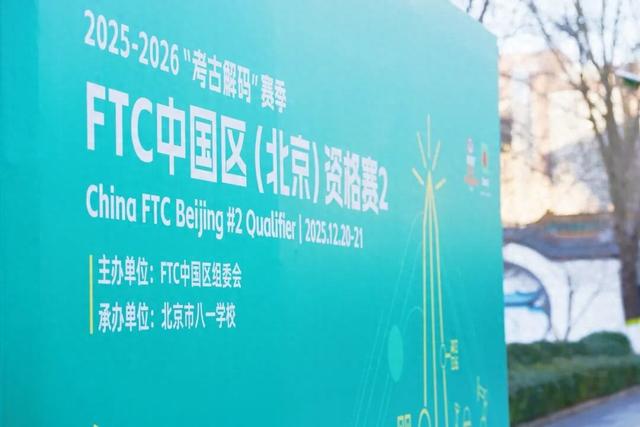
Group 1 - The FTC (FIRST Tech Challenge) is a premier competition for youth in STEM education, emphasizing not only technical skills but also project management and teamwork [3] - The 2025-2026 season's theme is "Decode," where teams design robots to capture and shoot spherical "cultural relics," testing mechanical stability and decision-making skills [5][8] - The competition saw participation from 32 top teams across 8 provinces and municipalities, with nearly 400 students involved [1][8] Group 2 - The event was hosted by Bayi School, which provided logistical support and ensured a fair competition environment [23][25] - Bayi School's team, 27570 Rongzhen Kaiwu, won the championship and set a new world record for single-match scoring [8][9] - The competition serves as a platform for youth to engage in scientific exploration and practical experience, aligning with Bayi School's STEM education philosophy [25][29] Group 3 - The students demonstrated significant growth in engineering thinking, moving from passive execution to proactive problem-solving [14][16] - The competition highlighted the importance of resilience and iterative learning, with students refining their robots through trial and error [17][20] - Bayi School emphasizes a comprehensive approach to education, integrating technology and engineering with real-world problem-solving [31][33]
鸿合科技:改选姚瑞波为公司第三届董事会董事长
Mei Ri Jing Ji Xin Wen· 2025-12-22 12:28
Group 1 - The core point of the news is the change in the leadership structure of Honghe Technology, with the resignation of Sun Xiaoqiang as the chairman and her subsequent appointment as the general manager [1][2] - The board of directors approved the election of Yao Ruibo as the new chairman and Sun Xiaoqiang as the vice chairman during the 18th meeting of the third board of directors held on December 22, 2025 [1] - The company’s legal representative has changed to Yao Ruibo, and the management is authorized to handle the necessary registration changes [1] Group 2 - For the first half of 2025, Honghe Technology's revenue composition was 81.91% from education and 18.09% from commercial and other sectors [2] - As of the latest report, Honghe Technology has a market capitalization of 7.1 billion yuan [3]

礼嘉街道青少年汽车科普基地:构筑家门口的青少年科创高地
Zhong Guo Xin Wen Wang· 2025-12-22 09:30
Core Viewpoint - The establishment of the Youth Automotive Science Popularization Base and "Leader" Youth Science Exploration Center in Liangjia Street aims to enhance community-based youth education and align with the Chongqing government's "15-minute convenient living circle" initiative [1][2]. Group 1: Project Overview - The Youth Automotive Science Popularization Base is the first community-led comprehensive youth science education platform in the Liangjiang New Area, integrating science education, technology model sports, and community innovation laboratories [1]. - The base is designed to align with Chongqing's "33618" modern manufacturing cluster plan, leveraging the area's automotive industry advantages to create a youth science popularization IP centered around "Seeing the Future" [1]. Group 2: Educational Features - The base features a three-part experiential system of "exhibition, lectures, and hands-on activities," showcasing achievements in the Chinese automotive industry and embedding technology ethics and safety concepts in youth education [1][2]. - Advanced facilities such as humanoid robots, 3D printers, and drone testing platforms are available, allowing local youth to engage with cutting-edge technology [2]. Group 3: Training Programs - The base has developed a dual-track training system called the "Wotuo Plan" and "Doying Plan," aiming to serve over 3,000 participants annually through various science popularization activities and focusing on cultivating technology-specialized students [2]. - The "Doying Plan" provides specialized training in fields like vehicle modeling, drones, and robotics, offering opportunities for outstanding students to participate in national competitions [2]. Group 4: Community Impact - The initiative is positioned as a model project for community service, aiming to foster future innovative talents and support local industrial development [2].
最新!名单公布!深圳拿下5项,全国数量第一!这背后是
Nan Fang Du Shi Bao· 2025-12-18 13:54
Core Insights - Shenzhen has won 5 "Innovation Potential Awards" in the 2025 China International College Students Innovation and Entrepreneurship Competition, maintaining its position as the city with the highest number of awards nationally [1] - The competition aims to foster a chain of innovation and entrepreneurship education from early education, identifying and nurturing young talent in science and technology [1] Group 1: Education Philosophy and Transformation - Shenzhen's educational philosophy has shifted from mere knowledge transmission to cultivating scientific literacy and innovative thinking among students [3][4] - Schools are focusing on a dual-track approach that emphasizes both widespread scientific literacy and the nurturing of exceptional talent [4] Group 2: Curriculum Development - Schools in Shenzhen are innovating their curriculum to create interdisciplinary, integrated, and multi-level educational systems that align with national standards [5][6] - Examples include the integration of science, information technology, and art to support student innovation projects [5] Group 3: Learning Environments - Shenzhen schools are transforming traditional classrooms into experiential learning centers that support project-based learning and hands-on practice [6] - Facilities such as maker spaces and science labs are designed to meet the needs of both general education and in-depth exploration [6] Group 4: Teacher Development and Collaboration - Schools are building diverse teams of educators with backgrounds in various scientific fields to provide a well-rounded educational experience [7][8] - Partnerships with high-tech companies enhance the curriculum, allowing students to engage with cutting-edge technology and ideas [8] Group 5: Community and Parental Involvement - Schools are fostering a collaborative educational environment that includes community support and parental participation [9] - Initiatives like family science challenges encourage joint projects between parents and children, enhancing the educational experience [9] Group 6: Innovative Educational Practices - Shenzhen has implemented a "Weekly Half-Day Plan" to integrate technology education with real-world applications, allowing students to explore local tech companies and scientific venues [10][11] - Schools are utilizing outdoor classrooms and nature-based learning to enhance student engagement and scientific inquiry [11] Group 7: Evaluation and Growth - The evaluation of students' progress is shifting from competition-based assessments to more holistic, developmental approaches that track individual growth and potential [12][13] - Schools are employing digital platforms to create comprehensive profiles of students' skills and project involvement [13] Group 8: Achievements and Future Directions - Shenzhen's educational practices have led to significant achievements, including student publications and patents, showcasing the effectiveness of its science education [14][15] - The city aims to continue refining its educational strategies to ensure that technology education benefits every student, contributing to the region's innovation ecosystem [15][16]
加快建设“六个强省”——深入贯彻落实省委十一届十次全会精神之一
He Nan Ri Bao· 2025-11-30 23:50
Group 1: Agricultural Development - The province aims to strengthen its agricultural sector, which is crucial for national food security, contributing nearly 10% of the country's grain output and over 25% of wheat production [1][5] - Agricultural technology progress rate is at 65.7%, with over 97% coverage of quality seeds for major crops, highlighting the importance of modernizing agriculture [1][5] Group 2: Manufacturing Sector - The manufacturing industry is seen as the backbone of the economy, with 41 industrial categories and a complete supply chain from raw materials to end products [2] - The province is focusing on creating a robust manufacturing base, leveraging its geographical advantages to integrate into the global economy [2] Group 3: Education and Technology - The province is prioritizing education and technology to foster innovation, with initiatives to address key technological challenges and enhance talent development [2] - There is a recognition of the need to strengthen original innovation capabilities and attract top-tier talent to overcome existing limitations [2] Group 4: Digital Transformation - Digital transformation is a key focus, with extensive coverage of 5G networks and the establishment of integrated online government service platforms [3] - The development of digital infrastructure is essential for the province's high-quality growth and aligns with global technological trends [3] Group 5: Transportation Infrastructure - The province's strategic location enhances its transportation capabilities, with a comprehensive high-speed rail network and major national transport corridors [3] - The development of transportation infrastructure is seen as a significant opportunity for economic growth and integration into a unified national market [3] Group 6: Cultural and Tourism Development - The cultural and tourism sector is viewed as a driver for economic growth, creating jobs and enhancing the region's image [4] - The province aims to leverage its cultural heritage to promote tourism and contribute to the overall economic development [4] Group 7: Implementation of Goals - The province has set clear goals for enhancing agricultural production, strengthening the real economy, and promoting technological innovation [5] - There is an emphasis on integrating various sectors and improving market infrastructure to stimulate economic activity [5]