
粮食收购与加工

Search documents
去年全省粮食收购量较2024年实现增长
Xin Lang Cai Jing· 2026-01-16 23:10
Group 1 - The core viewpoint of the articles highlights that the grain purchase volume in the province has increased in 2025 compared to 2024, ensuring that farmers can sell their crops effectively [1] - The province has implemented various policies to stabilize grain prices, including the minimum purchase price policy for wheat, which has led to a significant purchase of 27.4 billion pounds of wheat by nine cities in collaboration with the China Reserve Grain Management Group [1] - The grain storage system has been strengthened with a focus on project planning and implementation, aiming for high-quality development in the grain industry while ensuring farmers can sell their crops and maintaining market stability [2] Group 2 - In 2025, the province completed a new round of quality grain engineering projects, with 43 projects finished and an investment of 105 million yuan, adding 600,000 tons of green storage capacity [1] - The grain processing industry in the province has shown a recovery in total output value, indicating positive growth trends [1] - The province plans to enhance grain purchase and storage management comprehensively in 2026, emphasizing technological and talent support to maintain supply and market stability [2]
安徽全社会秋粮收购已超790万吨 占预计旺季收购量93.2%
Sou Hu Cai Jing· 2026-01-08 01:06
Group 1 - The total autumn grain purchase in Anhui Province reached 7.92 million tons as of January 7, accounting for 93.2% of the expected peak purchase volume [1] - Among the purchases, medium and late rice accounted for 6.626 million tons, corn for 1.266 million tons, and soybeans for 28,000 tons [1] - The market-oriented purchase reached 6.882 million tons, with a marketization rate of 86.9% [1] Group 2 - Anhui Grain Industry Group has acquired a total of 1.1006 million tons of autumn grain by December 30, 2025, representing a year-on-year increase of 153% [2] - The group has implemented a "smart Anhui grain" system for full-process information monitoring and traceability, ensuring quality standards for the grain [2] - The group has also expanded its processing capabilities, producing and selling 46,800 tons of branded rice, generating sales revenue of 198 million yuan, a year-on-year increase of 86.67% [2]
秋粮收购一线探访
Ren Min Ri Bao· 2025-12-19 01:36
Core Insights - The autumn grain harvest in China is progressing rapidly, with a notable increase in both the speed of grain purchases and market activity, particularly in Heilongjiang Province [8] Group 1: Grain Purchase Characteristics - Digital platforms like "Hui San Nong" are facilitating grain sales, allowing farmers to secure better prices, with some reporting a price increase of 27 to 34 yuan per ton compared to grain brokers [2] - The average purchase price for corn has risen by 80 to 100 yuan per ton compared to last year, leading to increased enthusiasm among farmers for selling their grain [4] - As of November 25, Heilongjiang Province has seen a total grain purchase of 506 billion jin, an increase of 109.7 billion jin year-on-year [7] Group 2: Financial Support and Loan Disbursement - The Agricultural Development Bank is providing significant financial support, with a total of 40.7 billion yuan in loans for autumn grain purchases, facilitating the acquisition of 168.8 million tons of grain [3] - The bank has also increased its loan disbursement for the 2025 grain year by 13.78 billion yuan, supporting the purchase of 110.46 billion jin of grain [7] - The bank's commitment to providing 24-hour payment services is crucial for ensuring farmers receive their payments promptly [3] Group 3: Quality and Market Dynamics - The quality of this year's corn is reportedly better than last year, with most samples classified as first-grade, which supports higher prices for farmers [7] - There is a growing demand for corn from outside Heilongjiang, indicating a recovery in downstream demand [8] - The market for high-protein soybeans remains strong, with active purchasing interest from operators [8] Group 4: Challenges and Recommendations - Some farmers are hesitant to sell their grain, driven by market speculation, which could pose risks [9] - Experts suggest enhancing the coordination between policy-driven and market-driven purchases, improving financial support, and promoting storage technology to ensure farmers benefit from the harvest [9]
【人民日报】秋粮收购一线探访(乡村观察)
Ren Min Ri Bao· 2025-12-19 00:53
Group 1 - The core viewpoint of the articles emphasizes the importance of food security and the current rapid pace of autumn grain procurement in China, particularly in Heilongjiang Province, which is experiencing a bumper harvest and favorable prices for farmers [1][7]. Group 2 - Digital platforms like "Hui San Nong" are facilitating grain sales, allowing farmers to efficiently sell their produce and receive payments quickly, with prices at procurement points being higher than those offered by grain brokers [2][3]. - The average procurement price for corn has increased by 80 to 100 yuan per ton compared to last year, leading to higher enthusiasm among farmers for selling their grain [4][6]. - As of the end of November, the Agricultural Development Bank has provided significant financial support for grain procurement, with loans amounting to 40.7 billion yuan for autumn grain purchases, facilitating the acquisition of 168.8 million tons of grain [3][6]. Group 3 - The quality of grains, particularly corn, has improved this year, with most samples being classified as first-grade, which is crucial for ensuring better prices for farmers [6][7]. - The total grain procurement in Heilongjiang Province has reached 506 billion jin, an increase of 109.7 billion jin year-on-year, indicating a robust market activity [6][7]. - Companies are focusing on building a complete industrial chain for corn, from procurement to deep processing, which enhances product value and competitiveness [5].
秋粮收购一线探访(乡村观察)
Ren Min Ri Bao· 2025-12-18 21:56
Core Insights - The article discusses the current state of autumn grain procurement in Heilongjiang Province, highlighting the rapid pace of grain purchases and the positive impact of digitalization on the process [2][7]. Group 1: Procurement Characteristics - The autumn grain procurement is characterized by a significant increase in purchasing speed, with Heilongjiang Province's enterprises having purchased a total of 506 billion jin of new grain by November 25, an increase of 109.7 billion jin year-on-year [7]. - Digital platforms like "Hui San Nong" are facilitating the procurement process, allowing farmers to easily schedule sales and receive timely payments [2][3]. - The average purchase price for corn has increased by 80 to 100 yuan per ton compared to last year, leading to higher enthusiasm among farmers to sell their grain [4][7]. Group 2: Financial Support - The Agricultural Development Bank has provided substantial financial backing, with a total of 172.81 billion yuan in loans for autumn grain procurement by the end of November, an increase of 13.78 billion yuan year-on-year [7]. - The bank supports both policy-based and market-oriented grain purchases, ensuring that farmers receive timely payments for their grain sales [7][8]. Group 3: Quality and Market Dynamics - The quality of grain, particularly corn, has improved this year, with most samples being classified as first-grade, which is expected to benefit farmers through better pricing [6][7]. - There is a notable increase in demand for corn from outside Heilongjiang, indicating a recovery in downstream demand [7]. - The market for soybeans remains strong, with high protein soybean purchases being actively pursued by operators [7]. Group 4: Challenges and Recommendations - Some farmers are hesitant to sell their grain, driven by a "look up, not down" mentality regarding market prices, which could pose risks [8]. - Experts suggest enhancing the coordination between policy-based and market-oriented procurement, improving financial support, and promoting storage technology to ensure that farmers can effectively capitalize on their harvests [8].
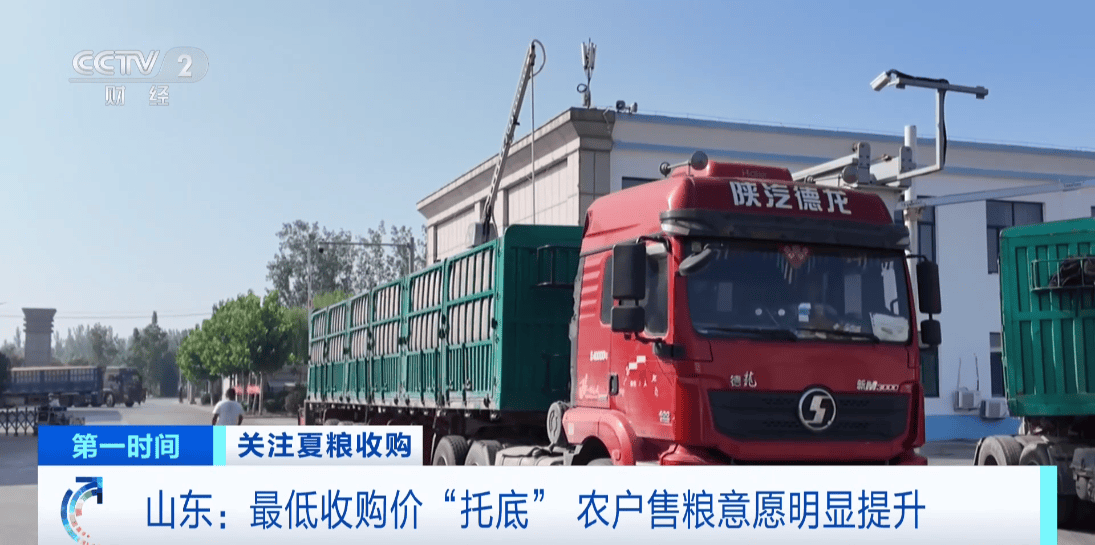
最低收购价“托底”稳定市场预期!山东小麦购销进度加快
Sou Hu Cai Jing· 2025-09-15 09:02
Core Viewpoint - The implementation of the minimum purchase price policy for wheat in Shandong province has stabilized market expectations and accelerated the purchasing process of wheat by state reserves and processing enterprises since August. Group 1: Market Dynamics - In Shandong, the minimum purchase price execution plan for wheat was initiated in eligible areas such as Heze and Binzhou since August, leading to an increase in market activity [1] - The new season wheat price dropped below 1.19 yuan per jin in late August, prompting the activation of the minimum purchase price plan, which has resulted in the cumulative purchase of 80,000 tons of wheat to date [3] - The average daily storage volume has reached 4,700 tons since the implementation of the minimum purchase price plan, significantly boosting farmers' willingness to sell their grain [5] Group 2: Purchase Price Details - The minimum purchase prices for different grades of wheat are set at 1.23 yuan for first-grade, 1.21 yuan for second-grade, and 1.19 yuan for third-grade wheat [5] - The total amount of wheat purchased by the state reserves has increased by 57% compared to last year's total, with 678 purchasing points established across five provinces [5] Group 3: Demand for Quality Wheat - A flour mill in Dezhou, Shandong, reports a daily demand of over 80,000 jin for quality wheat, with 20% of their daily purchases being high-quality wheat [7] - High-quality wheat is preferred for its higher protein content and better gluten quality, making it suitable for premium baked goods [7]

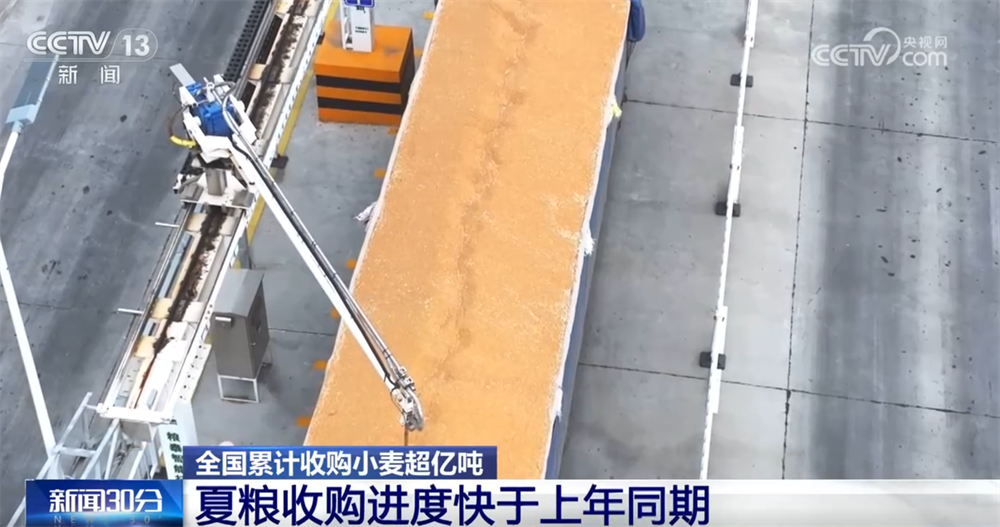
优质优价、“更营养、更健康”……夏粮收购亮点频现 端稳端牢“中国饭碗”
Yang Shi Wang· 2025-09-15 05:43
Group 1 - The core viewpoint is that wheat procurement in China has started strong this year, with over 100 million tons purchased, maintaining a high level of procurement [1] - Wheat prices have remained stable, with a clear trend of higher prices for quality wheat, supported by minimum purchase price policies [3][5] - The wheat market is expected to become more active as traditional peak consumption seasons approach, particularly with the upcoming Mid-Autumn Festival and National Day [5] Group 2 - The grain processing industry in China has seen its output value exceed 4 trillion yuan, indicating a significant growth in the sector [7] - There are currently 68,000 grain emergency guarantee enterprises in the country, reflecting an enhanced capacity for grain security [7] - New types of grain and oil products aimed at being "more nutritious and healthier" have been launched, showcasing innovation in the industry [7]
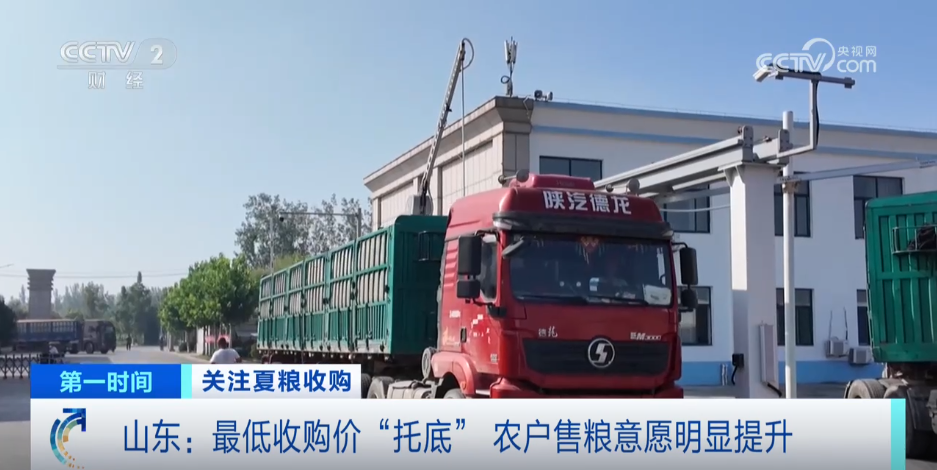
夏粮最低收购价“托底”稳信心 助力农户舒心满意卖粮
Yang Shi Wang· 2025-09-15 04:37
Core Viewpoint - The implementation of the minimum purchase price policy for wheat in Shandong province has stabilized market expectations and increased the pace of wheat purchasing since August, with significant participation from both the state reserve and processing enterprises [1][5]. Group 1: Wheat Purchase and Pricing - The minimum purchase price for wheat was activated in eligible areas such as Heze and Binzhou, leading to a quicker wheat purchase process [1]. - The new season wheat price dropped below 1.19 yuan per jin in late August, prompting the activation of the minimum purchase price policy, which has resulted in the purchase of 80,000 tons of wheat to date [5]. - The minimum purchase prices for different grades of wheat are set at 1.23 yuan for first-grade, 1.21 yuan for second-grade, and 1.19 yuan for third-grade [5]. Group 2: Market Activity and Demand - Since the launch of the minimum purchase price policy, the daily average volume of wheat entering storage has reached 4,700 tons, significantly boosting farmers' willingness to sell [5]. - The total amount of wheat purchased by the state reserve across five provinces has increased by 57% compared to last year, with 678 purchasing points established [7]. - The demand for high-quality wheat is rising, especially with the upcoming National Day and Mid-Autumn Festival, as processing enterprises are increasing their purchasing efforts [7]. Group 3: Quality Wheat Insights - Farmers are excited about selling high-quality wheat, which commands a price premium of 0.1 yuan over ordinary wheat [9]. - Processing enterprises, such as flour mills, have a substantial daily requirement for high-quality wheat, averaging over 80,000 jin per day, with high-quality wheat making up over 20% of their total purchases [9]. - High-quality wheat has a higher protein content and better gluten quality, making it more suitable for premium baked goods, thus offering higher added value and broader market appeal compared to ordinary flour [11].
【省粮食和物资储备局】陕西省粮食经纪人轮训实训活动举行
Shan Xi Ri Bao· 2025-05-06 22:38
Group 1 - The provincial grain and material reserves bureau has initiated a training program for grain brokers to enhance their skills and promote healthy development in the grain industry, with over 180 representatives participating in the first training session [1] - The training program aims to improve four key capabilities of grain brokers: political and legal awareness, technical skills, market understanding, and community service, with a goal to build a professional team of brokers [1] - A tiered training mechanism has been established, including provincial-level expert lectures and local-level small training sessions, with an annual target of training over 500 individuals [1] Group 2 - Hanzhong Three Kingdoms Agricultural Technology Co., Ltd. emphasizes that the training activity provides theoretical guidance and practical direction for their operations, aiming to ensure farmers can sell grain confidently and promote a healthy market [2] - In 2024, the provincial grain and material reserves bureau plans to implement a "negative list" for grain brokers to strengthen and standardize their management [2] - The provincial grain industry association will introduce operational service standards and a self-discipline convention for grain brokers to encourage industry self-regulation and integrity in business practices [2]