
粮食运输

Search documents
内河行情略有抬头 海轮基本稳定
Xin Lang Cai Jing· 2026-01-11 17:36
Inland Transportation - The grain transportation market in the Su-Wan region has shown slight improvement this week, although the increase is limited [1] - The first auction of minimum purchase price wheat planned to sell 198,800 tons, with actual transactions of 105,400 tons, including approximately 22,000 tons in the Su-Wan region [1] - The supply of wheat remains sufficient due to ongoing market releases and increased turnover of reserve wheat, while demand is subdued as flour mills reduce operating rates ahead of the Spring Festival [1] Coastal Transportation - The coastal wheat transportation market remains quiet, with low circulation of Su-Wan wheat southward, and overall coastal wheat transportation prices are stable [3] - Freight rates for coastal shipping are approximately 65-70 yuan/ton from Anning Port to Guangdong and 55-60 yuan/ton to Fujian [3] - The demand for wheat transportation is weak, influenced by high labor and energy costs, and shipping capacity is expected to decrease as some shipowners plan to stop operations for the holiday [3] Market Outlook - The short-term outlook for the Su-Wan wheat market indicates that purchasing volumes are unlikely to see significant breakthroughs, with inland transportation expected to experience fluctuations [2][4] - The coastal transportation market is anticipated to maintain a stable yet weak trend, with attention needed on pre-holiday stocking pace and changes in coastal shipping capacity [4]
粮船运价高位趋稳,市场供需博弈持续
Xin Lang Cai Jing· 2025-11-30 15:44
Group 1: Inland Transportation - Wheat prices have fluctuated, returning to a high level, with a steady pace of grain shipments from holders, while the supply of autumn grains like rice is increasing, supporting high inland grain shipping rates [1] - The overall market for circulating grain is relatively tight due to low levels of reserve wheat releases, while the arrival of autumn grains provides additional shipping demand, maintaining high inland shipping rates [1] - Upstream drought conditions have tightened shipping capacity, and the influx of northeastern corn has further increased shipping costs, with maintenance at some local locks exacerbating the pressure on shipping capacity [1] Group 2: Coastal Transportation - In coastal grain transportation, the volume of wheat shipments from the Jiangsu and Anhui regions has not significantly increased, but shipping rates remain high due to strong demand from the northern market and adverse weather conditions [3] - The shipping cost from Anning Port to Guangdong for a 5000-ton vessel is 80-85 yuan/ton, while to Fujian it is 70-75 yuan/ton, indicating sustained high shipping rates despite a lack of significant volume increase [3] - The efficiency of ship turnover at northern ports has decreased, and rising costs for rail and road transport have stimulated water transport demand, leading to tight shipping capacity on southern routes [3] Group 3: Market Outlook - The pace of autumn grain listings is expected to accelerate, keeping inland shipping demand active, with close attention needed on the dynamics of wheat and autumn grain sales and shipping capacity changes [2] - Coastal shipping rates are currently at a two-year high, influenced by rising costs in shipping operations, and there is potential for a price correction as weather improves and port operations in the north become more efficient [4] - Future market focus will be on the coordination of purchasing and sales between northern and southern regions as the traditional consumption peak approaches [4]
“铁海联运”“黄金水道”按下秋粮运输“加速键” 为全国粮食安全筑牢坚实屏障
Yang Shi Wang· 2025-11-21 06:44
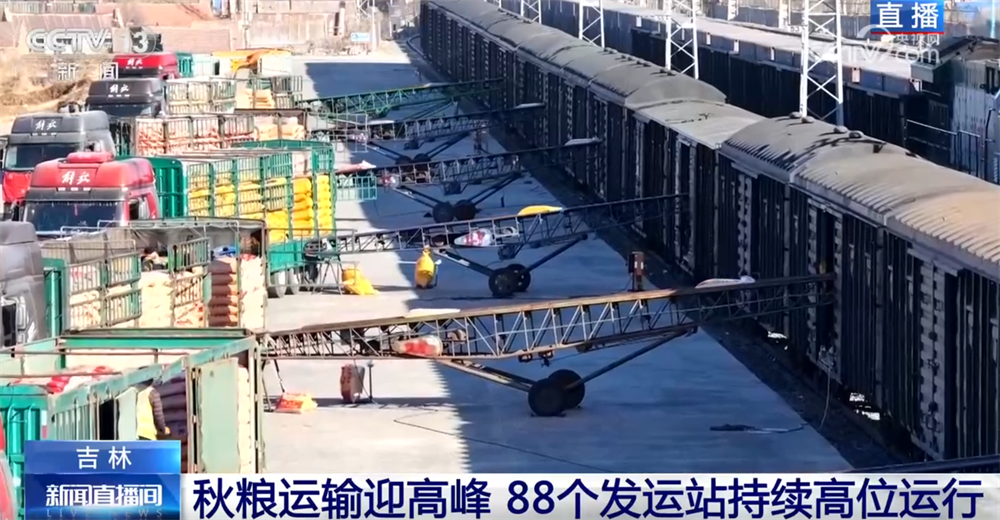
Group 1 - The core point of the article highlights the peak period of autumn grain transportation in Northeast China, particularly in Jilin Province, which has already dispatched nearly 4 million tons of grain since mid-October, marking a nearly 50% year-on-year increase [1][6] - The Changchun Railway Logistics Center in Fuyu is identified as a key hub for autumn grain transportation, facilitating the movement of high-quality grain from production areas to various destinations [3][6] - Jilin Province has maintained a total grain output exceeding 800 billion jin for four consecutive years, with expectations for a new record this year [6] Group 2 - The transportation process involves unloading grain from trucks and efficiently moving it onto trains, with each bag weighing 60 kilograms and a truck carrying approximately 30 tons of grain [4] - The logistics system includes two main transportation methods: pure rail transport and rail-sea intermodal transport, allowing for efficient distribution to major cities across the country [8] - The Yingkou Port in Liaoning serves as a crucial grain transshipment hub, with busy railway lines facilitating the transport of corn and wheat from various regions [9] Group 3 - The article emphasizes the importance of logistics in ensuring the quality of grain, with advanced monitoring and ventilation systems in storage facilities to maintain grain quality [12][14] - The Huangma Port in Jiangsu is highlighted as a new key node for autumn grain transportation, equipped with modern logistics platforms and large storage facilities to enhance efficiency [17][19] - The integration of smart storage systems at Huangma Port allows for seamless transportation of grain to adjacent rice processing enterprises, promoting a "storage-trade integration" model [21]

内河运价整体维稳,沿海明显上涨
Xin Lang Cai Jing· 2025-11-16 10:56
Inland Transportation - The inland transportation market remains stable due to the gradual release of wheat and the steady increase in the supply of autumn grains like rice, providing support for cargo availability [1] - Wheat market prices are experiencing fluctuations, with some grain holders choosing to sell, while the demand for wheat is weakened by the increased supply of quality corn for feed, reducing wheat's competitive edge [1] - Localized shipping efficiency issues and concentrated short-term cargo flows have led to slight tightness in shipping capacity, with some inland routes in the Jiangsu and Anhui regions maintaining stable freight rates after a previous increase of 3-5 yuan/ton [1] Coastal Transportation - The coastal grain transportation market shows a strong performance with stable cargo volumes and rising freight rates, specifically reporting freight rates of 78-83 yuan/ton from Anning Port to Guangdong and 68-73 yuan/ton to Fujian for 5000-ton vessels [3] - Despite the stable demand for wheat in southern sales areas, the overall consumption remains flat, with milling companies purchasing based on demand and feed companies maintaining safe inventory levels, leading to limited cargo support [3] - Typhoon weather has caused delays in port operations, tightening market shipping capacity and resulting in an overall increase in freight rates by approximately 10 yuan/ton compared to the previous week [3] Market Outlook - The inland transportation market is expected to remain stable with the ongoing release of autumn grains, while freight rates are anticipated to fluctuate slightly based on actual conditions of various routes [2] - The coastal grain shipping market has reached relatively high freight rates, and future trends will depend on the impact of typhoons and the alignment of shipping capacity with actual cargo demand [4]
6.4万司机半月运粮超400万吨!数字物流护航“中原粮仓”丰收季
Yang Zi Wan Bao Wang· 2025-09-24 12:18
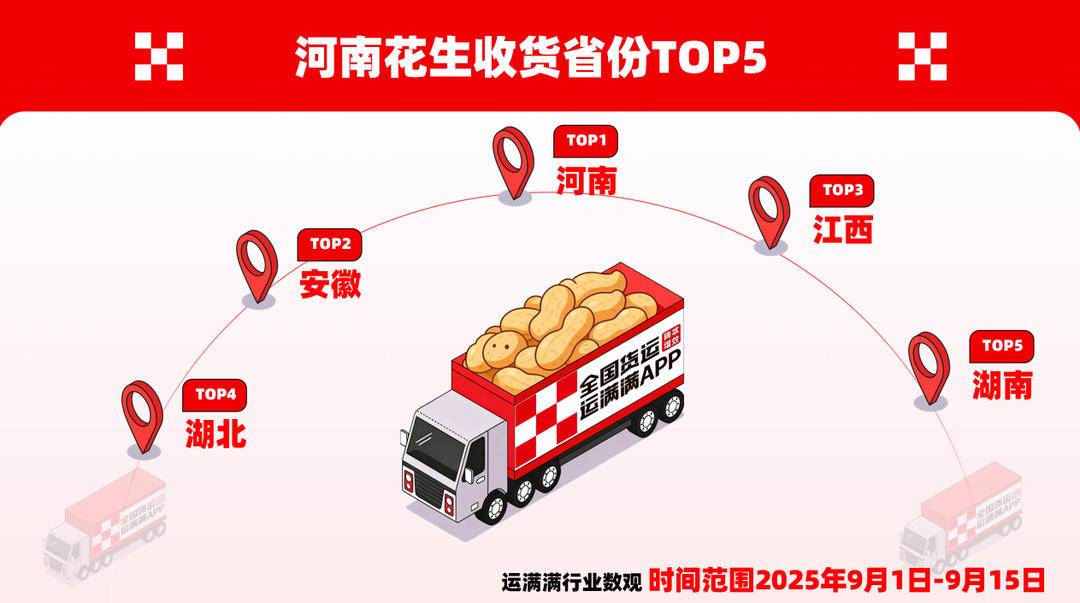
Core Insights - The report highlights the significant role of logistics in transporting grain during the harvest season in Henan, with over 405.8 million tons of grain transported in the first half of September, equivalent to circling the Earth 1,359 times [1][3]. Transportation Data - A total of 130,000 truck trips were made for grain transportation in September, covering a distance of 54.454 million kilometers [3]. - Key transportation routes include Zhumadian to Xinxiang and Nanyang to Jiaozuo within the province, while cross-province routes include Zhoukou to Heze and Zhumadian to Heze [3]. - The 13-meter high-barrier truck has emerged as the primary vehicle for grain transportation due to its balanced load capacity and flexibility [3]. Key Crops and Distribution - Corn and peanuts are identified as the main crops for external transportation from Henan, with key shipping cities including Kaifeng, Zhumadian, and Nanyang [5]. - The furthest corn shipment traveled 4,860 kilometers to Tibet, while peanuts were shipped as far as 1,578 kilometers to provinces like Jiangxi, Hunan, and Guangdong [5]. Support for Truck Drivers - On the Chinese Farmers' Harvest Festival, a "Harvest Station" was established to provide truck drivers with free rest services and hot meals, recognizing their crucial role in the grain transportation process [7]. - A documentary titled "Autumn Equinox: Harvest Ferryman" was premiered, showcasing the entire process from harvesting to transportation [7]. Digital Logistics Impact - The use of mobile apps for logistics has been praised for its convenience, allowing farmers to easily find transportation [9]. - The logistics platform aims to enhance transportation efficiency through technological innovation and to provide better support for drivers, acknowledging their contributions to modern agriculture [9][14]. Historical Context - The evolution from historical grain storage practices to modern digital logistics reflects a commitment to ensuring food security, with 64,000 drivers playing a vital role in this mission [14].
满载3250吨玉米 新疆开行今年首趟集装箱粮食专列
news flash· 2025-07-09 17:16
Core Viewpoint - The launch of the first container grain special train from Xinjiang to Sichuan marks a significant step in enhancing grain transportation and supporting regional economic development, particularly during the summer harvest season [1] Group 1: Grain Transportation - A freight train carrying 3,250 tons of corn departed from the Emen Station in Xinjiang, heading to Meishan Station in Sichuan, representing the first container grain special train of the year [1] - The railway department has prioritized grain transportation as part of its key material plan to meet the strong demand from major grain-producing areas such as Tacheng, Emen, and Yili during the summer harvest [1] Group 2: Regional Economic Impact - Xinjiang has consistently ranked first in the country for new grain acreage and production over the years, being the only province to achieve a cumulative grain increase of over 10 billion jin in three years [1] - The operation of the "Xinjiang Grain Export" special train is expected to contribute positively to regional economic development and enhance efforts to ensure national food security [1]