
精制茶加工

Search documents
2025年我国规上酿酒企业实现营业收入8200多亿元,规上精制茶加工企业营收超1200亿元
Xin Lang Cai Jing· 2026-02-14 04:05
Group 1 - The tea industry and liquor industry in China have a combined scale exceeding 2 trillion yuan, with significant contributions to tax revenue and economic stability [1][2] - By 2025, the revenue of large-scale refined tea processing enterprises is expected to exceed 120 billion yuan, with the entire industry chain scale surpassing 1 trillion yuan and creating over 6 million jobs annually [1][2] - The liquor industry is projected to achieve revenues of over 820 billion yuan by 2025, with advancements in digital transformation, green development, and brand building [2] Group 2 - The development quality of the tea and liquor industries has been continuously improving since the 18th National Congress, with a rapid pace of transformation and upgrade [2] - A significant portion of tea and liquor brands have been recognized on international platforms, showcasing Chinese cultural charm [2] - New business models such as "satellite+" tea planting, smart factories, new-style tea drinks, and tea tourism integration are accelerating in the tea industry [1][2]
山东移动日照分公司:以“产业大脑能力中心”筑数智生态新底座
Qi Lu Wan Bao· 2025-12-29 14:13
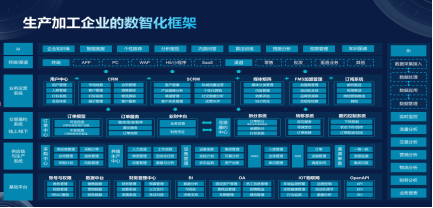
Core Insights - The article highlights the strategic implementation of the "Digital-Real Integration" initiative in Shandong Province, with Shandong Mobile's Rizhao branch at the forefront, utilizing technologies like 5G, AI, and blockchain to create an intelligent empowerment system across various industries [1][8] - The "Enterprise Brain" serves as a digital tool tailored for small and medium-sized enterprises, addressing common challenges such as high transformation barriers and data silos, and enhancing management efficiency by over 60% while reducing implementation costs by more than 60% [2][3] - The integration of core systems through the "Enterprise Brain" not only improves operational efficiency but also fosters a collaborative ecosystem, transforming technology empowerment into a stable business growth engine [3][8] Industry and Company Developments - The "Enterprise Brain" framework expands its influence from individual production workshops to entire industry ecosystems, exemplified by its application in the green tea industry, which integrates climate data for precise planting and marketing strategies [5][6] - The establishment of a credit system based on real business data allows for embedded financial services within the industry chain, attracting various financial institutions and creating new revenue streams for the company [5][6] - The successful replication of the "Industry Brain Capability Center" model across different sectors, including marine food and green construction, demonstrates its scalability and cost-effectiveness, promoting a standardized approach to industry empowerment [6][7] - The strategic value of the "Industry Brain Capability Center" is underscored by its role in advancing local industries towards digitalization and high-end development, contributing to the recognition of Rizhao as a key green tea production area [8]

乐山云雾间的金融“链金术” 淬炼“峨眉山茶”香溢天下
和讯· 2025-09-16 09:07
Core Viewpoint - The article emphasizes the implementation of a "financial chain leader" system to support the "Emei Mountain Tea" industry, aiming to enhance the financial services for the entire tea processing industry chain, thereby boosting local economic growth and increasing farmers' income [1][2][5]. Financial Chain Leader System - The "financial chain leader" system is being implemented to provide tailored financial services for the refined tea processing industry, with Agricultural Bank of Leshan and Leshan Rural Commercial Bank designated as the financial chain leaders [2]. - As of the end of Q2, the tea industry in Leshan has a loan balance of 30.4 billion yuan, benefiting 35 core enterprises and driving 35,000 farmers to increase their income [1][2]. Mechanism Construction - A specialized task force has been established to ensure collaboration among various stakeholders, with responsibilities clearly defined to enhance the interaction between industry, finance, and fiscal policies [2]. - By the end of Q2, the tea industry had a guarantee balance of 480 million yuan and an insurance balance of 20.9 million yuan [2]. Financial Products and Services - The article highlights the introduction of 19 flexible credit products tailored for the tea industry, including "Huinong e-loan" and "Shuxin e-loan," to address the urgent funding needs of small and micro enterprises [3]. - Banks are encouraged to adopt a three-tier service model ("on-site service + branch staff + online self-service") to better understand the financial needs of tea farmers and processors [3]. Focus on Core Enterprises - Financial institutions are guided to provide financing support specifically for key enterprises within the refined tea processing industry, with a focus on innovative collateral models [4]. - The value of the "Emei Mountain Tea" regional public brand has reached 5.42 billion yuan, indicating its significant market presence [4]. Financial Support and Policy - The tea industry utilized 210 million yuan from the central bank's re-lending funds in the first half of the year, with loan interest rates dropping to 3.89%, a decrease of 41 basis points compared to the previous year [5]. - The ongoing efforts aim to transform Leshan into a "world green tea highland," continuously injecting financial support into the local tea industry [5].

七部门部署推动食品工业数字化转型,涉及精制茶领域
Nan Fang Nong Cun Bao· 2025-06-13 12:32
Core Viewpoint - The joint implementation plan by seven departments aims to promote the digital transformation of the food industry, focusing on various sectors including refined tea processing [2][3]. Group 1: Digital Transformation Initiatives - The plan outlines four major actions: application of information technology innovation, cultivation of new models and business formats, upgrading of the industry, and empowering foundational capabilities [3][4]. - It specifies 18 concrete measures to accelerate the comprehensive empowerment of digital technology in the food industry [3][5]. Group 2: Focus on Specific Industries - The plan identifies typical application scenarios in beverage manufacturing, edible plant oil processing, dairy product manufacturing, and labor-intensive industries such as brewing, canned food production, baked goods manufacturing, seafood processing, and refined tea processing [7][8]. - It also addresses emerging fields like pre-prepared food manufacturing and food biotechnology, highlighting the need for tailored digital transformation strategies [9][10]. Group 3: Key Tasks for Refined Tea Manufacturing - For the refined tea manufacturing sector, the plan includes tasks such as the discovery of typical scenarios, intelligent tea garden mechanization, and smart logistics for tea storage [11][12][13]. - It emphasizes the importance of quality safety traceability management for processed tea and clean processing of raw tea [14][15]. Group 4: Development of Key Technologies - The plan promotes the development and dissemination of key technological equipment, including intelligent fermentation process devices, smart vertical pressure tea machines, and intelligent tea-picking robots [16][17][18]. Group 5: Standard System Construction - It outlines the construction of a standard system, including technical specifications for tea garden mechanization, guidelines for building digital factories for tea processing, and storage standards for tea [19][21][22].
