绿色氢能和核聚变能

Search documents
2026全国两会跟踪第二期:经济主题记者会要点总结
一瑜中的· 2026-03-07 06:17
Core Viewpoint - The "14th Five-Year Plan" continues to emphasize high-quality development, aligning with the "15th Five-Year Plan" which aims to establish a correct performance evaluation system [2] Group 1: Key Policies of the "15th Five-Year Plan" - The "15th Five-Year Plan" focuses on high-quality development and includes six emerging pillar industries: integrated circuits, aerospace, biomedicine, low-altitude economy, new energy storage, and intelligent robotics [2] - Future industries identified in the plan include quantum technology, biomanufacturing, green hydrogen energy, nuclear fusion energy, brain-computer interfaces, and embodied intelligence, with 6G technology also emerging [2] - Major projects under the "15th Five-Year Plan" include the advancement of the "six networks" (water, electricity, computing power, new communication, urban underground pipelines, and logistics) and significant infrastructure investments exceeding 7 trillion yuan [2][9] Group 2: Upcoming Policies - A national service industry conference will be held post-conference to introduce measures aimed at enhancing service consumption [3] - The China Securities Regulatory Commission (CSRC) plans to implement two new measures: deepening the reform of the Growth Enterprise Market and optimizing the refinancing mechanism [3] - The Ministry of Commerce will introduce policies for expanding and upgrading commodity consumption, including a new version of the tax refund policy for outbound travelers [3] - A national-level merger fund will be established in collaboration with the Ministry of Finance and the People's Bank of China to facilitate industrial funds [3]


国家发改委定调!新型储能列入六大新兴支柱产业
中关村储能产业技术联盟· 2026-03-06 12:30
Core Viewpoint - The article discusses the strategic focus of China's 14th Five-Year Plan, highlighting the development of six emerging pillar industries and six future industries, which are expected to significantly contribute to the economy by 2030 [2][4]. Group 1: Emerging Pillar Industries - The six emerging pillar industries identified are integrated circuits, aerospace, biomedicine, low-altitude economy, new energy storage, and intelligent robotics [2]. - The combined output of these six industries is projected to approach 60 trillion yuan by 2025, with expectations to double to over 100 trillion yuan by 2030 [2]. Group 2: Future Industries - The six future industries include quantum technology, biological manufacturing, green hydrogen energy, nuclear fusion energy, brain-computer interfaces, and embodied intelligence, along with the nascent 6G technology [4]. - These future industries are on the brink of technological breakthroughs and are anticipated to transition into emerging pillar industries in the near future [4]. Group 3: Market Potential - The 14th Five-Year Plan aims to foster high-growth sectors, creating several trillion-yuan markets through both incremental innovation and optimization of existing resources [4]. - The expectation is that these emerging and future industries will provide substantial support to the capital markets [4].
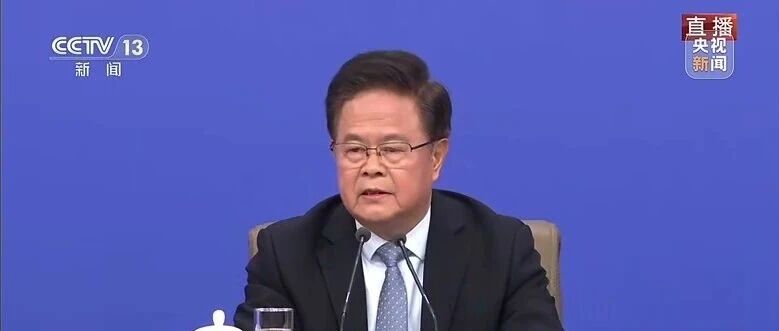
郑栅洁:集成电路、航空航天、生物医药等六大新兴支柱产业相关产值到2030年有望扩大到十万亿元以上
财联社· 2026-03-06 09:18
Core Insights - The National Development and Reform Commission emphasizes the development of six emerging pillar industries and six future industries, with a projected output of nearly 6 trillion yuan by 2025, potentially doubling to over 10 trillion yuan by 2030 [1] Emerging Pillar Industries - The six emerging pillar industries include integrated circuits, aerospace, biomedicine, low-altitude economy, new energy storage, and intelligent robotics [1] - These industries are expected to significantly contribute to the national economy, with a focus on long-term growth and substantial investment [3][4] Future Industries - The six future industries consist of quantum technology, biomanufacturing, green hydrogen energy, nuclear fusion energy, brain-computer interfaces, embodied intelligence, and 6G technology [1] - These sectors are on the brink of technological breakthroughs and may evolve into the next generation of emerging pillar industries [1] Investment and Project Development - Major projects in integrated circuits, satellite internet, domestic large aircraft, and national integrated computing networks will be developed, with investment scales reaching hundreds of billions to trillions of yuan [3][4] - The government aims to create foundational "national heavy equipment" through these long-chain, large-scale projects [4] Traditional Industry Enhancement - The government plans to strengthen traditional industries, expecting to create an additional market worth over 10 trillion yuan in the next five years [4] - This initiative is seen as a crucial source of development momentum alongside high-growth industries [4] Support for High-Growth Industries - The government will focus on three key areas: long-term planning, resource assurance, and reform collaboration [4][5] - Initiatives include the establishment of national-level merger funds to address challenges in venture capital exits and support mergers and acquisitions [4] Reform and Innovation - Emphasis will be placed on both hard investments in projects and soft construction of systems and mechanisms [5] - The government plans to promote the monetization of intangible assets like software development and data processing, enhancing intellectual value [5] - A large-scale application demonstration action will be implemented in key areas, with around 100 flagship projects identified to drive industrial innovation [5]