
金属工业

Search documents
波黑2025年外贸总额增长约21亿马克
Shang Wu Bu Wang Zhan· 2026-02-25 13:28
Core Insights - Bosnia and Herzegovina's total exports in 2025 are projected to reach 17.42 billion marks, an increase of 0.882 billion marks compared to 2024, while total imports are expected to be 30.43 billion marks, up by 1.21 billion marks from the previous year, resulting in a trade deficit of 13 billion marks, which is an increase of 0.359 billion marks year-on-year [1] Trade Structure - The trade structure remains stable, with the metal industry holding the largest share, while the wood industry contributes positively to foreign trade balance [1] - The European Union is the most significant trading partner for Bosnia and Herzegovina, accounting for over 73% of total exports and 66% of total imports [1] Export Growth - Exports to the EU increased by 5.57%, amounting to an additional 0.669 billion marks [1] - In the CEFTA region, Serbia is the largest trading partner, with Bosnia and Herzegovina exporting 1.88 billion marks and importing 4.1 billion marks [1] - The energy, electronics, and automotive industries are experiencing the fastest export growth, with electricity exports rising by 30%, highlighting the energy sector's critical role [1] - Automotive parts exports grew by 13%, indicating stable integration of local companies into the European supply chain [1] Import Dynamics - Despite a 7% decrease in oil and petroleum product imports, they remain the largest import category at 2.24 billion marks [2] - Automobile imports increased by 9%, and pharmaceutical imports rose by 8% [2] - Electricity imports surged by 101%, reaching 0.62896 billion marks, underscoring the need to strengthen domestic production capacity [2]
欧盟找了个城堡开闭门会:怎么在激烈的中美竞争下生存下去
Xin Lang Cai Jing· 2026-02-12 15:26
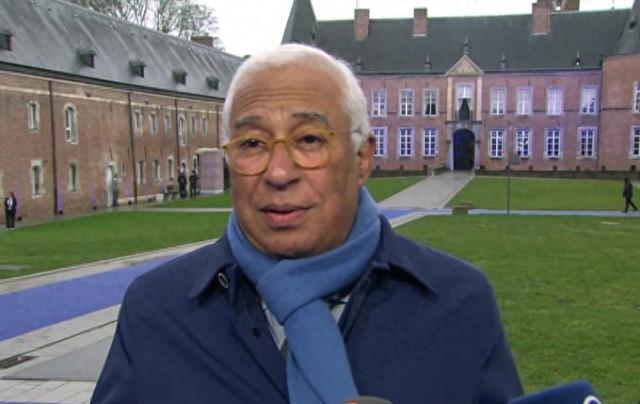
Core Viewpoint - The EU leaders convened to address the urgent need to enhance competitiveness amid economic downturns and geopolitical risks, focusing on energy costs and internal market operations [1][3]. Group 1: Economic Competitiveness - The meeting's primary agenda was to find ways to lower energy costs and improve the functioning of the EU's internal market to help European businesses remain competitive against the US and China [1][3]. - European industrial electricity prices are reported to be more than double those in the US and China, highlighting the urgent need for a unified energy market [3][4]. - The EU is considering the "European priority" policy to support local industries in strategic sectors like clean technology, chemicals, steel, automotive, and defense [4][5]. Group 2: Divergence Among Member States - There are significant disagreements among EU member states regarding the implementation of the "European priority" policy, with countries like France advocating for it while others, including Germany and Ireland, express concerns about maintaining free trade principles [5][6]. - The meeting is expected to reveal whether member states can overcome their individual interests to reach a collective action plan [8][9]. Group 3: Regulatory Challenges - EU leaders discussed the need to reduce excessive regulations that complicate business operations, such as differing weight limits for trucks across borders [8][9]. - The current global economic order is perceived as fragile, with calls for a shift from a confederation to a federation to enhance decision-making and unity among member states [8][9]. Group 4: Historical Context and Meeting Significance - The choice of a castle for the meeting symbolizes a retreat from public scrutiny, allowing leaders to engage in serious discussions about Europe's future [10][12]. - Historical precedents show that such secluded meetings have been used to address critical issues, indicating the importance of the current discussions for the EU's stability and competitiveness [12][13].

波黑今年前三季度电力进口同比增长184%
Shang Wu Bu Wang Zhan· 2025-11-28 14:51
Core Insights - Bosnia and Herzegovina's total foreign trade increased by 5.6% in the first nine months of the year, reaching 35.6 billion marks [1] - Exports amounted to 12.94 billion marks (up 5.6%), while imports were 22.6 billion marks (up 4.11%), resulting in a trade deficit of 9.65 billion marks [1] - The metal industry accounted for 44% of exports, followed by the wood industry at 21%, with energy, electronics, and automotive sectors being key growth drivers [1] - Electricity imports surged by 184% year-on-year, totaling 313 million marks, highlighting structural weaknesses in the energy sector [1] - Despite over two-thirds of exports going to the EU, reliance on low-value-added products and the EU market poses significant structural challenges, necessitating the exploration of new markets such as the US and the Middle East, along with accelerating digital transformation in industries [1]
美国高关税影响瑞士经济:对某些行业来说堪称灾难
Zhong Guo Xin Wen Wang· 2025-09-10 07:10
Group 1 - The high tariff of 39% imposed by the US on Swiss goods is considered a disaster for certain industries in Switzerland [1] - Switzerland faces the highest tariffs from the US among all European countries, significantly impacting its economy [1] - Approximately 10% of Swiss exports to the US are expected to be affected by the tariffs, with the watch and technology sectors being the most impacted [1][2] Group 2 - The strong Swiss franc is exacerbating the situation for Swiss exporters, making their products more expensive [2] - The GDP growth rate of Switzerland in the second quarter has significantly declined compared to the same period last year, indicating economic weakness [2] - Swiss companies are estimated to lose $9.5 billion in revenue and $4 billion in profit due to the tariffs, particularly affecting high-priced product sectors [2]