
上海价格

Search documents
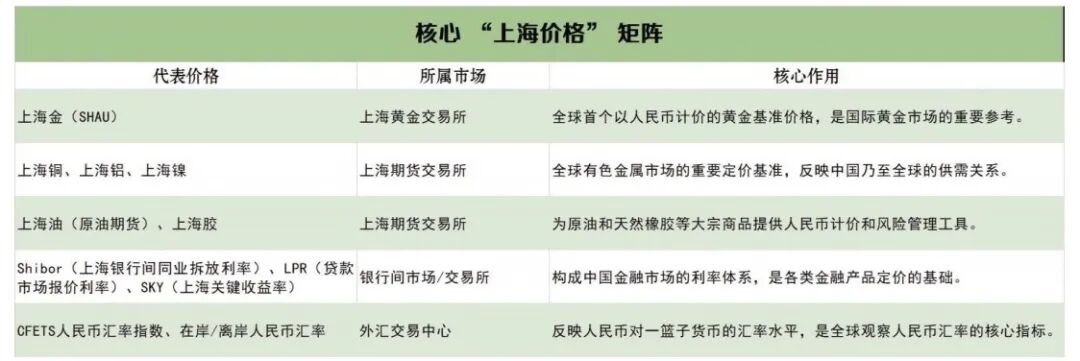
期货重塑“上海价格”全球坐标
Guo Ji Jin Rong Bao· 2026-02-24 11:38
Core Viewpoint - The exploration of the RMB foreign exchange futures trading pilot is a key task outlined in Shanghai's "14th Five-Year Plan," marking a significant step in the financial sector's service to the real economy and financial opening-up [1][7][9]. Group 1: Development of Futures Market - The past five years have seen Shanghai's futures industry leverage the legal framework, product innovation, and structural optimization to empower the real economy [1]. - The "15th Five-Year Plan" emphasizes the development of the futures and derivatives market, aiming to enhance the international financial center's competitiveness and influence [3][5]. - The futures market is transitioning from a supplementary role in capital market risk management to a core functional pillar, supporting national strategies and global pricing [5][6]. Group 2: Key Tasks and Focus Areas - The plan includes accelerating the establishment of a global RMB asset allocation center and risk management center, with specific measures to enrich exchange rate hedging tools and promote RMB internationalization [3][6]. - The focus has shifted from local service to supporting national strategies and enhancing the international influence of commodity pricing [5][6]. - The futures market is expected to serve as a critical link among the five centers of finance, trade, shipping, technology innovation, and industry [6]. Group 3: RMB Foreign Exchange Futures - The pilot for RMB foreign exchange futures is a crucial task in the "15th Five-Year Plan," aimed at addressing the real needs of enterprises for exchange rate risk management [7][10]. - The introduction of RMB foreign exchange futures is seen as a response to the increasing demand for hedging tools among small and medium-sized enterprises, which face challenges with existing OTC products [10][11]. - The standardized nature of futures trading is expected to lower costs and improve accessibility for enterprises, particularly in terms of capital requirements and pricing transparency [10][11]. Group 4: Long-term Development Strategy - The "15th Five-Year Plan" calls for a steady and orderly development of the futures and derivatives market, aligning with the current market development status and ensuring long-term health [12]. - Key directions for achieving stable development include maintaining financial risk limits, aligning with real economic needs, and ensuring gradual market opening while safeguarding national financial security [13][14]. - The futures industry is anticipated to experience opportunities in product expansion, market opening, and institutional upgrades, contributing to the construction of Shanghai as an international financial center [15].

提升有色金属大宗商品能级 助力“五个中心”建设
Jin Rong Shi Bao· 2026-01-22 02:03
Core Viewpoint - The Shanghai Municipal Government has launched an action plan to enhance the linkage between futures and spot markets for non-ferrous metals, aiming to improve the global pricing influence and commodity trading capacity of Shanghai by December 2025 [1][3]. Group 1: Current Market Landscape - Shanghai has developed a linked market structure for non-ferrous metals, including futures, spot, and over-the-counter derivatives, leveraging its financial market advantages and manufacturing base in the Yangtze River Delta [2]. - The Shanghai Futures Exchange (SHFE) has listed 11 non-ferrous metal futures and 10 options, with "Shanghai Copper" recognized as one of the three major global pricing centers for non-ferrous metals [2]. - The Shanghai Clearing House has been providing central counterparty clearing services for 20 swap and forward products across six industries since 2013, enhancing the risk management framework for non-ferrous metals [2]. Group 2: Challenges and Action Plan - The non-ferrous metals trade in Shanghai faces challenges such as insufficient linkage between futures, spot, and derivatives markets, limited international pricing power, and a lack of major international commodity traders [3]. - The action plan includes 18 specific measures across three main areas: enhancing market connectivity, increasing internationalization of the non-ferrous metals market, and fostering a supportive ecosystem for market participants [3]. - Proposed measures include improving settlement efficiency through the Commodity Clearing Link, exploring cross-border transactions, and establishing a market maker system for over-the-counter derivatives [3]. Group 3: Future Steps - The Shanghai Municipal Government and relevant departments will expedite the implementation of the action plan to strengthen market linkages and support the high-quality development of the non-ferrous metals industry [4]. - The goal is to create a collaborative policy environment that enhances Shanghai's resource allocation capabilities and global pricing influence in the non-ferrous metals sector [4].
上海出台18项措施提升有色金属大宗商品能级
Xin Lang Cai Jing· 2026-01-21 20:32
Core Viewpoint - The "Action Plan" aims to strengthen the linkage between futures and spot markets, enhancing Shanghai's global resource allocation capability and pricing influence in the non-ferrous metal commodity sector [1] Group 1: Action Plan Overview - The "Action Plan" includes 18 specific measures to enhance the linkage between futures, spot, and derivative markets in the non-ferrous metal sector [1] - Shanghai has established a coordinated development pattern in the non-ferrous metal sector, leveraging its financial market and spot platform advantages [1] Group 2: Market Development Initiatives - The plan promotes the interconnection of the non-ferrous metal market, supporting communication between Shanghai Clearing House and Shanghai Futures Exchange for risk management [2] - It encourages local enterprises in sectors like automotive, construction, and home appliances to participate in futures and derivative markets for better price risk management [2] Group 3: Internationalization and Influence - The plan aims to enhance the internationalization of the non-ferrous metal commodity market and increase the influence of "Shanghai prices" [2] - It proposes expanding the openness of Shanghai's non-ferrous metal futures market and exploring cross-border delivery mechanisms [2] Group 4: Market Ecosystem Development - The plan focuses on cultivating competitive trading entities and fostering collaboration between commodity enterprises and upstream/downstream industries [3] - It encourages the application of blockchain technology in the non-ferrous metal sector to facilitate data sharing across platforms and regions [3]
上海出台18项措施强化期现联动,提升有色金属大宗商品能级
2 1 Shi Ji Jing Ji Bao Dao· 2026-01-21 08:33
Core Viewpoint - China's economy is undergoing transformation, and the role of bulk commodities, particularly non-ferrous metals, is becoming increasingly significant due to the growth of strategic emerging industries such as new energy vehicles, aerospace, and semiconductors [1] Group 1: Action Plan Overview - The "Action Plan" was jointly released by multiple financial and regulatory bodies in Shanghai to enhance the trading capabilities of non-ferrous metal bulk commodities [2] - The plan identifies challenges such as the need for improved interaction between futures, spot, and derivatives markets, insufficient international pricing power, and a lack of leading international commodity traders [2] Group 2: Specific Measures - The Action Plan includes 18 specific measures aimed at promoting market connectivity and enhancing the development of futures, spot, and derivatives markets [2] - It supports the Shanghai Clearing House and Shanghai Futures Exchange in improving communication on clearing and risk management [2] - The plan encourages local enterprises in sectors like automotive, construction, and home appliances to engage in futures and derivatives markets for better price risk management [2] Group 3: Internationalization and Ecosystem Development - The Action Plan aims to enhance the internationalization of the non-ferrous metal market and increase the influence of "Shanghai prices" through high-level institutional openness [3] - It promotes the exploration of cross-border delivery mechanisms and the establishment of overseas warehouses to enhance international service capabilities [3] - The plan focuses on cultivating a competitive trading ecosystem by fostering collaboration between commodity companies and upstream/downstream enterprises [3] Group 4: Current Market Landscape - Shanghai has established a linked development pattern for futures, spot, and over-the-counter derivative markets in the non-ferrous metal sector, with 11 futures and 10 options products listed [5] - Some futures products have gained pricing capabilities on a global or regional scale, with "Shanghai copper" being a notable example [5] - The Shanghai Clearing House has been providing central counterparty clearing services for various non-ferrous metal products since 2013, enhancing risk management and supporting the development of the spot trading platform [5] Group 5: Future Developments - The Shanghai government has initiated a three-year action plan (2025-2027) to accelerate the transformation of bulk commodity trading [6] - The establishment of Guomao Holdings, a state-owned enterprise, aims to integrate port resources and enhance the logistics industry, focusing on international commodity trade and investment [6] - Guomao Holdings has a registered capital of 13 billion RMB and is positioned as a key player in Shanghai's international shipping center development [6]
上海重磅发布18条新政,以“期现联动”提升有色金属定价权
Huan Qiu Wang Zi Xun· 2026-01-21 05:24
Core Viewpoint - The Shanghai financial sector has introduced a significant policy initiative aimed at enhancing the market capabilities of non-ferrous metal commodities and increasing their global pricing influence through a comprehensive action plan consisting of 18 specific measures [1]. Group 1: Market Integration and Infrastructure - The action plan emphasizes "spot-futures linkage" and focuses on the interconnection of non-ferrous metal futures, spot, and derivative markets [2]. - It supports deep cooperation between the Shanghai Clearing House and the Shanghai Futures Exchange in clearing and risk management, promoting the application of "bulk commodity clearing" to improve transaction efficiency and security [2]. - The plan aims to enhance the breadth of services in the futures market by developing new products that cater to the needs of emerging industries such as new energy and new materials [2]. Group 2: Market Participation and Risk Management - The policy encourages various non-ferrous metal application enterprises, including those in automotive, construction, and home appliance manufacturing, to actively participate in futures and OTC derivative markets [2]. - It advocates for state-owned enterprises to use options to hedge risks and promotes a pricing model based on "futures price + premium" in trade settlements [2]. - These measures aim to break down barriers between the real economy and financial markets, allowing upstream and downstream enterprises in the supply chain to benefit from financial services [2]. Group 3: Internationalization and Pricing Influence - The plan seeks to enhance the internationalization of the market and increase the influence of "Shanghai prices" by expanding the high-level institutional opening of the futures market [3]. - It introduces an innovative "overseas warehousing and cross-border delivery" business model, allowing more non-ferrous metal varieties to be registered for delivery by foreign enterprises [4]. - This shift signifies a transition from "bringing in" to "going out," enabling "Shanghai prices" to reflect not only domestic supply and demand but also impact global trade [4]. Group 4: Market Ecosystem and Technological Integration - The action plan includes fostering a market ecosystem by cultivating trade leaders with supply chain service capabilities and exploring the establishment of a market maker system for OTC derivatives [4]. - It emphasizes the application of blockchain technology in the non-ferrous metal sector to promote cross-platform data sharing and establish corporate credit archives [4]. - The plan also aims to enhance the functionality of the national bulk commodity warehouse receipt registration center and explore legal enhancements for warehouse receipts to address issues related to rights confirmation and financing [4]. Group 5: Expert Evaluation and Strategic Implications - Analysts have praised the action plan for its depth and breadth, particularly highlighting the significance of "cross-border delivery" and "warehouse receipt legislation" in addressing industry pain points [4]. - The exploration of "overseas warehousing" is expected to significantly enhance the international representativeness of Chinese futures prices, attracting more foreign capital [4]. - The application of blockchain technology and the exploration of warehouse receipt legislation are seen as milestone developments in resolving trust issues in bulk commodity trade, potentially lowering risk management costs for financial institutions [5].
四大证券报头版头条内容精华摘要_2026年1月21日_财经新闻
Xin Lang Cai Jing· 2026-01-21 00:41
Group 1 - Shanghai has introduced 18 measures to enhance the competitiveness of non-ferrous metal commodities, aiming for improved market interconnectivity and internationalization by December 30, 2025 [1] - The average return of quantitative index enhancement strategies for 2025 is reported to be 45.08%, with nearly 90% of products achieving positive excess returns [4][21] - Over 500 A-share companies have disclosed their 2025 performance forecasts, with many in the technology sector expected to see robust growth due to AI advancements [9][26] Group 2 - The stock price of Kailong High-Tech (300912) was reported at 19.85 yuan per share, with a total market capitalization of 2.28 billion yuan, as it plans a major asset restructuring [5][22] - Yihualu (300212) announced the termination of several projects due to low input-output ratios, reallocating approximately 355 million yuan of remaining funds to enhance liquidity [6][23] - The securities sector has shown signs of recovery, with a slight increase of 0.42% after a previous decline of over 4% [7][24] Group 3 - The A-share market is experiencing a high-volume consolidation, with traditional sectors like non-ferrous metals and AI applications showing strong performance [8][25] - QDII fund total assets have reached 970 billion yuan, marking a 59% increase from the previous year, indicating a growing demand for global asset allocation [14][32] - The South China East Ying South China Index ETF has been listed on the Singapore Exchange, reflecting China's ongoing efforts to enhance its capital market's global influence [15][33]
上海印发行动方案 提升有色金属大宗商品能级
Shang Hai Zheng Quan Bao· 2026-01-20 18:53
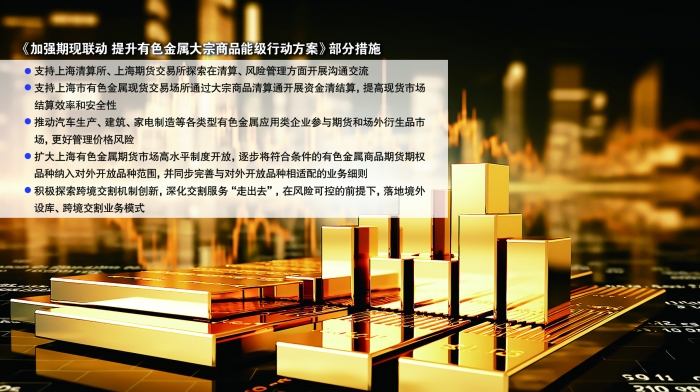
Core Viewpoint - The "Action Plan" aims to strengthen the linkage between futures and spot markets, enhancing the competitiveness and global pricing influence of Shanghai's non-ferrous metal commodities [4] Group 1: Futures Market - Shanghai Futures Exchange has listed 11 non-ferrous metal futures and 10 options, with some products gaining global pricing capabilities, positioning "Shanghai Copper" among the top three global pricing centers for non-ferrous metals [2] - The exchange emphasizes the importance of risk management and regulatory oversight to ensure market safety and stability [2] Group 2: OTC Market - Shanghai Clearing House has established a framework for OTC commodity derivatives trading and risk management since 2013, providing central counterparty clearing services for 20 products across six industries, including non-ferrous metals [3] - The clearing house aims to enhance service quality and risk prevention mechanisms, supporting the development of local non-ferrous metal trading platforms [3] Group 3: Spot Market - Shanghai has introduced the "Three-Year Action Plan for the Transformation and Upgrade of Bulk Commodity Trade (2025-2027)" to accelerate the transformation of bulk commodity trade [3] - Challenges in the non-ferrous metal trade include the need for stronger linkage between futures, spot, and derivatives markets, insufficient international pricing power, and a lack of leading global commodity traders [3] Group 4: Action Plan Measures - The Action Plan includes 18 measures focusing on three main areas: promoting market connectivity, enhancing internationalization of the non-ferrous metal market, and fostering a competitive market ecosystem [4][5] - It supports communication between Shanghai Clearing House and Shanghai Futures Exchange for better risk management and encourages participation from various industries in futures and OTC markets [4] - The plan aims to increase the international influence of "Shanghai prices" by expanding the openness of the non-ferrous metal futures market and exploring cross-border delivery mechanisms [4]
上海发布18项措施!提升有色金属大宗商品能级
Zhong Guo Zheng Quan Bao· 2026-01-20 14:58
Core Viewpoint - The Shanghai Municipal Financial Office, in collaboration with various financial institutions, has introduced an action plan aimed at enhancing the linkage between the futures and spot markets for non-ferrous metals, thereby improving the international competitiveness and pricing influence of Shanghai's non-ferrous metal commodities [1][2]. Group 1: Action Plan Overview - The action plan includes 18 specific measures divided into three main parts, focusing on market interconnectivity, internationalization, and ecosystem development for non-ferrous metals [2]. - It aims to promote the use of futures prices in trade settlements and encourages financial institutions to utilize hedging tools to mitigate price volatility risks [2][3]. Group 2: Market Interconnectivity - The plan supports the establishment of efficient and secure settlement systems for non-ferrous metal spot markets through commodity clearing channels [2]. - It encourages the development of price indices by trading venues and index service providers, facilitating trade settlements based on these indices [2]. Group 3: Internationalization of the Market - The action plan emphasizes international cooperation, aiming to explore cross-border business and product innovations with foreign regulatory bodies and exchanges [2]. - It proposes expanding the openness of Shanghai's non-ferrous metal futures market and exploring cross-border delivery models [2]. Group 4: Ecosystem Development - The plan advocates for the application of blockchain technology in the non-ferrous metal sector to enhance data sharing across platforms and institutions [3]. - It aims to strengthen the functionality of national commodity warehouse registration centers and expand the coverage of warehouse receipt registration for key non-ferrous metal products [3]. Group 5: Importance of Non-Ferrous Metals - Non-ferrous metals are increasingly vital to the national economy, especially with the growth of strategic emerging industries such as new energy vehicles and aerospace [4]. - Shanghai has developed a comprehensive market structure for non-ferrous metals, integrating futures, spot, and over-the-counter derivatives markets [4]. Group 6: Futures and Derivatives Market - The Shanghai Futures Exchange has listed 11 non-ferrous metal futures and 10 options, with some products gaining global pricing capabilities, positioning Shanghai among the top three global pricing centers for non-ferrous metals [4]. - The Shanghai Clearing House has established a framework for over-the-counter commodity derivatives, providing central counterparty clearing services for various products [5][6].
期现联动做强“上海价格”,有色金属大宗商品能级再提升
第一财经· 2026-01-20 14:48
Core Viewpoint - Shanghai is actively enhancing its global influence in the pricing of non-ferrous metals through the implementation of the "Action Plan" aimed at strengthening the linkage between futures and spot markets, thereby promoting internationalization and improving the pricing capabilities of non-ferrous metal commodities [3][5]. Group 1: Market Development and Structure - Shanghai is positioned as a key player in the economic transformation and adjustment of international trade patterns, with non-ferrous metals becoming essential resources for global industrial competition and technological innovation [5]. - The Shanghai Futures Exchange has listed 25 futures and 18 options products, covering major non-ferrous metals, with Shanghai copper emerging as a significant pricing center globally [5][6]. - The Shanghai Clearing House has established a framework for over-the-counter (OTC) derivatives trading and risk management, supporting the development of the non-ferrous metals market [6]. Group 2: Action Plan Measures - The "Action Plan" includes 18 specific measures across three main areas: enhancing market connectivity, improving internationalization, and fostering a robust market ecosystem [8][9]. - Measures to strengthen the linkage between futures, spot, and OTC markets include collaboration between the Shanghai Clearing House and the Shanghai Futures Exchange to improve risk management and operational efficiency [8]. - The plan aims to expand the internationalization of non-ferrous metal futures and options, exploring cross-border delivery mechanisms and enhancing the influence of "Shanghai prices" in global markets [9]. Group 3: Future Implementation - The Shanghai Municipal Financial Office will work with relevant departments to implement the "Action Plan," focusing on market connectivity and supporting the real economy in the non-ferrous metals sector [9].
聚焦“上海价格”影响力 上海出台提升有色金属大宗商品能级行动方案
Xin Hua Wang· 2026-01-20 13:33
Core Viewpoint - The Shanghai government has launched an action plan to strengthen the linkage between futures and spot markets in the non-ferrous metals sector, aiming to enhance the global pricing influence of these commodities [1]. Group 1: Action Plan Overview - The action plan consists of three main parts and 18 measures aimed at promoting market connectivity and the development of futures, spot, and OTC derivatives markets in the non-ferrous metals sector [1]. - Key objectives include enhancing the internationalization of the non-ferrous metals commodity market and increasing the influence of "Shanghai prices" [1]. Group 2: Market Development Goals - The initiative seeks to gather market participants and cultivate a favorable ecosystem for the non-ferrous metals market [1]. - Future efforts will focus on creating a robust ecological system that fosters policy collaboration to improve resource allocation capabilities and global pricing influence for non-ferrous metal commodities in Shanghai [1].