食品营养

Search documents
资本赋能产业协同,莱茵生物控制权变更叠加资产收购重塑赛道格局
Mei Ri Jing Ji Xin Wen· 2025-12-16 13:01
Core Viewpoint - The announcement of Gulin Rhein Biotech's stock suspension due to a change in control and asset acquisition has attracted market attention, indicating significant future developments for the company [1][2]. Group 1: Control Change - The controlling shareholder, Qin Benjun, plans to transfer part of his shares to Guangzhou Defu Nutrition Investment Partnership, voluntarily relinquishing some voting rights, marking a transition to "Defu Capital Empowerment" [2][3]. - This control change is not merely a capital exchange but aligns with the strategic needs of the industry, facilitating a smooth transition that matches capital resources with industry development [3]. Group 2: Acquisition of Beijing Jinkangpu - Rhein Biotech intends to acquire 80% of Beijing Jinkangpu Food Technology Co., Ltd. through a combination of share issuance and cash payment, while simultaneously raising matching funds from Guangzhou Defu Nutrition [4][5]. - Beijing Jinkangpu, established in 2004, specializes in food nutrition fortifiers and will become a subsidiary of Rhein Biotech, enhancing the company's full industry chain layout in the food nutrition sector [4]. Group 3: Synergy and Strategic Fit - The acquisition is expected to create a synergistic effect, as Rhein Biotech's strengths in natural raw materials and formulation development will complement Beijing Jinkangpu's established market channels and customer resources [5][6]. - The collaboration aims to enhance market competitiveness by integrating Rhein Biotech's raw material advantages with Beijing Jinkangpu's market presence, ultimately leading to improved product solutions and business value [5][6]. Group 4: Transaction Details - The transaction price will be based on an assessment report from a qualified institution, with the specifics of the deal still under negotiation [6]. - The integration of Beijing Jinkangpu into Rhein Biotech's operations is anticipated to bolster the company's capabilities in the food and health product sectors, although the transaction is still subject to various approvals and uncertainties [6].

Dyadic(DYAI) - 2025 Q3 - Earnings Call Transcript
2025-11-12 23:00
Financial Data and Key Metrics Changes - Total revenues for Q3 2025 decreased to $1,165,000 from $1,958,000 in the same period a year ago, primarily due to declines in research and development revenue and license and milestone revenue [23][24] - Research and development expenses increased to $572,000 from $460,000 year-over-year, driven by a rise in active internal research initiatives [24] - Net loss for Q3 2025 increased to $1,976,000 or $0.06 per share compared to a loss of $203,000 or $0.01 per share in the same period last year [25] Business Line Data and Key Metrics Changes - The Life Sciences segment is now operating as a product company, manufacturing and supplying lab-grade materials for multiple recombinant proteins [5][6] - The recombinant human albumin program is advancing towards a commercial launch in early 2026, with significant milestone payments received from ProLiant [6][7] - The first bulk purchase order for a Dyadic produced protein was achieved in October, validating the market readiness of the technology [8] Market Data and Key Metrics Changes - The cell culture media market is identified as a dynamic growth area, requiring consistent animal-free proteins for scalability and regulatory confidence [6] - The market for DNase one is approximately $250 million for recombinant products, with a broader market of $1.5 billion for all production methods [32] - The animal-free dairy protein market is expected to exceed $20 billion by 2035, driven by demand for sustainable protein production [13] Company Strategy and Development Direction - The company is transitioning from a platform-centric R&D organization to a commercially focused biotechnology company with a growing portfolio of high-value products [4][5] - Dyadic has rebranded as Dyadic Applied Biosolutions and is enhancing its technology foundation with CRISPR Cas9 gene editing capabilities [4][5] - The strategy includes expanding customer engagement in key global markets, particularly in Asia, Europe, and North America [76] Management's Comments on Operating Environment and Future Outlook - Management expressed optimism about the company's transformation and execution, highlighting the first commercial bulk sale as a pivotal moment [4][5] - The focus remains on accelerating product sales across life sciences and molecular biology reagent portfolios, with early commercial traction already underway [76] - The company anticipates growth in product revenue in life sciences and food and nutrition markets while maintaining operating expenses in line with the previous year [26] Other Important Information - The company received a total of $1,500,000 in milestone payments from ProLiant, with expectations to share in profits as albumin products enter the market [7] - Dyadic's collaboration with Intralink aims to accelerate market penetration in Japan and South Korea, leveraging local expertise for effective market reach [11][12] Q&A Session Summary Question: What does the new relationship with ERS Genomics bring to the portfolio? - The CRISPR license enhances the genetic toolbox, accelerating product development and improving optimization yields, providing a competitive advantage in various markets [29][30] Question: How should the DNase one opportunity be viewed for growth in 2026 and beyond? - The DNase one market is substantial, and the focus is on securing OEM agreements for bulk sales, with expectations for steady growth as higher margin segments are targeted [32][34] Question: What characteristics of customers are expected in the Asian markets for DNase one and transferrin? - The target customers include cell and gene therapy manufacturers and suppliers, focusing on bulk purchase orders rather than individual institutions [36][37] Question: Can you elaborate on the CRISPR ERS agreement structure? - The agreement involves improving fungal cell lines for efficiency and quality, with confidentiality around financial specifics, but it is not comparable to CRISPR applications in pharmaceuticals [45][46] Question: How is the infant nutrition product being marketed? - The goal is to mimic human breast milk and bovine milk, with a focus on regulatory hurdles and consumer acceptance, presenting a significant opportunity in the market [51][53]

(第八届进博会)“健康中国”向全球敞开机遇大门
Zhong Guo Xin Wen Wang· 2025-11-07 18:21
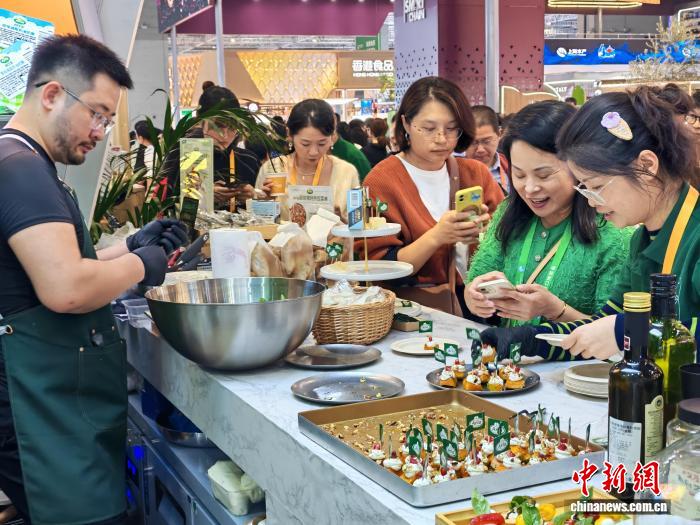
Core Insights - The "Healthy China" initiative is driving an increasing demand among Chinese consumers for food that is healthy, nutritious, safe, and personalized [1] Group 1: Industry Trends - The eighth China International Import Expo (CIIE) showcases a wide variety of healthy and delicious food products, reflecting the diverse choices available to Chinese consumers [1] - The demand for nutritional and health-focused products is growing, particularly among parents seeking high-quality nutritional supplements for children [5] Group 2: Company Innovations - Arla introduced three globally launched products at the expo, including Cocio coconut-flavored chocolate milk and two types of cream cheese, which cater to the evolving tastes and health needs of Chinese consumers [3] - Newray showcased its new Lactoferrin Taurine Vitamin C powder, building on its previous product aimed at children, addressing the diverse nutritional needs of families [5] - Innos introduced its upgraded AKK菌 series, emphasizing research-backed formulations for daily weight management, highlighting the brand's commitment to innovation in the health sector [6]

2025服贸会|锚定GDP超千亿目标 北京平谷国家服务业扩大开放综合示范区建设提速
Bei Jing Shang Bao· 2025-09-12 13:31
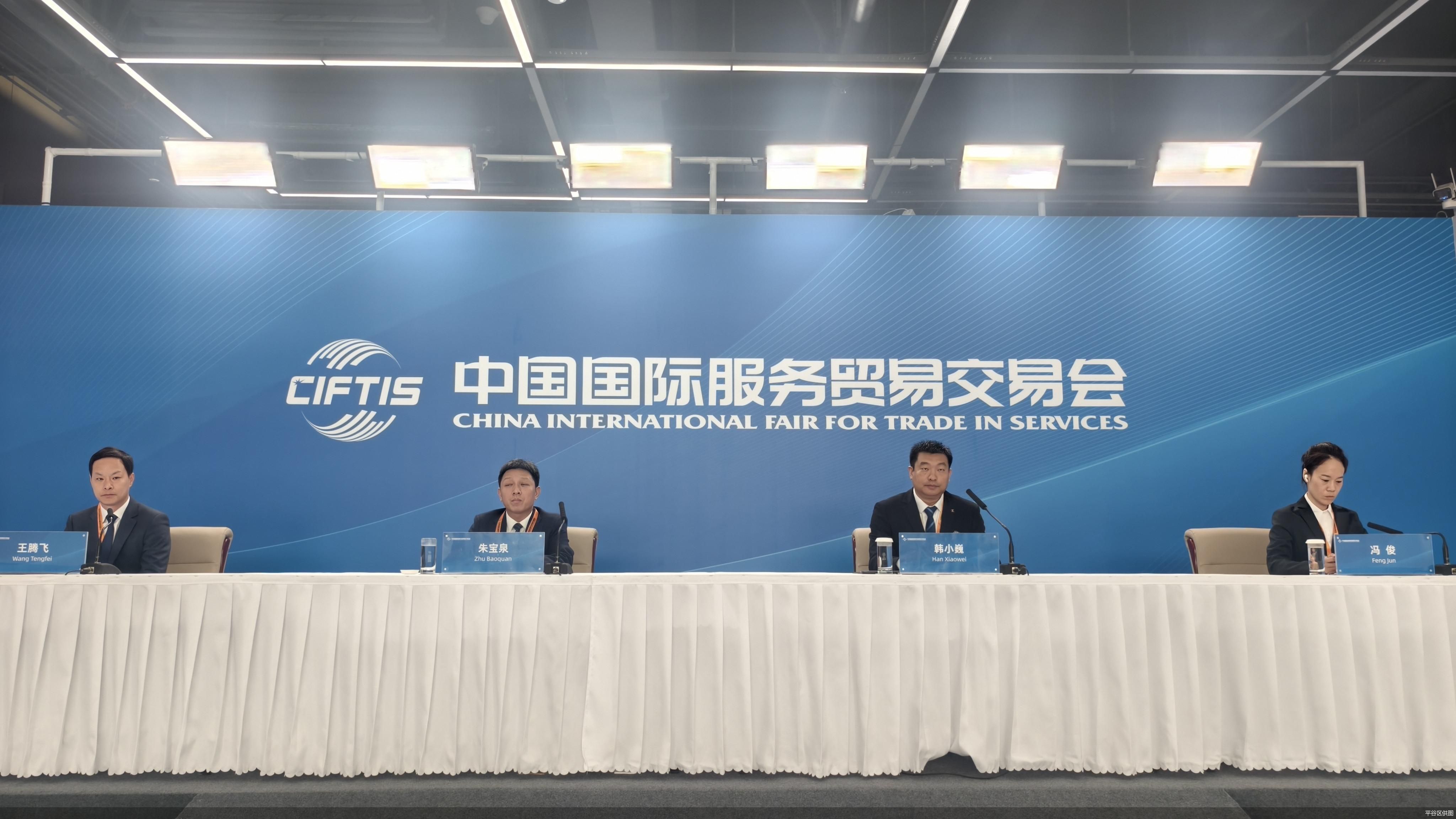
Core Viewpoint - The Pinggu District is actively promoting the construction of a national comprehensive demonstration zone for the expansion of the service industry, focusing on industrial development, business environment improvement, and policies to support enterprises [1][4]. Group 1: Industrial Development - The Pinggu District has approved a ten-year strategic plan for high-quality development (2025-2035), implementing the "1351K" strategy, which focuses on three major sectors and three sub-sectors, aiming to achieve a GDP exceeding 100 billion yuan within ten years [2]. - The district is developing 15 industrial chains, including modern logistics, live e-commerce, and food nutrition, leveraging its geographical advantages to enhance logistics capabilities [2][3]. - The construction of the Mafu Railway and the expansion of the H-type railway are underway, which will increase the district's throughput capacity to 10 million tons, with a potential for expansion to 20 million tons [3]. Group 2: Business Environment Improvement - Pinggu District is enhancing its business environment through institutional reforms and has introduced a comprehensive plan to optimize the business environment, including various supportive measures for enterprises [4]. - The district has established 16 policies aimed at supporting enterprises, including measures for the development of live e-commerce, foreign trade, and small and medium-sized enterprises [4][5]. - Specific policies include financial incentives for foreign investment and support for participation in trade exhibitions, with rewards for meeting investment thresholds [5]. Group 3: Talent Development - The district is focusing on talent development by providing housing support and subsidies for qualified professionals working in Pinggu, with rental assistance ranging from 60% to 100% [6]. - The district's economic indicators show significant growth, with a GDP of 570.5 billion yuan in 2024 and a fixed asset investment growth rate of 19.1% [6].
锚定GDP超千亿目标,北京平谷国家服务业扩大开放综合示范区建设提速
Bei Jing Shang Bao· 2025-09-12 13:18
Core Viewpoint - The Pinggu District is actively promoting the construction of a national comprehensive demonstration zone for the expansion of the service industry, focusing on industrial development, business environment improvement, and policies to support enterprises [1][6]. Group 1: Industrial Development - The Pinggu District has approved a ten-year strategic plan for high-quality development (2025-2035), implementing the "1351K" strategy, which focuses on three major sectors and three sub-sectors, aiming to achieve a GDP exceeding 100 billion yuan within ten years [4]. - The district is developing 15 industrial chains, including modern logistics, live e-commerce, and food nutrition, leveraging its geographical advantages to enhance logistics capabilities [4][5]. - The Pinggu District aims for a logistics capacity of 40 million tons, supporting 35% of the city's livelihood material guarantee [4]. Group 2: Infrastructure and Logistics - Construction of the Mafu Railway and H-type railway expansion is underway, with a planned throughput capacity of 10 million tons and potential for expansion to 20 million tons [5]. - The district is establishing a modern logistics backbone network and planning 100 front warehouses across the city [5]. Group 3: Business Environment Improvement - Pinggu District is enhancing its business environment through the "1+N Work Plan" aimed at optimizing the business environment, which includes various supportive measures for enterprises [7]. - The district has introduced 16 policies to support enterprises, focusing on live e-commerce, foreign trade, small and medium enterprises, and talent development [6][8]. Group 4: Economic Performance - In 2024, the Pinggu District achieved a GDP of 57.05 billion yuan, with fixed asset investment growth of 19.1% and agricultural output reaching 4.04 billion yuan [9]. - In the first half of 2025, the GDP grew by 11% (totaling 30.3 billion yuan), with fixed asset investment increasing by 26.4%, marking a significant milestone in investment [9].
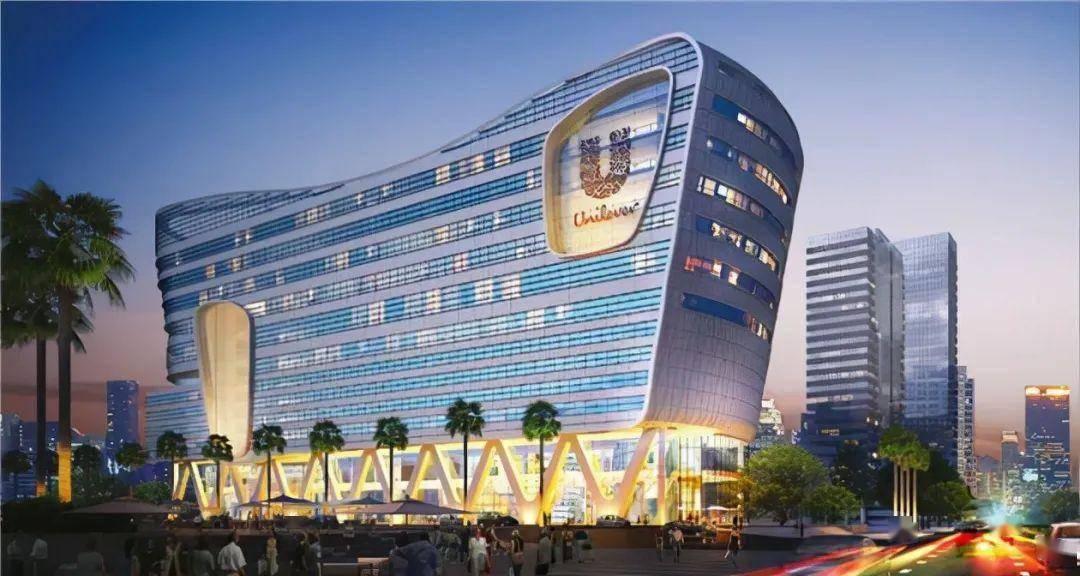
联合利华中国高层变动背后:市场挑战与战略调整
Sou Hu Cai Jing· 2025-06-10 05:14
Group 1 - The recent leadership change at Unilever (China) Co., Ltd. reflects the company's strategic adjustments in response to challenges in the global and Chinese markets [1][3] - Roland Polaroid Hutabarat has been appointed as the new chairman, succeeding Zhong Zhaomin, indicating Unilever's focus on the beauty and health sectors in China [1][3] - The leadership transition is part of a broader trend of management changes within Unilever globally, aimed at driving business transformation and enhancing profitability [3] Group 2 - Unilever faces significant challenges in the Chinese market, including a high single-digit decline in performance during Q1 2025, with brands like Clear and Lifebuoy experiencing downturns [4] - The rise of local brands poses a strong competitive threat to Unilever, as these brands leverage their understanding of the local market and offer more competitive pricing [4] - Rapid changes in consumer demand are increasing the pressure on Unilever to innovate its product offerings [4] Group 3 - In response to market challenges, Unilever is intensifying its investment in the Chinese market, particularly in the beauty and health sectors, by establishing a high-end beauty matrix with ten major brands [6] - The company is optimizing its brand portfolio by discontinuing underperforming brands, such as Tatcha and REN, to focus resources on stronger brands [6] - Unilever's strategic adjustments aim to enhance market competitiveness and operational efficiency in China [6] Group 4 - The leadership change is seen as a crucial part of Unilever's strategy to address market challenges and signals the company's long-term commitment to the Chinese market [7] - The new chairman's extensive supply chain management experience is expected to improve operational efficiency, particularly in the beauty and health sectors [7] - Unilever's ongoing adjustments and new management are anticipated to bring fresh energy and opportunities in the Chinese market [9]