高端铝产业

Search documents
听,高质量发展新脉动|深化改革激发发展新动力
Xin Hua She· 2025-12-18 09:59
Group 1 - The core viewpoint emphasizes the necessity of comprehensive deepening of reforms and innovation as fundamental drivers for economic and social development during the "14th Five-Year Plan" period, starting in 2026 [1] - The Central Economic Work Conference highlighted the importance of combining policy support with reform and innovation, focusing on enhancing the momentum for high-quality development as a key task for 2026 [1] Group 2 - Continuous reform and opening-up have significantly contributed to China's economic achievements, with a 30% reduction in the negative list for the market during the "14th Five-Year Plan" period and the introduction of the Private Economy Promotion Law to invigorate the private sector [3] - The breadth and depth of reforms have expanded, providing institutional guarantees and strong momentum for economic and social development, with over 40 reform experiences from Shenzhen being promoted nationwide [5] Group 3 - The National Development and Reform Commission is focused on enhancing the effectiveness of comprehensive reforms, encouraging local pilot programs, and has promoted 88 innovative measures across four batches to provide replicable reform experiences nationwide [7] - The establishment of a unified national market is crucial for strengthening domestic circulation, with the Central Economic Work Conference calling for the formulation of regulations for the unified market and the improvement of supporting laws for the Private Economy Promotion Law [13] Group 4 - The acceleration of technological innovation in China is evidenced by the rapid development of AI models and the integration of humanoid robots into real-world scenarios, supported by a series of reform measures aimed at fostering a conducive environment for private sector investment in R&D and production [15][17] - Continuous deepening of reforms and innovation in institutional mechanisms is aimed at releasing development momentum, with a consistent focus on high-quality development from the 20th Party Congress to the Central Economic Work Conference [17]


滨州市固定资产投资始终保持稳中有进态势
Sou Hu Cai Jing· 2025-12-01 08:31
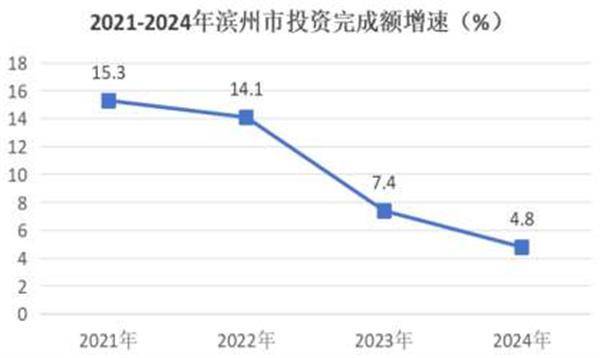
Core Viewpoint - The city of Binzhou is focusing on high-quality development during the "14th Five-Year Plan" period, optimizing investment structures to lead economic transformation and enhance quality and efficiency [1][2]. Investment Structure Optimization - Binzhou's investment strategy has shifted from scale expansion to quality improvement, with an average annual growth rate of 10.3% in fixed asset investment from 2021 to 2024, and a year-on-year growth of 6.4% in the first nine months of this year [2]. - The proportion of manufacturing investment increased from 26.5% at the end of the "13th Five-Year Plan" to 41.2% by 2024, with an average annual growth of 23.2%, making it a core driver of investment growth [2]. - In the first nine months of this year, manufacturing investment grew by 12.2%, contributing 4.9 percentage points to overall investment growth [2]. Traditional and Emerging Industries - Binzhou is focusing on upgrading traditional industries while simultaneously promoting emerging industries, with an average annual growth of 9.0% in industrial technological transformation investment from 2021 to 2024, and a year-on-year growth of 5.2% in the first nine months of this year [3][6]. - The high-end aluminum industry is a key focus, with 32 technological transformation projects planned for 2024, accounting for 71.1% of the total projects in this sector [6]. - Investment in "four new" industries (new technologies, new industries, new business models, and new forms of consumption) has consistently accounted for over 55% of total investment, with an average annual growth of 11.8% [6]. Infrastructure and Social Investment - Binzhou is actively promoting infrastructure projects, with infrastructure investment maintaining over 20% of total investment and an average annual growth of 4.3% from 2021 to 2024 [7]. - In the first nine months of this year, infrastructure investment grew by 8.4%, driven by major projects in road transportation [7]. - Social sector investment has an average annual growth of 2.6%, with education sector investment growing at 16.7%, outpacing overall investment growth [7]. Policy and Market Dynamics - The local government is implementing policies to support project construction and resource allocation, with a focus on enhancing the business environment and encouraging private investment [8]. - From 2021 to 2024, private investment has consistently accounted for over 60% of total investment, with an average annual growth of 9.2%, significantly higher than the provincial average [8]. - In the first nine months of this year, private investment grew by 20.5%, making up 70.4% of total investment, an increase of 8.2 percentage points compared to the same period last year [8].