
鳗鱼养殖

Search documents
债台高筑仍然狂撒8亿购苗,鳗鱼龙头在“赌”一个怎样的未来?
3 6 Ke· 2025-11-27 03:48
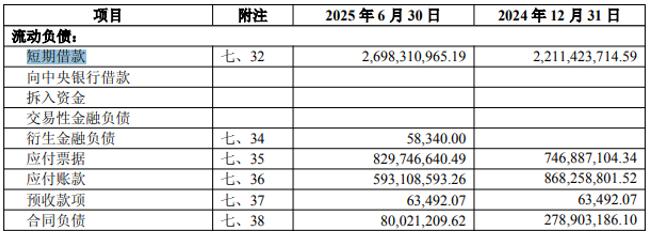
Core Viewpoint - Tianma Technology has become the global leader in eel stock, but this achievement comes at a significant cost, reflected in its high short-term debt of 2.7 billion yuan and a total debt of 6.6 billion yuan, raising concerns about its financial stability and ability to manage cash flow effectively [1][8][10]. Financial Performance - In the first three quarters of 2023, Tianma Technology reported a revenue of 4.5 billion yuan, a slight increase of 0.11% year-on-year, while net profit attributable to shareholders was 70.78 million yuan, up 1.96% year-on-year. However, excluding one-time gains, the net profit decreased by 11.93% [4]. - The company's operating cash flow for the first three quarters of 2023 was 6.75 million yuan, a decline of 39.24% compared to the previous year [7]. Debt and Liquidity Concerns - As of the third quarter of 2023, Tianma Technology's total liabilities reached 6.6 billion yuan, with interest-bearing debt at 4.46 billion yuan, a year-on-year increase of 23.54%. The current ratio stands at 0.91, significantly below the industry safety line [8][10]. - The company's asset-liability ratio is at 69.73%, which is considerably higher than the industry average, indicating a potential "interest swallowing profit" cycle [10]. Investment in Eel Farming - Despite financial pressures, Tianma Technology has aggressively invested in eel farming, purchasing eel fry at a historic low price of 7.8 yuan per fry, totaling 812 million yuan in the first half of 2025, a 390% increase from 166 million yuan in 2024 [5]. - The company has built a complete industrial chain from eel feed research and development to farming, processing, and sales since its establishment in 2005 [2]. Market Dynamics and Risks - The eel farming industry is characterized by unstable profitability, heavily reliant on wild fry capture, which is subject to environmental factors and declining wild eel populations [12]. - The mismatch between farming capacity and output is evident, as Tianma Technology has not met its annual output targets since 2021, leading to increased inventory levels and potential price impacts [15][16]. Business Structure and Challenges - Concerns have been raised about the authenticity of Tianma Technology's closed-loop business model, with overlapping identities between customers and suppliers, which could indicate potential conflicts of interest [17]. - The company's feed business, which accounts for 70% of its revenue, is under pressure due to declining demand and increased competition, with feed revenue dropping by 16.11% year-on-year in the first half of 2023 [18]. Future Outlook - The eel market in Japan, which consumes 70% of the world's eels, is still recovering and does not match its peak levels from 2000. The pricing of Chinese eels is significantly lower than that of Japanese products, limiting profit margins [20]. - Regulatory risks are also looming, as proposals to list all eel species under Appendix II of the Convention on International Trade in Endangered Species could disrupt the eel trade in East Asia [20].

让“书斋智慧”变“发展真金”,江门社科界积极助力“百千万工程”
Nan Fang Nong Cun Bao· 2025-08-14 03:36
Core Insights - The article emphasizes the integration of social sciences into local development initiatives, particularly the "Hundred Million Project" in Jiangmen, showcasing how academic insights can drive practical solutions for regional revitalization [3][34]. Group 1: Project Overview - The "Hundred Million Project" is revitalizing various industries in Jiangmen, such as cultural tourism in Kaiping and eel farming in Taishan, with significant contributions from the social sciences community [2][34]. - Jiangmen's social sciences sector is actively addressing local development challenges by establishing 104 targeted research topics to enhance county-level growth [6][34]. Group 2: Industry-Specific Initiatives - A report co-produced with Jiangmen Customs outlines strategies for the eel industry, focusing on four key areas: distribution, processing, branding, and circulation, which have been endorsed by local government leaders [7][8]. - The Chenpi (dried tangerine peel) industry is aiming for a production value of 50 billion, with strategies to address issues like resource degradation and brand recognition [17][19]. Group 3: Research and Development - The social sciences community has produced 38 reports in 2024, with 28 receiving feedback from city leaders, indicating a strong alignment between academic research and governmental needs [10][34]. - Collaborative efforts with local universities and institutions have led to the creation of 32 research outcomes focused on cultural heritage and community engagement [14][15]. Group 4: Practical Applications - The social sciences sector is promoting hands-on research by sending experts into the field, transforming local areas into experimental labs for the "Hundred Million Project" [21][34]. - Initiatives like "Smart Agriculture" are being explored to integrate blockchain technology into rural property transactions, enhancing the foundation for rural e-commerce and revitalization [25][34]. Group 5: Economic Opportunities - The completion of major infrastructure projects, such as the Shenzhen-Jiangmen Bridge, presents significant economic opportunities, prompting research on leveraging these developments for regional growth [28][30]. - The social sciences community is actively disseminating findings through various media, generating public interest and support for the "Bridge Economy" [30][31].

金融助闽特色农业升级 政银协同壮大农企向“新”力
Zheng Quan Shi Bao· 2025-06-27 18:00
Group 1: Financial Support for Agricultural Innovation - Financial institutions are providing crucial support for the technological innovation in traditional agriculture, particularly in the jasmine tea and eel farming sectors in Fujian [2][3][10] - The collaboration between banks and local governments through risk-sharing mechanisms has enabled the provision of financial products like "Technology Loans" to support small and medium-sized enterprises in their transition to modern industrial leaders [4][10] - The risk-sharing fund established by the Fujian Provincial Science and Technology Department and local banks can cover up to 50% of the principal for overdue loans, addressing the credit enhancement issues faced by small enterprises [4] Group 2: Technological Advancements in Jasmine Tea Industry - The jasmine tea industry in Fujian has seen significant investment in technology, with companies like Chunlun Group investing 200 million yuan in tea technology to enhance production quality and efficiency [3][4] - The market for flower teas, including jasmine tea, is experiencing growth driven by new tea brands and innovations in deep processing technologies, transforming traditional tea plantations into comprehensive industrial parks [3][6] Group 3: Eel Farming Industry Developments - Fujian province, particularly Fuzhou, is a major hub for eel farming, contributing to approximately 80% of China's eel production [5][6] - The Tianma Technology Group has made significant advancements in eel farming technology, including the development of domestic feed for eel larvae, which previously relied on expensive imports [6][7] - The company is focusing on enhancing the value chain of eel products by exploring new markets and consumer preferences, particularly in China, to reduce reliance on traditional markets like Japan [7][9] Group 4: Rural Revitalization and Financial Integration - The integration of financial services with agricultural development is crucial for rural revitalization, with initiatives like "Fumin Loans" providing flexible funding solutions for farmers [9][10] - Agricultural banks are collaborating with leading enterprises to support local farmers, enhancing their income through a modern agricultural service system that includes government guidance and financial support [9][10] - As of May 2023, agricultural banks have approved financing plans totaling 2.88 billion yuan for agricultural leaders, demonstrating the financial sector's commitment to supporting the agricultural industry [10]

