5G技术

Search documents
春晚的广告牌 印刻着中国经济的一次次跃迁
Nan Fang Du Shi Bao· 2026-02-17 15:27
Core Insights - The sponsorship history of the CCTV Spring Festival Gala reflects China's economic development and industrial upgrades over the past four decades, showcasing three major transitions: from basic needs to consumer electronics and automobiles, from virtual economy to hard technology, and from demographic dividend to engineer dividend [1][2]. Group 1: Historical Sponsorship Trends - In the 1980s, the main sponsors represented basic household needs, with brands like 康巴丝 leading the way, highlighting the public's desire for precision and the prosperity of light industry [1]. - The 1990s saw a shift towards quality consumption, with liquor brands and home appliance giants like 美的集团 becoming prominent sponsors, marking a transition from survival to quality-focused consumption [1]. Group 2: The Rise of Internet and Technology - The year 2015 marked a turning point with the emergence of internet giants like WeChat and Alipay, initiating a "red envelope war" that transformed user engagement and payment methods [2]. - As the internet traffic peaked, the focus shifted to hard technology, with a notable increase in sponsorship from the electric vehicle sector, indicating a fundamental shift in China's competitive edge from demographic to engineer dividends [2]. Group 3: Future Trends and Cultural Consumption - The upcoming 2026 Spring Festival Gala will feature new partnerships with brands like 名创优品 and 卡游, suggesting a potential shift towards "emotional value" and "cultural consumption" as new wealth drivers in a mature market [3]. - The evolution of sponsors serves as a "value anchor" migration, reflecting China's economic transitions from production capabilities to creative intelligence, providing a lens to observe the pulse of the times [3].
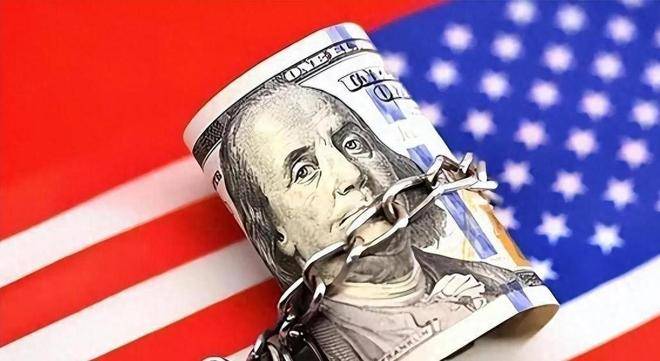
美国霸权算盘落空?美元动荡、国债失控,美国恐先熬死自己
Sou Hu Cai Jing· 2025-11-23 05:38
Core Viewpoint - The article discusses the differences between the current U.S.-China rivalry and the U.S.-Soviet Cold War, emphasizing that China is unlikely to collapse like the Soviet Union did, as highlighted by Singapore's Prime Minister Lee Hsien Loong at the Davos Forum [1][15]. Group 1: Historical Context - The Cold War involved a prolonged confrontation between the U.S. and the Soviet Union, reshaping global dynamics through various conflicts and crises [3]. - The Soviet Union's collapse was attributed to multiple factors, including military overreach and economic mismanagement, particularly a heavy reliance on military spending that detracted from civilian needs [3][5]. - Economic sanctions and oil price controls by the U.S. effectively targeted the Soviet economy, which was already struggling due to its closed trade structure [5][6]. Group 2: Current U.S.-China Relations - The U.S.-China trade war, initiated in 2018, has seen the U.S. impose tariffs, but unlike the Soviet Union, China is deeply integrated into the global supply chain, with trade between the two countries projected to exceed $680 billion by 2025 [8][9]. - China's economic resilience is highlighted by its robust manufacturing sector and large domestic market, allowing it to maintain steady growth despite external pressures [15]. - The U.S. attempts to isolate China through alliances have faced challenges, as many countries prefer to maintain cooperative relationships with China, which offers mutual benefits without political conditions [13][17]. Group 3: Strategic Differences - Unlike the Soviet Union, China has adopted a pragmatic approach to international relations, focusing on win-win cooperation rather than ideological confrontation [17]. - The U.S. strategy of containment, reminiscent of Cold War tactics, is ineffective against China, which has shown significant advancements in technology and military capabilities without engaging in an arms race [11][21]. - The interdependence between the U.S. and China in trade, technology, and global challenges complicates the notion of a simple adversarial relationship, suggesting that cooperation is essential for addressing global issues [19][21]. Group 4: Future Outlook - The article posits that if the U.S. continues to apply outdated Cold War strategies, it risks self-destruction, as China's rise is not aimed at replacing the U.S. but rather at fostering a more equitable international order [21]. - China's commitment to peaceful development and dialogue contrasts sharply with the Soviet Union's expansionist tendencies, positioning it as a stabilizing force in the current global landscape [21].