《合成大西瓜》

Search documents
爆款小游戏的长青“密码”
Zhong Guo Jing Ying Bao· 2025-10-24 20:28
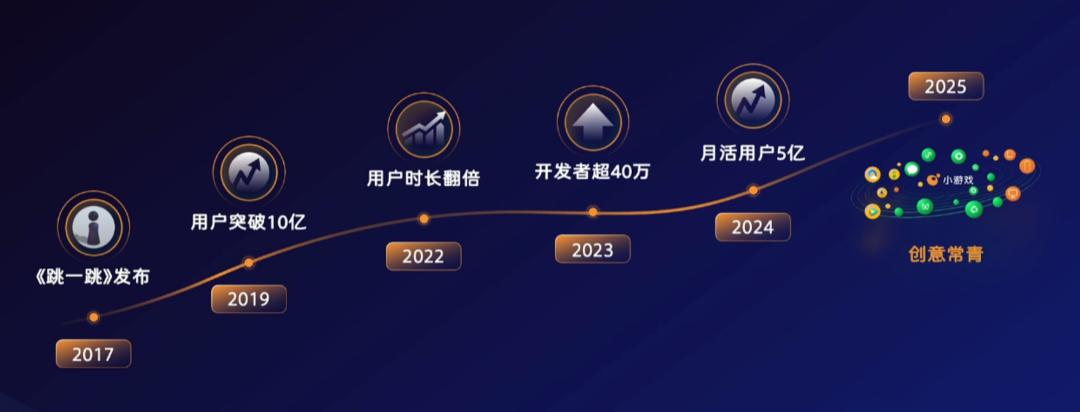
Core Insights - The article discusses the evolution of mini-games on platforms like WeChat, highlighting a shift from short-lived hits to long-lasting titles that maintain player engagement over time [2][6]. Group 1: Mini-Game Longevity - Mini-games are increasingly adopting long-term operational models similar to traditional app games, with regular content updates to enhance player retention [2][6]. - As of October 23, at least two mini-games in the WeChat top 10 have been operational for over a year, indicating a trend towards sustained popularity [6][9]. Group 2: Historical Context of Popular Mini-Games - "Jump Jump," launched in late 2017, quickly amassed 310 million users within a month, but has since faded from popularity [2]. - "Combine Big Watermelon," released in January 2021, attracted nearly 60 million players in its first week, showcasing the potential for rapid user acquisition [3]. - "Sheep Got Sheep," which became a hit in 2022, faced server issues due to overwhelming user traffic, demonstrating the impact of viral trends [4]. Group 3: Characteristics of Successful Mini-Games - Successful mini-games share common traits: low entry barriers, simple mechanics, short play sessions, and social sharing capabilities [4][5]. - Seasonal events and holidays significantly influence the popularity of these games, as seen with "Jump Jump" and "Combine Big Watermelon" during the Spring Festival [4]. Group 4: Challenges Facing Mini-Games - The simplicity and low barrier to entry of many mini-games can lead to player boredom over time, limiting their longevity [5]. - Many mini-games rely heavily on advertising for revenue, which can be a single point of failure as user interest wanes [5][8]. Group 5: Successful Strategies for Mini-Game Developers - Century Huatong's "Endless Winter" has successfully transitioned from a mini-game to a dual-platform model, maintaining user engagement through regular content updates and seasonal events [6][9]. - The company utilizes AI technology to enhance content production, ensuring it meets evolving user demands [7]. - The revenue model for mini-games is shifting from ad-based to in-app purchases, with in-app revenue projected to increase significantly from 38.8% in 2022 to 68.7% in 2024 [8]. Group 6: Market Trends - The mini-game market is projected to reach 23.276 billion yuan in the first half of 2025, with a growth rate exceeding 40% [9]. - The trend of dual-platform releases is becoming common among game developers, allowing for better user retention and risk mitigation [9].



大厂「疯抢」的小游戏赛道,中小团队还有机会吗?
3 6 Ke· 2025-10-16 09:57
Core Insights - The Chinese gaming market, despite being perceived as saturated, continues to evolve with the emergence of mini-games, which have shown significant growth in recent years [1][3] - The mini-game market generated revenue of 39.836 billion yuan in the past year, marking a year-on-year growth of 99.18%, with 500 million monthly active users, only 10% of whom overlap with the mobile gaming market [1][3] Group 1: Market Dynamics - The success of mini-games is attributed to their reliance on social platforms, ease of access, and strong social sharing attributes, alongside lower development costs compared to traditional mobile games [3][6] - Currently, 70% of listed gaming companies are investing in the mini-game sector, with notable products like "Endless Winter" and "Seeking the Great Thousand" leading the market [3][6] Group 2: Challenges for Small Teams - The entry of large companies into the mini-game market has increased operational costs, making it harder for small teams, which constitute 80% of the market, to compete [5][6] - As competition intensifies, the marginal returns on purely creative gameplay are diminishing, making it difficult for new mini-games to achieve significant user acquisition without substantial marketing budgets [8][9] Group 3: Opportunities for Small Teams - Despite challenges, small teams remain a vital part of the mini-game ecosystem and can leverage partnerships with larger platforms for support in product development and marketing [9][10] - Companies like ByteDance and Kuaishou are providing financial incentives and technical support to developers, helping to reduce marketing costs and enhance product competitiveness [10][12] Group 4: Evolution of Game Development - The mini-game sector is evolving similarly to the mobile game market, with a shift towards combining creative gameplay with established genres to meet user expectations [6][17] - Traditional mobile game content is increasingly influencing mini-game development, with many existing mobile games being adapted for mini-game platforms [17][19] Group 5: Future Directions - The unique social and high-sharing characteristics of mini-games may lead to distinct developmental paths compared to traditional mobile games, emphasizing the importance of innovation and adaptation to platform features [19][20] - Developers are encouraged to focus on gameplay creativity while relying on professional teams for technical optimization and commercialization, allowing them to carve out a niche in the growing mini-game market [20]