
《星际迷航》

Search documents
好莱坞千亿并购战落幕,特朗普密友胜出,奈飞饮恨离去,CNN或面临巨变
Xin Lang Cai Jing· 2026-02-27 23:44
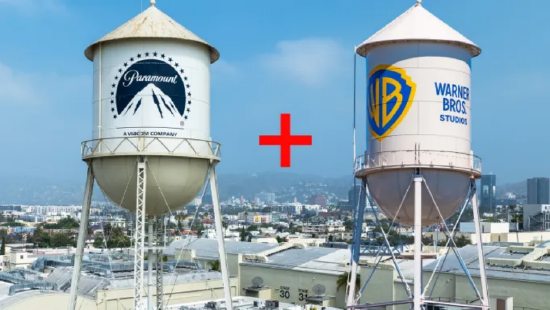
Group 1 - The acquisition battle between Paramount Skydance and Warner Bros. Discovery concluded with Paramount winning the bid with a total cash offer of approximately $111 billion, marking it as the largest leveraged buyout in history [2][27] - The merger creates a media empire that controls significant portions of the U.S. entertainment landscape, including major networks and iconic intellectual properties (IPs) such as DC Universe, The Godfather, and Harry Potter [3][30][31] - The combined streaming platforms of HBO Max, Discovery+, and Paramount+ will exceed 200 million users, positioning the new entity as a major player in the streaming market, just behind Netflix and Disney [6][31] Group 2 - The acquisition was driven by the financial struggles of Warner Bros. Discovery, which was formed from the merger of AT&T's WarnerMedia and Discovery, Inc., and faced significant debt challenges [8][33] - David Ellison, son of Oracle co-founder Larry Ellison, led the acquisition strategy for Paramount after successfully acquiring Paramount itself for $8.4 billion [11][39] - The deal was facilitated by Larry Ellison's substantial financial backing, including $40 billion in funding secured against his Oracle shares, and support from various financial institutions and sovereign wealth funds [17][42] Group 3 - The acquisition reflects a broader trend of Silicon Valley companies consolidating power in Hollywood, as traditional media companies face pressure to merge or be acquired due to the financial might of tech giants [23][48] - The merger is expected to lead to significant cost-cutting measures, including potential layoffs and a reduction in content investment, raising concerns among Hollywood professionals about job security and production levels [24][49] - The political implications of the merger are notable, as the Ellison family has connections to former President Trump, which may influence the regulatory landscape and media narratives [19][44]


祖宾·梅塔的燕尾服和毛衣
Xin Lang Cai Jing· 2026-02-07 07:21
Group 1 - The article reflects on the personal connection and emotional significance of the Vienna New Year Concert, highlighting its role in marking the beginning of a new year [1] - It discusses the historical context of conductor Zubin Mehta's relationship with Shanghai, including his family's ties to the city and his first performance there in 1994 [1] - The narrative emphasizes the importance of personal relationships in the lives of great musicians, particularly the supportive role of Nancy Kovack in Zubin Mehta's life and career [2][3] Group 2 - The article illustrates the deep bond between Zubin Mehta and Nancy Kovack, portraying her as a nurturing presence that enhances his artistic journey [2][3] - It describes Nancy Kovack's illustrious career in entertainment before her marriage to Mehta, highlighting her transition from a star to a supportive partner [2] - The piece concludes with a vivid description of the music from the Vienna New Year Concert, evoking the emotional resonance of the event and its connection to the couple's legacy [3]
派拉蒙百年兴衰史:80亿卖身甲骨文背后的传媒帝国大洗牌
3 6 Ke· 2025-12-19 10:27
Group 1 - Netflix announced an $83 billion acquisition of Warner Bros, marking a significant move in the competitive landscape of Hollywood [1] - David Ellison, son of Oracle's founder, has been actively involved in acquisitions, including an $8 billion purchase of Paramount, positioning himself as a key player in the industry [1][3] - The acquisition of Paramount has led to a major restructuring, dividing the company into three main segments: film and TV production, streaming services centered around Paramount+, and television media [3][5] Group 2 - In 2024, Disney reported revenues of $91.4 billion with streaming profits of $574 million, while Warner Bros. Discovery generated $39.3 billion with streaming profits of $677 million, contrasting sharply with Paramount's $29.2 billion revenue and a net loss of $6.2 billion [4] - Ellison's leadership has seen significant changes, including the replacement of many executives and a workforce reduction of over 2,000 employees to cut costs [5][7] - The media industry is witnessing a shift where traditional giants struggle to adapt to streaming, with Paramount's market share in streaming at only about 2% [27][28] Group 3 - The decline of traditional media giants like Paramount is attributed to their inability to pivot effectively to streaming, with a focus on direct audience engagement and data analytics being crucial for success [19][23] - Paramount's historical bundling strategy, which was effective in the cable era, is now less relevant in the streaming landscape where audience preferences have shifted [21][23] - The competition in streaming is intensifying, with only a few players expected to survive, highlighting the urgency for Paramount to strengthen its position through acquisitions like Warner Bros. [28][30] Group 4 - The cultural influence of Hollywood is waning, with global narratives increasingly shaped by non-American content, as seen with the success of international productions like "Parasite" and "Squid Game" [35][38] - The rise of platforms like TikTok signifies a shift in how content is consumed and distributed, challenging traditional media's dominance [39][41] - Ellison's potential acquisition of TikTok's U.S. operations could redefine media power dynamics, allowing for innovative content distribution strategies [39][41] Group 5 - Paramount's cable business, once a stable revenue source, is facing significant challenges as subscriber numbers decline, with the model of bundling channels becoming less effective [42][44] - The history of Viacom and its acquisition of Paramount illustrates the evolution of media conglomerates and the impact of strategic decisions on long-term success [47][49] - Paramount's film division has struggled due to a lack of strong intellectual properties and missed opportunities, leading to a decline in its market position [55][57]

科技领跑需要更多科幻想象力
Ke Ji Ri Bao· 2025-09-28 01:29
Group 1 - The "South Sky Gate Plan" has gained significant attention among aviation technology enthusiasts, as it aims to construct a futuristic air combat system based on China's current aviation technology [1] - The plan is not merely a conceptual idea but is seen as a tangible future technology driver, reflecting the historical connection between scientific achievements and science fiction [1] - The essence of science fiction lies in its ability to boldly speculate on technological advancements and their impacts on humanity, providing inspiration and direction for technological innovation [1] Group 2 - China's technological innovation is increasingly reliant on the imaginative power of science fiction, especially as the country transitions from following to leading in key technology sectors [2] - The rapid development of China's science fiction industry has produced high-quality works, with the industry expected to generate over 100 billion yuan in revenue in 2023 and 2024 [2] - There is a belief that the integration of science fiction into the technological innovation process will foster mutual promotion between China's technological advancements and its science fiction industry [2]

从美苏到美俄,“太空电影竞赛”持续百年
Huan Qiu Shi Bao· 2025-09-05 22:49
Group 1: Historical Context of Space Films - The first Soviet science fiction film, "Queen of Mars Alita," released in 1924, marked the beginning of space-themed cinema, inspired by the exploration of the universe [1] - Following the launch of Sputnik 1 in 1957, Soviet space films shifted towards hard science fiction, exemplified by "Road to the Stars," which accurately predicted human space exploration milestones [2] - In contrast, early American space films focused on soft science fiction themes, reflecting Cold War anxieties, with "The Day the Earth Stood Still" as a notable example [3] Group 2: Evolution of Space Film Genres - The success of the Apollo moon landing significantly increased public interest in space, leading to the emergence of iconic space-themed films like "Star Wars" and "Alien," showcasing diverse genres within the space film category [4] - After the Cold War, Soviet films transitioned from hard science fiction to exploring human nature, with Tarkovsky's "Solaris" questioning the purpose of space exploration [4] - Hollywood introduced disaster films in the space genre, such as "Armageddon," reflecting a societal optimism about technological solutions to crises [4] Group 3: Recent Developments in Space Filmmaking - Recent Hollywood films like "Gravity" and "The Martian" have benefited from NASA's expertise, while historical space events are being adapted into films, such as "Apollo 13" [5][6] - Russia produced "The Challenge," recognized as the first film shot in space, featuring a real-life rescue mission, which was filmed aboard the International Space Station [7] - Upcoming projects include a new space film by Hollywood producer Andre Ilvovino, which claims to be the greatest space love story, with 85% of its footage shot outside Earth's atmosphere [6][7]