
《本草纲目》

Search documents
书页间的季风
Xin Lang Cai Jing· 2026-01-29 18:46
Group 1 - The narrative highlights the transformative power of literature and education in shaping self-confidence and personal growth, as illustrated through various characters' experiences with books [1][3] - The story emphasizes the importance of perseverance and the willingness to learn from failures, as seen in the character of Xu Yi, who turned her initial failures in tofu-making into a successful business [2] - The connection between literature and personal identity is explored, particularly through the character of the security officer, Xiao Zhang, who uses poetry to express his thoughts and emotions while performing his job [2][3] Group 2 - The recurring theme of books as vessels of knowledge and potential is evident, with characters finding inspiration and confidence through their interactions with literature [1][2] - The narrative illustrates the passage of time and the continuity of knowledge, as seen in the old bookstore's history and the journey of the book "A Brief History of Quantum Physics" through multiple owners [3] - The metaphor of books as a source of self-discovery and empowerment is reinforced, suggesting that literature can help individuals confront their insecurities and embrace their identities [1][3]
何处觅芸香
Bei Jing Wan Bao· 2025-10-01 09:45
Group 1 - The core idea revolves around the historical significance and uses of various aromatic plants, particularly "芸草" (Yun grass) and "兰草" (Lan grass), in ancient Chinese culture, especially in relation to book preservation and fragrance [1][2][14] - "兰台" (Lan Tai) was a significant library in the Western Han dynasty, evolving through various dynasties, with its management and naming conventions changing over time [2][7] - The term "芸香" (Yun Xiang) has become synonymous with the fragrance associated with books, indicating its cultural importance in literature and preservation [14][15] Group 2 - The historical context of "芸草" and its various interpretations, including its medicinal and aromatic properties, highlights the confusion surrounding its identity in ancient texts [3][6][9] - The use of "芸草" in libraries for pest control demonstrates the practical applications of aromatic plants in safeguarding literature [8][16] - The evolution of terminology related to "兰草" and "芸草" reflects the linguistic and botanical complexities in ancient Chinese literature [10][12][13]

新书架丨重寻地平线
Zhong Yang Ji Wei Guo Jia Jian Wei Wang Zhan· 2025-09-16 01:22
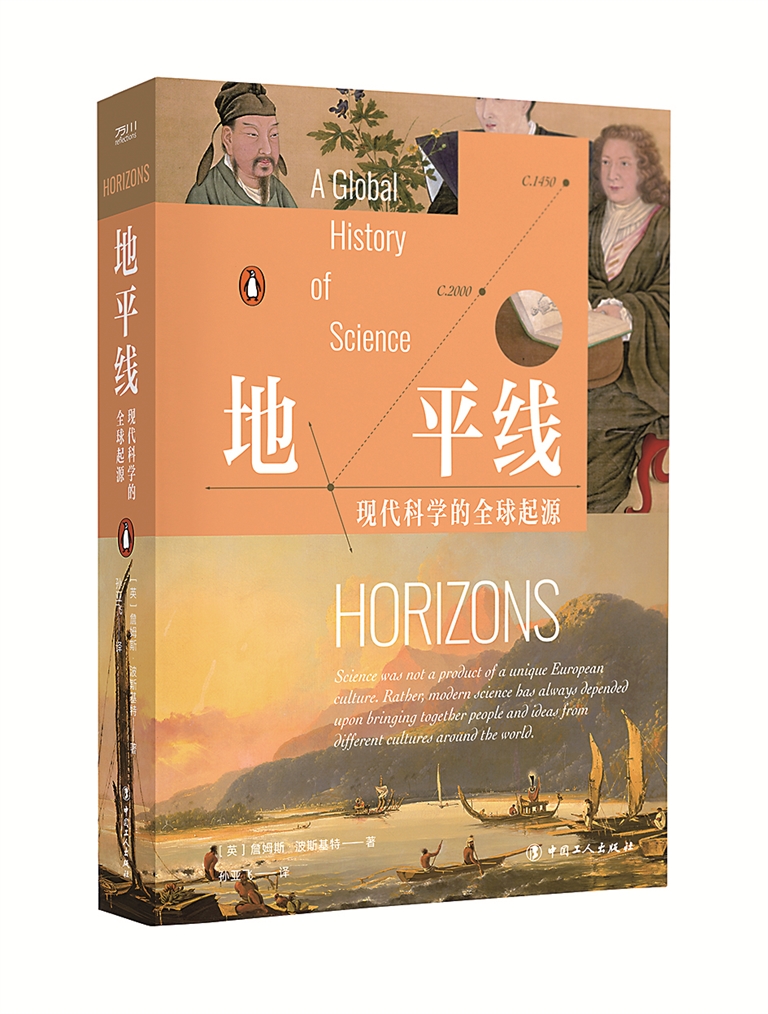
Group 1 - The book challenges the Eurocentric view of the origins of modern science, suggesting that significant moments in the development of modern science should be understood within a global historical context [2] - It emphasizes that the scientific revolution of the 16th century was a process that integrated knowledge from various cultures around the world, rather than being solely a European phenomenon [2] - The exploration journeys sponsored by European states in the 18th century led to advancements in various scientific disciplines, relying heavily on indigenous knowledge from the regions they explored [2] Group 2 - The book discusses the impact of the publication of "Compendium of Materia Medica" by Li Shizhen in the late 16th century, which categorized natural phenomena and influenced European scientific thought [3] - It highlights the significance of Charles Darwin's "On the Origin of Species," which was shaped by global discoveries and discussions on evolution that began in the late 18th century [3] - The translation and dissemination of Darwin's work into at least 15 languages by the time of World War I illustrates its global impact [3] Group 3 - The book explores the relationship between physics and international politics in the early 20th century, noting that international cooperation and conflict have continuously shaped the development of modern science [4] - It mentions the collaborative efforts of scientists from various countries, including China, in advancing modern physics, particularly in the context of relativity and quantum mechanics [4] - The current trends in research fields such as artificial intelligence, space exploration, and climate science highlight the necessity for international cooperation and knowledge sharing in addressing global challenges [4]
王世贞:大明文坛盟主的多面人生|历史人物
Jing Ji Guan Cha Bao· 2025-08-25 08:47
Core Viewpoint - Wang Shizhen, a prominent figure in the Ming Dynasty literary scene, experienced a multifaceted life marked by literary achievements and political struggles, particularly after the death of his father, Wang Xu, due to political machinations [1][9]. Group 1: Early Life and Education - Wang Shizhen was born in 1526 into a well-established family, the Wang family of Langya, which had a history of serving in government positions [2]. - His father, Wang Xu, focused on his education, leading to Wang Shizhen's extensive literary knowledge and early poetic talent [3][4]. - By the age of 15, he had already gained recognition for his poetic abilities, impressing his teachers [3]. Group 2: Literary Contributions and Political Career - Wang Shizhen became a Jinshi in 1547 and began a decade-long career in the capital, where he initially held political ambitions but faced numerous setbacks due to conflicts with powerful officials [4][5]. - His disillusionment with the political landscape led him to focus on literary pursuits, particularly the revival of classical literature [5][6]. - He formed a literary alliance known as the "Post-Seven Sons," advocating for a return to classical literary forms [5][6]. Group 3: Historical Writings and Personal Experiences - Wang Shizhen's historical writings were deeply influenced by his personal experiences, particularly the political downfall of his father at the hands of the powerful official Yan Song [9][10]. - He documented his disdain for Yan Song in his historical works, portraying him as corrupt and tyrannical [10][11]. - His major historical contributions include "Records of the Cabinet Ministers since Jiajing," which reflects his critical view of the political environment [11][12]. Group 4: Later Life and Legacy - In his later years, Wang Shizhen shifted focus to collecting books and artworks, becoming a notable collector in Jiangnan [24][25]. - He established the Yanshan Garden, which became a cultural hub for literary gatherings and artistic exchanges [30][31]. - Wang Shizhen's influence extended to his support for Li Shizhen's "Compendium of Materia Medica," for which he wrote a preface, highlighting his role in promoting significant literary works [36][37].
古装剧最爱的“掉马甲”神器:古人到底怎么避讳?
Hu Xiu· 2025-06-10 16:01
Core Viewpoint - The article discusses the cultural phenomenon of "taboo words" (避讳) in ancient China, highlighting its historical significance and various methods of avoidance used in literature and daily life [4][11][23]. Group 1: Definition and Historical Context - "Taboo words" refer to the practice of avoiding the direct mention of names of rulers, ancestors, and revered figures in ancient Chinese society, which has been documented since the Zhou Dynasty [4][14]. - The practice of avoiding taboo words became more formalized during the Tang and Song dynasties, with specific laws and regulations established to govern its use [16][17]. Group 2: Methods of Avoidance - Common methods of avoiding taboo words include changing characters (改字), leaving characters blank (空字), and reducing strokes in writing (缺笔) [7][8]. - The practice of reducing strokes was first noted in Tang dynasty inscriptions, where characters were intentionally altered to avoid offending the names of emperors [8]. Group 3: Cultural Impact and Examples - The phenomenon of taboo words permeated various aspects of Chinese literature, including classical texts and popular novels, indicating its deep integration into cultural practices [10][19]. - Numerous historical examples illustrate the lengths to which individuals and officials would go to avoid taboo words, including changing names of places and even altering official titles [21][22]. Group 4: Evolution Over Time - The strictness of taboo word practices fluctuated over time, with the Song dynasty seeing the most extensive regulations, while the Yuan and Ming dynasties relaxed these rules significantly [17][18]. - By the Qing dynasty, the avoidance of taboo words became particularly stringent again, with severe penalties for violations [18]. Group 5: Modern Relevance - Today, the practice of avoiding taboo words is largely a historical artifact, serving as a tool for scholars to study ancient texts and understand cultural norms of the past [23].
向世界开源中国技术
Hu Xiu· 2025-04-20 03:31
Core Insights - The article discusses the significance of the book "Tiangong Kaiwu" by Song Yingxing, highlighting its role in documenting various industries and technologies in 17th century China, particularly in Jiangnan [1][2][3] Group 1: Historical Context and Significance - "Tiangong Kaiwu" serves as a comprehensive record of over 130 technologies across 18 industries, including agriculture, handicrafts, and metallurgy, reflecting the practical experiences of laborers [1][2] - The book integrates technical descriptions with aesthetic evaluations, showcasing the intersection of science and art, and emphasizes the importance of craftsmanship in society [2][3] - It illustrates the economic dynamics of the Jiangnan region, where merchants accumulated wealth through cross-regional trade, forming a capital cycle between commerce and agriculture [3][4] Group 2: Economic Growth Models - The article introduces the concept of "Smithian growth," which is driven by market expansion and division of labor, as articulated by Adam Smith in "The Wealth of Nations" [4][5] - It contrasts "Smithian growth" with "Kuznetsian growth," noting that while Jiangnan and England were both in a "Smithian growth" phase around 1800, Europe transitioned to "Kuznetsian growth" due to colonial resources and technological breakthroughs [5][6] Group 3: Labor and Craftsmanship - The book highlights the emergence of a "free artisan" class, characterized by personal freedom, skill autonomy, and payment based on labor, which marked a shift from traditional feudal labor relationships [10][11][12] - It documents the labor dynamics in various industries, such as weaving and metallurgy, where workers operated under non-feudal employment relationships, indicating a move towards a market-driven economy [11][12][13] Group 4: Technological Limitations - Despite its extensive documentation of technologies, "Tiangong Kaiwu" lacks innovative breakthroughs, as it primarily reflects a tradition of knowledge transfer rather than a culture of innovation [20][21] - The article critiques the book for focusing on practical applications without delving into scientific principles, limiting its potential to contribute to modern scientific discourse [21][22] Group 5: Influence and Legacy - "Tiangong Kaiwu" significantly influenced Japan's technological advancements during the Edo period, leading to the development of "Kaibutsu no Gaku," which emphasized technological innovation for national prosperity [28][29] - The book's impact extended to Europe, where it was translated and disseminated, contributing to agricultural and industrial revolutions, although it did not catalyze a similar transformation in China due to a lack of innovative mechanisms [36][40]