《百骏图》

Search documents
十余幅画马名作亮相台北故宫博物院南院新春特展
Xin Hua She· 2026-02-13 01:21
Core Viewpoint - The exhibition "Galloping Horses - A Selection of Horse Paintings from Various Dynasties in the Year of the Horse" opened at the National Palace Museum in Chiayi, showcasing the significance of horse paintings in Chinese art, particularly in the context of the Year of the Horse [1]. Group 1: Exhibition Details - The exhibition features two main sections: "Ecology of Horses" and "Historical Horse Paintings," displaying 13 notable works from different periods, including pieces by renowned artists such as Qiu Ying and Xu Beihong [1]. - The centerpiece of the exhibition is Lang Shining's "Hundred Horses," which is considered a treasure of the museum and is currently not on display due to its resting period after a previous exhibition [1]. - A replica of Lang Shining's "Hundred Horses" by modern artist Ma Jin is available for viewing, allowing art enthusiasts to appreciate the theme of horse paintings [1]. Group 2: Visitor Experience - Visitors have expressed their enjoyment and newfound appreciation for the details in the paintings, noting the various expressions and activities of the horses depicted, such as fighting, bathing, and rolling [2]. - The exhibition is set to run until May 10, providing ample opportunity for the public to engage with the artwork [2].
“马——来!”
Xin Lang Cai Jing· 2026-02-08 07:09
Group 1 - The year 2026, which is the Year of the Horse, is characterized by the heavenly stem "Bing" and is expected to be a dynamic and vibrant year, marked by enthusiasm among the populace [2] - The horse symbolizes loyalty in Chinese culture and is associated with various idioms and artistic representations, reflecting its significance in governance and societal values [1] - The horse is ranked seventh in the Chinese zodiac and is associated with the fire element, which represents qualities such as politeness, urgency, eloquence, and creativity [1]
中国十大名画,一套集齐!收藏界都惊了
凤凰网财经· 2026-01-14 13:05
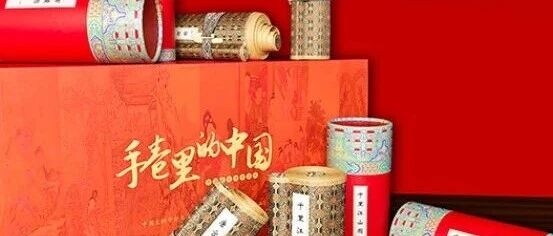
Core Viewpoint - The article emphasizes the significance of the "Top Ten Masterpieces of Chinese Calligraphy and Painting," highlighting their cultural and historical value as treasures of Chinese civilization [1][3][8]. Group 1: Overview of the Top Ten Masterpieces - The "Top Ten Masterpieces of Chinese Calligraphy and Painting" includes renowned works such as "The Nymph of the Luo River," "A Thousand Li of Rivers and Mountains," "Along the River During the Qingming Festival," "Dwelling in the Fuchun Mountains," "Spring Dawn in the Han Palace," "The Hundred Horses," "The Court Ladies of the Tang Dynasty," "The Five Cattle," "The Night Banquet of Han Xizai," and "The Step on the Throne" [4][25][28]. Group 2: Cultural Significance - These ten paintings embody the unique artistic spirit of ancient Chinese culture, capturing the rich history and beautiful landscapes of China over thousands of years [6][8][10]. - They are regarded as masterpieces of Chinese civilization, representing a high point in the history of Chinese art and serving as a testament to the country's cultural heritage [8][10]. Group 3: Accessibility and Preservation - Access to these masterpieces is limited, with significant challenges in viewing the original works due to their preservation needs and the rarity of exhibitions [11][14][17]. - The article discusses the difficulties in restoring ancient paintings, noting that even experts must take precautions when handling these delicate works [11][13]. Group 4: The "Handscroll of China" Collection - The "Handscroll of China" collection features high-quality reproductions of the ten masterpieces, allowing more people to appreciate these national treasures [21][24]. - This collection is produced under the supervision of the Chinese Cultural Relics Society, utilizing advanced reproduction techniques to ensure high fidelity to the originals [30][35]. Group 5: Features of the Collection - The collection boasts five key features: authoritative supervision, high-definition reproduction, equal proportion restoration, limited official release, and accompanying certification, making it a valuable collectible [30][78]. - Each piece in the collection is crafted with care, using traditional materials and methods to replicate the original artworks closely [42][73]. Group 6: Historical Context - The ten masterpieces span from the Eastern Jin to the Northern Song dynasties, with some dating back nearly 1800 years, reflecting the depth of Chinese history and culture [84][85]. - Each painting carries a rich historical narrative, contributing to its status as a national treasure [85][116].

中国十大名画,一套集齐!收藏界都惊了
凤凰网财经· 2025-10-31 12:34
Core Viewpoint - The article emphasizes the significance of the "Top Ten Masterpieces of Chinese Calligraphy and Painting," highlighting their cultural and historical value as treasures of Chinese civilization [1][3][8]. Group 1: Overview of the Top Ten Masterpieces - The "Top Ten Masterpieces of Chinese Calligraphy and Painting" includes renowned works such as "Lo Shen Fu Tu," "Qian Li Jiang Shan Tu," "Qing Ming Shang He Tu," "Fu Chun Shan Ju Tu," "Han Gong Chun Xiao Tu," "Bai Jun Tu," "Bu Nian Tu," "Hui Shan Shi Nu Tu," "Wu Niu Tu," and "Han Xi Zai Ye Yan Tu" [4][24]. - These masterpieces are considered the pinnacle of ancient Chinese art, embodying the unique artistic spirit of the Chinese nation and reflecting thousands of years of history and culture [6][8][28]. Group 2: Cultural and Historical Significance - The article describes these paintings as "living history" and "silent symphonies," representing the heights of Chinese art history and serving as cultural landmarks [8][10]. - The masterpieces are rare treasures, with each piece being a product of meticulous craftsmanship and historical significance, dating from the Eastern Jin to the Northern Song dynasties [28][84]. Group 3: Accessibility and Preservation - Access to these artworks is limited, with exhibitions occurring infrequently, making it a once-in-a-lifetime opportunity for many to view them in person [14][17]. - The article discusses the challenges of preserving ancient paintings, noting that restoration efforts can lead to damage, and viewing them online often results in a loss of detail and color accuracy [11][13]. Group 4: The "Handscroll of China" Collection - The "Handscroll of China" collection features high-quality reproductions of the ten masterpieces, allowing more people to appreciate these national treasures [21][30]. - This collection is produced under the supervision of the Chinese Cultural Relics Association, utilizing advanced reproduction techniques to ensure high fidelity to the original works [30][35]. Group 5: Features of the Collection - The collection boasts five key features: authoritative supervision, high-definition reproduction, full-length restoration, limited official release, and accompanying certification, making it a valuable collectible [30][78]. - Each reproduction is crafted with care, using materials that closely match the originals, and is presented in a high-quality gift box, enhancing its aesthetic and collectible value [45][73].
被特批在故宫拍照,气场全开,网友:中国美绝了
凤凰网财经· 2025-05-23 12:51
Core Viewpoint - The article emphasizes the cultural and historical significance of the Forbidden City, highlighting its architectural beauty and the rich history behind its artifacts, while promoting a special book that encapsulates this heritage. Group 1: Cultural Significance - The colors red, yellow, and blue symbolize the grandeur and history of the Forbidden City, representing 600 years of imperial legacy and timeless craftsmanship [2][4]. - The Forbidden City is not just an architectural marvel but a living history of Chinese civilization, housing 1.86 million artifacts that reflect the aesthetic values and artistic achievements of ancient China [15][18]. Group 2: Historical Narratives - The article recounts poignant historical moments, such as Emperor Shunzhi's grief for his wife and Emperor Yongzheng's dedication to his work, illustrating the human stories behind the palace [6][9][11]. - It critiques the portrayal of the Forbidden City in media, which often focuses on sensationalized narratives, overshadowing the true historical depth and the significance of its collections [14][15]. Group 3: Book Promotion - A special book titled "The Most Beautiful Forbidden City" is introduced, featuring a comprehensive collection of artifacts from four major palaces, aiming to provide an immersive experience of Chinese art and history [27][28]. - The book is presented as a lifelong treasure, designed to enhance understanding of architectural aesthetics and Eastern art, making it suitable for both personal enjoyment and as a gift [30][71]. Group 4: Visual and Artistic Value - The book includes over 400 representative works, showcasing the evolution of Chinese aesthetics from various dynasties, and is described as a visual feast that captures the essence of Chinese culture [115][139]. - It features high-quality reproductions and detailed photography, allowing readers to appreciate the intricate details of the artifacts and artworks [142][146]. Group 5: Accessibility and Pricing - The book is offered at a promotional price of 399 yuan, significantly lower than its original price of 1298 yuan, making it more accessible to a wider audience [63][160]. - Additional gifts are included with the purchase, enhancing the value proposition for potential buyers [67][164].