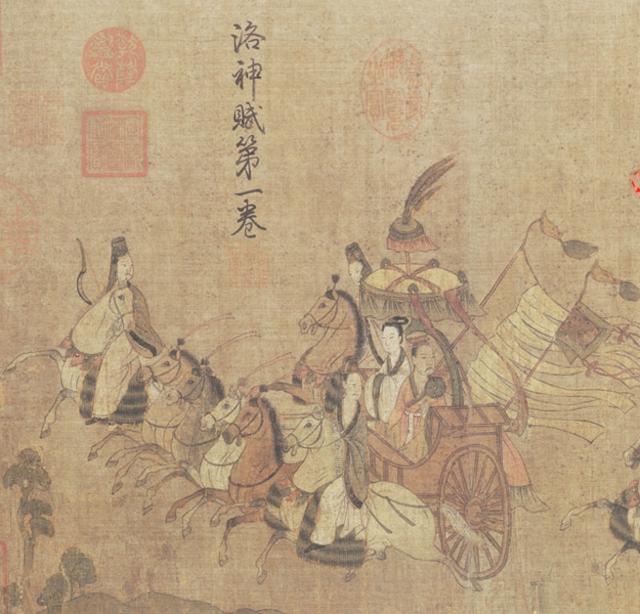
《洛神赋图》

Search documents
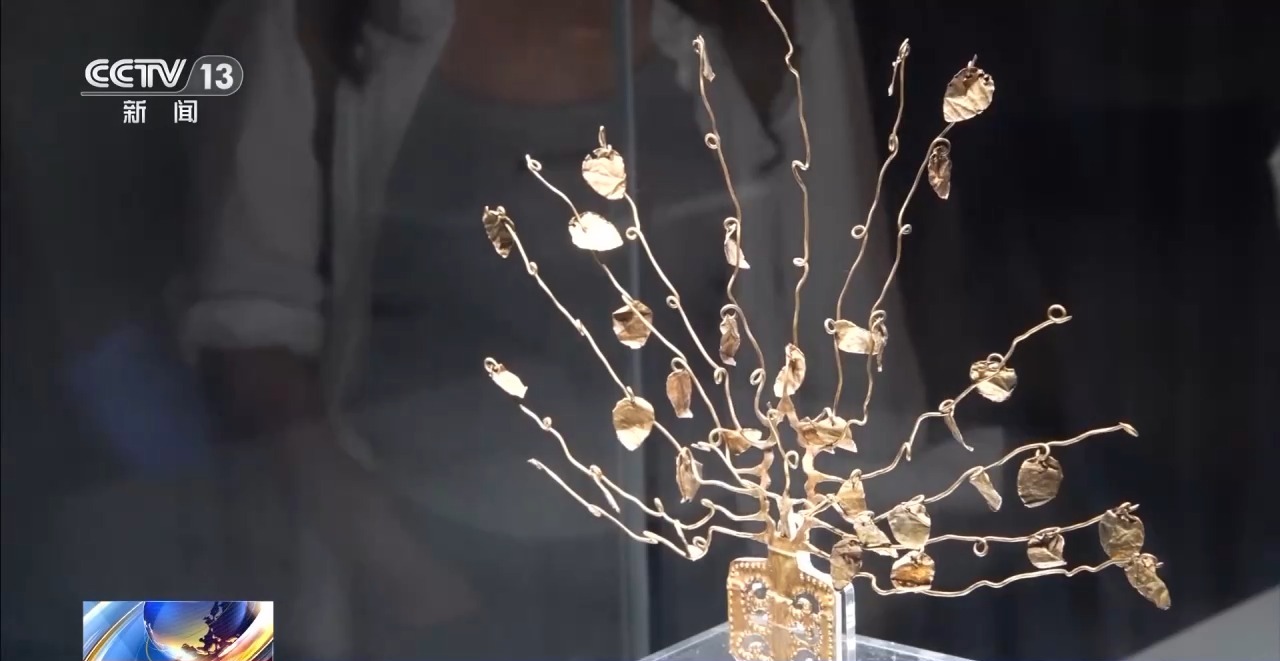
从博物馆到美术馆 跃马扬鞭踏进马年
Xin Lang Cai Jing· 2026-02-25 17:54
Core Viewpoint - The article highlights the significance of horses in Chinese culture, history, and art, emphasizing their role as symbols of power, vitality, and cultural identity throughout various dynasties and eras [2][4][15]. Group 1: Historical Significance of Horses - Horses have been integral to human civilization since their domestication, serving as partners in hunting and migration, with archaeological evidence dating back 45,000 years [2]. - In ancient China, horses were considered vital for agriculture and warfare, being included in sacrificial rites and depicted in various historical artifacts [2][3]. - The importance of horses is reflected in historical texts, where they are described as essential to national strength and military capability [2][4]. Group 2: Cultural Representations of Horses - The artistic representation of horses spans from ancient rock paintings to modern artworks, showcasing their significance in various cultural contexts [9][12]. - Notable examples include the "Copper Galloping Horse" from the Han Dynasty, which exemplifies advanced bronze casting techniques and symbolizes the spirit of the era [3][4]. - The depiction of horses in literature and art reflects their multifaceted roles in society, from symbols of nobility to representations of everyday life [11][15]. Group 3: Horses in Folklore and Beliefs - Horses are deeply embedded in Chinese mythology and folklore, often associated with auspicious meanings and cultural practices, such as the zodiac [13][14]. - The concept of horses as protectors and symbols of good fortune is prevalent in various cultural artifacts, including decorations and games [14][15]. - The integration of horses into daily life and celebrations illustrates their enduring significance in Chinese culture, representing vitality and progress [15].
记者来信:辽宁春晚,如何以匠心打造文化年味?
Xin Hua Wang· 2026-02-25 01:26
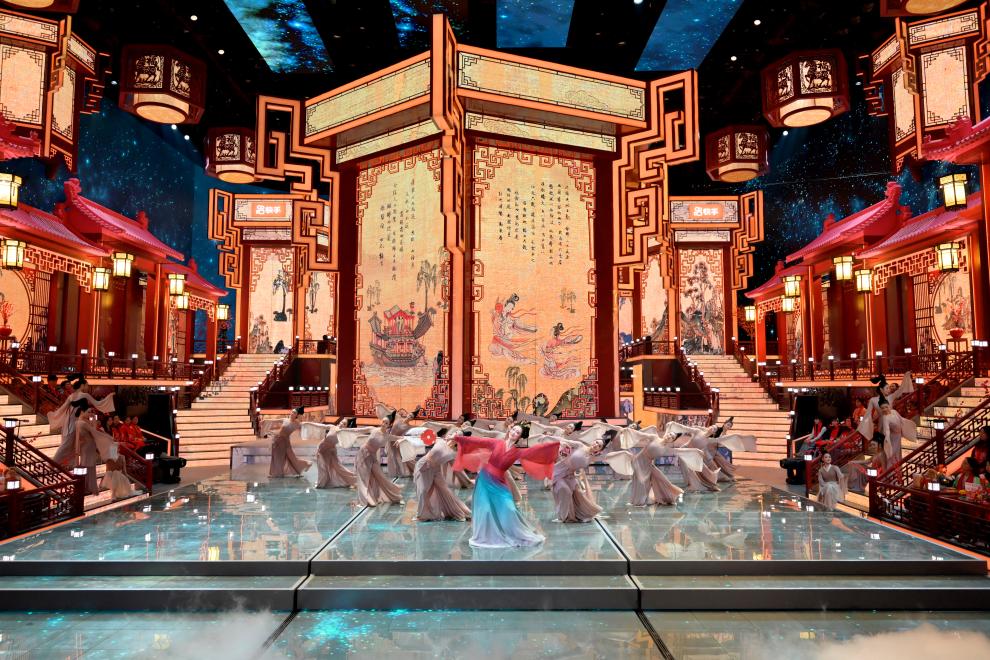
Core Viewpoint - The Liaoning Spring Festival Gala has evolved into a significant cultural phenomenon, showcasing a blend of traditional and innovative performances that resonate with audiences, particularly through its emphasis on humor and regional culture [1][2][6]. Group 1: Program Highlights - The gala features a strong emphasis on language-based programs, which account for over 60% of the performances, continuing its reputation as a "comedy stronghold" [1]. - Notable performances include "Hello, Dad" addressing educational anxiety, "Night Market New Star" depicting urban warmth, and "Integrity is Fundamental" emphasizing the importance of honesty in business [1]. - The integration of XR technology in the dance "Lo Shen Fu Tu" brings traditional art to life, enhancing audience experience through interactive elements [2]. Group 2: Cultural Significance - The gala has increasingly incorporated unique regional cultural elements, such as recreating the Liao Dynasty mural "San Yue Tu" and drawing inspiration from archaeological sites for future performances [2]. - The rebranding from "Liaoshi Chunwan" to "Liaoning Chunwan" signifies a shift towards a broader cultural representation of the province, moving away from a media-centric identity [6]. Group 3: Audience Reception and Future Challenges - The gala has received positive feedback for its heartfelt and innovative approach, reflecting the audience's appreciation for its cultural significance and emotional resonance [6]. - Challenges remain in continuously producing fresh comedic content, integrating advertisements more naturally, and nurturing new comedic talent while maintaining the essence of the gala [6].

中国绘画“常青树”!马的艺术形象变化勾勒出深邃文化内涵
Xin Lang Cai Jing· 2026-02-16 22:32
Core Perspective - The article explores the cultural significance of horses in Chinese art, illustrating how the representation of horses has evolved through different life stages and artistic expressions, reflecting deeper cultural values and human experiences [1][10][12]. Group 1: Historical and Cultural Significance - Horses have been a prominent symbol in Chinese art for over 15,000 years, representing identity, power, and spiritual values [1]. - The evolution of horse imagery in Chinese art mirrors the cultural memory and character of the Chinese people, transcending their biological attributes [1][9]. - Early artistic representations of horses, such as those in the Yinshan rock paintings, emphasize a raw, instinctual connection to nature, similar to children's imaginative depictions [8]. Group 2: Children's Perception of Horses - Children view horses as magical and pure beings, often depicted in vibrant colors and whimsical contexts, such as in fairy tales and games [6][7]. - Their artistic expressions of horses lack burdens and constraints, focusing instead on freedom and joy, reflecting their emotional projections [7][10]. Group 3: Horses in Different Life Stages - As individuals mature, their perception of horses shifts from whimsical companions to symbols of responsibility and ideals, embodying qualities like loyalty and perseverance [10][12]. - Artistic representations of horses in adulthood, such as in works by Han Gan and Li Gonglin, highlight their practical value and aesthetic beauty, reflecting the realities of life [10][11]. Group 4: Modern Interpretations - In modern times, the portrayal of horses has transitioned from practical utility to a representation of contemporary ideals, as seen in Xu Beihong's works, which combine Western techniques with traditional Chinese aesthetics [11][17]. - Xu Beihong's horse paintings serve as a spiritual symbol of resilience and hope during challenging times in Chinese history, reflecting the national spirit [18][19].
《辽视春晚》:科技文化交织 幽默语言演绎东北时代脉动
Xin Lang Cai Jing· 2026-02-16 05:41
Core Viewpoint - The 2026 Liaoning Spring Festival Gala showcases a blend of traditional culture and modern innovation, reflecting the spirit of Liaoning and its cultural significance both locally and globally [1][2][3] Group 1: Cultural Impact - The Liaoning Spring Festival Gala has evolved over 40 years, becoming a classic brand that resonates with audiences, symbolizing the cultural aspirations and emotional connections of viewers [1] - The gala's viewership peaked at 4.338%, making it the top-rated program in its time slot across national channels [1] Group 2: Program Highlights - Language programs dominate the gala, making up over 60% of the content, with notable performances from comedians like Gong Hanlin and Ju Hao, addressing current social issues [1] - Innovative performances include classical dancers bringing museum artifacts to life and a collaboration between former basketball coach Yang Ming and a humanoid robot, showcasing Liaoning's cultural heritage and innovative spirit [2] Group 3: Thematic Elements - The gala emphasizes a message of progress and warmth, symbolized by the recurring "horse element," representing Liaoning's determination on its path to revitalization [3] - The event aims to present a multidimensional portrayal of Liaoning's identity, balancing its rich history with an openness to new ideas and innovations [2]
中国十大名画,一套集齐!收藏界都惊了
凤凰网财经· 2026-01-14 13:05
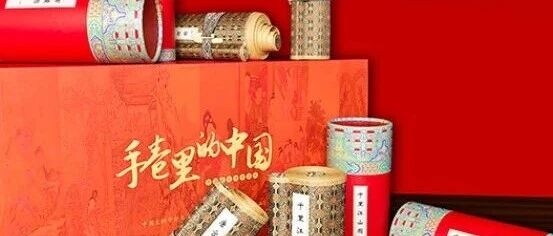
Core Viewpoint - The article emphasizes the significance of the "Top Ten Masterpieces of Chinese Calligraphy and Painting," highlighting their cultural and historical value as treasures of Chinese civilization [1][3][8]. Group 1: Overview of the Top Ten Masterpieces - The "Top Ten Masterpieces of Chinese Calligraphy and Painting" includes renowned works such as "The Nymph of the Luo River," "A Thousand Li of Rivers and Mountains," "Along the River During the Qingming Festival," "Dwelling in the Fuchun Mountains," "Spring Dawn in the Han Palace," "The Hundred Horses," "The Court Ladies of the Tang Dynasty," "The Five Cattle," "The Night Banquet of Han Xizai," and "The Step on the Throne" [4][25][28]. Group 2: Cultural Significance - These ten paintings embody the unique artistic spirit of ancient Chinese culture, capturing the rich history and beautiful landscapes of China over thousands of years [6][8][10]. - They are regarded as masterpieces of Chinese civilization, representing a high point in the history of Chinese art and serving as a testament to the country's cultural heritage [8][10]. Group 3: Accessibility and Preservation - Access to these masterpieces is limited, with significant challenges in viewing the original works due to their preservation needs and the rarity of exhibitions [11][14][17]. - The article discusses the difficulties in restoring ancient paintings, noting that even experts must take precautions when handling these delicate works [11][13]. Group 4: The "Handscroll of China" Collection - The "Handscroll of China" collection features high-quality reproductions of the ten masterpieces, allowing more people to appreciate these national treasures [21][24]. - This collection is produced under the supervision of the Chinese Cultural Relics Society, utilizing advanced reproduction techniques to ensure high fidelity to the originals [30][35]. Group 5: Features of the Collection - The collection boasts five key features: authoritative supervision, high-definition reproduction, equal proportion restoration, limited official release, and accompanying certification, making it a valuable collectible [30][78]. - Each piece in the collection is crafted with care, using traditional materials and methods to replicate the original artworks closely [42][73]. Group 6: Historical Context - The ten masterpieces span from the Eastern Jin to the Northern Song dynasties, with some dating back nearly 1800 years, reflecting the depth of Chinese history and culture [84][85]. - Each painting carries a rich historical narrative, contributing to its status as a national treasure [85][116].
看见艺术中流淌的生命力
Ren Min Ri Bao· 2025-12-04 22:24
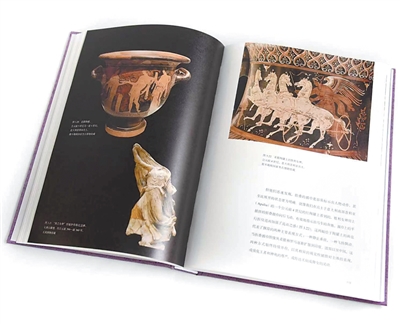
Core Perspective - The book "Vivid: Discovering Art in Roaming" by Wu Hong explores the concept of "vivid art," which possesses intrinsic vitality that resonates with viewers [2] Group 1: Artistic Elements - The author highlights the significance of the element of "flowing ribbons" in traditional Chinese art, which conveys a sense of movement and life in otherwise static images [3] - Examples include the "人物御龙图" from the Warring States period, where the ribbons create a dynamic effect, and the "洛神赋图," where the flowing shawl adds ethereal quality to the figure [3] Group 2: Invisible Elements - The second part of the book, "Wind," focuses on the invisible elements in art, such as the representation of wind, which artists make visible through their brushwork [4] - Notable examples include Botticelli's "The Birth of Venus," where wind animates the goddess's hair and garments, and the "升仙图" mural, where the wind affects the figure's hair and robe [4] Group 3: Emotional Depth - The combination of figures and dynamics in art evokes invisible emotions, particularly the profound expression of grief related to death across different cultures [5] - The book compares various cultural representations of mourning, revealing a surprising similarity in emotional expression despite diverse backgrounds [5] Group 4: Cross-Cultural Perspective - Wu Hong employs a cross-cultural approach, transcending traditional boundaries in art history, encouraging a more inclusive and open-minded appreciation of art [6] - This artistic journey represents a self-breakthrough in Wu Hong's decades of academic research, inviting readers to discover and feel the "transcultural and transhistorical" connections in art [6]
中国十大名画,一套集齐!收藏界都惊了
凤凰网财经· 2025-10-31 12:34
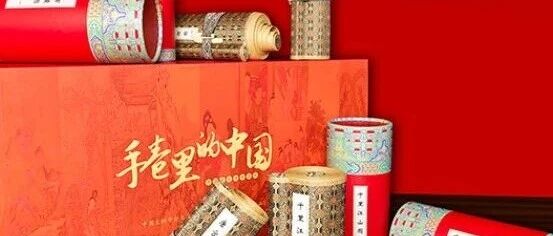
Core Viewpoint - The article emphasizes the significance of the "Top Ten Masterpieces of Chinese Calligraphy and Painting," highlighting their cultural and historical value as treasures of Chinese civilization [1][3][8]. Group 1: Overview of the Top Ten Masterpieces - The "Top Ten Masterpieces of Chinese Calligraphy and Painting" includes renowned works such as "Lo Shen Fu Tu," "Qian Li Jiang Shan Tu," "Qing Ming Shang He Tu," "Fu Chun Shan Ju Tu," "Han Gong Chun Xiao Tu," "Bai Jun Tu," "Bu Nian Tu," "Hui Shan Shi Nu Tu," "Wu Niu Tu," and "Han Xi Zai Ye Yan Tu" [4][24]. - These masterpieces are considered the pinnacle of ancient Chinese art, embodying the unique artistic spirit of the Chinese nation and reflecting thousands of years of history and culture [6][8][28]. Group 2: Cultural and Historical Significance - The article describes these paintings as "living history" and "silent symphonies," representing the heights of Chinese art history and serving as cultural landmarks [8][10]. - The masterpieces are rare treasures, with each piece being a product of meticulous craftsmanship and historical significance, dating from the Eastern Jin to the Northern Song dynasties [28][84]. Group 3: Accessibility and Preservation - Access to these artworks is limited, with exhibitions occurring infrequently, making it a once-in-a-lifetime opportunity for many to view them in person [14][17]. - The article discusses the challenges of preserving ancient paintings, noting that restoration efforts can lead to damage, and viewing them online often results in a loss of detail and color accuracy [11][13]. Group 4: The "Handscroll of China" Collection - The "Handscroll of China" collection features high-quality reproductions of the ten masterpieces, allowing more people to appreciate these national treasures [21][30]. - This collection is produced under the supervision of the Chinese Cultural Relics Association, utilizing advanced reproduction techniques to ensure high fidelity to the original works [30][35]. Group 5: Features of the Collection - The collection boasts five key features: authoritative supervision, high-definition reproduction, full-length restoration, limited official release, and accompanying certification, making it a valuable collectible [30][78]. - Each reproduction is crafted with care, using materials that closely match the originals, and is presented in a high-quality gift box, enhancing its aesthetic and collectible value [45][73].
暑期探馆打卡“热”,这些文物和展览值得细细品鉴!
Yang Shi Wang· 2025-07-19 07:03
Group 1: Museum Visitor Trends - Various museums, including the Liaoning Provincial Museum and Xinjiang Museum, are experiencing a surge in visitor numbers during the summer vacation period, with the Liaoning Provincial Museum averaging nearly 15,000 visitors on recent weekdays [1][6] - The Chengdu Museum has received over 20 million visitors since its new building opened in 2016, indicating its popularity as a cultural destination [11] Group 2: Notable Exhibits and Cultural Significance - The Liaoning Provincial Museum features significant artifacts such as the jade pig dragon, a symbol of the Hongshan culture, showcasing the importance of jade craftsmanship in ancient times [1][3] - The Xinjiang Museum's new exhibition on ancient Chinese musical instruments includes over 200 representative artifacts, enhancing cultural appreciation through interactive experiences [8] - Chengdu's unique offerings include a variety of interactive experiences at the Chengdu Museum and the Sichuan Cuisine Museum, which features over 6,000 artifacts related to the history of Sichuan cuisine [13][15] Group 3: Innovative Exhibition Formats - The Liaoning Provincial Museum has launched a high-tech immersive digital exhibition titled "Tang and Song Elegance," allowing visitors to engage with national treasures through digital means [4][6] - Xinjiang Museum is utilizing advanced technologies such as AI and interactive displays to enhance visitor engagement and understanding of historical artifacts [8] Group 4: Extended Access and Visitor Engagement - To accommodate increased summer visitors, the Liaoning Provincial Museum has extended its hours from July 1 to August 31, remaining open an additional hour each day [6] - The Sichuan Cuisine Museum offers bilingual guides and tax refund services for international visitors, enhancing the overall visitor experience [13][15]