《锦衣卫之刀与花》

Search documents
人民日报记者三问音乐剧市场活力密码
Ren Min Ri Bao· 2026-01-22 02:09
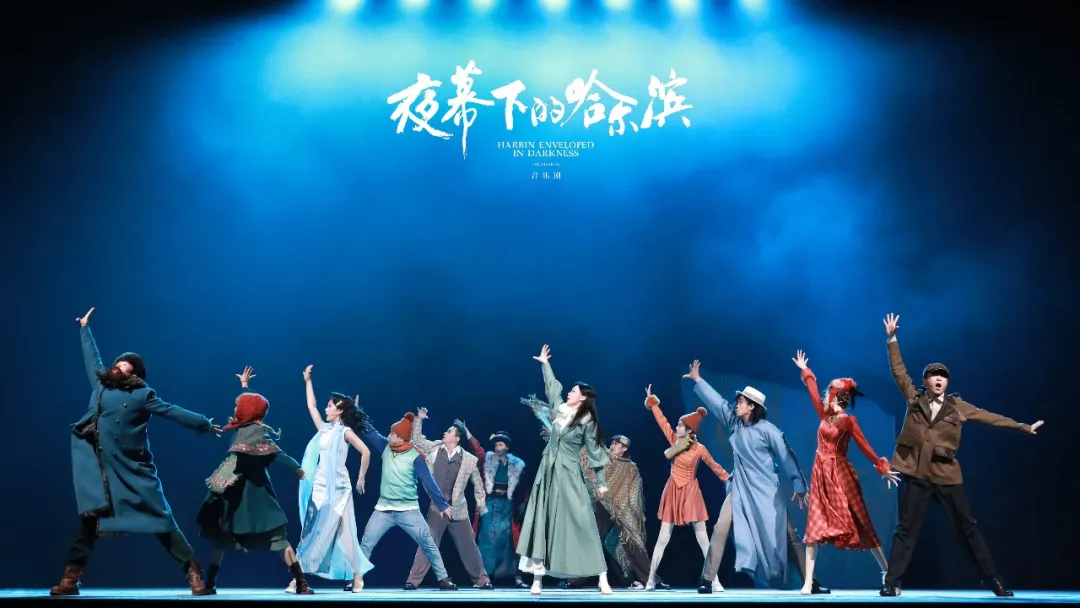
Core Insights - The Chinese musical theater market has seen significant growth, with ticket sales increasing by over 300% from approximately 600 million yuan in 2019 to 1.807 billion yuan in 2025, indicating a robust demand for this art form [3][5]. - The market is now evenly split between original Chinese musicals and imported productions, reflecting a surge in the quality and quantity of domestic creations [6][8]. - The audience demographic is predominantly young, with nearly 80% of attendees being under 35 years old, highlighting a shift in cultural consumption patterns [1][4]. Group 1: Market Growth - The number of performances has increased by 15.04% year-on-year, while box office revenue has grown by 7.55% [1]. - The rise of immersive theater spaces in Shanghai has contributed to the growth of the musical theater sector, with over 90% of resident projects in key areas being musicals [3]. Group 2: Original vs. Imported Musicals - Six years ago, imported musicals dominated the market with a 90% share, but now original Chinese musicals and imported versions each hold about half of the market [6]. - Notable original productions include "Searching for Li Er Gou" and "Under the Nightfall in Harbin," which have received acclaim for their quality and innovative storytelling [6][8]. Group 3: Audience Engagement and Trends - The trend of "chasing casts" and "collecting cards" among audiences reflects a unique aspect of musical theater, where the popularity of specific actors can drive ticket sales [10]. - The industry is still in its early stages, with a need for improved quality in both productions and performers, as well as a focus on deeper artistic and thematic exploration [11]. Group 4: Future Prospects - The overall box office for live performances in China is projected to exceed 60 billion yuan by 2025, with musicals representing a small but growing segment of this market [5]. - Initiatives like the "Tianqiao No. 1" project aim to establish a comprehensive ecosystem for musical theater, including the development of small theaters and artistic districts [11].

去年全国营业性演出票房收入超616亿元
Xin Lang Cai Jing· 2026-01-13 21:57
Group 1 - The core viewpoint of the articles indicates that the Chinese performance market is experiencing robust growth, with significant increases in both the number of performances and box office revenue for 2025 [1][2] - The total number of commercial performances in China for 2025 is projected to reach 640,400, representing a year-on-year growth of 6.58% [1] - Box office revenue for the same year is expected to be 61.655 billion yuan, reflecting a year-on-year increase of 6.39% [1] Group 2 - Large-scale performances (over 5,000 attendees) are anticipated to generate box office revenue of 32.448 billion yuan in 2025, driven by supportive local policies and the integration of performance projects with regional tourism [1] - The musical theater segment is expected to see a box office revenue increase of 7.55% in 2025, highlighting a growing market for this art form [2] - The tourism performance sector is projected to achieve box office revenue of 17.442 billion yuan in 2025, indicating its significance in the overall performance market [2]
2025年全国营业性演出票房收入超616亿元
Xin Hua Wang· 2026-01-13 10:03
Core Insights - The Chinese performance industry is experiencing robust growth, with a projected 640,400 performances and ticket revenue of 61.655 billion yuan in 2025, reflecting year-on-year increases of 6.58% and 6.39% respectively [1] Group 1: Market Overview - The large-scale performance market (over 5,000 attendees) is expected to generate ticket revenue of 32.448 billion yuan in 2025, driven by supportive local policies and the integration of performance projects with regional tourism [1] - The "ticket economy" is enhancing consumer willingness to spend, positioning large performances as a significant driver of local cultural and tourism consumption [1] Group 2: Artistic Trends - The market for stage arts is showing a high degree of commercialization, with musical theater ticket revenue projected to grow by 7.55% in 2025 [1] - Mainstream themes in productions are becoming more vibrant, with works like "Finding Li Ergou" and "Under the Night in Harbin" showcasing high-quality performances that enrich the cultural landscape [1] - Traditional cultural elements are gaining popularity, with national style musicals such as "The Knight and the Flower" and "The Great Status King" resonating with audiences [1] Group 3: Theatre and Tourism Performances - The drama market is characterized by a dual approach of classic adaptations and original contemporary themes, with new productions like "Romance of the Three Kingdoms" and "Peony Pavilion" gaining market attention [2] - The ticket revenue for large and medium-sized tourism performances is projected to reach 17.442 billion yuan in 2025, with innovative elements like drones and fireworks enhancing audience engagement [2] - The integration of national trend IPs with cultural tourism is revitalizing traditional arts, making them more appealing to modern audiences [2]
活动报名|去西岸大剧院,和《锦衣卫之刀与花》导演主演面对面
Xin Lang Cai Jing· 2025-12-30 08:38
Core Insights - The musical "Jinyiwei: Blade and Flower" has become a phenomenon in the performance market, achieving 109 sold-out shows nationwide, with its 100th performance scheduled at the West Bank Grand Theatre starting December 23 [1][3] - A significant discussion event featuring director Liu Xiaoyi, actors Zhang Zhihan and Xu Zehui, and historian Huang Amin will take place on December 31, focusing on the themes of the musical and its emotional resonance across time [1][6] Summary by Sections Performance Highlights - The musical is set against the backdrop of the "Ming Ping Han Wang Gao Kuang Rebellion," creating a tension-filled and poetic world [3] - The story follows a grassroots character, Feng Wuyang, who inadvertently becomes involved with the Jinyiwei and faces a fate intertwined with a conspiracy involving the Han Wang and Mei Shuanghua [3] - The production features a "dual male lead" format and incorporates a "group + national style" creative approach, breaking the traditional "standing and singing" format of domestic musicals [3] Artistic Elements - The musical combines martial arts, folk dance, classical dance, and modern dance, enhancing emotional expression through dynamic physicality [3] - The stage design employs "new Chinese aesthetics," integrating traditional mortise and tenon structures, ink wash projections, and modern lighting technology [3] - The themes of "blade" representing responsibility and "flower" symbolizing the original intention are explored, addressing the timeless question of how to maintain one's core values in chaotic times [3] Discussion Event Insights - Liu Xiaoyi will discuss the balance between historical accuracy and creative expression, particularly how the design of "blade and flower" conveys the protagonist's internal conflicts [5] - Huang Amin will challenge the singular perception of the Jinyiwei, exploring the intertwining of national duty and personal emotion in historical narratives [5] - Zhang Zhihan will share insights from the perspective of Feng Wuyang, illustrating the growth of a grassroots hero through performance nuances [5] - Xu Zehui will delve into the character of Han Wang, portraying the internal struggles of a powerful figure consumed by ambition [5]

贷款8万看剧,饭圈正在捧杀音乐剧
3 6 Ke· 2025-12-22 09:20
Core Insights - The musical theater market in China is experiencing significant growth, with box office revenue increasing by 15.1% year-on-year in the first half of 2025, as reported by the China Performance Industry Association [1] - Popular productions include the new national style musical "Jinyiwei: Knife and Flower," the well-received "The King’s Speech," the French musical "Les Misérables," and others, indicating a strong trend in audience engagement and ticket sales [1] - However, the market faces challenges such as a chaotic secondary ticketing market, which benefits scalpers and frustrates genuine fans, as well as a trend where producers prioritize marketing over quality production, potentially alienating broader audiences [1] Ticketing and Scalping Issues - The influx of scalpers into the booming musical theater market has led to ticketing chaos, with tickets for popular shows like "Les Misérables" selling out quickly and being resold at a premium of 300-500 yuan, with some front-row seats marked up by over 3000 yuan [2] - Fans are resorting to extreme measures, such as hiring individuals to queue for tickets, highlighting the desperation to secure seats for popular performances [2] Fraud and Scams - The rise of ticket scalping has been accompanied by an increase in fraudulent activities, with scammers posing as fans to trick others into transferring money for tickets that do not exist [4][5] - A case involving a fan who was scammed out of money for tickets illustrates the sophisticated tactics used by these fraudsters, including creating a false identity and leveraging the trust within the fan community [7] Stage Door (SD) Culture - The Stage Door (SD) experience, originally intended for post-show interactions between fans and actors, has devolved into a chaotic scene where fans prioritize meeting actors over watching the performances [10][11] - This shift has led to complaints about disorderly conduct and has prompted some theaters to implement stricter access controls to maintain order [11] Audience Dynamics and Market Trends - The audience for musicals is predominantly female, with their spending on musical theater increasing from 77.4% in 2019 to 88.5% projected for the first half of 2025, significantly higher than the industry average [20][21] - The focus on female audiences has influenced the content and marketing strategies of musical productions, often favoring male leads and neglecting other demographic groups [21] Quality and Content Concerns - The quality of musical productions varies, with many relying heavily on star power rather than artistic merit, leading to a perception that the market is more focused on short-term profits than long-term audience development [18][20] - Industry professionals express concerns that the current trend of prioritizing marketing and celebrity over quality content may not sustain the growth of the musical theater market in the long run [21]