《Vogue》

Search documents
2025年VOGUE的时尚商业叙事——市场下沉
Sou Hu Cai Jing· 2025-12-27 09:48
Core Insights - Condé Nast China faces significant challenges, including the loss of key publications and a shift in market dynamics, necessitating a focus on improving commercial performance in the region [1][3] - The introduction of new sub-publications under the Vogue brand represents a strategic pivot to address market constraints and enhance brand influence [5][7] Group 1: Market Challenges - The departure of the publication "GQ" has severely impacted Condé Nast China's presence in the high-end male market, creating a gap in revenue sources [1] - The economic slowdown has led to more cautious brand budgets, shifting advertising logic from mere exposure to quantifiable ROI [1][3] - The flagship publication "Vogue" is constrained by content control from its New York headquarters, limiting the local team's creative freedom [3][10] Group 2: Strategic Initiatives - The launch of sub-publications like "Vogue Wellness," "Vogue Man," "Vogue Film," and "Vogue Art" is a strategic move to penetrate niche markets and diversify content offerings [5][7] - These sub-publications serve as a tactical response to the challenges faced by the main publication, allowing for greater flexibility in collaborations and expanding the pool of potential partners [9][10] Group 3: Operational Considerations - The decision to develop sub-publications rather than create entirely new brands is driven by cost and risk considerations, allowing for quicker market entry with lower investment [9][10] - The sub-publications can be seen as natural extensions of the Vogue brand, enabling more agile operations and content management [10] Group 4: Talent and Execution Challenges - The fashion media industry is experiencing a talent drain, with skilled professionals being attracted to tech companies and local brands that offer better compensation and creative environments [11] - The success of the sub-publication strategy hinges on the ability to attract and retain talent capable of navigating the new market dynamics while maintaining content quality [11][12] - The overarching challenge is to balance brand prestige with commercial flexibility, ensuring that the Vogue brand retains its high-end image while expanding its audience [12]


新任命!《Vogue》美国版史上首位编辑内容主管就位
2 1 Shi Ji Jing Ji Bao Dao· 2025-09-03 12:33
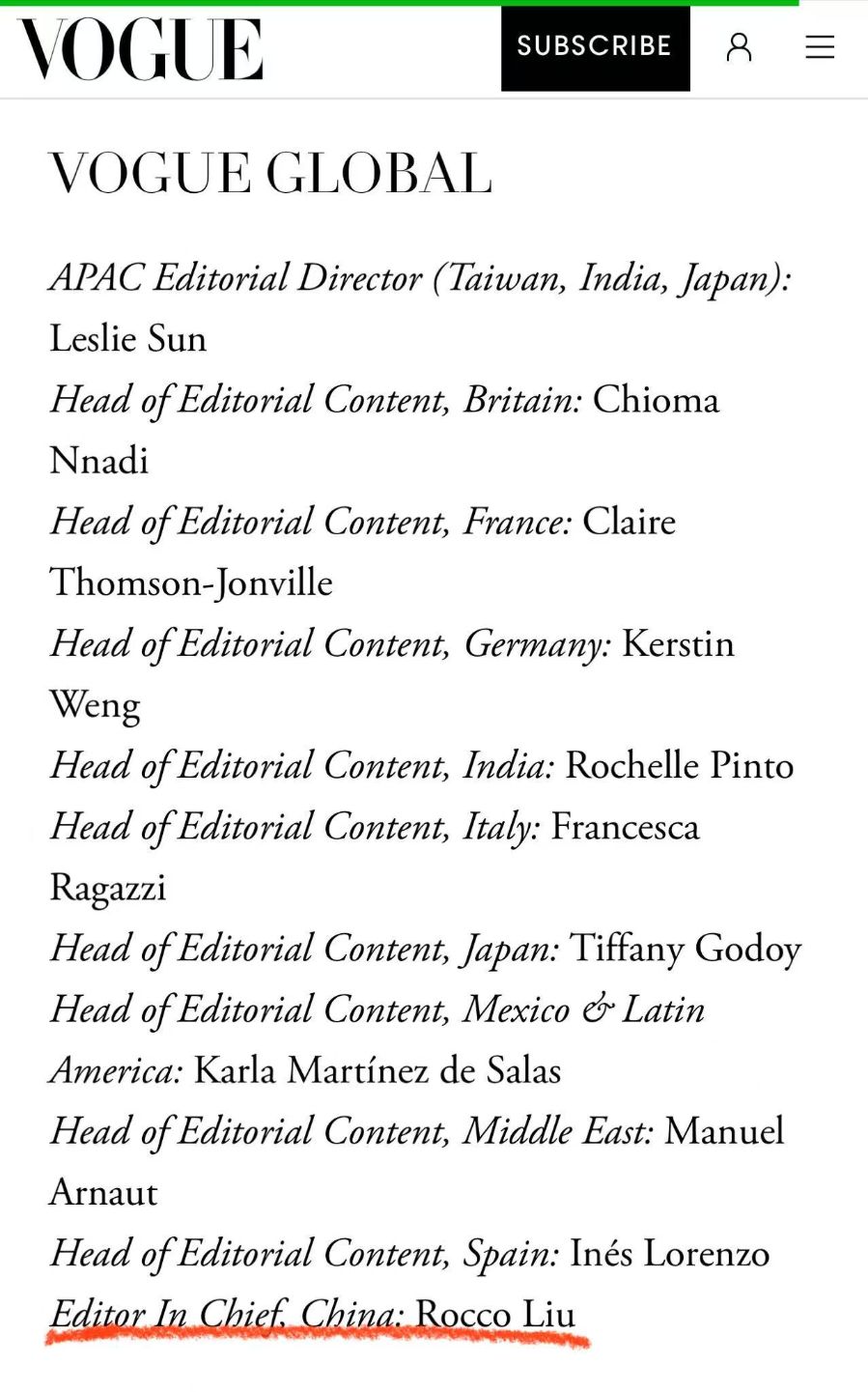
Core Insights - Condé Nast appointed Chloe Malle as the first Head of Editorial Content for the U.S. edition of Vogue, emphasizing cross-platform content production and operations, moving beyond traditional editorial roles [1][3] - Chloe Malle has been with Vogue since 2011, previously serving in various editorial roles, and is recognized as a key figure in merging the brand's traditional values with modern digital innovation [1][2] - The new title of Head of Editorial Content signifies a deeper reform in content management, allowing for integrated authority across platforms and departments, which is a departure from the traditional Editor-in-Chief role [3] Company Background - Condé Nast has unified its global editorial system under Anna Wintour's leadership since 2020, integrating brands like Vogue, GQ, and Vanity Fair to promote cross-market collaboration and content consistency [3] - The appointment of Chloe Malle reflects a broader trend within Condé Nast to adapt to the evolving media landscape, with a focus on commercial and platform integration [3] Industry Context - Chloe Malle's background as a "star kid" has sparked discussions about nepotism within elite circles, highlighting the intersection of personal connections and professional advancement in the fashion media industry [2] - The title of Head of Editorial Content is now used for Vogue leaders in various countries, indicating a shift towards a more commercialized and integrated media approach, with the exception of the China region where the title emphasizes traditional editorial leadership [3][5]
“时尚女魔头”卸任:社交媒体时代崩塌的权威
虎嗅APP· 2025-07-09 13:21
Core Viewpoint - The resignation of Anna Wintour as the editor-in-chief of American Vogue marks the end of an era in the fashion industry, highlighting the collapse of the traditional fashion authority in the digital age [5][7]. Group 1: Anna Wintour's Legacy - Anna Wintour has been a significant cultural symbol in the fashion industry for 37 years, representing the old guard of fashion authority [5][9]. - Under her leadership, Vogue became a powerful platform for discovering and promoting talent, influencing public perception of fashion [11][12]. - Despite her departure, Wintour remains a key figure as the Chief Content Officer of Condé Nast and Global Editorial Director of Vogue, still influencing the overall strategy [9]. Group 2: Financial Performance of Condé Nast - Condé Nast struggled financially before 2021, with total revenue around $2 billion in that year, and an estimated $1.2 billion attributed to Vogue [9]. - The company has faced challenges in meeting revenue targets in subsequent years, largely due to a decline in print advertising revenue over the past two decades [9]. Group 3: The Shift in Fashion Authority - The rise of social media has diminished the power of traditional fashion editors, as consumers now rely on influencers and peers for fashion guidance [21][25]. - The authority of fashion magazines has been questioned, with criticisms regarding systemic issues within the industry, including the treatment of models and the elitism of fashion events [23][24]. - The pandemic significantly impacted luxury advertising, leading to cost-cutting measures and layoffs within major publishing groups, further eroding the myth of the fashion editor's authority [25][26]. Group 4: Future of Fashion Media - Condé Nast has attempted to adapt by prioritizing mobile content and investing in events like Vogue World, but the financial success has come from less fashion-centric publications like The New Yorker [28]. - The future viability of fashion magazines may depend on their ability to leverage internet communities rather than traditional fashion content, as exemplified by the success of Reddit [28].

“时尚女魔头”卸任:社交媒体时代崩塌的权威
Hu Xiu· 2025-07-09 02:39
Core Viewpoint - The traditional fashion empire, represented by figures like Anna Wintour, is collapsing due to the rise of social media and changing consumer behaviors, leading to a reevaluation of who defines fashion today [2][17][18]. Group 1: Anna Wintour and Vogue's Influence - Anna Wintour has been a significant cultural symbol in the fashion industry, representing the traditional fashion authority [2][4]. - Under her leadership, Vogue has evolved, with the U.S. version being the most influential among its 28 international editions [3][5]. - Despite stepping down as editor-in-chief, Wintour remains a key figure in shaping Vogue's global strategy [4]. Group 2: Financial Performance of Condé Nast - Condé Nast faced financial struggles before 2021, with total revenue around $2 billion and Vogue contributing approximately $1.2 billion in revenue that year [5]. - The company has struggled to meet revenue targets in subsequent years, largely due to a decline in print advertising revenue [7][18]. Group 3: Changes in Fashion Consumption - The emergence of social media has diminished the authority of traditional fashion editors, as consumers now rely on influencers and peers for fashion insights [18][24]. - The pandemic significantly impacted luxury advertising, leading to cost-cutting measures within major publishing groups [24][27]. Group 4: Shift in Fashion Magazine Dynamics - Fashion magazines are increasingly seen as out of touch, struggling to communicate effectively with audiences accustomed to direct engagement with brands and influencers [19][25]. - The rise of a "fan economy" has shifted the focus from fashion itself to celebrity culture, affecting how magazines operate and engage with their audience [26][28]. Group 5: Future of Fashion Publications - Condé Nast is attempting to adapt by prioritizing mobile content and investing in events like Vogue World, but the financial success of its publications may rely more on non-fashion-related ventures [29][33]. - The success of platforms like Reddit, which has seen significant growth and profitability, highlights a potential shift in how fashion and culture are consumed and monetized [32][33].