时尚媒体

Search documents
瑞丽三十而“丽”:一场穿越时光的美力盛典
Xin Lang Cai Jing· 2026-01-29 12:38
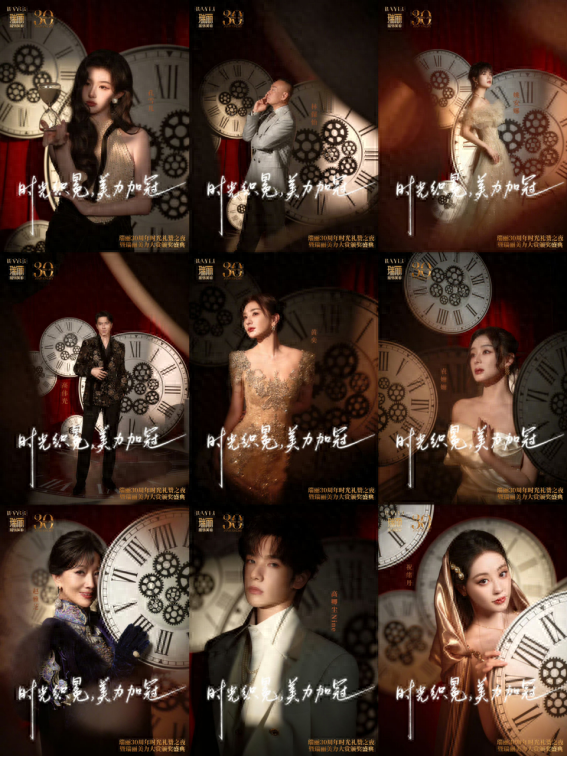
Core Viewpoint - The event "Ruili 30th Anniversary Celebration Night and Ruili Beauty Awards Ceremony" marks the 30-year journey of Ruili magazine, celebrating its evolution from a magazine to a comprehensive fashion media group, and its commitment to empowering Chinese women through beauty and aesthetics [1][3]. Group 1: Company Evolution - Ruili has transformed from a magazine into a full media fashion group, witnessing the evolution of Chinese women from "readers" to "creators" [3]. - The company aims to evolve into a "beauty ecosystem platform," focusing on discovering beauty value, constructing Chinese aesthetic discourse, and advocating for sustainable aesthetic lifestyles [3]. Group 2: Awards and Recognition - The ceremony honored industry figures, including Spring Nan, awarded as "Star Aesthetician," and Li Dongtian, recognized as "Aesthetic Art Master," for their contributions to beauty aesthetics [5]. - Founders Anna and Zhu Jun received the "Special Tribute Figures" award, acknowledging their role in pioneering a new fashion reading approach and maintaining quality in content [9][11]. - Various artists were recognized for their contributions, including Zhao Yazhi as a "Special Tribute Figure" and Lin Baoyi as a "Special Influence Figure," highlighting their enduring impact on the industry [11][14]. Group 3: Future Initiatives - The "Ruili Beauty Awards" were announced, focusing on brands and products that have led trends in fashion, beauty, and lifestyle over the past year [31]. - A capsule exhibition titled "Ruili 30th Anniversary Capsule Exhibition and Hepburn Exhibition: Eastern Reply" will take place, showcasing the evolution of beauty and fashion over the past 30 years [35][39].

GQ重启中国业务,此前停刊十八月
21世纪经济报道· 2026-01-16 14:58
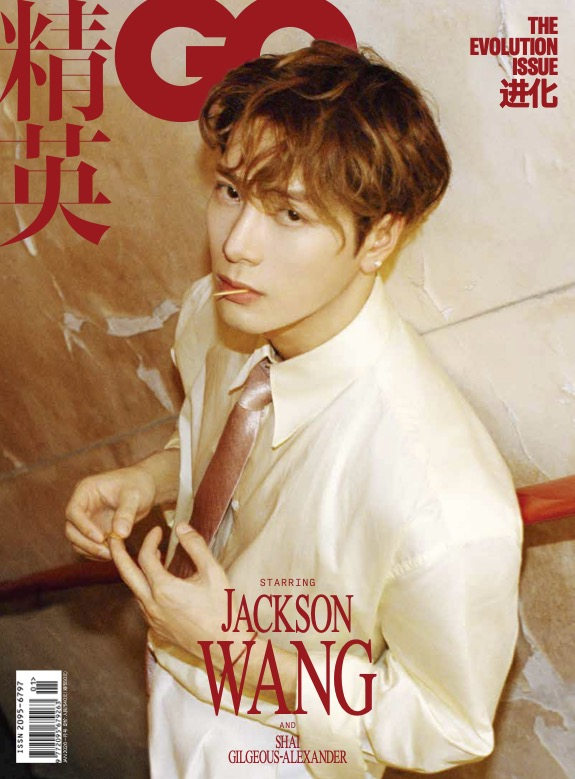
Core Viewpoint - The return of the Chinese edition of GQ, now titled "Elite GQ," marks a significant revival of the brand in China after an 18-month hiatus, with a focus on local creativity and cultural representation [1][6]. Group 1: Return of GQ - GQ China officially resumed publication on January 16, with the first issue featuring music artist Jackson Wang and NBA star Shai Gilgeous-Alexander on the cover [1][3]. - The brand's return follows a period of challenges, including the termination of a partnership with China News Service and the disbandment of its core team [5][6]. Group 2: Cultural Significance - The first issue of "Elite GQ" emphasizes the creativity of Chinese culture and fashion on an international stage, showcasing works from emerging Chinese menswear designers [8][9]. - Condé Nast's CEO Roger Lynch expressed confidence in the brand's potential in China, highlighting the importance of supporting and promoting Chinese culture [6][9]. Group 3: Market Position and Challenges - The magazine aims to re-establish its position in the industry, which it held since its inception in 2009, known for its in-depth reporting and high-quality content [5]. - Despite the challenges ahead, the leadership remains optimistic about the brand's ability to engage with both local and international audiences [6][9].
停刊十八月,GQ中国重启
2 1 Shi Ji Jing Ji Bao Dao· 2026-01-16 06:13
Core Viewpoint - The return of GQ China marks a significant revival of the brand after an 18-month hiatus, with a new partnership between Condé Nast and Southern Media Group, indicating a strong commitment to re-establishing its presence in the Chinese market [1][4]. Group 1: Brand Relaunch - GQ China officially announced its return on January 16, 2024, with the first issue featuring musician Jackson Wang and NBA star Shai Gilgeous-Alexander on the cover [1]. - The GQStudio WeChat account posted a message signaling the brand's determination to restart after facing challenges such as contract termination and team disbandment [3]. - The previous publication, "智族GQ," ceased operations due to the expiration of its partnership with China News Service, leading to a significant restructuring of its team and social media presence [4]. Group 2: Market Strategy - Condé Nast's CEO Roger Lynch expressed confidence in the brand's potential in China, emphasizing the importance of supporting and promoting Chinese culture [5]. - The first issue of "精英GQ" aims to showcase the creativity of Chinese culture and fashion on an international stage, featuring local designers and photographers [7]. - The publication is positioned to facilitate cross-cultural dialogue between Chinese culture and global fashion trends, highlighting the value of the Chinese market [7].
2025年VOGUE的时尚商业叙事——市场下沉
Sou Hu Cai Jing· 2025-12-27 09:48
Core Insights - Condé Nast China faces significant challenges, including the loss of key publications and a shift in market dynamics, necessitating a focus on improving commercial performance in the region [1][3] - The introduction of new sub-publications under the Vogue brand represents a strategic pivot to address market constraints and enhance brand influence [5][7] Group 1: Market Challenges - The departure of the publication "GQ" has severely impacted Condé Nast China's presence in the high-end male market, creating a gap in revenue sources [1] - The economic slowdown has led to more cautious brand budgets, shifting advertising logic from mere exposure to quantifiable ROI [1][3] - The flagship publication "Vogue" is constrained by content control from its New York headquarters, limiting the local team's creative freedom [3][10] Group 2: Strategic Initiatives - The launch of sub-publications like "Vogue Wellness," "Vogue Man," "Vogue Film," and "Vogue Art" is a strategic move to penetrate niche markets and diversify content offerings [5][7] - These sub-publications serve as a tactical response to the challenges faced by the main publication, allowing for greater flexibility in collaborations and expanding the pool of potential partners [9][10] Group 3: Operational Considerations - The decision to develop sub-publications rather than create entirely new brands is driven by cost and risk considerations, allowing for quicker market entry with lower investment [9][10] - The sub-publications can be seen as natural extensions of the Vogue brand, enabling more agile operations and content management [10] Group 4: Talent and Execution Challenges - The fashion media industry is experiencing a talent drain, with skilled professionals being attracted to tech companies and local brands that offer better compensation and creative environments [11] - The success of the sub-publication strategy hinges on the ability to attract and retain talent capable of navigating the new market dynamics while maintaining content quality [11][12] - The overarching challenge is to balance brand prestige with commercial flexibility, ensuring that the Vogue brand retains its high-end image while expanding its audience [12]
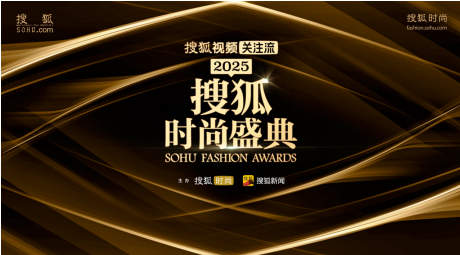
2025搜狐时尚盛典12月18日即将启幕
Bei Jing Wan Bao· 2025-12-04 04:11
Core Insights - The 2025 Sohu Fashion Gala will be held on December 18 in Beijing, focusing on the theme "Moving Towards the Heart," which emphasizes emotional value, emotional economy, and social companionship as emerging trends in the fashion industry [1][3] Group 1: Event Overview - The gala will gather influential fashion pioneers, aesthetic advocates, and cultural creators to discuss the new directions and consumer logic in the fashion industry amidst the integration of emotional needs and AI technology [1][3] - Sohu Video will provide live streaming of the entire event, ensuring broad accessibility [1] Group 2: Key Themes and Trends - "Emotional value" is highlighted as the annual keyword, reflecting a shift in consumer behavior where younger generations are more willing to pay for emotional experiences [3] - The event will feature discussions on topics such as "emotional dressing" and "self-fashion," showcasing the contemporary fashion philosophy of "beauty for oneself" [3] Group 3: Historical Context and Evolution - Since its inception in 2012, the Sohu Fashion Gala has evolved to reflect industry trends, introducing various awards that align with emerging marketing and consumption patterns, such as e-commerce and live streaming [4] - The 2025 gala marks a significant shift by centering on "emotional value," indicating a rethinking of fashion definitions and a keen understanding of contemporary societal values [4]

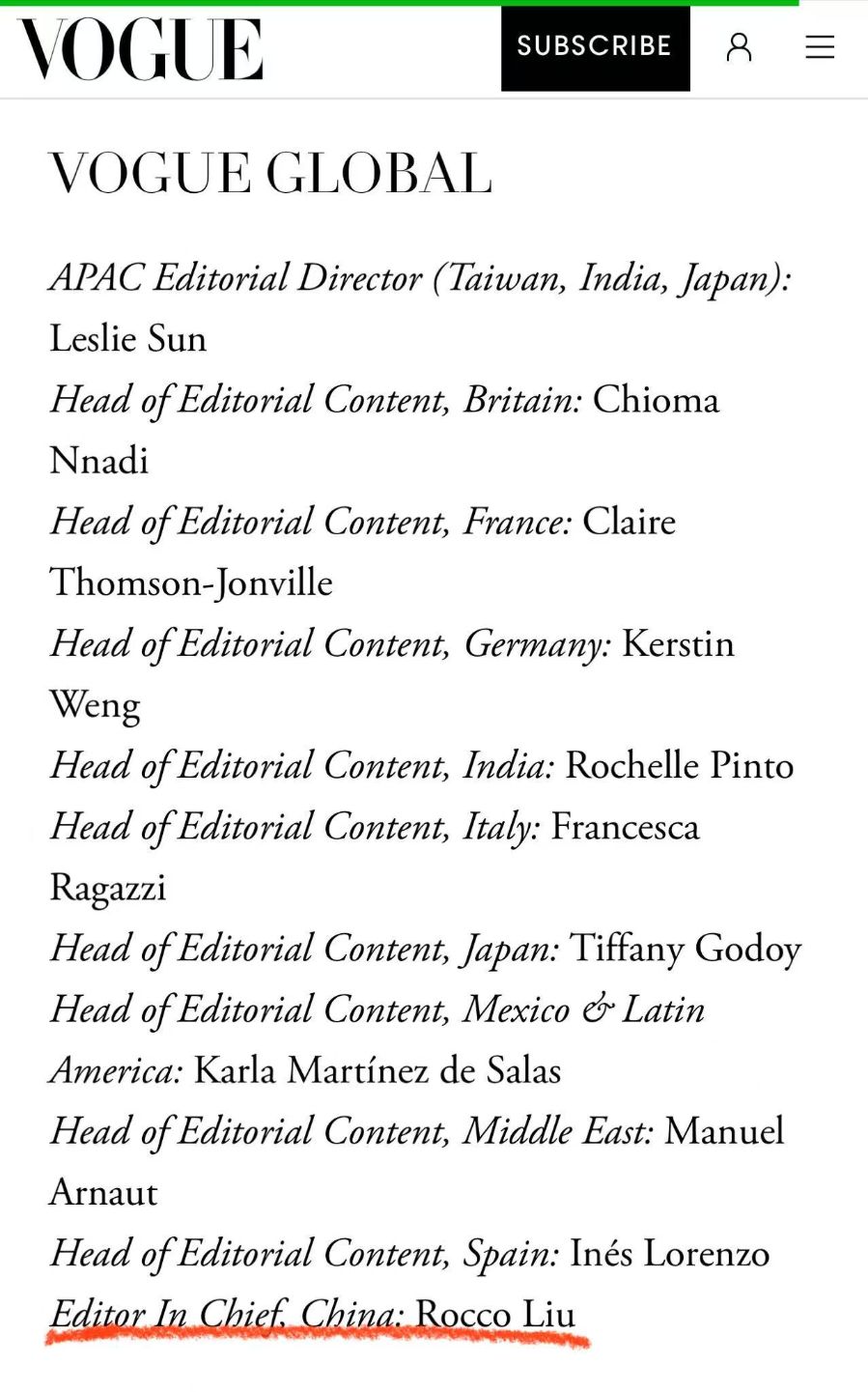
新任命!《Vogue》美国版史上首位编辑内容主管就位
2 1 Shi Ji Jing Ji Bao Dao· 2025-09-03 12:33
Core Insights - Condé Nast appointed Chloe Malle as the first Head of Editorial Content for the U.S. edition of Vogue, emphasizing cross-platform content production and operations, moving beyond traditional editorial roles [1][3] - Chloe Malle has been with Vogue since 2011, previously serving in various editorial roles, and is recognized as a key figure in merging the brand's traditional values with modern digital innovation [1][2] - The new title of Head of Editorial Content signifies a deeper reform in content management, allowing for integrated authority across platforms and departments, which is a departure from the traditional Editor-in-Chief role [3] Company Background - Condé Nast has unified its global editorial system under Anna Wintour's leadership since 2020, integrating brands like Vogue, GQ, and Vanity Fair to promote cross-market collaboration and content consistency [3] - The appointment of Chloe Malle reflects a broader trend within Condé Nast to adapt to the evolving media landscape, with a focus on commercial and platform integration [3] Industry Context - Chloe Malle's background as a "star kid" has sparked discussions about nepotism within elite circles, highlighting the intersection of personal connections and professional advancement in the fashion media industry [2] - The title of Head of Editorial Content is now used for Vogue leaders in various countries, indicating a shift towards a more commercialized and integrated media approach, with the exception of the China region where the title emphasizes traditional editorial leadership [3][5]
媒体报道:借权威背书优势,强化品牌市场竞争壁垒
Sou Hu Cai Jing· 2025-08-25 12:10
Core Insights - In a highly competitive market, brands need to build strong competitive barriers, with media coverage serving as a core weapon to enhance brand competitiveness [1] Group 1: Trust Building - Authority media reports act as a "credit certificate," significantly enhancing consumer trust when company news appears in mainstream outlets like Xinhua News Agency and People's Daily [3] - The trust established through authoritative endorsements reduces consumer decision-making costs, leading them to prioritize brand products or services [3] Group 2: Image Shaping - A unique and positive brand image helps differentiate it in the market, with media coverage providing a platform to showcase entrepreneurial stories, development history, corporate culture, and social responsibility [4] - Environmental companies can highlight their green technologies and social responsibility through media, while traditional brands can leverage their heritage to attract specific consumer groups [4] Group 3: Targeted Communication - Brands can select media partners based on their target audience, with high-end fashion brands choosing authoritative fashion media like Vogue to reach affluent consumers [5] - Youth-oriented brands can utilize platforms like Douyin and Bilibili for interactive and fast-paced content to engage younger demographics [5] Group 4: Crisis Management - During crises, authoritative media coverage is crucial for brands to communicate transparent information, helping to stabilize consumer confidence and counteract rumors [6] - A case study of a food company illustrates how media reports on quality testing and recall plans can restore brand reputation and market share [6] Group 5: Memory Reinforcement - Continuous media coverage strengthens brand recall, keeping the brand in consumers' minds through regular updates on product development and market activities [7] - Technology companies can maintain consumer awareness of their innovation and leadership through regular media updates, fostering brand loyalty over time [8] Group 6: Overall Media Value - Media coverage contributes to building competitive barriers through trust, image, targeted communication, crisis management, and memory reinforcement, highlighting the importance of leveraging media value for brands to stand out in competition [8]

多少打工人被骗进“精致版大厂”?
Hu Xiu· 2025-06-16 08:52
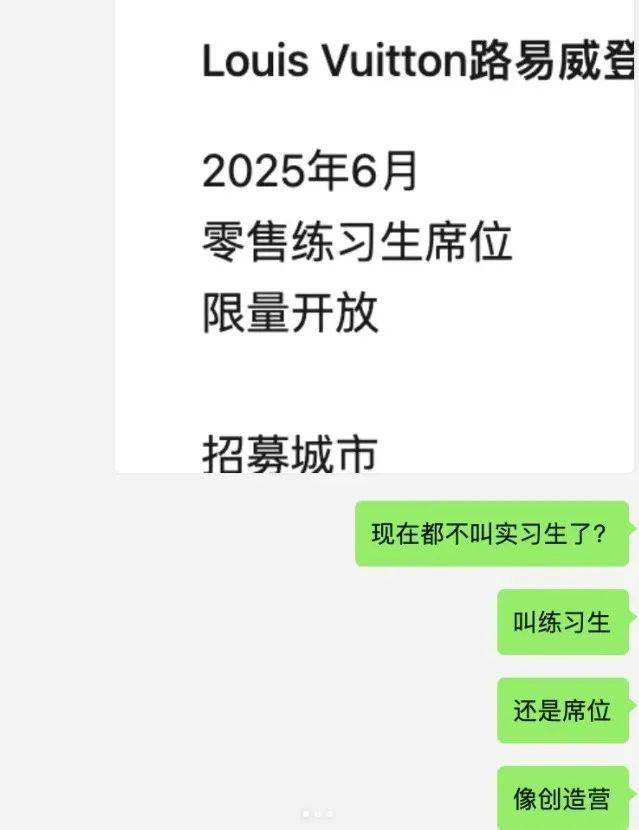
Group 1 - The luxury goods industry, represented by LV, is attracting attention with its recruitment of retail interns, which some speculate could lead to a new entertainment venture [1][2] - Interns in luxury brands often come from prestigious universities and have extensive extracurricular experiences, indicating a highly competitive environment [8][12] - The work culture in luxury brands emphasizes a balance between professional and glamorous lifestyles, with interns participating in high-profile events [6][7] Group 2 - Interns at LV experience a stark divide from full-time employees, often feeling excluded from social gatherings [14] - English is the primary language for communication in luxury brands, highlighting the international nature of the industry [15][16] - Employees enjoy significant discounts on products, fostering a culture of loyalty to the brand [17] Group 3 - The fast-moving consumer goods (FMCG) sector is described as a "modern Huangpu Military Academy," emphasizing a rigorous and competitive training environment [34][36] - Interns in FMCG companies often face demanding work hours and a high-pressure atmosphere, with expectations to perform under challenging conditions [43][44] - The FMCG industry values creativity and unique perspectives, with companies like Coca-Cola focusing on brand strength and market positioning [46][49] Group 4 - The fashion magazine industry is characterized by a closed network, where most job opportunities arise from personal connections rather than public postings [63][64] - Interns in fashion magazines often face low pay and high living costs, requiring financial support from family to sustain their lifestyle [67][69] - The perception of luxury and high fashion is maintained through curated experiences, despite the reality of financial struggles faced by interns [81][83] Group 5 - The economic downturn has led to significant layoffs in top FMCG companies, with Procter & Gamble announcing a reduction of 7,000 jobs, representing 6.5% of its workforce [85] - The luxury sector has been experiencing a decline since 2020, with major brands like Kering and Chanel reporting significant drops in profits and sales [85] - The changing economic landscape has shifted public perception of luxury and fashion industries, leading to a sense of disillusionment among consumers [86]