丁苯酞

Search documents
河北推进新型工业化走深走实 工业经济压舱石作用更加凸显
Jing Ji Ri Bao· 2025-11-17 22:03
Core Viewpoint - The article highlights the significant progress and achievements of Hebei Province in promoting new industrialization since the start of the 14th Five-Year Plan, emphasizing the importance of industrial development as a foundation for modernization. Group 1: Industrial Economic Growth - Hebei's total industrial added value increased from 11,813.5 billion to 14,908.5 billion from 2020 to 2024, with the manufacturing added value accounting for 26.3% of GDP in 2024, surpassing the national average by 1.4 percentage points [1] - The annual growth rate of industrial added value for large-scale industries is 6.2%, with operating income rising from 4.21 trillion to 5.17 trillion [1] - The province has developed advanced steel and high-end equipment industries, with several industry-leading companies emerging [1] Group 2: Quality Upgrade of Leading Industries - Hebei has implemented 10,552 key industrial and technological transformation projects, enhancing the competitiveness of steel products and transitioning companies from manufacturers to comprehensive service providers [2] - The production of new energy vehicles in Hebei increased by 5.3 times from 2020 to 2024, while the robot industry saw revenue growth exceeding 40% for two consecutive years [2] - The proportion of high-tech industry added value in large-scale industrial added value rose from 19.4% in 2020 to 22.3% in 2024 [2] Group 3: Development of Characteristic Industries - Hebei is focusing on building 107 provincial-level key characteristic industrial clusters, promoting shared manufacturing to enhance efficiency and reduce costs [3] - A total of 90 clusters have established 166 shared factories and over 10,000 shared devices, involving more than 13,000 enterprises [3] - The province has nurtured 589 "leader" enterprises within these clusters, driving collaborative development among over 3,200 cluster enterprises [3] Group 4: Enhancement of Quality Enterprises - By the end of 2024, the number of large-scale industrial enterprises in Hebei increased by 4,286 compared to the end of 2020, totaling 18,525 [4] - Hebei ranks fifth nationally in the number of companies included in the 2025 China Top 500 Private Enterprises and China Top 500 Manufacturing Enterprises [4] - The province has established a nurturing mechanism for high-quality small and medium-sized enterprises, with 15,500 high-tech enterprises and 7,014 specialized and innovative small and medium-sized enterprises cultivated [4] Group 5: Integration of Technological Innovation - Hebei has recognized over 10,000 industrial enterprise R&D institutions and established several manufacturing innovation centers [5] - The province has made significant breakthroughs in key technologies, with R&D intensity in large-scale manufacturing enterprises reaching 1.6%, an increase of 0.35 percentage points since 2020 [5] Group 6: Digital Transformation and Empowerment - Hebei has implemented 3,939 provincial-level digital transformation projects, creating 155 5G factories and 14 national exemplary smart factories [6] - The province's integration level of information technology and industrialization reached 63.8 in 2024, ranking ninth nationally [6] - A total of 371 industrial internet platforms have been cultivated, connecting 15.58 million industrial devices [6] Group 7: Green Transformation Progress - Hebei has achieved a 26.9% reduction in energy consumption and a 27.6% reduction in water consumption per unit of industrial added value since the start of the 14th Five-Year Plan [7] - The province has implemented over 2,000 green technology transformation projects, promoting the widespread adoption of green products [7] - Hebei has established 1,107 provincial-level green factories and 309 national green factories, leading the nation in green manufacturing initiatives [7]
超60亿大单品丁苯酞:石药领航,复星折戟,改良仿制困局谁能破?
Ge Long Hui· 2025-09-22 11:41
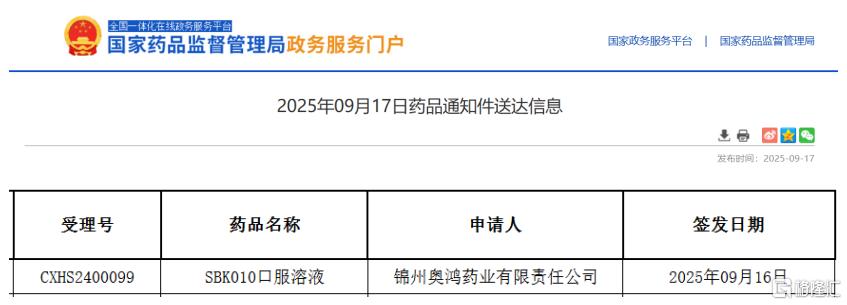
Core Insights - The article discusses the competitive landscape of the drug Diphenylhydantoin, primarily dominated by CSPC Pharmaceutical Group, and highlights the recent failed market entry attempt by a subsidiary of Fosun Pharma, Jinzhou Aohong Pharmaceutical, with their modified new drug SBK010 [1][11]. Market Overview - Diphenylhydantoin, marketed as Enbip, is a Class 1 new drug in China, providing new hope for patients with ischemic stroke. The soft capsule form was launched in 2004, and the injection form was approved in 2009, making it the third Class 1 new drug with independent intellectual property rights in China after artemisinin and bifendate [3]. - The market for Diphenylhydantoin is substantial, with projected total sales exceeding 6 billion yuan in 2024, and sales nearing 3 billion yuan by mid-2025, accounting for nearly 30% of CSPC's revenue [3][5]. Competitive Challenges - Despite the attractive market prospects, many companies have attempted to enter the Diphenylhydantoin market through generic or modified versions but have ultimately failed [5]. - The primary obstacles for generic versions include the lack of inclusion in the reference preparation directory, which has delayed the approval process for many companies that have completed bioequivalence (BE) trials [8][14]. Clinical Trial Insights - The failure of Fosun's SBK010 is attributed to the absence of Phase III clinical trials, which CSPC has rigorously conducted, establishing a robust clinical trial system that ensures the safety and efficacy of Diphenylhydantoin [11][14]. - Currently, only Hebei Saipuruisi Pharmaceutical Technology Co., Ltd. is advancing a Phase III clinical trial for a modified version of Diphenylhydantoin, which could potentially break the current deadlock in the market [14]. Patent Landscape - Although the compound patent for Diphenylhydantoin has expired, CSPC has successfully extended the composition and preparation method patents until 2032, complicating the entry of other companies into the market [14][15]. - The combination of unresolved reference preparation status, unclear clinical pathways, and stringent patent restrictions creates significant barriers for competitors seeking to develop their own versions of Diphenylhydantoin [14]. Innovation and Future Outlook - CSPC continues to innovate, having launched several new drugs in 2024, including Enlansumab and Omab, while also achieving breakthrough therapy designations for multiple projects, reinforcing its leadership in the pharmaceutical market [15].