
恩朗苏拜单抗

Search documents
“90后”掌舵500亿市值药企,新诺威转型阵痛中的豪赌?
Xin Lang Cai Jing· 2026-02-02 08:46
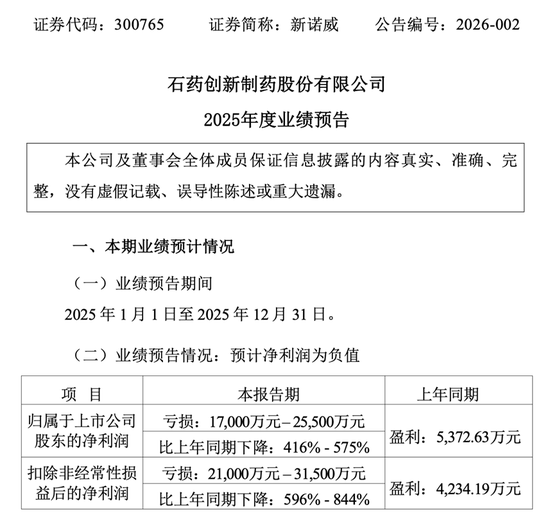
Core Viewpoint - The recent leadership change at Newnoway, with a young manager taking over amidst significant financial losses, highlights the challenges faced by Chinese pharmaceutical companies in their transformation efforts [1][15]. Management Changes - Newnoway appointed Dai Long, a 1992-born executive, as the new general manager, who previously served as the board secretary and will also continue as the financial director [1][17]. - The former general manager, Yao Bing, will remain as the chairman [17]. - Dai Long's annual salary is only 223,200 yuan despite holding multiple positions, reflecting the company's current financial constraints [5][19]. Financial Performance - Newnoway expects a net loss of 170 million to 255 million yuan for 2025, marking a decline of 416% to 575% compared to the previous year, which will be the company's first annual loss since its listing in 2019 [15][20]. - The company's net profit dropped from 726 million yuan in 2022 to 43.4 million yuan in 2023, a decrease of 40.18%, and further to 5.37 million yuan in 2024, a decline of 87.63% [6][20]. - The decline in performance is attributed to increased R&D expenses, expanded losses from acquired subsidiaries, and decreased gross margins in traditional business lines [20][21]. Business Transformation - Newnoway is transitioning from traditional functional raw materials, primarily caffeine, to innovative pharmaceuticals, including antibody-drug conjugates and mRNA vaccines [10][24]. - The company acquired a 51% stake in Giant Stone Biotech in 2023 and increased its stake to 80% in 2025, but the subsidiary has not yet contributed positively to overall performance [10][24]. - The strategic partnership with AstraZeneca, potentially worth over $17 billion, offers a glimmer of hope for the company's innovative drug pipeline [12][25]. Challenges and Outlook - Newnoway faces the challenge of balancing its declining traditional business with the need for substantial investment in innovative drug development [13][25]. - As of the third quarter of 2025, the company's debt ratio rose to 32.94%, indicating increased financial pressure [13][25]. - The success of Dai Long's leadership will be critical in navigating these challenges and achieving a successful transition from a traditional raw material supplier to an innovative pharmaceutical company [26][27].

别猜了!这家制药巨头换帅的真相是……
Xin Lang Cai Jing· 2025-12-24 09:52
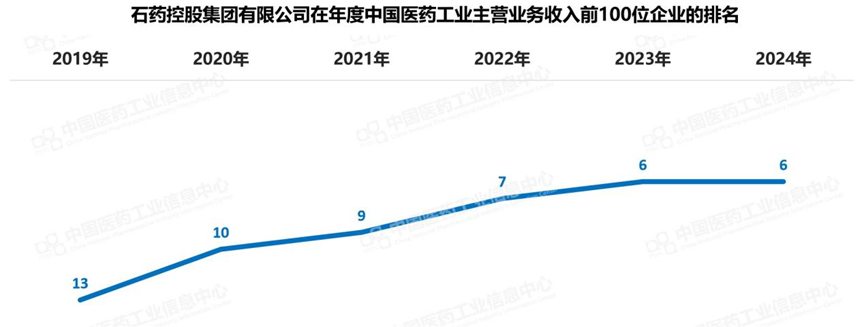
Group 1 - The core point of the article is the significant management reshuffle at CSPC Pharmaceutical Group, with Zhang Cuilong transitioning to an executive director role while Cai Lei is appointed as the new CEO and vice chairman, and Wei Qingjie as vice chairman and COO [1][19]. Group 2 - CSPC Pharmaceutical Group has shown a strong upward trajectory in its ranking among the top 100 pharmaceutical companies in China, reflecting its robust strategic positioning and growth in innovative drug revenue [3][21]. - The company has received approval for five Class 1 innovative drugs, with a significant increase in the proportion of innovative drug revenue compared to the same period in 2019 [5][24]. - CSPC has a total of 83 new drugs in various stages of clinical trials globally, and its licensing out transactions have reached a total of $9.71 billion this year [5][24]. Group 3 - CSPC has established eight major technology platforms, including ADC, dual antibodies, and mRNA, with a large pipeline of 178 projects, of which approximately 10% are in Phase 3 clinical trials [12][29]. - The company’s R&D expenses are projected to be 4.83 billion RMB in 2023, 5.191 billion RMB in 2024, and approximately 4.19 billion RMB in the first three quarters of 2025, indicating a 7.9% year-on-year growth [32][34]. Group 4 - The new management team is expected to navigate the dual drivers of "innovation" and "internationalization," which are critical for CSPC's growth at this stage [18][35]. - The management's ability to efficiently convert scientific achievements into marketable products and their understanding of both domestic and global markets will be crucial for the company's success [18][35].
新诺威递表港交所:当“故事”难以为继,资本“输血”能否续命? 原创 上市报 上市报 2025年12月11日 19:07 北京
Zhong Jin Zai Xian· 2025-12-11 14:28
Core Viewpoint - The journey of Sinovation has shifted from a grand vision of building an "innovative pharmaceutical empire" to facing harsh realities, particularly after the termination of a significant acquisition deal, leading to a deteriorating financial situation and challenges in the Hong Kong IPO market [1][2]. Group 1: Company Transformation and Challenges - Sinovation, initially a functional raw material producer, aimed to transform into an innovative pharmaceutical company by acquiring assets in cutting-edge fields like ADC and mRNA vaccines [1]. - The planned acquisition of Shiyao Baike for 7.6 billion yuan was halted due to a drastic price drop of its core product, "Jin You Li," from approximately 1,600 yuan to about 666 yuan, alongside stagnant sales and increased market competition [1]. - The anticipated GLP-1 weight loss drug pipeline lacks competitive advantages, failing to fill the revenue gap [1]. Group 2: Financial Deterioration - The cessation of external funding from the halted acquisition has led to a rapid decline in Sinovation's financial health, characterized by a struggling caffeine business and escalating R&D costs, which surged by 81% year-on-year in the first half of 2025 [2]. - The IPO in Hong Kong is perceived more as a necessity to address a significant funding gap rather than a strategic global expansion [2]. Group 3: Market Environment and IPO Challenges - Sinovation's IPO faces a challenging market environment, with a rising post-listing failure rate of 42.10% since November, compared to 30.23% in the first half of 2025 and 35.71% for the entire year of 2024, indicating a shift towards selective investment by investors [3]. - The valuation conflict in the "A+H" model poses a significant challenge, as Hong Kong investors prioritize cash flow and dividend returns, while Sinovation is currently unprofitable with negative cash flow [3]. Group 4: Liquidity Concerns and Funding Utilization - New IPO regulations in Hong Kong allow issuers to set public offering ratios between 10% and 60%, leading to potential liquidity issues as over 90% of shares may be concentrated among a few cornerstone and institutional investors [4]. - The ambiguity surrounding the use of funds raised from the IPO raises concerns about whether they will be effectively utilized for breakthrough projects or diluted across broad R&D investments [5][6]. Group 5: Future Prospects and Commercialization Challenges - The future value of Sinovation hinges on its ability to commercialize its innovative drug pipeline, with existing products lacking competitive advantages and future prospects in ADC and mRNA vaccine platforms facing intense competition [6]. - Successfully entering the Hong Kong market is only the first step; the real challenge lies in demonstrating to a more rational international market that the company is not only in need of funds but also worthy of investment [6].
超60亿大单品丁苯酞:石药领航,复星折戟,改良仿制困局谁能破?
Ge Long Hui· 2025-09-22 11:41
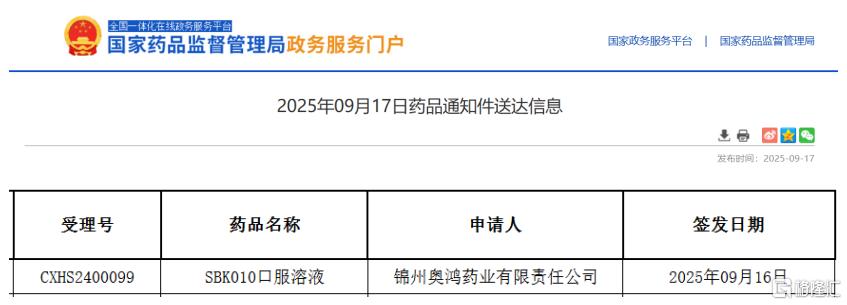
Core Insights - The article discusses the competitive landscape of the drug Diphenylhydantoin, primarily dominated by CSPC Pharmaceutical Group, and highlights the recent failed market entry attempt by a subsidiary of Fosun Pharma, Jinzhou Aohong Pharmaceutical, with their modified new drug SBK010 [1][11]. Market Overview - Diphenylhydantoin, marketed as Enbip, is a Class 1 new drug in China, providing new hope for patients with ischemic stroke. The soft capsule form was launched in 2004, and the injection form was approved in 2009, making it the third Class 1 new drug with independent intellectual property rights in China after artemisinin and bifendate [3]. - The market for Diphenylhydantoin is substantial, with projected total sales exceeding 6 billion yuan in 2024, and sales nearing 3 billion yuan by mid-2025, accounting for nearly 30% of CSPC's revenue [3][5]. Competitive Challenges - Despite the attractive market prospects, many companies have attempted to enter the Diphenylhydantoin market through generic or modified versions but have ultimately failed [5]. - The primary obstacles for generic versions include the lack of inclusion in the reference preparation directory, which has delayed the approval process for many companies that have completed bioequivalence (BE) trials [8][14]. Clinical Trial Insights - The failure of Fosun's SBK010 is attributed to the absence of Phase III clinical trials, which CSPC has rigorously conducted, establishing a robust clinical trial system that ensures the safety and efficacy of Diphenylhydantoin [11][14]. - Currently, only Hebei Saipuruisi Pharmaceutical Technology Co., Ltd. is advancing a Phase III clinical trial for a modified version of Diphenylhydantoin, which could potentially break the current deadlock in the market [14]. Patent Landscape - Although the compound patent for Diphenylhydantoin has expired, CSPC has successfully extended the composition and preparation method patents until 2032, complicating the entry of other companies into the market [14][15]. - The combination of unresolved reference preparation status, unclear clinical pathways, and stringent patent restrictions creates significant barriers for competitors seeking to develop their own versions of Diphenylhydantoin [14]. Innovation and Future Outlook - CSPC continues to innovate, having launched several new drugs in 2024, including Enlansumab and Omab, while also achieving breakthrough therapy designations for multiple projects, reinforcing its leadership in the pharmaceutical market [15].
新诺威(300765) - 300765新诺威投资者关系管理信息20250915
2025-09-16 01:02
Group 1: Innovation Drug Development - The company is optimistic about the future of China's innovative drug market, with a record-breaking overseas transaction amount in 2025 [2] - The company has multiple products in critical clinical trial stages and is committed to accelerating innovation pipelines [3] - The company’s R&D investment accounts for 43% of revenue, significantly exceeding industry standards, yet revenue from biopharmaceuticals is only 0.94 billion [5] Group 2: Financial Management and Cash Flow - The company reported a net cash outflow of 1.235 billion, but has 455 million in idle funds for financial management [3] - The company maintains a low-risk investment strategy for idle funds to support R&D and operational activities [3] - The caffeine business has a global market share exceeding 50%, but revenue has declined due to a 20% drop in export prices [5] Group 3: Market Strategy and Competition - The company’s product, Enlansumab, has entered the insurance reimbursement list, with ongoing commercialization efforts [10] - The company faces intense competition in the PD-1 market, with an average annual price drop exceeding 20% [10] - The company is exploring various strategies to maintain gross margins in the face of price drops due to centralized procurement [8] Group 4: Future Plans and Strategic Direction - The company aims to transform into an innovative drug company, leveraging its strong cash flow from functional raw materials to support R&D [5] - The company plans to enhance its core competitiveness in the biopharmaceutical sector and achieve profitability in its innovative drug segment [9] - The company is actively utilizing national policies to promote innovative development [7]
新诺威:EGFR突变TKI耐药的非小细胞肺癌的3期临床研究已启动
Cai Jing Wang· 2025-09-15 12:44
Core Viewpoint - The company is actively involved in the development of SYS6010 and has made significant progress in clinical trials, while also addressing the decline in revenue from its functional raw materials business due to fluctuating caffeine prices [1] Group 1: Product Development - The company currently does not have any GLP-1 related products [1] - The clinical study for SYS6010 targeting EGFR mutation TKI-resistant non-small cell lung cancer has officially started in March this year and is currently enrolling participants [1] - The company is exploring multiple combination therapy studies covering esophageal squamous cell carcinoma, small cell lung cancer, and both EGFR mutant and wild-type non-small cell lung cancer frontline patients [1] - There are no data release plans for H2 this year, with updates expected next year [1] Group 2: Commercialization and Clinical Trials - The company's Enlansumab has been included in the medical insurance, and commercialization is proceeding normally [1] - Key clinical trials for first-line recurrent or metastatic cervical cancer are currently underway [1] - A II/III phase clinical trial for small cell lung cancer post-chemotherapy consolidation treatment is set to begin in June 2025 in China, with the first subject already enrolled [1] - The company is also exploring trials related to the combination of PD-1 and SYS6010 (EGFR-ADC) products [1] Group 3: Revenue and Market Conditions - Revenue from the functional raw materials business has declined primarily due to the drop in caffeine prices compared to the highs of 2022 and 2023 [1] - Currently, caffeine prices have stabilized, and this business segment continues to maintain a high level of profitability [1]
新诺威(300765) - 300765新诺威投资者关系管理信息20250411
2025-04-14 00:16
Group 1: Production and Market Strategy - The company has a caffeine production capacity of 16,700 tons/year, with a sales volume of 14,010 tons in 2023. It aims to enhance gross margins through product structure upgrades and explore new application fields such as medical beauty and pet health [1] - The company is committed to maintaining its competitive edge in the functional raw materials industry by expanding into niche products like theobromine and theophylline, leveraging its production advantages to create a diversified profit engine [1] Group 2: Research and Development - The company emphasizes innovation and R&D as core drivers for future growth, focusing on aligning product development with market demand to mitigate the high failure rates and costs associated with drug development [2] - Significant resources are being allocated to accelerate product layout and R&D progress, with a goal to solidify and expand its innovative biopharmaceutical platform [2] Group 3: Financial Performance and Shareholder Information - As of April 10, 2025, the number of shareholders is 10,386 [4] - The company plans to disclose its Q1 2025 report on April 24, 2025, and has already released its 2024 annual report on March 21, 2025 [4] Group 4: Market Impact and Risk Management - The direct revenue from the U.S. market is low, and the current tariff policies have minimal direct impact on the company's profitability, indicating manageable risk [4] - The company is actively monitoring changes in international trade policies to address potential risks [4] Group 5: Product Development and Sales - The company is in the process of commercializing the innovative drugs Enlansumab and Omabuzumab, which have been approved for inclusion in the medical insurance directory [5] - The sales network for these products is being developed systematically [5]