上汽荣威M7 DMH

Search documents
字节跳动否认造车 豆包大模型、火山引擎已与多家车企合作
Nan Fang Du Shi Bao· 2026-01-07 04:48
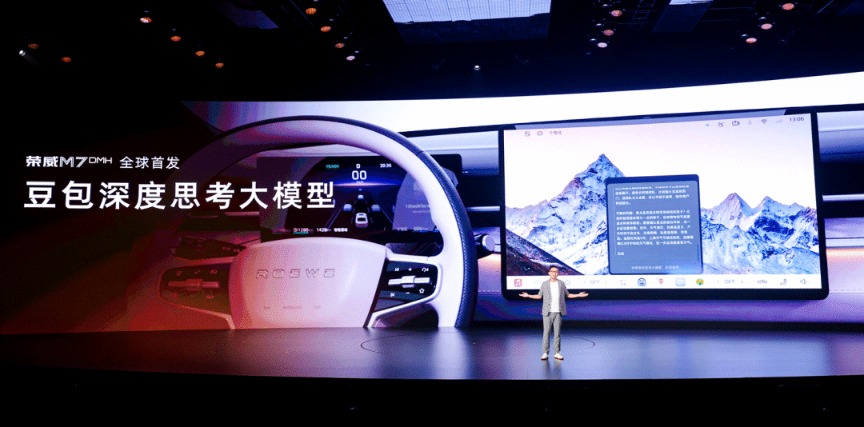
Core Viewpoint - ByteDance is reportedly not pursuing any plans to manufacture cars, despite rumors suggesting otherwise. The company emphasizes its focus on providing AI solutions for the automotive industry through its Volcano Engine platform [1][2]. Group 1: ByteDance's Automotive Strategy - ByteDance's Volcano Engine is actively collaborating with numerous automotive clients, providing an efficient algorithm training platform, but it does not have plans for autonomous driving business [2]. - Over 90% of mainstream automotive companies are partnering with Volcano Engine for AI innovations, covering various scenarios from smart cockpits to intelligent marketing and autonomous driving labeling [2]. Group 2: Collaborations and Innovations - The SAIC Roewe M7 DMH, launched in September 2022, features the Doubao Deep Thinking Model, enabling the vehicle to interpret vague user commands and understand true intentions through long-term memory capabilities [4]. - BYD has integrated the Doubao model with its DiLink system in just over four months, enhancing voice interaction, content recommendations, and travel services [4]. - Xiaomi is collaborating with Volcano Engine on multiple fronts, including stable foundational computing facilities and AI cloud-native acceleration solutions, which have significantly improved training stability and simulation efficiency [4]. Group 3: Recent Automotive Showcases - At the Guangzhou Auto Show in November, several models from brands like Mercedes-Benz, SAIC Audi, and Changan Mazda showcased their collaboration with Volcano Engine, featuring advanced human-machine interaction systems [5]. - The Mercedes-Benz electric CLA model, equipped with a new intelligent interaction system, has improved interaction efficiency by 50%, with a wake-up speed of 0.2 seconds and an end-to-end execution speed of just 0.8 seconds [5]. - The SAIC Audi E5 Sportback and Changan Mazda EZ60 also demonstrated enhanced capabilities in understanding user intent and executing commands through voice instructions, showcasing the integration of the Doubao model [5].

45.4万对44.17万:上汽终结比亚迪连冠,反超正式开始
首席商业评论· 2025-11-13 04:36
Core Viewpoint - The competition between SAIC Group and BYD in the Chinese automotive market has intensified, with SAIC reclaiming the top sales position in October 2025, driven by a dual strategy of fuel and new energy vehicles [3][10][19]. Sales Performance - In October 2025, SAIC Group achieved a monthly sales figure of 454,000 vehicles, marking a 12.96% year-on-year increase, while BYD's sales were 441,706 vehicles, reflecting a 13.88% increase [3][4][10]. - BYD's sales in September 2025 were 396,270 vehicles, a decline of 5.5% year-on-year, indicating a shift in market dynamics [7][42]. - Cumulatively from January to October 2025, BYD's total sales reached 3.701 million vehicles, while SAIC's total was 3.643 million, showing a close competition [4][19]. Production and Sales Breakdown - In October 2025, SAIC's new energy vehicle sales reached 207,000 units, a 31.6% increase year-on-year, contributing to a total of 1.29 million new energy vehicles sold in the first ten months, up 42.5% [21][23]. - BYD's sales of its core models, the Dynasty and Ocean series, accounted for 91.25% of its total sales, with a notable decline in sales for these models in October [42][44]. Financial Performance - SAIC Group reported a total revenue of 169.4 billion yuan in Q3 2025, a 16.19% increase year-on-year, with a net profit of 2.08 billion yuan, up 644.88% [23][25]. - BYD's Q3 2025 revenue was 194.98 billion yuan, down 3.05% year-on-year, with a net profit of 7.82 billion yuan, reflecting a 32.6% decline [40][42]. Strategic Adjustments - SAIC Group is focusing on a three-pronged growth strategy involving its own brands, new energy vehicles, and exports, with a significant increase in sales from its self-owned brands [19][21]. - BYD is undergoing a structural adjustment, shifting its focus from volume to optimizing product structure, with a clear brand hierarchy emerging [42][44]. Market Dynamics - The competition between SAIC and BYD is characterized by a shift in market leadership, with SAIC's recovery attributed to its dual strategy of fuel and new energy vehicles, while BYD faces challenges in maintaining its growth trajectory [25][47]. - The automotive market is experiencing heightened competition, with both companies needing to balance sales volume with profitability as they navigate the evolving landscape [47][48].


都市车界|新能源车购置税政策“提门槛” 插混车型续航须超100公里
Qi Lu Wan Bao· 2025-10-10 07:35
Core Insights - The Ministry of Industry and Information Technology, Ministry of Finance, and State Taxation Administration announced a continuation of the vehicle purchase tax exemption policy for new energy vehicles (NEVs) starting January 1, 2026, with significantly higher technical requirements aimed at promoting high-quality industrial development [1][3]. Policy Overview - The purchase tax exemption will remain in effect until the end of 2027, with a 50% tax reduction in 2026 and a maximum tax reduction of 15,000 yuan per vehicle [3][9]. - The new technical standards will disqualify models that do not meet the updated criteria from enjoying tax benefits, indicating a shift from policy subsidies to technological innovation [3][10]. Technical Requirements - For pure electric vehicles, the energy consumption per 100 kilometers must comply with the latest national standards, ensuring energy efficiency [4]. - For plug-in hybrid vehicles, the pure electric driving range requirement has increased from 43 kilometers to 100 kilometers, a 132% increase [1][5]. - Fuel consumption in electric mode must also be reduced according to specific weight categories, with stricter limits for heavier vehicles [5][6]. Transition and Compliance - Vehicles listed in the tax exemption directory before December 31, 2025, that meet the new requirements will automatically transition to the 2026 directory; non-compliant models will be removed [7][9]. - New models must be submitted for inclusion in the 2026 directory by December 12, 2025, with a dynamic regulatory mechanism in place for compliance [8]. Market Impact - The new requirements are expected to drive technological upgrades in the NEV sector, pushing manufacturers to enhance research and development efforts and phase out outdated products [10]. - As of September 2025, plug-in hybrid vehicles accounted for 30.7% of total NEV sales, indicating a significant market presence that may be affected by these new standards [10][11]. - The policy aims to align with advancements in battery technology and engine efficiency, ensuring that the market evolves towards high-quality development rather than mere scale expansion [10][11].
车辆购置税减免门槛提高,插混车型纯电续航至少100公里
Bei Ke Cai Jing· 2025-10-09 13:59
Core Insights - The Ministry of Industry and Information Technology, along with two other departments, announced new technical requirements for electric vehicles and plug-in hybrid vehicles, effective January 1, 2026, which include stricter energy consumption standards and an increase in the pure electric range requirement for plug-in hybrids from 43 kilometers to 100 kilometers [1][2][4] Group 1: Technical Requirements - The new announcement specifies that pure electric passenger vehicles must meet the energy consumption limits set by the national standard GB 36980.1-2025, which will be implemented starting January 1, 2026 [2][3] - The requirement for plug-in hybrid vehicles now mandates a minimum pure electric range of 100 kilometers, significantly up from the previous threshold of 43 kilometers [2][3] Group 2: Industry Impact - The new technical requirements are expected to drive technological upgrades in the industry, prompting companies to increase R&D investments to enhance battery technology and energy management efficiency [4][5] - The changes may lead to the elimination of outdated models from the market, optimizing competition and concentrating resources among companies with stronger technological capabilities [4][5] Group 3: Consumer Impact - Consumers will see changes in vehicle purchase costs, as only models meeting the new technical requirements will qualify for tax exemptions, potentially reducing the range of available models in the short term [5] - In the long term, the market is expected to offer more high-quality products, encouraging consumers to pay closer attention to vehicle technical specifications when making purchasing decisions [5]
最后一个电车免税的“金九银十”!近40款新车扎堆上市
Di Yi Cai Jing· 2025-09-19 00:34
Group 1 - The automotive market is experiencing a surge in new vehicle launches, with nearly 40 new models expected in September 2023, compared to 17 in the same month of 2024, indicating a significant increase in activity [1] - September 17 alone saw the launch of five new electric vehicle models, including the 2025 Mercedes-Benz EQS and the new Chery Fengyun X3L, highlighting the trend towards electric vehicles [1] - The Chinese government has been supporting the electric vehicle industry by exempting vehicle purchase tax since 2014, with 2023 being the last year for full exemption, and a gradual reduction in tax for 2026 and 2027 [1] Group 2 - Automakers are under pressure to meet annual sales targets, with Geely and BYD leading in completion rates at 63% and 62% respectively, while others like BAIC are struggling at 36% [2] - New energy vehicle brands such as XPeng and Li Auto have shown higher completion rates, while brands like NIO and Zeekr face significant sales challenges with rates below 40% [2] - In response to market pressures, several automakers have introduced promotional strategies, including Tesla's price cuts and financing offers, to stimulate sales [2] Group 3 - Over 20 provinces and cities in China have launched regional purchase subsidies in September, creating a layered subsidy effect to encourage vehicle purchases [3] - For example, Guangxi province has initiated a vehicle purchase subsidy program with amounts ranging from 2,000 to 5,000 yuan, totaling 350 million yuan in subsidies [3] - Local governments are also offering additional incentives such as fuel vouchers and insurance coupons to further promote vehicle sales [3]

豆包·深度思考模型全球首发上车!上汽荣威M7 DMH正式上市
Cai Fu Zai Xian· 2025-09-18 08:48
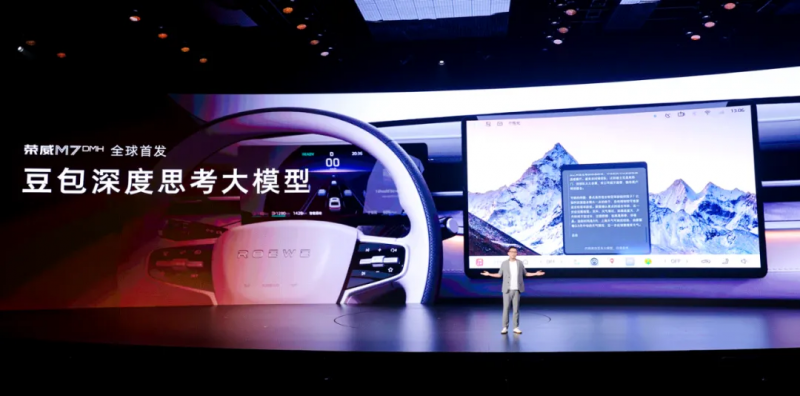
Core Insights - The launch of the SAIC Roewe M7 DMH marks the introduction of the "Doubao Deep Thinking" model, which enhances the AI capabilities of the vehicle, enabling it to perform deep thinking and understand user intentions more effectively [1][3]. Group 1: AI Capabilities - The Roewe M7 DMH utilizes the Doubao Deep Thinking model to interpret vague user commands and deduce their true intentions, showcasing advanced semantic understanding [3][5]. - The vehicle features the highest industry coverage for vague semantic understanding, encompassing 15 key driving scenarios, transitioning from command-driven to intention-driven interactions [5]. - The model's memory capabilities allow it to retain user preferences and historical interactions, enhancing the personalization of the user experience while ensuring privacy [5]. Group 2: Complex Control Functions - The Roewe M7 DMH can execute multiple vehicle control tasks through a single user command, significantly improving the interaction experience [8]. - The vehicle boasts the highest number of control ports in the industry, facilitating a more integrated and intelligent user experience [8]. - The collaboration between SAIC Roewe and Volcano Engine aims to merge advanced AI capabilities with the vehicle's underlying systems, addressing the evolving user demand for smarter, more intuitive vehicles [8].
小米汽车登记Vision GT概念车著作权;上汽荣威M7 DMH内饰首发亮相:定位中大型轿车丨汽车交通日报
创业邦· 2025-07-21 10:26
Group 1 - Xiaomi has registered copyrights for the "Xiaomi Vision GT Concept" and "Vision GT" artworks, indicating its entry into the automotive design space with a focus on future vehicle concepts [1] - BYD's high-end brand Yangwang is set to enter the European market, targeting luxury brands like Bentley and Porsche, with a focus on high-tech features and performance [2] - Geely has unveiled the official images of the 2026 Galaxy E5, a compact electric SUV, which will be available in eight color options and is priced between 107,800 to 179,800 yuan, with a long-range version set to launch on July 24 [3] - SAIC's Roewe M7 DMH has made its debut as a mid-to-large sedan, featuring a pure electric range of 160 km and advanced AI voice capabilities, with plans for a launch in the second half of the year [4]