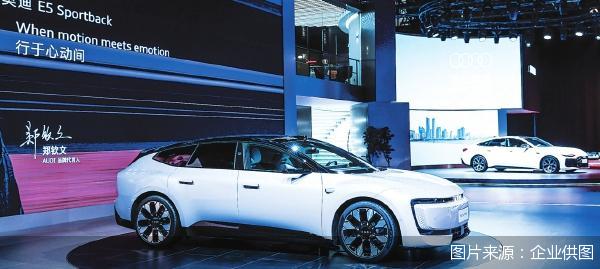
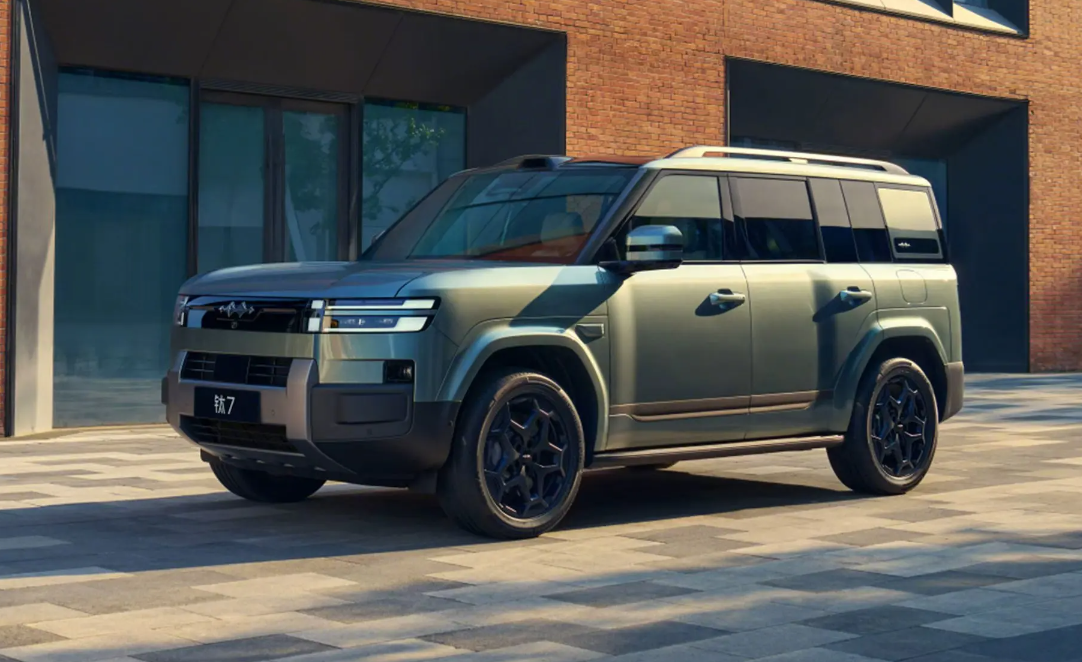
比亚迪方程豹钛7

Search documents
消息称小米SU7换代车型明年2季度上市,要涨2万元;比亚迪推进L3量产内测,已完成15万公里验证丨汽车交通日报
创业邦· 2025-12-17 10:19
Group 1 - Xiaomi's CarloT ecosystem has opened to over 30 categories of partners, with initial partners including BYD, GAC Toyota, Great Wall, and Zhengzhou Nissan [2] - The timeline for the CarloT ecosystem includes physical interface and power supply products in 2024, home control by 2025, and vehicle control by 2026 [2] - The first model compatible with Xiaomi's ecosystem, the BYD Fangchengbao Titanium 7, has already been launched [2] Group 2 - The new generation of Xiaomi's SU7 model is expected to launch in Q2 2025 with a price increase of 20,000 yuan [2] - Xiaomi's "on-the-spot selection" feature for car purchases was opened to all users on December 3, 2025, allowing for quick delivery and warranty services [2] Group 3 - BYD has initiated L3-level autonomous driving testing in Shenzhen, completing over 150,000 kilometers of real-world validation [2] - The testing includes various scenarios such as rainy weather and nighttime driving, positioning BYD as one of the first companies to gain L3-level autonomous driving approval in 2024 [2] Group 4 - Lantu Automotive has signed a deep cooperation agreement with CATL to enhance collaboration in new technologies, product supply, and global market synergy [2] - This partnership aims to ensure stable supply and technological leadership in battery technology for Lantu Automotive [2]




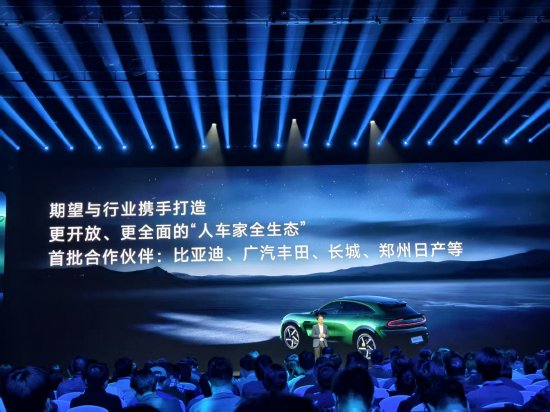
小米汽车:比亚迪、广汽丰田等首批合作伙伴已加入CarloT生态
Xin Lang Cai Jing· 2025-12-17 03:45
Core Insights - Xiaomi announced the opening of its CarloT ecosystem with over 30 product categories available for collaboration [1][3] - The timeline for the CarloT ecosystem rollout includes physical interface and power supply products in 2024, home control for vehicles in 2025, vehicle control for homes in 2026, and a vehicle central gateway in 2027 [1][3] - Initial partners in the CarloT ecosystem include BYD, GAC Toyota, Great Wall Motors, and Zhengzhou Nissan, with the first compatible model, BYD Fangchengbao Titanium 7, already launched [1][3] Timeline of CarloT Ecosystem - 2024: Deployment of physical interfaces and power supply CarloT ecosystem products [1][3] - 2025: Launch of home control for vehicles and establishment of the smart interconnectivity ecosystem alliance [1][3] - 2026: Introduction of vehicle control for homes [1][3] - 2027: Development of the vehicle central gateway [1][3] Partnerships - Initial partners include major automotive manufacturers such as BYD, GAC Toyota, Great Wall Motors, and Zhengzhou Nissan [1][3] - GAC Toyota's first model to integrate with Xiaomi's ecosystem is the Platinum Smart 7 [1][3]
45.4万对44.17万:上汽终结比亚迪连冠,反超正式开始
首席商业评论· 2025-11-13 04:36
Core Viewpoint - The competition between SAIC Group and BYD in the Chinese automotive market has intensified, with SAIC reclaiming the top sales position in October 2025, driven by a dual strategy of fuel and new energy vehicles [3][10][19]. Sales Performance - In October 2025, SAIC Group achieved a monthly sales figure of 454,000 vehicles, marking a 12.96% year-on-year increase, while BYD's sales were 441,706 vehicles, reflecting a 13.88% increase [3][4][10]. - BYD's sales in September 2025 were 396,270 vehicles, a decline of 5.5% year-on-year, indicating a shift in market dynamics [7][42]. - Cumulatively from January to October 2025, BYD's total sales reached 3.701 million vehicles, while SAIC's total was 3.643 million, showing a close competition [4][19]. Production and Sales Breakdown - In October 2025, SAIC's new energy vehicle sales reached 207,000 units, a 31.6% increase year-on-year, contributing to a total of 1.29 million new energy vehicles sold in the first ten months, up 42.5% [21][23]. - BYD's sales of its core models, the Dynasty and Ocean series, accounted for 91.25% of its total sales, with a notable decline in sales for these models in October [42][44]. Financial Performance - SAIC Group reported a total revenue of 169.4 billion yuan in Q3 2025, a 16.19% increase year-on-year, with a net profit of 2.08 billion yuan, up 644.88% [23][25]. - BYD's Q3 2025 revenue was 194.98 billion yuan, down 3.05% year-on-year, with a net profit of 7.82 billion yuan, reflecting a 32.6% decline [40][42]. Strategic Adjustments - SAIC Group is focusing on a three-pronged growth strategy involving its own brands, new energy vehicles, and exports, with a significant increase in sales from its self-owned brands [19][21]. - BYD is undergoing a structural adjustment, shifting its focus from volume to optimizing product structure, with a clear brand hierarchy emerging [42][44]. Market Dynamics - The competition between SAIC and BYD is characterized by a shift in market leadership, with SAIC's recovery attributed to its dual strategy of fuel and new energy vehicles, while BYD faces challenges in maintaining its growth trajectory [25][47]. - The automotive market is experiencing heightened competition, with both companies needing to balance sales volume with profitability as they navigate the evolving landscape [47][48].

smart #5插混版上市,能否挽回3位数的月销量?
Guan Cha Zhe Wang· 2025-11-04 05:46
Core Viewpoint - The article emphasizes that smart's ability to redefine its product positioning in a competitive market is more crucial than technological upgrades [1]. Group 1: Product Launch and Specifications - The smart 5 EHD, the brand's first plug-in hybrid SUV, has been launched with a price range of 189,900 to 239,900 yuan, with a promotional starting price of 169,900 yuan after discounts [1]. - The 5 EHD is positioned as a mid-size SUV and features the Geely Group's Raytheon hybrid technology, offering two battery pack options: a 20 kWh lithium iron phosphate battery with a pure electric range of 120 km and a comprehensive range of 1,483 km, and a 41.46 kWh battery with a pure electric range of 252 km and a comprehensive range of 1,615 km [3][5]. - The vehicle is equipped with a 1.5T four-cylinder hybrid engine, achieving a fuel consumption of 4.4L per 100 km under CLTC conditions [5]. Group 2: Market Position and Challenges - Smart has faced declining sales since 2025, with the 1 model maintaining monthly sales around 2,000 units, while the 3 and 5 models have only achieved sales in the hundreds, with 404 and 204 units sold in September, respectively [8]. - The 5 model competes against strong rivals in the Chinese market, including Tesla Model Y, Li Auto L6, and BYD models, which presents significant challenges for market penetration [8]. - The introduction of the plug-in hybrid version aims to attract consumers by alleviating "range anxiety" and enhancing cost-effectiveness with a lower price point [8]. Group 3: Brand Strategy and Future Outlook - Smart's brand transformation began after Geely acquired a 50% stake in 2019, shifting from a focus on compact city cars to a broader range of vehicles [7]. - Despite the shift, smart faces a dilemma of unclear positioning, as it struggles to balance its identity as a design-oriented brand with the need to appeal to a wider audience [9]. - The future success of the smart 5 EHD will depend on the brand's ability to find a new balance between individuality and mass appeal, avoiding a price war while maintaining brand value [9].
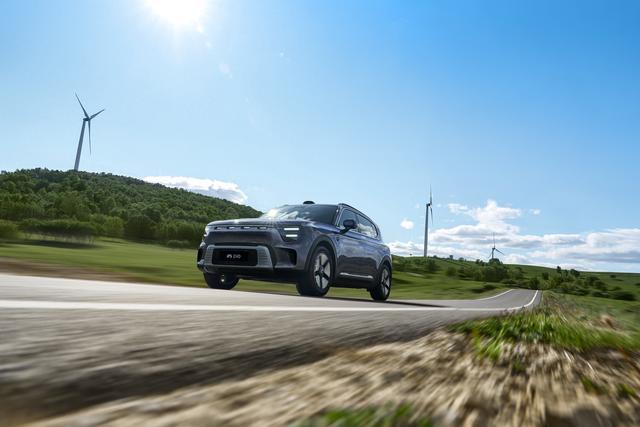
不用妥协的全能城市SUV——试驾比亚迪方程豹钛7
Zhong Guo Qi Che Bao Wang· 2025-09-30 02:49
Core Viewpoint - BYD's Fangchengbao Titanium 7 is positioned as a versatile SUV that combines strong performance, spaciousness, and advanced technology, appealing to modern families seeking quality living without compromise [15][19]. Design and Aesthetics - The Titanium 7 features a robust design with a length of nearly 5 meters and a width of nearly 2 meters, showcasing a powerful and angular exterior [3]. - The front design includes a distinctive raised hood and an "H-shaped" panel, while the rear adopts a practical "backpack" style, enhancing its off-road appeal [3]. Interior and Comfort - The interior boasts a dual-layer floating dashboard with a blend of metal and soft materials, ensuring a harmonious balance of technology and comfort [6]. - Standard features include ventilated and heated seats, massage functions for the front seats, and an intelligent climate control system with a temperature range from -6°C to 50°C [6][10]. Space and Storage - The rear cargo space reaches nearly 1,000 liters, expanding to 1,880 liters with the second-row seats folded down, capable of accommodating multiple pieces of luggage [10]. - The vehicle includes 47 storage compartments, catering to the needs of all family members [10]. Performance and Efficiency - Equipped with the new generation DM technology, the Titanium 7 offers 10 driving modes, achieving a fuel consumption of only 4.9L per 100km under NEDC standards [11]. - The four-wheel drive Ultra version can accelerate from 0 to 100 km/h in just 4.5 seconds, with a top speed of 190 km/h, and a combined range exceeding 1,300 km [11]. Suspension and Handling - The Titanium 7 features a front double-wishbone and rear multi-link suspension system, providing enhanced stability and comfort over rough terrain [13]. - It has a turning radius of only 5.67 meters, making it suitable for urban driving and tight spaces [13]. Intelligent Features - The vehicle introduces BYD's new smart ecosystem, including the BYD Pad, which supports 45 vehicle control functions and is designed for in-car use [15]. - The Titanium 7 is equipped with advanced safety features, including the "Tian Shen Zhi Yan" intelligent driving assistance system and a high-rigidity body structure with nine airbags [19]. Market Positioning - Priced between 179,800 and 219,800 yuan, the Titanium 7 is positioned as a value-for-money option for families seeking a vehicle that meets diverse needs without compromise [19].

中国汽车市场一周行业信息快报——2025年9月第3期
Zhong Guo Zhi Liang Xin Wen Wang· 2025-09-15 09:27
Group 1: Market Overview - In the second week of September, the Chinese automotive market is experiencing a convergence of new car launches, brand strategy upgrades, and industry trend reflections against the backdrop of the "Golden September and Silver October" sales peak [1] Group 2: New Energy Vehicle Tax Exemption - On September 8, the Ministry of Industry and Information Technology released the latest directory of new energy vehicle models eligible for tax exemption, including models like the all-new Wanjie M7 and BYD Seagull [2] Group 3: New Model Launches - The BYD Fangcheng Leopard Ti 7 was launched on September 9, with a price range of 179,800 to 219,800 yuan, enhancing the product lineup in the mid-to-large SUV segment [3] - The fourth-generation Volkswagen Sagitar L was officially launched on September 9, with prices ranging from 114,900 to 131,900 yuan, featuring upgrades in design, intelligence, power, and space [6] - The Wei brand Gaoshan 7 began pre-sales on September 10, starting at 289,800 yuan, targeting young families with flexible space and advanced technology [12] - The Yangwang U8L Ding Shi version was launched on September 12, priced at 1.28 million yuan, featuring luxurious design elements and advanced driving assistance systems [18] Group 4: Industry Regulations - On September 10, the Ministry of Industry and Information Technology and five other departments announced a three-month special action to rectify online chaos in the automotive industry, focusing on illegal profit-making and false advertising [9][11]

“金九银十”旺季开启 中国新能源车市迎双线利好
Zhong Guo Xin Wen Wang· 2025-09-12 11:05
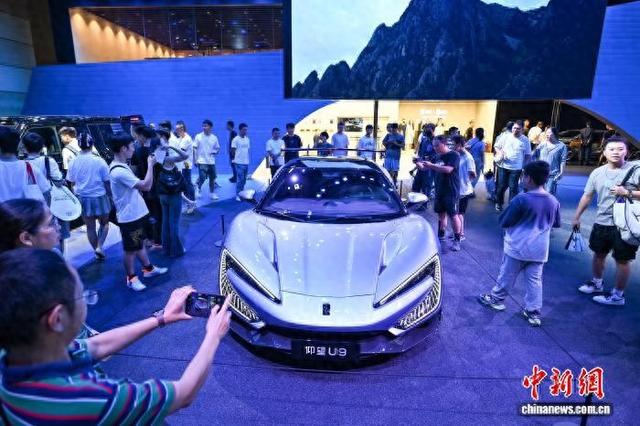
Group 1 - The Chinese new energy vehicle (NEV) market is experiencing a dual benefit of policy support and market resonance as the traditional consumption peak season approaches [1][2] - Various regions are launching limited-time subsidies to stimulate consumer demand, such as Shenyang's 50 million yuan subsidy and Chongqing's 100 million yuan budget for vehicle replacement [1] - The national government is reinforcing policy support, including the implementation of a new fiscal subsidy for personal consumption loans related to vehicle purchases [1][3] Group 2 - The "Golden September and Silver October" period is crucial for automakers to boost annual sales, with major brands preparing for this peak season [1][2] - Over 70% of new car launches in September are NEVs, with companies initiating promotional activities to convert market interest into actual orders [2] - Experts predict significant growth in the NEV market during this period, driven by rising consumer confidence and increased travel demand [2][3] Group 3 - The market is supported by ongoing government incentives such as trade-in programs and NEV promotions, while automakers are expected to leverage the second half of the year for sales boosts [3] - The China Automobile Dealers Association forecasts that NEV sales could exceed 13 million units by 2025, indicating strong market potential [3]

(经济观察)“金九银十”旺季开启 中国新能源车市迎双线利好
Zhong Guo Xin Wen Wang· 2025-09-12 10:23
Group 1 - The Chinese new energy vehicle (NEV) market is experiencing a dual benefit of policy support and market resonance as the traditional consumption peak season of "Golden September and Silver October" approaches [1][5] - Various regions are launching limited-time subsidies to stimulate consumer demand, such as Shenyang's 50 million yuan subsidy for NEVs and Chongqing's 100 million yuan budget for vehicle replacement [1][5] - National policies continue to strengthen support for the NEV market, including the implementation of a new fiscal subsidy scheme for personal consumption loans that includes auto loans [1][5] Group 2 - The automotive industry is fully entering the era of new energy and intelligence, with rapid iterations of new technologies and features that enhance consumer purchasing intentions [3] - Analysts predict significant growth in the NEV market during the "Golden September and Silver October" period, driven by steady economic growth, rising consumer confidence, and increased travel demand [5] - The China Automobile Dealers Association forecasts that NEV sales in China could exceed 13 million units by 2025, indicating strong market potential supported by policies and supply upgrades [5]
新车密集上市冲刺“金九银十” 购车补贴再升级
Bei Jing Shang Bao· 2025-09-04 23:38
Group 1 - The automotive market is experiencing a consumption surge with the arrival of the traditional sales peak season, "Golden September and Silver October," as various automakers launch new models to capture market share and meet diverse consumer demands [1] - In September alone, at least 16 new car models were launched or upgraded, with over 70% being new energy vehicles, highlighting the industry's focus on innovation and technology [2] - Major automakers are introducing models tailored to the Chinese market, such as Audi's AUDI E5 Sportback and BMW's iX3, which feature competitive pricing and advanced technology to attract younger consumers [3][4] Group 2 - Government subsidies and automaker discounts are significant drivers for consumer purchases, with a new fiscal subsidy policy for personal consumption loans effective from September 1, 2023, offering a 1% interest subsidy for loans of 50,000 yuan and above [5] - Various regions are implementing unique subsidy policies, such as cash discounts for electric vehicle purchases in Beijing and Hangzhou, further incentivizing consumer spending [5][6] - Automakers are enhancing their financial offerings, with companies like XPeng Motors and Buick providing attractive financing options to lower the economic burden on consumers, thereby boosting sales during the peak season [6]
新车冲刺“金九银十” 购车补贴再升级
Bei Jing Shang Bao· 2025-09-04 16:11
Core Viewpoint - The automotive market is experiencing a consumption surge with the arrival of the traditional sales peak season, "Golden September and Silver October," as various automakers launch new models and offer attractive financial policies to stimulate sales [1][7]. Group 1: New Car Launches - In September, at least 16 new car models were launched or upgraded, with over 70% being new energy vehicles [3]. - Notable upcoming models include the Lynk & Co 10 EM-P, which features advanced technology and has received 12,900 orders within 24 hours of pre-sale [3]. - Audi's new electric vehicle, AUDI E5 Sportback, will be priced at 235,900 yuan, indicating a strategy to attract younger consumers [4]. - BMW's iX3, designed specifically for Chinese consumers, will feature a range of 900 kilometers and is set to launch soon [4]. Group 2: Consumer Incentives - The implementation of a new personal consumption loan subsidy policy allows for a 1% annual subsidy on loans of 50,000 yuan or more for car purchases, effective from September 1 to August 31 of the following year [7]. - Local governments are also offering additional subsidies, such as up to 6,000 yuan for electric vehicle purchases in specific districts [7]. - Automakers are enhancing their financial offerings, with companies like XPeng Motors providing "5 years 0 interest, 0 down payment, 0 fees" financing options [8]. Group 3: Market Dynamics - The competition among new energy vehicle manufacturers is expected to intensify over the next six months, with safety and stability becoming critical competitive factors [1][8]. - The combination of government subsidies and automaker promotions is effectively lowering the purchase threshold for consumers, particularly those sensitive to price [8]. - Industry experts suggest that automakers should focus on differentiated services and explore new scenarios for vehicle usage to enhance consumer engagement and loyalty [8].