
沃尔沃全新XC70

Search documents
这一回,豪华品牌终于拔刀了!
电动车公社· 2026-01-30 14:00
Core Insights - The article highlights the contrasting performance of luxury car brands in China, with BBA (Benz, BMW, Audi) experiencing significant sales declines while the new energy vehicle (NEV) market is booming, with production and sales exceeding 16 million units, a nearly 30% year-on-year increase [3][4][5]. - Volvo's new XC70 has emerged as a key player in the luxury segment, achieving a 34.7% share of Volvo's sales in China by the fourth quarter of 2025, indicating a shift in the luxury market towards electric and hybrid vehicles [8][9]. Group 1 - The luxury car market in China is facing challenges, with Mercedes-Benz sales down 19%, BMW down 12.5%, and Audi's sales falling short of previous highs [1][2]. - The NEV market is thriving, with production and sales surpassing 16 million units, reflecting a significant growth trend [3]. - Traditional luxury brands are losing market share as they struggle to keep up with the rapid growth of the NEV sector [4][5]. Group 2 - The launch of the XC70 in September 2025 marked a turning point for Volvo, as it became the best-selling model for the brand, contributing to a significant portion of its sales [6][9]. - The XC70's success is attributed to its alignment with local consumer preferences, featuring a longer electric range of 212 km, which is more than double that of previous models [37][40]. - The XC70 utilizes a new hybrid architecture that enhances performance while addressing the shortcomings of previous models, making it more appealing to Chinese consumers [38][40]. Group 3 - Volvo's commitment to electrification is evident in its ambitious targets, aiming for 90%-100% of its global sales to come from electric models by 2030, surpassing EU regulations [15][19]. - The XC70's design process involved extensive market research to understand the needs of Chinese consumers, leading to a product that resonates with local preferences [29][30]. - The XC70 incorporates advanced technology and design elements, such as a large central display and a focus on user experience, which have been well-received by consumers [48][52]. Group 4 - Safety remains a core value for Volvo, with the XC70 undergoing rigorous testing to ensure it meets high safety standards, including a dramatic crash test demonstration [82][84]. - The XC70 is positioned as a global model that leverages insights from the Chinese market to meet diverse consumer needs worldwide [94][101]. - The article emphasizes that understanding local market dynamics is crucial for traditional luxury brands to thrive in the evolving automotive landscape [112][113].

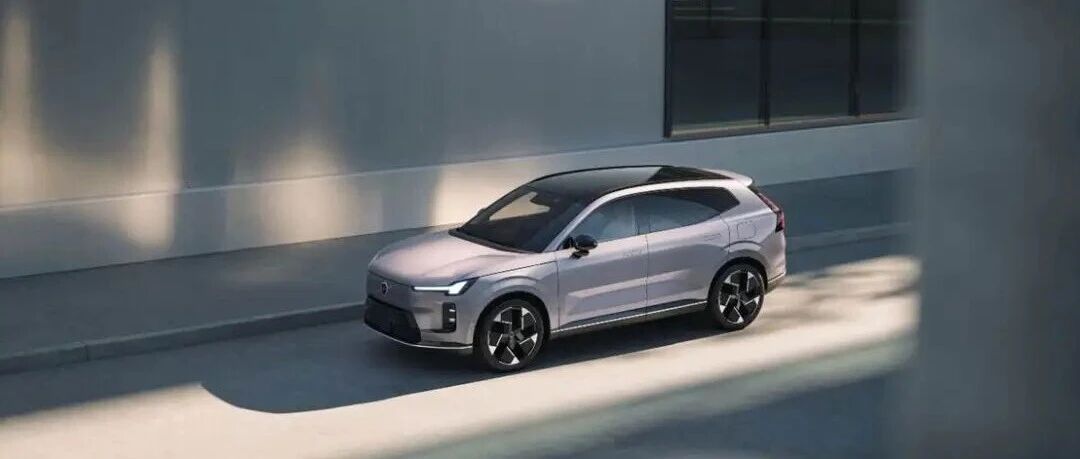
佛瑞亚海拉为沃尔沃XC70打造极具未来感的雷神之锤前照灯
Zhong Guo Qi Che Bao Wang· 2026-01-07 07:01
Core Viewpoint - The collaboration between Faurecia Hella and Volvo has resulted in the development of a futuristic "Thor's Hammer" headlight for the new XC70 model, emphasizing safety, technology, and design as part of Volvo's electrification strategy [2][5]. Group 1: Product Features - The new headlight features a matrix adaptive lighting system composed of multiple independently controllable LED sources, providing broader illumination, better brightness, and precise light distribution adjustments based on speed, steering angle, traffic conditions, and road curvature [3]. - The headlights can dynamically adjust to focus on distant objects during high-speed driving and expand coverage for near-field visibility at low speeds, ensuring optimal driver visibility [3]. - The system can automatically adjust the headlight height to maintain focus on the road, preventing glare for oncoming vehicles and adapting to different driving regulations based on the vehicle's delivery region [4]. Group 2: Recognition and Collaboration - Faurecia Hella's successful mass production of the XC70 headlight system highlights its expertise in advanced lighting technology and the strong partnership with Volvo [5]. - Volvo awarded Faurecia Hella the Outstanding Supplier Award, recognizing the contributions of the Jiaxing headlight factory and the Nanjing R&D center team in developing and producing the innovative headlight [5]. - This recognition underscores Faurecia Hella's commitment to quality and innovation, aiming to shape safer and smarter mobility solutions [5].
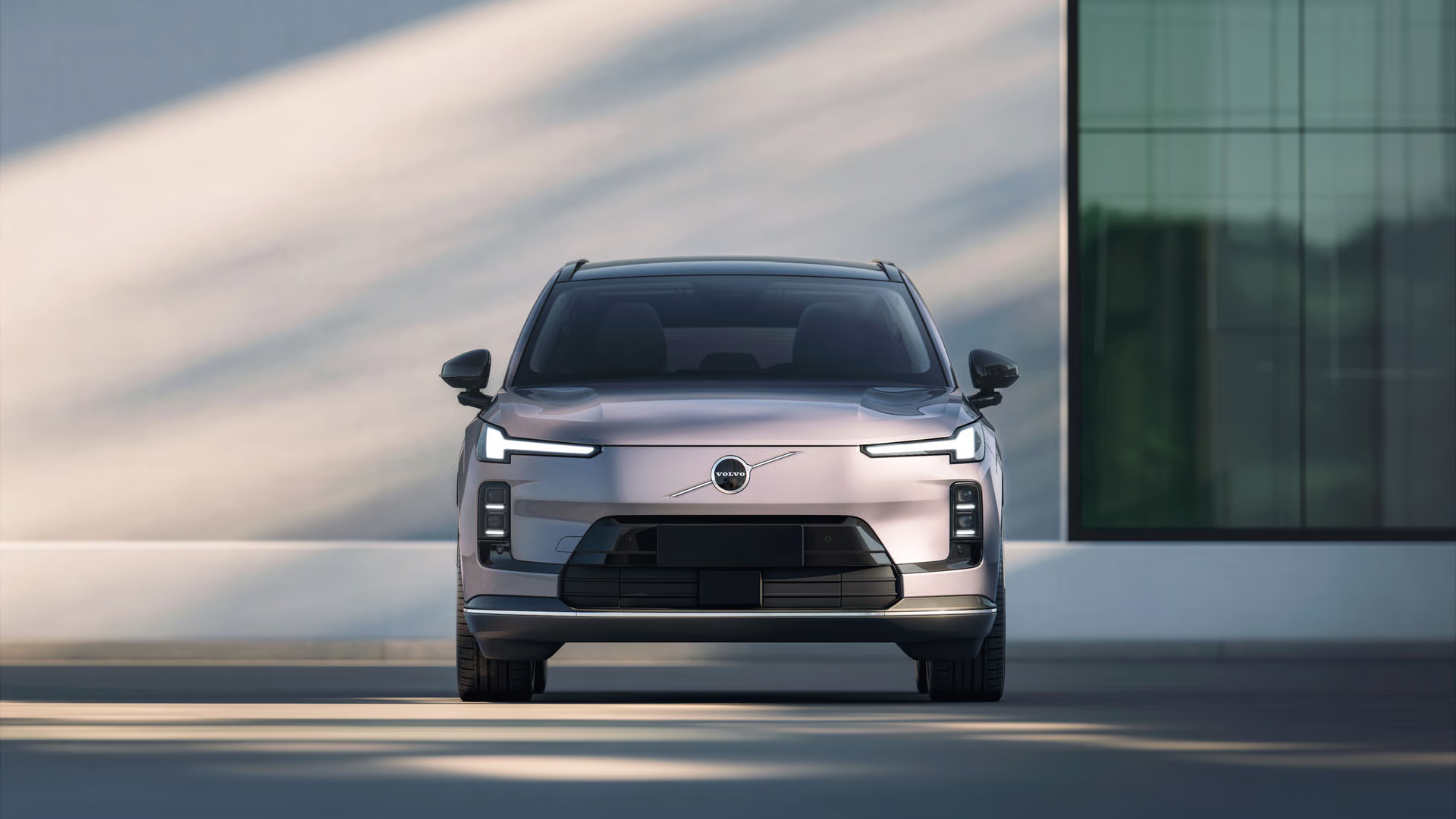
沃尔沃旗下全新XC70、全新XC90亮相2025广州车展
Bei Jing Shang Bao· 2025-11-23 06:10
Core Insights - Volvo showcased the new XC70 and XC90 at the Guangzhou Auto Show, highlighting advancements in automotive safety technology [1] Group 1: Product Features - The new XC90 features a boron steel closed-loop "cage structure," enhancing the vehicle's structural integrity [1] - The XC70 is equipped with a "three-way, three-zone" energy absorption system, designed to improve crash safety [1] - Both models underwent collision tests at Volvo's safety center in Gothenburg, exceeding legal requirements [1] Group 2: Safety Initiatives - In March 2024, Volvo established the first official AED organization in the industry, named the Volvo AED Road Messenger Alliance [1] - The alliance allows non-owners to join, with over 1,300 members already participating [1]
沃尔沃携品牌代言人郭晶晶亮相广州车展
Zheng Quan Ri Bao Wang· 2025-11-21 14:00
Core Points - The 23rd Guangzhou International Auto Show has commenced, showcasing Volvo's new luxury long-range hybrid SUV, the XC70, and the official launch of the 2026 XC90 model [1] - Olympic champion Guo Jingjing appeared as the brand ambassador and public welfare ambassador for Volvo's AED Road Messenger Alliance, sharing her safety experiences as a car owner [1] Product Highlights - The new XC90 is described as the culmination of Volvo's safety technology, featuring a strong "cage structure" made of boron steel, ensuring safety even in less noticed areas like the C-pillar [1] - The XC70, which has been popular since its launch this year, incorporates a notable "three-way, three-zone" energy absorption and unloading technology [1] - Together, the XC70 and XC60 form the "Volvo Luxury SUV Twin Stars," with combined sales exceeding 8,000 units in October, positioning Volvo among the top tier in the luxury mid-size to large SUV market [1] Social Responsibility Initiatives - Volvo's safety philosophy extends beyond products to societal initiatives, with the establishment of the first official AED organization in the industry, the Volvo AED Road Messenger Alliance, set to launch in March 2024, allowing non-owners to join [1] - The alliance currently has over 1,300 members and has initiated various public welfare actions, including the "Little Red Horse Safety Education Public Welfare Action" and the "Love Plan" [1]
销量持续下滑沃尔沃的如何自救?
Xi Niu Cai Jing· 2025-11-06 03:34
Core Insights - Volvo's sales have shown a downward trend despite a seemingly good performance since 2025, with a notable 12% year-on-year decline in global sales in June [2][3] - The company has initiated significant cost-cutting measures, including a plan to reduce costs by 18 billion Swedish Krona (approximately 1.9 billion USD) and a global workforce reduction of 3,000 employees [4] - The introduction of aggressive pricing strategies has led to a backlash from existing customers, raising concerns about brand value and resale rates [5][6] Sales Performance - In September, Volvo sold 12,802 new cars in China, marking a 1.1% month-on-month increase, but overall global sales have been declining [2] - Global retail sales in Q3 were 160,500 units, down 7% compared to the same period in 2024, with significant monthly declines observed in July and August [2] - Electric vehicle sales have been particularly hard hit, with a 26% drop in sales for pure electric models, which accounted for only 22% of total sales [2] Cost-Cutting Measures - Following a significant profit drop in Q1, Volvo launched a cost-cutting initiative and announced layoffs affecting about 7% of its workforce [4] - The company has implemented price reductions on several models, with discounts exceeding 140,000 RMB on new vehicles [4][5] Customer Sentiment - The aggressive pricing strategy has led to dissatisfaction among existing customers, who feel undervalued as new buyers benefit from lower prices [5] - Volvo's resale value has suffered, with a reported depreciation rate of 43.1%, placing it at the bottom among luxury brands [5] Electric Vehicle Strategy - Volvo is focusing on full electrification as a key strategy for future growth, with the launch of new models like the XC70 and the upcoming EX60 [6][7] - The EX60, built on the new SPA3 platform, is critical for demonstrating Volvo's electric technology and market competitiveness [7][8] Market Challenges - The luxury car market is facing intense competition from emerging Chinese electric vehicle brands, challenging Volvo's traditional market position [8] - Quality issues and recalls have undermined Volvo's reputation for safety, which was once a key competitive advantage [8]
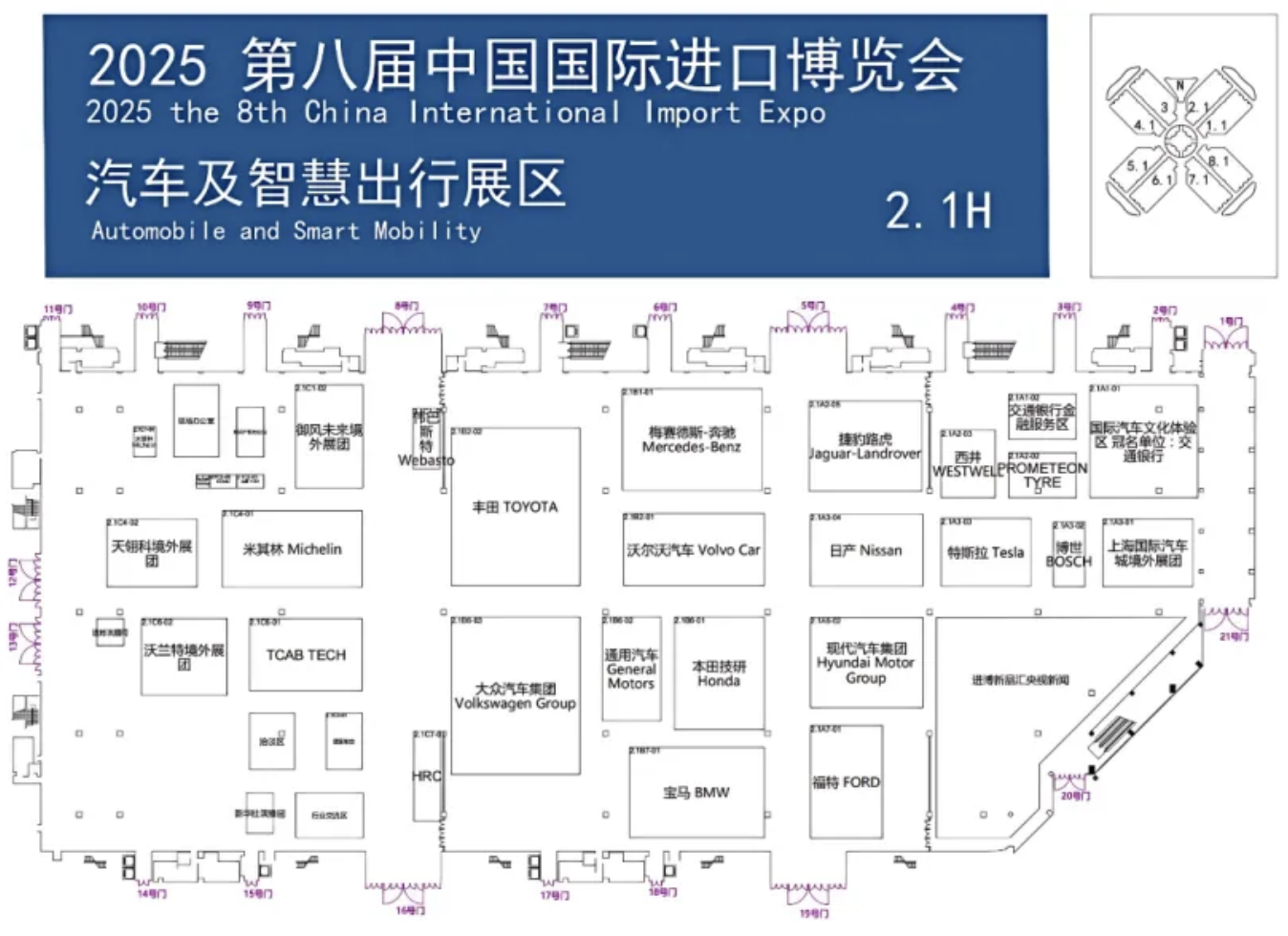
12家外资车企登陆第八届进博会,10家八年“全勤”
Zhong Guo Jing Ji Wang· 2025-11-05 06:16
Core Insights - The 8th China International Import Expo (CIIE) has commenced, continuing its role as a premier platform for international procurement, investment promotion, cultural exchange, and open cooperation since its inception in 2018 [1][3] - The automotive sector remains a focal point at the expo, showcasing major global brands and their latest advancements in autonomous driving technology, new energy vehicles, and smart cockpit experiences [1][3] Automotive Industry Trends - Despite a shrinking import car market due to the rise of domestic brands, the import market serves as a stage for multinational brands to showcase cutting-edge technology and diverse products [3] - The evolution of the automotive industry is highlighted at the expo, transitioning from traditional fuel to electric and intelligent vehicles, and from singular to diversified energy solutions [3] Major Exhibitors and Innovations - Jaguar Land Rover, celebrating its 15th anniversary in China, is showcasing the new Land Rover Defender OCTA and the Range Rover SV, along with rare royal vehicles [5] - Ford is presenting a unique American automotive culture experience with models like the Ford Mustang and the all-terrain camping SUV, Ford Mustang Mach-E [6] - Mercedes-Benz is displaying eight luxury models, including offerings from its AMG and Maybach lines, catering to various luxury market segments [8] - Volvo is introducing the new XC70, a luxury hybrid SUV that combines safety and advanced hybrid technology [10] - Toyota is focusing on localization and showcasing electric vehicles and new energy products, including a new energy storage solution developed with China Minmetals [12] - Honda is breaking traditional display modes by showcasing a diverse range of mobility solutions, including electric vehicles and motorcycles, emphasizing safety and outdoor experiences [14] - General Motors is highlighting its commitment to safety and sustainability with new electric and intelligent driving solutions, including the Buick Electra and Baojun models [16] - Volkswagen is presenting eight models from its four brands, showcasing its transition to electric vehicles and advanced driving assistance technologies [18] - BMW is featuring several high-performance and electric models, including the new BMW M2 CS and the electric BMW i4 M60, with limited availability in the Chinese market [20]
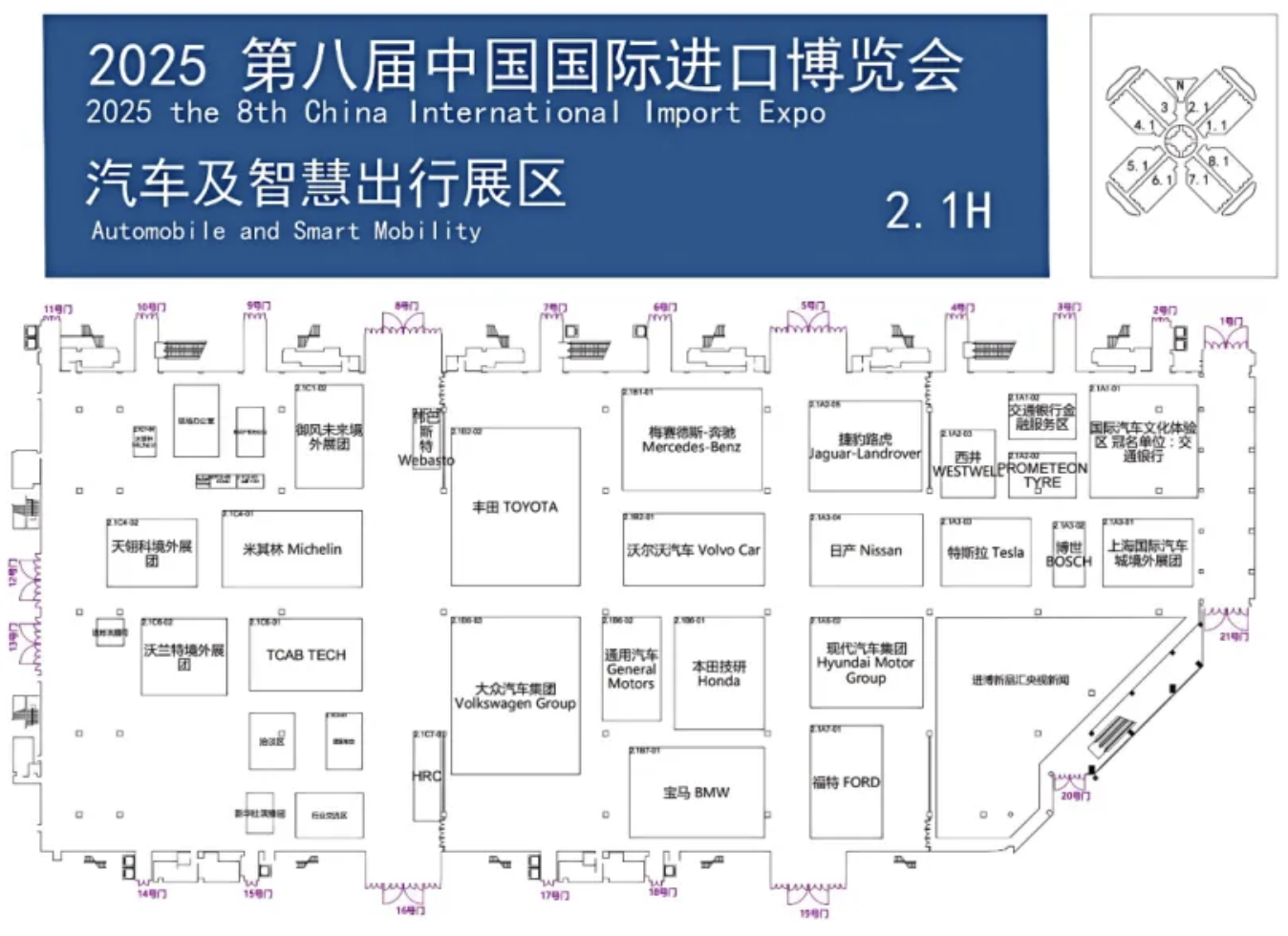
12家外资车企登陆第八届进博会,9家八年“全勤”
Zhong Guo Jing Ji Wang· 2025-11-05 04:06
Core Insights - The 8th China International Import Expo (CIIE) will commence on November 5, showcasing the automotive sector as a key highlight, featuring major global brands like Jaguar Land Rover, Tesla, Nissan, and more [1][3] - The automotive exhibition has evolved to reflect industry trends, with a focus on electric vehicles, hydrogen energy, and autonomous driving technologies, marking a significant transformation in the automotive landscape [3] Group 1: Automotive Industry Trends - The import car market is contracting, yet it remains a platform for multinational brands to showcase cutting-edge technologies and diverse products [3] - The evolution from traditional fuel vehicles to electric and intelligent solutions is evident, with autonomous driving technology being the focal point of this year's expo [3] Group 2: Participating Brands and Innovations - Jaguar Land Rover will present the new Land Rover Defender OCTA and the Range Rover SV, along with rare royal vehicles, emphasizing its cultural heritage [5] - Hyundai will debut the world's first mass-produced hydrogen fuel cell heavy-duty truck, showcasing advancements in logistics efficiency and zero-emission operations [5] - Mercedes-Benz will display eight luxury models, catering to various market segments with different driving technologies [7] - Volvo will introduce the new XC70, a luxury hybrid SUV, highlighting safety and advanced technology [9] - Toyota will focus on localization, showcasing electric vehicles and new energy storage products developed in collaboration with China Minmetals [11] - Honda will present a diverse range of mobility solutions, including electric vehicles and motorcycles, emphasizing safety and outdoor experiences [14] - General Motors will highlight its commitment to safety and sustainability with new electric and intelligent driving solutions [15] - Volkswagen will showcase eight models, including electric and high-end smart vehicles, reflecting its commitment to rapid delivery in the Chinese market [17] - BMW will unveil several key models, including the new BMW M2CS and electric vehicles, targeting performance and exclusivity in the Chinese market [19]
新能源车购置税政策“提门槛” 插混车型续航须超100公里
Qi Lu Wan Bao Wang· 2025-10-10 07:48
Core Viewpoint - The announcement from the Ministry of Industry and Information Technology, Ministry of Finance, and State Taxation Administration indicates that the purchase tax exemption policy for new energy vehicles will continue from January 1, 2026, but with significantly raised technical thresholds to promote high-quality industrial development [1][2]. Group 1: Policy Overview - The purchase tax exemption for eligible new energy vehicles will remain in effect until the end of 2027, with a 50% tax reduction in 2026 and a maximum tax reduction of 15,000 yuan per vehicle [2][7]. - The new policy links tax benefits directly to compliance with updated technical standards, marking a shift from subsidy-driven support to innovation-driven growth in the new energy vehicle sector [2][8]. Group 2: Technical Requirements - For pure electric passenger vehicles, the energy consumption must meet the latest national standards, ensuring compliance with GB36980.1—2025 [3]. - Plug-in hybrid vehicles must achieve a minimum pure electric range of 100 kilometers, a significant increase from the previous requirement of 43 kilometers, reflecting a 132% rise [4][8]. - Fuel consumption for plug-in hybrids must be reduced according to vehicle weight, with specific thresholds set for different weight categories [4]. Group 3: Transition and Compliance Management - Vehicles listed in the tax exemption directory before December 31, 2025, that meet the new requirements will automatically transition to the 2026 directory, while non-compliant models will be removed [5][7]. - New models seeking inclusion in the 2026 directory must be submitted by December 12, 2025, with a dynamic regulatory mechanism allowing for reapplication of previously removed models [6]. Group 4: Market Impact and Future Trends - The new technical requirements are expected to accelerate product iteration and enhance energy efficiency and range in the new energy vehicle market [8]. - Current mainstream plug-in hybrid models already exceed the new 100-kilometer electric range requirement, indicating readiness for compliance [9]. - By 2030, the market is projected to balance between pure electric, plug-in hybrid, and fuel vehicles, each accounting for approximately 30% of the market share, driven by the new policy's emphasis on technological advancement [9].
都市车界|新能源车购置税政策“提门槛” 插混车型续航须超100公里
Qi Lu Wan Bao· 2025-10-10 07:35
Core Insights - The Ministry of Industry and Information Technology, Ministry of Finance, and State Taxation Administration announced a continuation of the vehicle purchase tax exemption policy for new energy vehicles (NEVs) starting January 1, 2026, with significantly higher technical requirements aimed at promoting high-quality industrial development [1][3]. Policy Overview - The purchase tax exemption will remain in effect until the end of 2027, with a 50% tax reduction in 2026 and a maximum tax reduction of 15,000 yuan per vehicle [3][9]. - The new technical standards will disqualify models that do not meet the updated criteria from enjoying tax benefits, indicating a shift from policy subsidies to technological innovation [3][10]. Technical Requirements - For pure electric vehicles, the energy consumption per 100 kilometers must comply with the latest national standards, ensuring energy efficiency [4]. - For plug-in hybrid vehicles, the pure electric driving range requirement has increased from 43 kilometers to 100 kilometers, a 132% increase [1][5]. - Fuel consumption in electric mode must also be reduced according to specific weight categories, with stricter limits for heavier vehicles [5][6]. Transition and Compliance - Vehicles listed in the tax exemption directory before December 31, 2025, that meet the new requirements will automatically transition to the 2026 directory; non-compliant models will be removed [7][9]. - New models must be submitted for inclusion in the 2026 directory by December 12, 2025, with a dynamic regulatory mechanism in place for compliance [8]. Market Impact - The new requirements are expected to drive technological upgrades in the NEV sector, pushing manufacturers to enhance research and development efforts and phase out outdated products [10]. - As of September 2025, plug-in hybrid vehicles accounted for 30.7% of total NEV sales, indicating a significant market presence that may be affected by these new standards [10][11]. - The policy aims to align with advancements in battery technology and engine efficiency, ensuring that the market evolves towards high-quality development rather than mere scale expansion [10][11].
车辆购置税减免门槛提高,插混车型纯电续航至少100公里
Bei Ke Cai Jing· 2025-10-09 13:59
Core Insights - The Ministry of Industry and Information Technology, along with two other departments, announced new technical requirements for electric vehicles and plug-in hybrid vehicles, effective January 1, 2026, which include stricter energy consumption standards and an increase in the pure electric range requirement for plug-in hybrids from 43 kilometers to 100 kilometers [1][2][4] Group 1: Technical Requirements - The new announcement specifies that pure electric passenger vehicles must meet the energy consumption limits set by the national standard GB 36980.1-2025, which will be implemented starting January 1, 2026 [2][3] - The requirement for plug-in hybrid vehicles now mandates a minimum pure electric range of 100 kilometers, significantly up from the previous threshold of 43 kilometers [2][3] Group 2: Industry Impact - The new technical requirements are expected to drive technological upgrades in the industry, prompting companies to increase R&D investments to enhance battery technology and energy management efficiency [4][5] - The changes may lead to the elimination of outdated models from the market, optimizing competition and concentrating resources among companies with stronger technological capabilities [4][5] Group 3: Consumer Impact - Consumers will see changes in vehicle purchase costs, as only models meeting the new technical requirements will qualify for tax exemptions, potentially reducing the range of available models in the short term [5] - In the long term, the market is expected to offer more high-quality products, encouraging consumers to pay closer attention to vehicle technical specifications when making purchasing decisions [5]