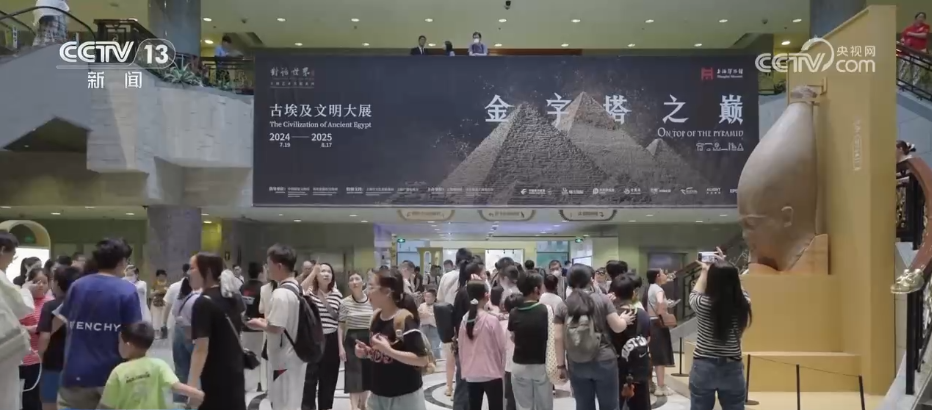
上海博物馆古埃及文明大展

Search documents
激活城市脉动 释放消费潜能 上海年味扑面而来 两会会场热议“文旅商体展”
Jie Fang Ri Bao· 2026-02-06 01:42
Group 1 - The core viewpoint emphasizes that the festive atmosphere in Shanghai not only enhances cultural appeal but also stimulates urban vitality and consumer potential [2] - The Shanghai government has introduced 28 measures to promote service industry quality and consumption expansion, indicating a shift in focus towards service consumption, which is experiencing rapid growth [3] - Successful cases, such as the Egyptian civilization exhibition at the Shanghai Museum, demonstrate the potential for high-quality offerings to drive significant consumer engagement and economic impact [4] Group 2 - The rise of the "self-love" trend among young consumers reflects a shift in consumption logic towards emotional resonance and value recognition, with 56.3% of young people willing to pay for emotional value or interests [5][6] - The "silver economy" targeting the elderly is identified as a new growth area, with recommendations for tailored policies and services to enhance quality of supply across various sectors [7] - Optimizing the consumption environment is crucial, with suggestions for reforming the consumption voucher system to better serve diverse demographics, particularly the elderly, and ensuring a fair and transparent consumer ecosystem [8][9]
2026文旅趋势深析: 经济理性下,价值消费如何重塑产业格局?
Sou Hu Cai Jing· 2026-01-01 15:47
Core Insights - The domestic cultural tourism industry has undergone a significant transformation by the end of 2025, with total consumption exceeding 5.8 trillion yuan, reflecting an 11.3% year-on-year growth, driven by a shift in consumer preferences towards experiences that offer emotional resonance and cultural value [1][2][12] - The focus for 2026 will be on "value cultivation" rather than mere scale expansion, fundamentally reshaping the supply logic and competitive landscape of the industry [1][12] Consumer Behavior Shift - Consumers are transitioning from a "traffic-dependent" mindset to a "value-first" approach, with 68.1% of consumers being cost-conscious in daily spending while 42.9% are willing to pay a premium for health and cultural experiences [2][11] - The lifespan of "internet-famous attractions" has significantly shortened, while destinations that provide core value are gaining popularity, as evidenced by the Shanghai Museum's exhibition attracting 2.77 million visitors and generating 760 million yuan in direct revenue [2][4] Experience Value and Cultural Depth - Emotional resonance and cultural depth are identified as the two core aspects for successful cultural tourism products in 2026 [5][7] - Over 65% of tourists are willing to pay a premium for unique experiences, with a 320% year-on-year increase in searches related to "emotional consumption" among Generation Z [5][9] - Successful case studies, such as the "Twelve Hours" cultural tourism IP in Jingzhou, demonstrate the effectiveness of creating immersive experiences that enhance visitor engagement and repeat spending [5][9] Cultural Value Integration - The integration of cultural value is crucial for the long-term viability of tourism products, with significant increases in visitor numbers linked to local cultural initiatives, such as the surge in visitors to Yibin's Nezha Palace after the release of the animated film [7][9] - Cultural value must be combined with modern experiences, as seen in the successful implementation of local cultural festivals that enhance product repurchase rates [9][11] Industry Transformation - The competitive focus of the cultural tourism industry is shifting from "resource-driven" to "value operation," as evidenced by government policies aimed at expanding quality supply and cultivating consumer experiences [11][12] - Companies are increasingly adopting a "value economy" approach, with personalized travel services and integrated tourism experiences becoming market necessities [11][12] Conclusion - The cultural tourism market in 2026 will move away from resource and traffic competition towards a model that prioritizes emotional and cultural value, offering consumers more meaningful experiences [12][13]

花样新“夜”态活跃“夏日经济” 特色文旅点燃消费市场新活力
Yang Shi Wang· 2025-06-30 07:29
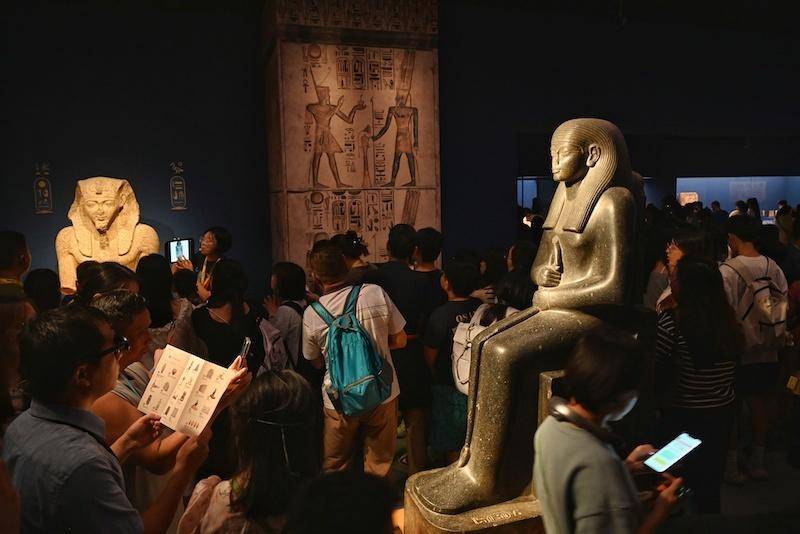
Core Viewpoint - The 2025 Shanghai Night Life Festival will enhance the cultural experience of citizens by extending the opening hours of museums, art galleries, and libraries, thereby promoting night-time cultural activities [1]. Group 1: Shanghai Night Life Festival - The festival will run from June to September 2025, featuring unique summer night consumption scenarios [1]. - Museums and cultural spaces in Shanghai will extend their hours and open night sessions to enrich the night-time cultural life of citizens [1]. Group 2: Museum Night Events - The Shanghai Museum's "Pyramid Peak: Ancient Egyptian Civilization Exhibition" has been very popular, leading to the addition of night sessions starting from July, with a "24-hour open" mode in the last week of the exhibition [4]. - Public cultural spaces like Xujiahui Academy and Heping Academy are also extending their hours into the night, with Heping Academy being the first 24-hour library in Shanghai [6]. Group 3: Broader Cultural Night Activities - Shanghai is actively developing night tours for museums and libraries, providing more options for cultural night life and meeting diverse cultural needs [8]. - In Luoyang, the Ancient Tomb Museum offers night tours, allowing visitors to explore ancient tombs in a unique night setting [8][10]. Group 4: Innovative Cultural Consumption - Various regions are creating new consumption scenarios, such as "Museum + Drama" and "Park + Mall," injecting new vitality into cultural tourism consumption [15]. - In Hangzhou, museums are integrating drama into their spaces, creating immersive experiences for visitors [17]. - "Park-style" malls are emerging in cities, combining natural scenery, commercial facilities, and diverse cultural spaces [19][21].