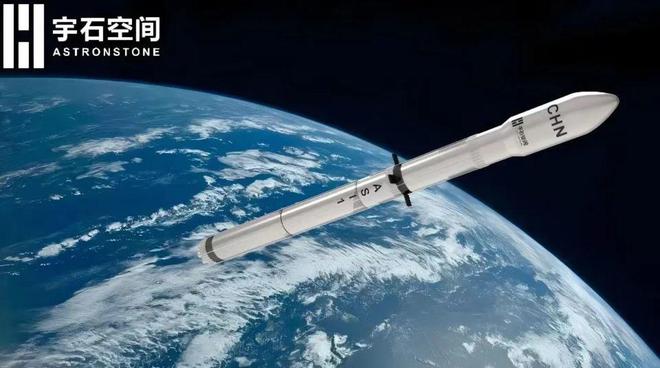
不锈钢火箭

Search documents
商业航天有望进入新纪元!航空航天ETF天弘(159241)标的指数放量长阳大涨近5%,成分股掀涨停潮
Xin Lang Cai Jing· 2026-01-08 06:26
Core Viewpoint - The aerospace ETF Tianhong (159241) is experiencing significant trading activity, with a turnover of 16.25% and a transaction volume of 97.0861 million yuan, reflecting a strong market interest in the aerospace sector [1] Product Highlights - The Tianhong aerospace ETF (159241) tracks the National Aerospace Industry Index, which covers over 68% of the aerospace and aviation equipment sectors, making it the highest "aerospace content" military index in the market [1] - The top ten holdings include major state-owned enterprises such as AVIC and Aero Engine Corporation, providing both stability from core assets and growth potential from smaller market cap companies [1] Hot Events - The first stainless steel rocket super factory in China has commenced construction, aiming for an annual production capacity of 25 rockets. This facility represents a significant advancement in high-end manufacturing for commercial aerospace in Hangzhou, with a total investment of 5.2 billion yuan [1] Institutional Viewpoints - CITIC Securities indicates that the commercial aerospace industry is entering a new era supported by national policies and technological breakthroughs. The development is characterized by a synergy between state-owned and private enterprises [2] - Successful overseas commercial aerospace development relies on the collaboration of policy, technology, and business models, as seen in the U.S. and Europe [2] Business Models - Companies like SpaceX have achieved profitability through a closed-loop industrial chain, while others like Planet Labs generate stable cash flow through standardized data subscription services. China's commercial aerospace sector needs to enhance legislative and procurement support while leveraging manufacturing advantages to tackle cost reduction in reusable rockets [3]

国内首个不锈钢火箭超级工厂开工拟年产25发;日本欲打造本土版“星链”系统;机构:内存市场已进入“超级牛市”——《投资早参》
Mei Ri Jing Ji Xin Wen· 2026-01-08 00:23
Market News - The U.S. stock market closed mixed, with the Nasdaq up 0.16%, while the S&P 500 and Dow Jones fell by 0.34% and 0.94% respectively. Major tech stocks mostly rose, with Intel increasing over 6% and Google rising more than 2%. Google's market capitalization reached $3.89 trillion, surpassing Apple's $3.85 trillion for the first time since 2019 [1] - International oil prices continued to decline, with WTI crude oil down 1.44% at $56.31 per barrel and Brent crude down 0.61% at $60.33 per barrel. Precious metals also saw a decrease, with spot gold down 0.92% at $4453.34 per ounce and silver down 3.8% at $78.16 per ounce [2] Industry Insights - Arrow Technology's large liquid carrier rocket assembly and recovery reuse base project commenced in Hangzhou, with a total investment of 5.2 billion yuan. This is China's first offshore recovery reusable rocket production base, expected to have an annual production capacity of 25 rockets [3] - Japan is developing a "Japanese version of Starlink" to establish a low-orbit satellite constellation for autonomous communication services, enhancing domestic control over communication networks [3] - The satellite communication industry is projected to exceed 200-400 billion yuan by 2030, with an annual compound growth rate of 10%-28%. This sector is transitioning from "concept verification" to "scale application," becoming a key driver for high-quality digital economic development [4] - The memory market has entered a "super bull market," surpassing historical highs from 2018. Prices for 64GB RDIMM memory are expected to rise significantly, with projections of a 40%-50% increase by Q4 2025 and another 40%-50% by Q1 2026 [4][5] - The postal industry plans to promote the application of unmanned delivery technologies by 2026, including the use of drones and automated sorting systems, to enhance logistics capabilities and support green development [6][7] Company Updates - Desay SV Automotive announced that its largest shareholder, Desay Group, plans to reduce its stake by up to 710,625 shares, representing no more than 1.19% of the company's total shares [8] - New Link Electronics plans to reduce its shares by up to 25.02 million, or 3% of its total shares, through various trading methods [8] - Yili Group's chairman plans to reduce his stake by up to 62 million shares, accounting for 0.98% of the total shares, with proceeds used to repay financing loans [10]
宇石空间:商业火箭领域追平美国,不会超过10年|50x50
Tai Mei Ti A P P· 2025-04-27 01:55
Core Insights - The essence of commercial rockets is logistics, primarily driven by satellite demand, with SpaceX's Starlink project leading the way in global satellite internet access [2] - China is launching three satellite constellation plans to compete with Starlink, aiming to deploy a total of 38,000 low-orbit satellites, but has only launched over 100 so far [2][3] - The commercial rocket market is characterized by a significant gap between high demand and limited supply, creating substantial market opportunities [3] Industry Overview - The U.S. satellite launch market is dominated by SpaceX, which holds 99% market share due to its technological advantages, while China's market is still emerging with no clear monopolistic player [3] - Key customer demands for commercial rocket companies include sufficient capacity, reliability, scheduling flexibility, and low transportation costs, with a current focus on reducing costs [3][4] Cost Reduction Strategies - SpaceX has successfully reduced launch costs to $1,500 per kilogram, aiming for $100 per kilogram, while other U.S. companies charge around $20,000 per kilogram and Chinese companies around 60,000 RMB per kilogram [4] - SpaceX's cost reduction is attributed to larger rocket sizes, innovative materials like stainless steel, and unprecedented reuse efficiency [4] Emerging Competitors - Yushi Space, founded by Dr. Tang Wen, is developing a stainless steel rocket technology and has recently completed a significant angel round of financing [5][4] - The company aims to leverage stainless steel for its superior thermal and structural properties, allowing for more efficient rocket recovery and operation [6][7] Technological Innovations - The use of liquid oxygen and methane engines offers advantages in longevity and maintenance, making them suitable for reusable rockets [7] - The "chopstick" recovery method proposed by Yushi Space is designed to reduce weight and costs associated with traditional landing gear, enhancing recovery efficiency [8] Market Challenges - The commercial rocket industry faces high prices and low production capacity, with China's launch frequency stagnating around 60 per year compared to the U.S. [9] - Innovation in manufacturing processes is essential for increasing capacity and reducing costs, with Yushi Space's focus on stainless steel rockets representing a potential breakthrough [9] Future Outlook - There is confidence that China will catch up to the U.S. in commercial rocket capabilities within a decade, leveraging its industrial manufacturing strengths [10] - Yushi Space envisions a future where affordable space transportation enables broader access to space infrastructure, with a target of achieving launch costs below 30,000 RMB per kilogram by 2027 [11][13]