专供卤料包

Search documents
业绩集体下滑,不再拼门店的“卤味三巨头”还能拼什么
Bei Jing Shang Bao· 2025-04-14 13:33
Core Viewpoint - The performance of the "three giants" in the marinated food industry, namely Zhou Hei Ya, Jue Wei Food, and Huang Shang Huang, has collectively declined due to a significant drop in sales of marinated products, prompting the need for new growth strategies such as "marinated+" [1][3][9]. Group 1: Financial Performance - Zhou Hei Ya reported a revenue of 2.451 billion yuan in 2024, a year-on-year decrease of 10.7%, with a net profit of 98.2 million yuan, down 15% [3]. - Jue Wei Food's revenue for the past year was 6.257 billion yuan, a decline of 13.84%, and its net profit fell by 34.04% to 227 million yuan [3]. - Huang Shang Huang's total revenue was 1.739 billion yuan, down 9.44%, with a net profit of approximately 40.3 million yuan, a decrease of 42.86% [3]. Group 2: Market Dynamics - The decline in sales of marinated products is attributed to increased market saturation and fierce competition, leading to a fragmentation of consumer demand [3][4]. - Analysts suggest that the industry's severe homogenization and lack of innovation in product flavors and formats have weakened brand loyalty among consumers [4][11]. Group 3: Store Expansion and Closure - The marinated food sector has seen a net closure of approximately 23,000 stores over the past year, with major brands closing over 1,700 stores in the first half of 2024 [4][8]. - Zhou Hei Ya's store count decreased by 785 to 3,031 by the end of 2024, while Jue Wei Food's stores fell by 981 to 14,969 [8] [11]. - Huang Shang Huang also closed 837 stores, marking an 18.6% decline in its total store count [8]. Group 4: Strategic Shifts - Jue Wei Food plans to focus on upgrading its brand and targeting younger consumers, introducing new products like milk tea to seek alternative growth avenues [10][11]. - Zhou Hei Ya is pursuing a "marinated+" strategy, expanding into compound seasonings and ready-to-eat products, while also launching new beverage lines [10][11]. - Huang Shang Huang aims to accelerate its "thousand cities, ten thousand stores" plan to solidify its market position and capitalize on the growth opportunities in the marinated food market [11].


"鸭脖一哥"跌落神坛!绝味食品净利暴跌34%创上市新低,万店扩张后遗症显现
Jin Rong Jie· 2025-04-11 09:26
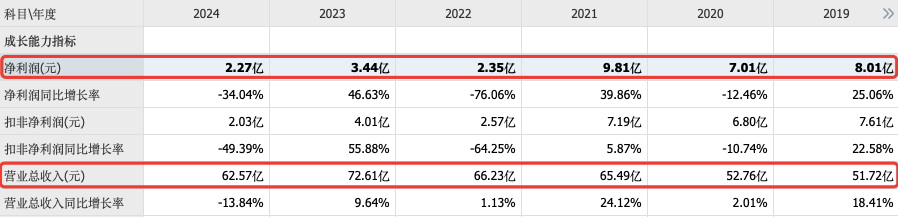
Core Viewpoint - Juewei Foods reported its worst performance since going public, with significant declines in revenue and net profit for 2024, indicating challenges in the snack food industry, particularly in the duck neck segment [1][2]. Financial Performance - In 2024, Juewei Foods achieved a revenue of 6.257 billion yuan, a year-on-year decrease of 13.84% [1][3]. - The net profit attributable to shareholders was 227 million yuan, down 34.04% from the previous year, representing only 23% of the net profit in 2021 [2][3]. - The company's total revenue for Q1 2025 was 1.501 billion yuan, with a net profit of approximately 120 million yuan, reflecting declines of 11.47% and 27.29% respectively compared to Q1 2024 [4]. Product Segment Performance - Revenue from fresh products decreased by 15.76% in 2024, with poultry products down 16.62%, vegetable products down 9.94%, and other products down 18.56%. Only livestock products saw an increase of 39.38%, but with a negative gross margin of -8.48% [3][4]. Strategic Changes - Juewei Foods began to shrink its store count in 2024, reducing the total number of stores in mainland China to 14,969, a decrease of 981 stores from the end of 2023 [4]. - The company initiated a brand upgrade in 2024, appointing a new global ambassador to target younger consumers, although the effectiveness of this strategy remains questionable [4]. Industry Context - The challenges faced by Juewei Foods are reflective of broader issues in the snack food industry, particularly in the duck neck market, where consumer preferences are shifting and competition is intensifying [5]. - Competitors like Zhou Hei Ya are also experiencing declines, with a reported revenue drop of 10.7% in 2024, prompting similar strategic adjustments such as reducing store numbers and diversifying product offerings [5][6].