卤味

Search documents
绝味食品登胡润中国食品行业百强第79位
Quan Jing Wang· 2026-02-10 02:41
Core Insights - The Chinese food industry is accelerating its transition towards high-quality development, with quality enhancement becoming a consensus within the industry. Recently, the "2025 Global Launch · Hurun China Food Industry Top 100 List" was released, where the company ranked 79th, marking a significant recognition of its industry position and digital development progress [1] Group 1: Supply Chain and Quality Assurance - The company has established a large-scale direct procurement system, signing long-term cooperation agreements with leading meat and poultry suppliers, and has invested in upstream enterprises to enhance supply chain resilience, ensuring raw material quality and cost control [2] - The company operates over 20 intelligent central factories nationwide, utilizing automated marinating equipment and rapid cooling technology to ensure consistent flavor across all stores and significantly improve production efficiency [2] - The company has developed a cold chain logistics system, equipped with over 2,000 GPS temperature-controlled vehicles, creating a three-tier logistics network with a delivery radius of 500-800 kilometers, ensuring fresh products reach consumers within 24 hours [2] Group 2: Product and Business Model Innovation - The company launched a new product, the 4.9 yuan hot marinated cup set, which includes rice noodles and hot marinated soup, achieving over 800,000 sales on Douyin in the first month, significantly increasing store traffic and creating a phenomenon in the market [3] - The company introduced three differentiated store formats: Juewei PLUS, Juewei Fresh Marinated, and Juewei Pot, to cover various consumer scenarios. Juewei PLUS targets young social consumers, Juewei Fresh Marinated focuses on community needs, and Juewei Pot caters to the lunch market for white-collar workers [3] - The recognition in the "2025 Global Launch · Hurun China Food Industry Top 100 List" reflects the industry's and market's high regard for the company, which is leading the marinated food sector towards standardization, intelligence, and all-scenario consumption through digital empowerment and innovation [3]


平均每天倒闭7家,绝味鸭脖撑不住了
Xin Lang Cai Jing· 2026-02-09 10:09
Core Viewpoint - The company "Juewei Duck Neck" is facing a severe crisis, marked by a significant decline in store numbers and financial performance, leading to its first-ever annual loss since its listing in 2017 [4][5][47]. Group 1: Store Operations and Market Presence - Juewei Duck Neck has seen a net reduction of over 4,000 stores in the past year and a half, averaging about 7 store closures per day [4][46]. - The company no longer discloses store numbers in its financial reports, interpreted as a signal of contraction [4][46]. - As of mid-2024, Juewei had approximately 10,713 stores nationwide, a significant drop from previous figures [4][46]. Group 2: Financial Performance - Juewei is projected to report a net loss of between 160 million to 220 million yuan for the year 2025, marking its first negative annual profit [5][47]. - The company's net profit plummeted to 235 million yuan in 2022, a decline of over 76% year-on-year, and has not returned to peak levels since [12][55]. - In 2021, Juewei achieved a revenue of 6.549 billion yuan and a net profit of 981 million yuan, but by 2024, revenue began to decline again [12][54][55]. Group 3: Competitive Landscape - Competitors like "Huang Shang Huang" are expected to see profit growth in 2025, while "Zhou Hei Ya" is showing signs of recovery despite also closing stores [15][58][59]. - The overall industry is under pressure, but not all players are experiencing the same downturn, highlighting Juewei's unique struggles [15][59]. Group 4: Consumer Behavior and Market Trends - Consumer preferences are shifting, with a growing number opting for lower-priced alternatives, such as street vendors, which offer similar products at significantly lower prices [24][66]. - The average consumer spending on duck neck products is decreasing, with a notable increase in the proportion of consumers favoring individual shops and street stalls [67]. Group 5: Regulatory and Trust Issues - Juewei's stock has been marked with "ST" (Special Treatment) due to significant financial risks, following a five-year period of financial misreporting that resulted in over 700 million yuan in understated revenue [26][70]. - The company has faced multiple food safety incidents, further damaging its brand reputation and consumer trust [31][75]. Group 6: Industry Outlook - The overall market for duck neck products is stagnating, with a projected growth rate of less than 3% for 2025, indicating a mature and potentially saturated market [34][76]. - Juewei is attempting to pivot by introducing new products, such as the "Hot Braised Cup," to adapt to changing consumer preferences and market conditions [79][80].
卤味巨头集体关店
第一财经· 2026-02-02 15:43
Core Viewpoint - The "luwei" (marinated food) industry is undergoing significant differentiation and deep adjustments, with major players showing contrasting performance signals amid a backdrop of slowing growth and intensified competition [3]. Performance Divergence - ST Juewei (603517.SH) has announced an expected revenue of 5.3 billion to 5.5 billion yuan for 2025, representing a year-on-year decline of 12.09% to 15.29%. This marks the company's first annual loss since its listing, with an anticipated loss of 160 million to 220 million yuan [5]. - In contrast, Huang Shang Huang (002695.SZ) forecasts a net profit of 70 million to 90 million yuan for 2025, reflecting a year-on-year increase of 73.57% to 123.16% [6]. - Zhou Hei Ya (1458.HK) has not yet released its full-year earnings forecast, but its mid-2025 report indicates total revenue of 1.223 billion yuan, a decrease of 2.9%, while net profit rose by 228% to 108 million yuan [7]. Store Count Reduction - Despite Zhou Hei Ya's profit increase and Huang Shang Huang's strong performance, both companies are reducing their store counts. Zhou Hei Ya closed 167 stores, bringing its total to 2,864 by mid-2025 [9]. - Huang Shang Huang reported a decrease in store count from 3,660 at the end of 2024 to 2,898 in June 2025 [10]. - ST Juewei has not disclosed its store count in recent reports, but it is estimated to have reduced over 4,000 stores in a year and a half, with approximately 10,713 stores remaining as of February 2026 [10]. Industry Challenges - The growth of the "luwei" industry is facing challenges due to a decline in consumer willingness, high prices, and competition from snacks and ready-to-eat meals. This has led to major companies closing inefficient stores and exploring transformation strategies [3][11]. - The overall market growth rate for the marinated food industry has slowed, with a compound annual growth rate (CAGR) of 6.42% from 2018 to 2023, and a market size of approximately 318 billion yuan in 2023 [10]. - Key pain points in the industry include competition from alternative products, product homogeneity among top brands, and pricing issues, with leading brands averaging over 50 yuan per kilogram, leading to a perceived lack of value among consumers [11].

卤味巨头业绩分化:绝味首次年度亏损,煌上煌盈利增加但门店减少
Di Yi Cai Jing· 2026-02-02 13:27
Core Insights - The overall sentiment in the marinated food industry indicates a significant challenge due to high prices and low cost-performance ratio, compounded by declining consumer willingness and confidence [1] Industry Performance - The marinated food sector is experiencing severe differentiation and deep adjustments, with major players showing divergent performance signals [1] - ST Juewei (603517.SH) anticipates its first annual loss since its listing in 2025, projecting a revenue decline of 12.09% to 15.29%, with expected losses between 160 million to 220 million yuan [2] - In contrast, Huang Shang Huang (002695.SZ) forecasts a net profit increase of over 70% for 2025, attributed to low raw material prices and improved operational efficiency [2][3] Store Count Trends - Despite positive profit forecasts, both Huang Shang Huang and Zhou Hei Ya (1458.HK) are reducing their store counts, with Zhou Hei Ya closing inefficient stores, resulting in a decrease from 3031 to 2864 stores [4][5] - Huang Shang Huang's store count dropped from 3660 to 2898 over the past two years, while ST Juewei has not disclosed its store count, but it has reportedly closed over 4000 stores in a year and a half [5] Market Challenges - The marinated food industry faces significant challenges, including competition from snacks, prepared dishes, and hot pot brands, leading to a threat of substitution [6][7] - Product homogeneity is prevalent, with 80% of the top 10 brands offering overlapping products, and there are concerns regarding pricing, as leading brands have an average product price exceeding 50 yuan per jin, which diminishes perceived consumer value [7]
一年闭店4000家,“中国鸭王”也撑不住了
Sou Hu Cai Jing· 2026-02-02 02:57
Core Insights - The core issue for "Duck Neck King" Juewei Foods is its first annual loss since its IPO in 2017, with a projected net loss of 160 million to 220 million yuan for 2025 [2] - The company has seen a net reduction of over 4,000 stores in the past year and a half, marking a significant decline from its peak of nearly 16,000 stores [4] - The competitive landscape in the snack food industry is shifting, with rivals like Huangshanghuang and Zhouheiya reporting profits while Juewei struggles [6][7] Financial Performance - Juewei's revenue is expected to decline by 12% to 15% in 2025, indicating a significant drop in sales of its core product, duck necks [3] - The company has recorded investment losses exceeding 370 million yuan over the past three years due to unsuccessful investments in other food brands [3] Store Operations - The aggressive expansion strategy led to a dilution of single-store revenue, resulting in franchisees closing stores due to lack of profitability [4] - As of January 2026, the number of operational stores has fallen to just over 10,000, a stark contrast to its previous peak [4] Regulatory and Market Challenges - Juewei is under investigation for concealing income from franchise store renovations, leading to regulatory warnings and a significant drop in market confidence [5] - The company's market value has plummeted by nearly 90% since its peak of 63.5 billion yuan in 2021, now valued at less than 8 billion yuan [5] Competitive Landscape - In contrast to Juewei, Huangshanghuang and Zhouheiya have adopted strategies focused on efficiency and profitability, with Huangshanghuang expecting a net profit increase of 73% to 123% in 2025 [6][7] - The shift in competition from "scale is king" to "efficiency is paramount" highlights the vulnerabilities of Juewei's previous growth strategy [8] Industry Outlook - The current state of the snack food industry suggests that survival will depend more on operational efficiency rather than rapid expansion [9]
新浪财经资讯AI速递:昨夜今晨财经热点一览 丨2026年2月1日
Xin Lang Cai Jing· 2026-01-31 23:52
Group 1 - The gold and silver prices experienced a significant drop, marking the largest single-day decline in 40 years, attributed to a technical correction after an overheated market [2][17] - The first trigger for the decline was profit-taking and forced liquidation of leveraged positions, while the second was the hawkish stance from the newly nominated Federal Reserve chairman and unexpected core PPI data, which increased real interest rates and the dollar's strength, diminishing gold's appeal [2][17] - Despite short-term market volatility, geopolitical tensions and the trend of de-dollarization are expected to provide structural support for gold in the medium to long term [2][17] Group 2 - The aging population in Guangdong is driving the growth of the eldercare robotics industry, which is seen as a new market with significant potential, supported by government policies [3][18] - The industry faces challenges such as technological disconnect and weak ecosystems, requiring strategic coordination and market environment improvements to advance [3][18] - Future developments in the industry are expected to focus on lightweight, intelligent, and home-based solutions [3][18] Group 3 - The demand for transformers, essential for AI computing power, has surged, with some orders extending to 2027, indicating a booming market [4][19] - Domestic manufacturers benefit from a shorter delivery cycle compared to European and American counterparts, leading to rapid export growth [4][19] - The ongoing "East Data West Computing" project and increased power consumption for computing are driving significant market expansion for high-end transformers [4][19] Group 4 - The commercial aerospace sector is experiencing a divergence in performance, with some companies like Beimo High-Tech projecting a net profit increase of over 12 times, while others face substantial losses exceeding 1 billion yuan [11][26] - The industry is shifting from valuation-driven growth to a focus on fundamentals, with 2026 anticipated to be a critical year for technology implementation and business model validation [11][26] Group 5 - The A-share market is witnessing a wave of delistings, with several companies facing termination due to financial misconduct or failing to meet market capitalization requirements [10][24][25] - This trend reflects the acceleration of the "delist as needed" mechanism under the registration system, indicating a deepening market clearing process [10][24][25] Group 6 - The photovoltaic industry in Yiwu is struggling due to rising metal prices and changes in export tax policies, leading to unstable pricing and increased customer hesitance [7][22] - Companies are clearing inventory to mitigate risks and exploring new business avenues such as energy storage and inverters, while recognizing the need for brand and core technology development for long-term success [7][22]
绝味食品百亿营收目标仅完成一半 踏入万亿小吃快餐赛道谋突围
Chang Jiang Shang Bao· 2026-01-26 23:44
Core Viewpoint - The pickled food industry is facing a "growth bottleneck," impacting the performance of Juewei Foods (ST Juewei, 603517.SH), which is expected to report a net loss for the fiscal year 2025 [1][5]. Financial Performance - Juewei Foods forecasts a net profit attributable to shareholders of between -160 million to -220 million yuan for 2025, indicating a loss compared to the previous year [1][5]. - The company anticipates operating revenue of 5.3 billion to 5.5 billion yuan for 2025, representing a year-on-year decline of 12.09% to 15.29% [2][5]. - The revenue target set in 2022 for 2025 was 10.937 billion yuan, meaning the company will only achieve 48.46% to 50.29% of this goal [3][5]. Market Context - The overall economic environment is stabilizing, but the consumption sector is still under structural adjustment pressure, affecting Juewei's operations [6]. - The fast-food market in China is projected to reach a scale of 1.08 trillion yuan by 2025, which could be a key growth driver for the restaurant industry [4][10]. Strategic Initiatives - Juewei Foods is entering the fast-food sector with a new brand "Juewei Bao Bao," combining its pickled food heritage with hot pot fast food to provide a new growth path [4][9]. - Industry experts suggest that Juewei should focus on product health upgrades, private traffic operations, and digital supply chain transformation to adapt to consumer trends [3][9]. Regulatory Issues - Juewei Foods has faced regulatory scrutiny for alleged violations of information disclosure, resulting in a warning and a fine of 4 million yuan [11].
上市九年首亏,绝味食品进入“寒冬”
Sou Hu Cai Jing· 2026-01-26 07:20
Core Viewpoint - ST Juewei (referred to as "Juewei Food") announced a projected revenue of 5.3 billion to 5.5 billion yuan, a year-on-year decline of 12.09% to 15.29%, and a projected net profit attributable to shareholders of -160 million to -220 million yuan, marking the first annual loss since its listing in 2017 [2][4]. Financial Performance - For the first three quarters of 2025, Juewei Food achieved a net profit of 280 million yuan, indicating a significant fourth-quarter loss of 440 million to 500 million yuan [4]. - The company's revenue fluctuated from 6.623 billion yuan in 2022 to 7.261 billion yuan in 2023, then dropped to 6.257 billion yuan in 2024, a year-on-year decline of 13.84% [5]. - The net profit attributable to shareholders decreased from 235 million yuan in 2022 to 344 million yuan in 2023, and further down to 227 million yuan in 2024, a year-on-year drop of 34.04% [5]. Regulatory Issues - Juewei Food faced regulatory scrutiny due to unrecognized franchise store renovation income from 2017 to 2021, resulting in a correction order, a warning, and a fine of 4 million yuan from the Hunan Securities Regulatory Bureau [5]. - The company was publicly reprimanded by the Shanghai Stock Exchange, leading to its stock being placed under risk warning and changing its name to "ST Juewei" [5]. Market Challenges - The company is experiencing a decline in the number of franchise stores, which peaked at 15,950 in 2023 and has since decreased to 10,713 by January 2026, a reduction of 5,237 stores [7][8]. - The revenue from poultry products, primarily duck necks, has decreased from 3.444 billion yuan in the first three quarters of 2023 to 2.434 billion yuan in the first three quarters of 2025, a decline of over 1 billion yuan [9]. Strategic Adjustments - In response to market challenges, Juewei Food is shifting its strategy from focusing solely on duck necks to a broader approach in the marinated food sector, launching new products like the "Hot Marinated Cup" priced at 4.9 yuan [9]. - The company is also venturing into the restaurant sector, opening a fast-food outlet named "Juewei Pot" in Shenzhen, which offers a range of dishes priced between 26.9 yuan and 39.9 yuan [9][11]. Consumer Trust Issues - Juewei Food is facing declining consumer trust, highlighted by a controversy over misleading pricing practices and food safety concerns, including reports of counterfeit health certificates among staff [11][13].
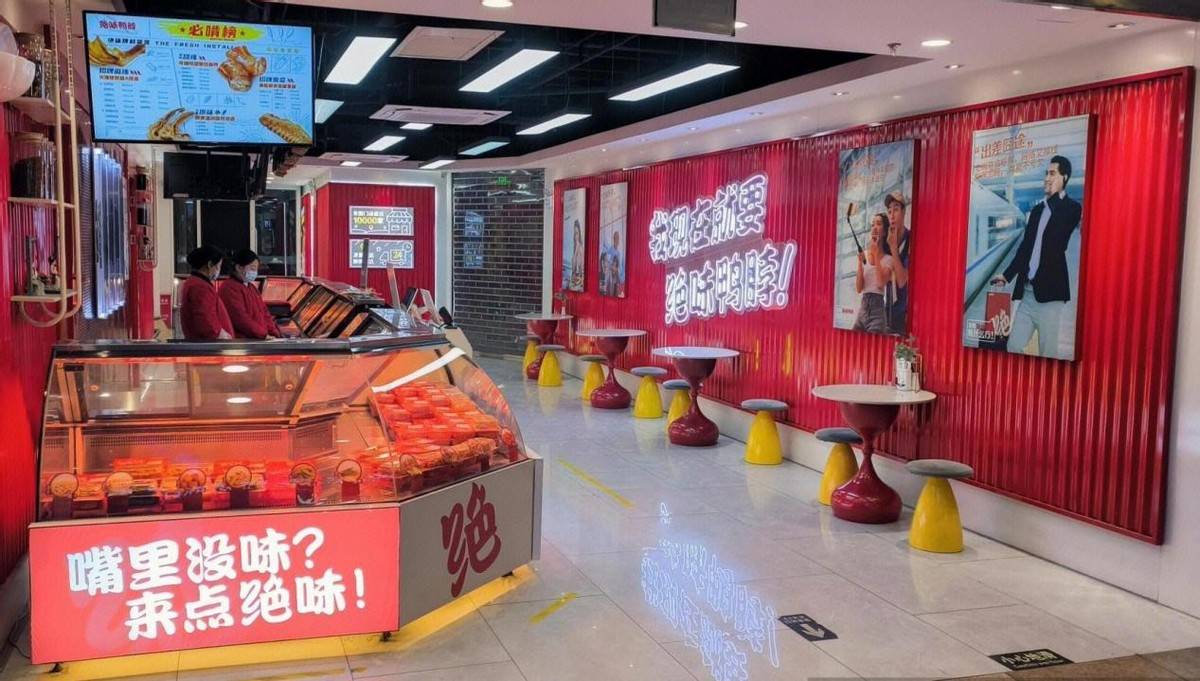
帮主郑重:ST绝味首亏!卤味行业下半场,投资逻辑彻底变了
Sou Hu Cai Jing· 2026-01-25 03:24
Group 1 - The core point is that the traditional snack industry, particularly the braised food sector, is undergoing significant changes, with major companies like Juewei Food reporting their first annual losses in eight years, amounting to 160 to 220 million yuan, and closing over 5,000 stores [1][3] - The industry is shifting from a focus on rapid expansion to a need for efficiency and profitability, as single-store revenue has dropped by over 40%, making store closures a common occurrence [3][4] - The losses are not isolated to Juewei but reflect a broader issue within the traditional braised food market, where many companies are struggling with profitability and facing regulatory penalties [3] Group 2 - Investment strategies in the consumer sector should now prioritize single-store profitability and product innovation rather than merely the number of stores [4] - Companies that continue to blindly expand without improving efficiency or innovating their product offerings are likely to face challenges, while those with strong supply chains and high-margin new products will be better positioned for success [4] - The competition in the braised food sector has evolved from merely opening more stores to focusing on stability and efficiency, with online brands and regional competitors diverting customers from traditional giants [4]

上市首亏!“鸭脖大王”绝味预亏超1.6亿元
Guo Ji Jin Rong Bao· 2026-01-23 12:38
Core Viewpoint - ST Juewei, known as the "Duck Neck King," is facing its first annual loss since its listing, with projected revenue declining by 12.09% to 15.29% year-on-year, leading to a net loss of 1.6 billion to 2.2 billion yuan in 2025, compared to a profit of 2.27 billion yuan the previous year [1][2][3] Group 1: Financial Performance - The company expects revenue for 2025 to be between 5.3 billion and 5.5 billion yuan, marking a significant decline from previous years [1] - The net profit for 2025 is projected to be a loss of 1.6 billion to 2.2 billion yuan, a stark contrast to the profit of 2.27 billion yuan in 2024, marking the lowest profit since its listing in 2017 [1][2] - In the first three quarters of 2025, the company reported a net profit of 280 million yuan, indicating a substantial fourth-quarter loss of 4.4 billion to 5 billion yuan [1][2] Group 2: Operational Challenges - The company cites increased non-operating expenses and losses from equity investments as key factors contributing to its financial struggles [3] - ST Juewei's investments in various brands within the food and beverage sector have not yielded positive returns, with investment losses recorded at -94 million yuan, -116 million yuan, and -160 million yuan from 2022 to 2024 [3] - The company has shown signs of operational weakness, with revenue declining by 13.84% and net profit dropping by 34.04% in 2024 [3] Group 3: Market Dynamics - The company is experiencing a contraction in store numbers, with a peak of 15,950 stores in 2023, but a significant reduction to 10,713 stores by 2025, indicating a shift in its growth strategy [4] - Increased competition in the snack food industry is further squeezing the company's core business, with revenue from poultry products dropping from 3.444 billion yuan in the first three quarters of 2023 to 2.434 billion yuan in the same period of 2025 [4] - The company is shifting its strategic focus from deepening its core duck neck business to concentrating on the broader snack food sector and addressing specific consumer demands [4] Group 4: Regulatory Issues - In 2025, the company faced regulatory penalties for failing to recognize revenue from franchise store renovations, resulting in a fine of 4 million yuan and further damaging market confidence [6] - The company’s stock was placed under risk warning and subsequently removed from the Hang Seng A-share investable index, leading to a significant decline in market valuation [6] - As of January 23, 2026, the company's stock price was 13.07 yuan per share, down 2.17%, with a market capitalization of 7.92 billion yuan, reflecting a decline of over 22% since the beginning of 2025 [6]