个人机器人

Search documents
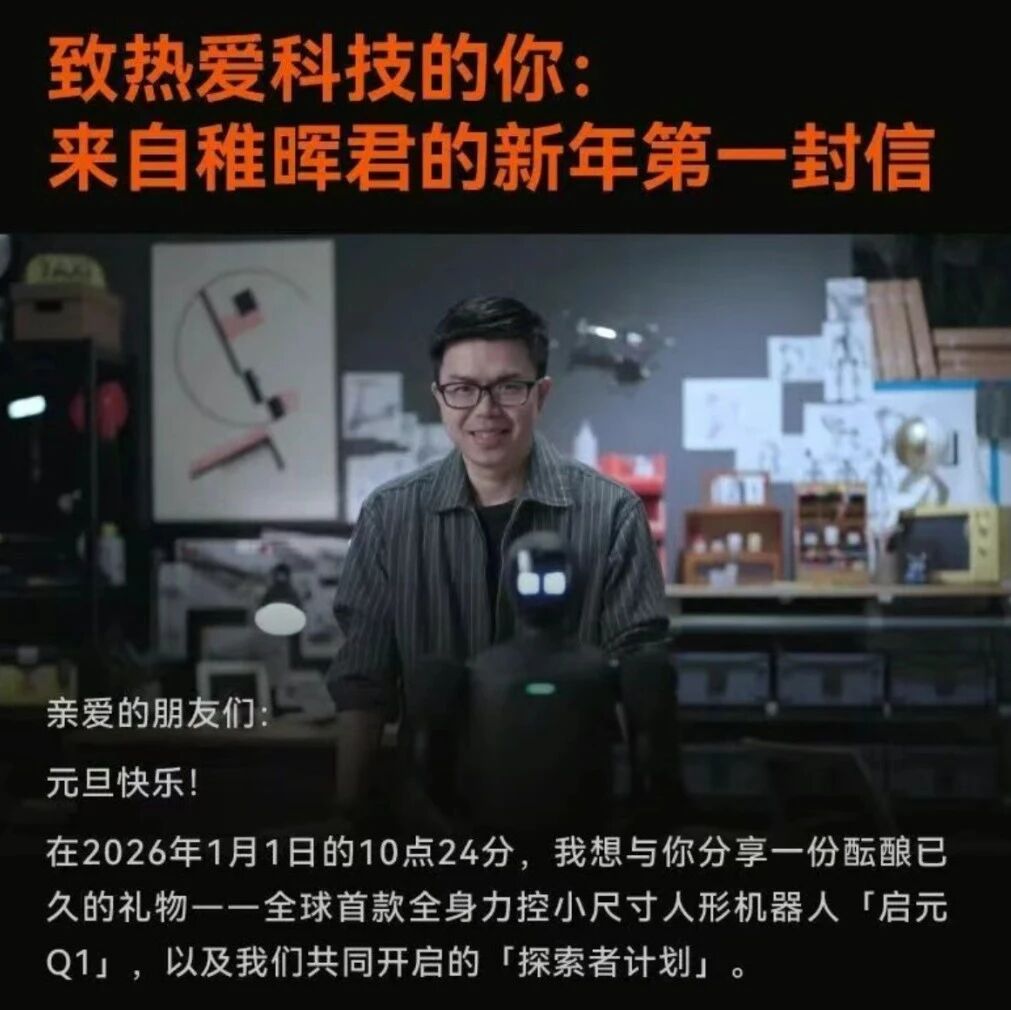
上纬新材造人形机器人,先高调宣传再信披“交底”不可取
Mei Ri Jing Ji Xin Wen· 2026-01-18 12:31
Core Viewpoint - The company has provided detailed responses to inquiries from the Shanghai Securities Regulatory Bureau and the Shanghai Stock Exchange regarding its embodied intelligence business, highlighting the complexity of its operations and the contradictions between cautious announcements and high-profile promotions [1]. Group 1: Business Strategy and Communication - There is a contradiction between the cautious content of the announcements regarding the embodied intelligence business and the high-profile promotions, such as the release of a humanoid robot concept poster and the introduction of a "global first personal robot" [1][2]. - The company’s announcements indicate that the humanoid robot products are still in the prototype stage and that the embodied intelligence business is in the early stages of research and team formation, lacking a comprehensive strategic framework [1][2]. Group 2: Independence and Related Transactions - The company faces contradictions regarding its independence and the actual business intersections with related companies, as evidenced by a significant transaction where a related company authorized the use of software code for 26 million yuan, which is claimed to have significant applicability in the embodied intelligence field [2]. - The company differentiates its consumer-grade small robots for home use from the commercial-grade AI robots of the related company, although there are concerns about potential overlaps in market applications [2][3]. Group 3: Control and Business Focus - The company has committed to not changing its main business or making significant adjustments within 12 months to avoid "restructuring" issues, emphasizing that its revenue and profits currently come from new materials, while the embodied intelligence business is still exploratory [4]. - Despite the stated focus on new materials, the current board members and management have backgrounds in communications, automation, and computing, raising questions about the company's commitment to its existing business versus the new embodied intelligence initiatives [4].



“稚晖君”当上市值600亿元“大牛股”董事长,账号发公司机器人宣传视频,引发监管问询!公司紧急回应
凤凰网财经· 2026-01-17 13:00
Core Viewpoint - The article discusses the strategic developments of Upwind New Materials, particularly its foray into the robotics sector, while addressing regulatory concerns regarding its independence and business direction [6][7][9]. Group 1: Business Strategy and Development - Upwind New Materials is expanding into the robotics field without altering its core business strategy, which remains focused on "carbon neutrality and new materials" [7]. - The company reported a revenue of 1.279 billion yuan and a net profit of 60.54 million yuan as of September 30, 2025, all derived from its new materials business [7]. - The robotics initiative is still in the research and development phase and has not yet generated any sales revenue or profit, indicating that it is an exploratory endeavor rather than a shift in core operations [8]. Group 2: Regulatory Compliance and Communication - Regulatory bodies have raised questions about the independence of Upwind New Materials, particularly concerning the role of its chairman, Peng Zhihui, who is also involved with Zhiyuan Robotics [9][12]. - The company clarified that Peng does not hold any senior management positions or participate in R&D, focusing instead on long-term strategic decisions and external communications [9][12]. - Upwind New Materials has committed to ensuring that its promotional content complies with advertising laws and maintains accuracy, especially regarding claims about its products [13].
国泰海通 · 晨报260105|元旦“微度假”热度高
国泰海通证券研究· 2026-01-04 13:14
Macro Insights - The New Year's holiday saw a significant increase in travel, with inter-regional mobility growing by 19.5% year-on-year, reaching a recent high. Short-distance "micro-vacations" have become mainstream, with strong performance in service consumption, particularly in entertainment. However, product consumption has declined due to the waning effects of year-end sales [4]. - Real estate sales are showing marginal declines, although the easing of purchase restrictions in first-tier cities has released some demand. Infrastructure and construction are still constrained by insufficient new projects [4]. - The port operations remain stable, but there is a divergence in domestic import freight rates and the Baltic Dry Index (BDI). Most industries are experiencing a decline in operating rates, with petrochemicals and automotive sectors showing weak performance due to rising costs and falling demand, while emerging sectors like lithium batteries and photovoltaics are performing well [4]. - The Producer Price Index (PPI) is generally rising, while the Consumer Price Index (CPI) shows mixed results. The RMB exchange rate has surpassed 7.0, with funding rates and government bond yields trending upward [4]. Strategy Insights - The A-share market is expected to see a "spring opening red" as it closed at 3968.84 points in 2025, marking an 18.41% annual increase. The market sentiment has shifted towards optimism, with expectations of a potential interest rate cut in the U.S. in 2026 [8]. - The influx of incremental capital, particularly through A500 ETF and insurance funds, is expected to solidify liquidity. The government has emphasized the need to stabilize and improve real estate market expectations, indicating a proactive approach to boosting growth [8][9]. - The central bank's fourth-quarter meeting highlighted the importance of price signals for promoting stable economic growth and reasonable price recovery, with a gradual emergence of price increases in certain sectors due to improved demand and supply constraints [10]. Industry Comparisons - The technology sector, particularly in AI and emerging industrialization trends, is expected to see strong growth. The domestic chip technology breakthroughs and storage price increases are anticipated to continue, with a focus on companies with global competitive advantages [11]. - Non-bank financial institutions are likely to benefit from increased demand for wealth management and the migration of household deposits, with recommendations for insurance and brokerage firms [11]. - The cyclical sectors are showing signs of improvement, with low valuations and positioning, benefiting from policies aimed at expanding domestic demand and stabilizing the real estate market. Recommendations include tourism services, hotels, and consumer goods [11]. - Specific themes to watch include AI applications, robotics, commercial aerospace, and domestic consumption, with a focus on new consumption patterns and service sectors [11].