
中国产电动汽车

Search documents
EU tariffs on imports of China-made EVs
Reuters· 2026-02-11 11:50
Group 1 - The European Commission has imposed additional duties on imported electric vehicles made in China starting from 2024 [1] - Under European Union rules, carmakers can negotiate tariff exemptions for individual electric models imported from China [1]


英媒:特朗普正在让世界爱上中国
第一财经· 2026-01-19 10:14
Core Viewpoint - The article discusses how Trump's approach to foreign policy has shifted global perceptions, leading to an increased admiration for China, particularly in the context of U.S. actions and rhetoric [2][3]. Group 1: U.S. Foreign Policy and Global Perception - The article argues that the end of hypocrisy in U.S. foreign policy under Trump has not resulted in increased respect for the U.S. but rather a growing appreciation for China [3]. - A global opinion poll indicated that during Trump's first year of his second term, more people believed that China's influence would continue to grow, suggesting a shift in global sentiment [3]. - The article highlights that many individuals in various countries are now using Chinese products, such as electric vehicles and solar panels, which contributes to a favorable view of China [3]. Group 2: Comparison of Power Dynamics - The article notes that while Trump showcased U.S. strength, it did not yield the expected results, as global attention was drawn to China's successful counteractions rather than U.S. displays of power [4]. - It points out that Trump's jealousy of China's industrial strength has led to a situation where the U.S. is now emulating certain aspects of China's approach [4]. - The article emphasizes that power does not guarantee loyalty, and the perception of the U.S. as a unilateral actor has diminished support among allies, with only 16% of Europeans viewing the U.S. as an ally [4][5]. Group 3: Ideological Implications - The article suggests that if the U.S. does not defend freedom or at least pretend to do so, the rationale for pro-American sentiment diminishes [6]. - It reflects on the historical context of the Cold War, where the U.S. was perceived as distinct and strong, which contributed to its victory, contrasting it with the current perception of the U.S. [5].
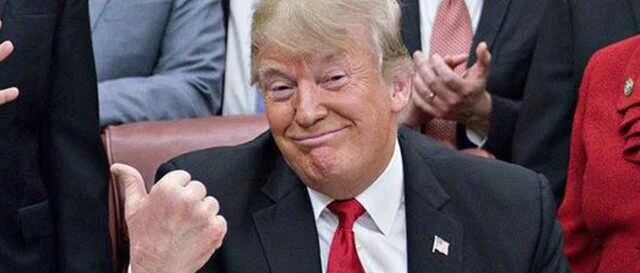
英媒:特朗普撼动世界,世界却爱上中国
Xin Lang Cai Jing· 2026-01-19 05:50
Core Viewpoint - The article argues that Trump's approach to foreign policy has led to a decline in American moral superiority and an increase in global admiration for China, as countries grow weary of U.S. hypocrisy and double standards [1][2][5]. Group 1: U.S. Foreign Policy and Global Perception - The article highlights that the U.S. has lost credibility in its moral stance, particularly after the Biden administration's failed attempts to revive Cold War narratives following Russia's actions in Ukraine [1][2]. - A global opinion poll indicates that during Trump's first year of his second term, more people believe that China's influence will continue to grow, suggesting a shift in global sentiment towards China [2][6]. - The article notes that many individuals in various countries are increasingly using Chinese products, such as electric vehicles and solar panels, which contributes to a favorable view of China [2][6]. Group 2: Trump's Leadership and Its Implications - Trump's leadership is characterized as a departure from diplomatic niceties, openly stating that U.S. actions in countries like Venezuela are driven by oil interests rather than democratic ideals [2][6]. - The article suggests that Trump's display of American power has not yielded the expected support, as global attention is drawn to China's successes rather than U.S. military actions [7][8]. - It is noted that Trump's "America First" policy has led to a perception of the U.S. as a solitary actor, with only 16% of Europeans viewing the U.S. as an ally, while 20% see it as an adversary [8][9]. Group 3: Historical Context and Ideological Shifts - The article references Machiavelli's idea that being feared is better than being loved, questioning why Trump's show of strength has not garnered the anticipated support [7]. - It discusses how the U.S. won the Cold War not just through strength but by being distinct, which is now perceived as lacking, leading to a diminished fear of China [9]. - The article concludes by questioning the significance of U.S. support if it is not based on a genuine defense of freedom, implying that the rationale for pro-American sentiment is eroding [9].
加拿大行业协会:卡尼政府调整中国产电动汽车进口政策“正当其时”
Huan Qiu Wang Zi Xun· 2026-01-18 12:28
Core Insights - Canadian Prime Minister Carney's visit to China marks the first official visit by a Canadian Prime Minister in eight years, focusing on deepening economic and trade cooperation between China and Canada [1] - A significant outcome of the visit is the signing of the "China-Canada Economic and Trade Cooperation Roadmap," which includes preliminary arrangements for addressing bilateral trade issues [1] Group 1: Trade Policy Changes - Canada will no longer impose a 100% additional tax on Chinese electric vehicles, instead implementing an annual import quota system, allowing Chinese electric vehicles to benefit from a 6.1% most-favored-nation tariff within the quota [1] - The quota for Chinese electric vehicles will increase proportionally each year, promoting competition in the Canadian market [1] Group 2: Market Implications - Daniel Breton, President and CEO of the Canadian Electric Vehicle Association, stated that the new tariff level of 6.1% will change the market dynamics and pressure other automakers to offer more affordable products [3] - The adjustment in import policy is seen as timely, given the diminishing reliability of the U.S. as a partner for Canada, prompting the need to seek new partnerships with countries like China, Japan, South Korea, and Europe [3][5] Group 3: Industry Context - The Canadian automotive industry has historically relied on agreements with the U.S. for 60 years, but the current landscape is rapidly changing, necessitating a shift in strategy [5] - The introduction of 49,000 Chinese electric vehicles into the Canadian market is viewed as a positive step towards diversifying trade partnerships [5]
视频丨加拿大行业协会:卡尼政府调整中国产电动汽车进口政策“正当其时”
Yang Shi Xin Wen Ke Hu Duan· 2026-01-18 12:18
Group 1 - Canadian Prime Minister Carney's visit to China marks the first official visit by a Canadian Prime Minister in eight years, resulting in a broad consensus on deepening economic and trade cooperation between China and Canada [1] - A significant outcome of the visit is the signing of the "China-Canada Economic and Trade Cooperation Roadmap," which includes preliminary arrangements for addressing bilateral trade issues [1] - Canada will no longer impose a 100% additional tax on Chinese electric vehicles, instead implementing an annual import quota system that allows Chinese electric vehicles to benefit from a 6.1% most-favored-nation tariff within the quota, with the quota increasing proportionally each year [1] Group 2 - Daniel Breton, President and CEO of the Canadian Electric Vehicle Association, emphasizes that the new tariff level of 6.1% will create market changes and pressure other automakers to offer more affordable products [3] - Breton notes that the adjustment of import policies for Chinese electric vehicles is timely, given that the U.S. is no longer a reliable partner for Canada [3][6] - The introduction of 49,000 Chinese electric vehicles into the Canadian market is seen as a positive step towards diversifying partnerships beyond the U.S., which has historically dominated the Canadian automotive industry [6]
普京:中国产电动汽车更好更便宜 欧洲汽车工业正崩溃
Xin Jing Bao· 2025-11-28 08:36
Group 1 - The core viewpoint is that Russian President Putin claims Chinese products, particularly electric vehicles, are more competitive than European products, indicating a shift in market dynamics [1] - Putin states that the European automotive industry is in decline, suggesting significant challenges for European manufacturers [1] - He compares the economic situations of Asia and Europe, asserting that the European economy is "shrinking" [1] Group 2 - Putin emphasizes that the economic issues in Europe are a natural development and are not directly related to the situation in Ukraine, indicating a broader context for the economic challenges faced by Europe [1]