
中庚小盘价值

Search documents
规模骤降、业绩承压下离任,中庚基金陈涛能否打破低估值魔咒?
Xin Lang Cai Jing· 2026-01-30 07:52
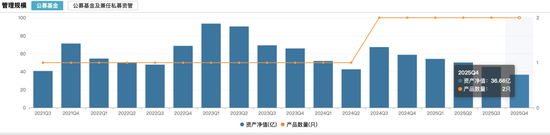
Group 1 - The core viewpoint of the article highlights the ongoing trend of scale decline and strategy adjustments in the management of funds by Chen Tao, leading to a significant management transition [1][21]. - As of the end of Q4 2025, the total scale of the two funds managed by Chen Tao was approximately 3.666 billion yuan, a decrease of nearly 900 million yuan from the end of Q3 2025 [2][22]. - This decline is not a one-time occurrence but has been a continuous trend since the second half of 2023, with the "Zhonggeng Value Pioneer" fund experiencing a peak scale of over 9 billion yuan in Q2 2023, followed by a significant drop in performance [3][23]. Group 2 - In Q4 2025, the "Zhonggeng Value Pioneer" fund saw a net redemption of approximately 490 million shares, reducing its scale from 3.2 billion yuan at the end of Q3 to 2.5 billion yuan [5][24]. - The "Zhonggeng Small Cap Value" fund also faced a decline, ending Q4 with a scale of about 1.1 billion yuan, down approximately 200 million yuan from Q3 [5][24]. - By the end of 2025, Chen Tao's management scale had significantly shrunk, indicating a clear reduction in management radius [6][24]. Group 3 - Despite maintaining a high stock position of over 90% in both funds, there was a notable shift in industry allocation, particularly a reduction in holdings in the liquor and aviation sectors due to weakening fundamentals [7][25]. - Chen Tao indicated that the decision to reduce exposure to liquor and aviation was driven by unexpected deterioration in industry fundamentals and increased uncertainty [27][28]. - The overall portfolio still reflects a bias towards "low valuation, low expectation" stocks, but the adjustments did not significantly alter this characteristic [28][29]. Group 4 - The top ten holdings of both funds showed a high degree of overlap, exceeding 90%, primarily in sectors such as pharmaceuticals, food, manufacturing, and certain technology sub-sectors [10][29]. - Despite the concentration in holdings, both funds underperformed their benchmarks, with "Zhonggeng Value Pioneer" achieving approximately 10% annual returns compared to over 27% for the benchmark [10][30]. - This suggests that the issues may lie more in stock selection and industry allocation effectiveness rather than a misalignment with index direction [12][30]. Group 5 - Chen Tao's investment framework remains focused on typical value investment logic, emphasizing low valuation, low expectations, and manageable fundamental risks while waiting for a reversal [13][31]. - However, the market's patience is waning as low valuations have not yet translated into profitability and stock performance, reflecting a broader challenge faced by many value-oriented funds in recent years [31][32]. - Following the quarterly report, Chen Tao was replaced as fund manager, with Han Yiping and Yin Le taking over the management of the "Zhonggeng Small Cap Value" fund [33][34].

中庚基金陈涛近年收益率低于同类均值 去年大幅跑输
Zhong Guo Jing Ji Wang· 2026-01-22 03:18
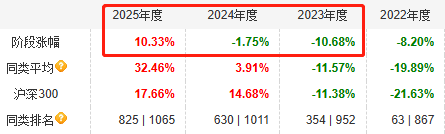
Group 1 - The article discusses the performance of funds managed by Chen Tao at Zhonggeng Fund, highlighting that both Zhonggeng Value Pioneer and Zhonggeng Small Cap Value have underperformed their respective benchmarks in 2025 [1][4] - In 2025, Zhonggeng Value Pioneer achieved a return of 10.33%, while its benchmark return was approximately 27.33%, resulting in a 17 percentage point underperformance [1] - Zhonggeng Small Cap Value recorded a return of 20.54% in 2025, compared to a benchmark return of about 24.83%, indicating a similar trend of underperformance [1] Group 2 - Chen Tao has been involved in securities research and investment management since July 2013, with previous roles at various financial institutions before joining Zhonggeng Fund in July 2018 [1] - Since taking over the management of Zhonggeng Value Pioneer on September 1, 2022, Chen Tao's performance has not shown significant improvement compared to his predecessor, Cao Qing [1] - The performance of Zhonggeng Value Pioneer under Chen Tao's management from 2023 to 2025 was -10.68%, -1.75%, and 10.33%, while the average returns of similar products were -11.57%, 3.91%, and 32.46%, respectively, indicating a notable lag [2] Group 3 - The annual reports for 2023 and 2024 show that Zhonggeng Value Pioneer did not meet its performance benchmark [4] - For Zhonggeng Small Cap Value, after Chen Tao took over management, the return was only 6.71% over 262 days, and subsequent management changes did not lead to improved performance [6] - In 2025, Zhonggeng Small Cap Value's return of 20.54% was significantly lower than the average return of similar products at 32.46% [8]
“王牌”基金经理出走之后: 是“一地鸡毛 ”还是“下一任更好”
Zhong Guo Zheng Quan Bao· 2025-08-08 07:16
Core Viewpoint - The departure of renowned fund managers from small and medium-sized fund companies has significant impacts, but it also presents opportunities for these firms to rethink their strategies and diversify their product lines [1][5][7]. Group 1: Impact of Departures - Since 2024, several well-known fund managers have left their positions, leading to noticeable declines in the managed equity scale of small and medium-sized fund companies [1]. - The exit of a "star" manager often results in substantial changes in fund performance, with some successor managers maintaining or even improving the investment strategies [2][3][4]. Group 2: Performance of Successor Managers - After the departure of Qiu Dongrong, Liu Sheng took over the management of Zhonggeng Value Navigation, achieving a return of 15.90% year-to-date and 18.83% since the departure date, outperforming the CSI 300 Index [3]. - Other funds managed by successors also showed varied performance, with Zhonggeng Value Quality achieving an 11.31% return year-to-date, while Zhonggeng Small Cap Value had a return of 16.53% since the departure but underperformed year-to-date [3]. Group 3: Industry Trends and Responses - The frequent turnover of fund managers is attributed to various factors, including performance pressure, industry competition, and personal career plans [6]. - The China Securities Regulatory Commission's recent action plan aims to shift the focus of fund companies from "scale" to "returns," providing new guidance for the development of small and medium-sized fund companies [8][9]. Group 4: Strategic Shifts in Fund Companies - The departure of key talent is prompting fund companies to reflect on their governance mechanisms and long-term incentives to retain core personnel [7]. - Companies are encouraged to adopt a platform-based survival strategy, focusing on building brand value and investment capabilities independent of individual managers [7][9].
稳定战胜基准的主动基金有何特征
HTSC· 2025-06-10 06:40
Quantitative Models and Construction Methods 1. Model Name: Brinson Attribution Model - **Model Construction Idea**: The model is used to decompose the excess returns of active equity funds into stock selection and sector allocation contributions, providing insights into the sources of fund performance [16][19][22] - **Model Construction Process**: The Brinson model calculates excess returns as follows: $ R_{excess} = \sum_{i=1}^{n} (W_{i,f} - W_{i,b}) \cdot R_{i,b} + \sum_{i=1}^{n} W_{i,f} \cdot (R_{i,f} - R_{i,b}) $ - $ W_{i,f} $: Fund weight in sector $ i $ - $ W_{i,b} $: Benchmark weight in sector $ i $ - $ R_{i,f} $: Fund return in sector $ i $ - $ R_{i,b} $: Benchmark return in sector $ i $ The first term represents the allocation effect, and the second term represents the selection effect [16][19] - **Model Evaluation**: The model highlights that stock selection contributes more significantly to excess returns than sector allocation, with stock selection accounting for 83.17% of the total contribution on average [16][22] --- Model Backtesting Results 1. Brinson Attribution Model - Average stock selection contribution: 5.38% per half-year [22] - Probability of positive stock selection returns: 69.12% [23] - Probability of positive sector allocation returns: 53.66% [23] --- Quantitative Factors and Construction Methods 1. Factor Name: Fund Stability Factor - **Factor Construction Idea**: This factor measures the stability of a fund's sector allocation and its impact on outperforming benchmarks [10][12] - **Factor Construction Process**: Funds are categorized into 16 groups based on static and dynamic sector allocation characteristics: - Static categories: Highly diversified, diversified, concentrated, highly concentrated - Dynamic categories: Highly stable, stable, rotational, highly rotational The average probability of outperforming benchmarks is calculated for each group [10][12] - **Factor Evaluation**: Funds with highly stable and diversified sector allocations have the highest probability of outperforming benchmarks, exceeding 73% on average [12][14] 2. Factor Name: Style Consistency Factor - **Factor Construction Idea**: This factor evaluates the consistency of a fund's style (e.g., large-cap value) and its correlation with performance [27][30] - **Factor Construction Process**: Funds are classified based on their style consistency over time: - Long-term stable allocation - Majority-time allocation - Partial-time allocation - Rare-time allocation The probability of outperforming benchmarks is calculated for each group [27][28] - **Factor Evaluation**: Funds with long-term stable large-cap value styles have the highest probability of outperforming benchmarks, reaching 79.77% [28][30] --- Factor Backtesting Results 1. Fund Stability Factor - Highly diversified-highly stable funds: - Probability of outperforming benchmark: 73.12% - Probability of outperforming benchmark +10%: 57.29% [12] 2. Style Consistency Factor - Long-term stable large-cap value funds: - Probability of outperforming benchmark: 79.77% - Probability of outperforming benchmark +10%: 69.05% [28]